
Quilts, clay jugs, and Tiffany-style lamps. Ladder-back chairs and vernacular figurines. A haul from Brimfield? Not quite: in the last year or so, these objects, created by active makers, have been popping up at Art Basel, Collectible, The Armory Show, NADA Miami and New York, and other contemporary art and design spaces. There seems to be a shared nostalgia circulating right now, focused on the aesthetics, motifs, and sensibilities of “folk art” and “Americana.”
These terms—often conflated, embraced, challenged, and even rejected—might appear merely charming at first, as do the new/old objects being made today. But there is more happening in the American studio than a simple resurfacing of vintage tropes. Nothing is neutral in the craft world, with its hand-labored histories and taxonomies. Cultural memory is revisionist even at its best. Hierarchies of labor, education, and training still complicate who gets to make what, and how it might be received. At a time when the flag itself feels either patriotic or propagandistic, this new Americana compellingly expresses an unsettled national material culture.
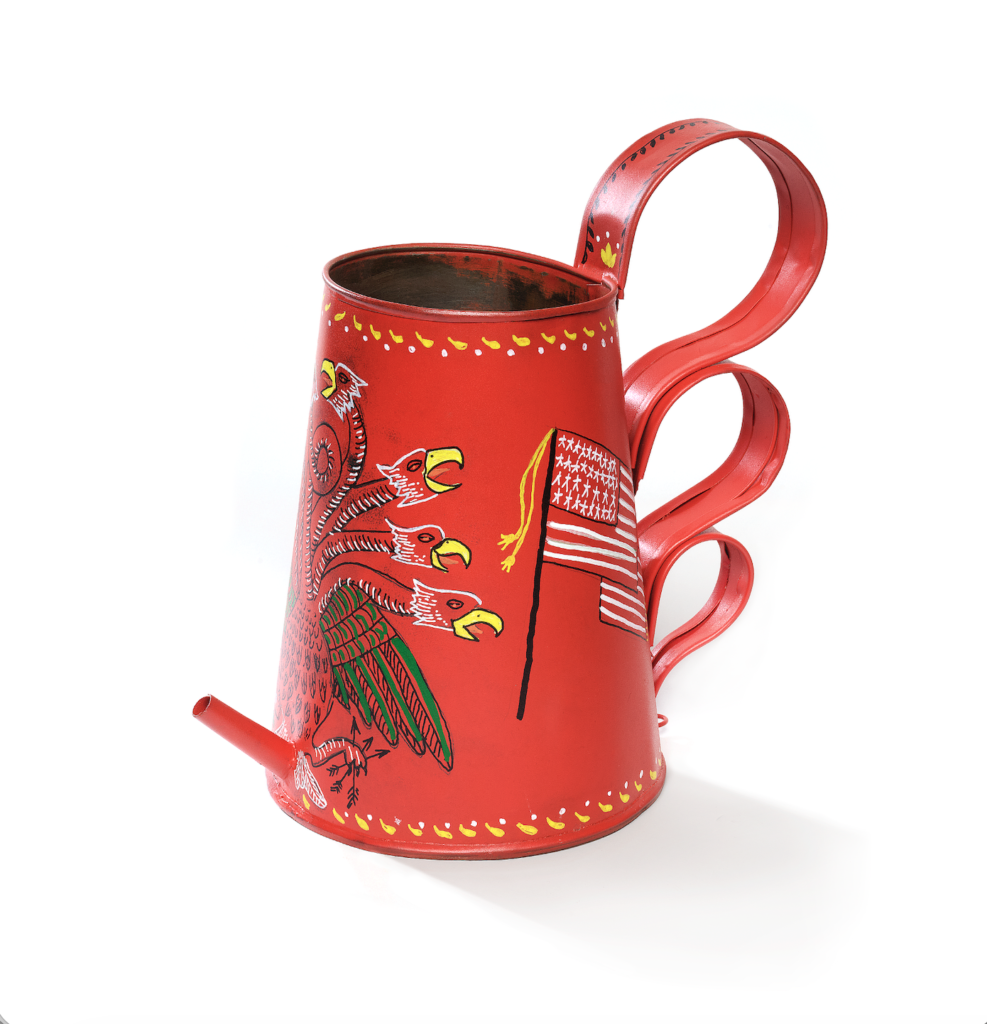
The metal vessels and trays of Jonathan Wahl exemplify this confusion. Spouts are too small or too many. Handles ribbon and multiply. Hand-painted motifs or stencils appear naïve. All these changes camouflaged by a humbleness only domestic objects can possess. The lineage of Wahl’s chosen material is worth looking at. A cheaper alternative to pewter, tin-coated iron sheet was used in late eighteenth-century America to make coffeepots, buckets, candle sconces, lanterns, snuffboxes, and other regular household utensils. Tin plating had been mastered in England, and for decades all plated sheet was imported. It was smithed locally by hand, then moved through a lucrative and extensive peddler network, which expanded with post-revolution migration and industrialization. By 1820 tin was everywhere.
Wahl’s works refer both to plain, crimped and pierced tinware and to painted or “japanned” examples—still utilitarian but more decorative. While black and gold Chinese and Japanese lacquered motifs remained popular in Europe, the application took a freer stylistic turn in colonial America. British and local motifs were combined with Pennsylvania German repertoire to create the classic designs we recognize today: green, red, and yellow flowers, fruits, and flourishes applied over black surfaces.
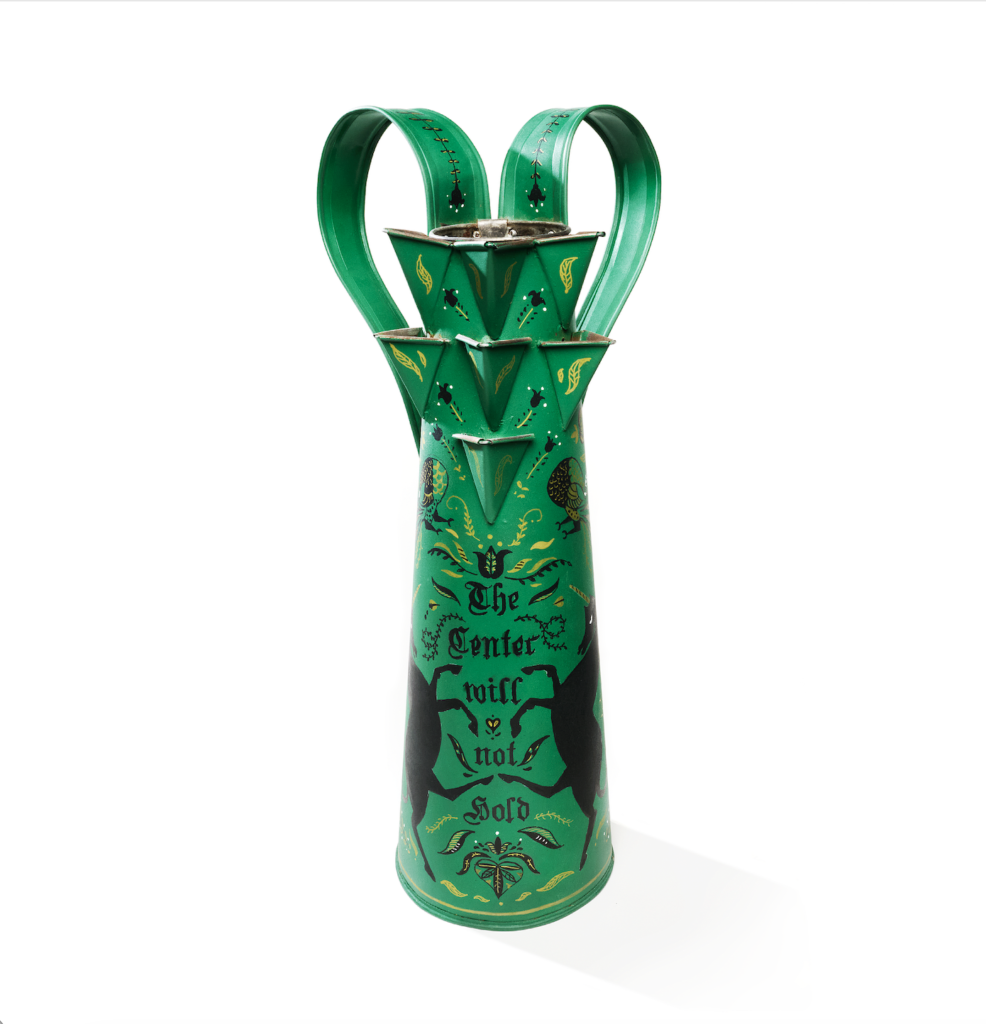
Jonathan grew up in Montgomery County, Pennsylvania—historic tin territory—and stumbled on the material in graduate school at SUNY New Paltz. He taught himself how to work with terne plate (steel sheet covered with an alloy of lead and tin) and made a series of watering cans that sort of let themselves down: one has a single hole; two are stacked as mirror reflections, closing off their reservoirs. They are embossed with words like “Liberty” or “In God We Trust.” He attributes his fondness for familiar objects of the past because “they help us understand and create distance to our present.” It was also a way to address being gay, which, “for many generations and hundreds of years, had to happen within a closed space,” he adds. “Coming out was to your parents, at home. It’s such an intimate thing.”
After graduating from SUNY in 1994, Wahl left tin behind to concentrate on drawing. Recently, however, tin is again the primary material in his Philadelphia studio. Borrowing language from our founding fathers (“Join, or Die”) and traditional American iconography, subtly skewed (a six-headed eagle), his new work articulates feelings of frustration and fear brought on by the current presidential administration and the social, institutional, and psychological disruptions of the time. “These are humble objects,” he says. “They are like the great equalizer—the kinds of things normal folk would use. This political hurricane we’re in, in this division, I hope they soften all of that.”
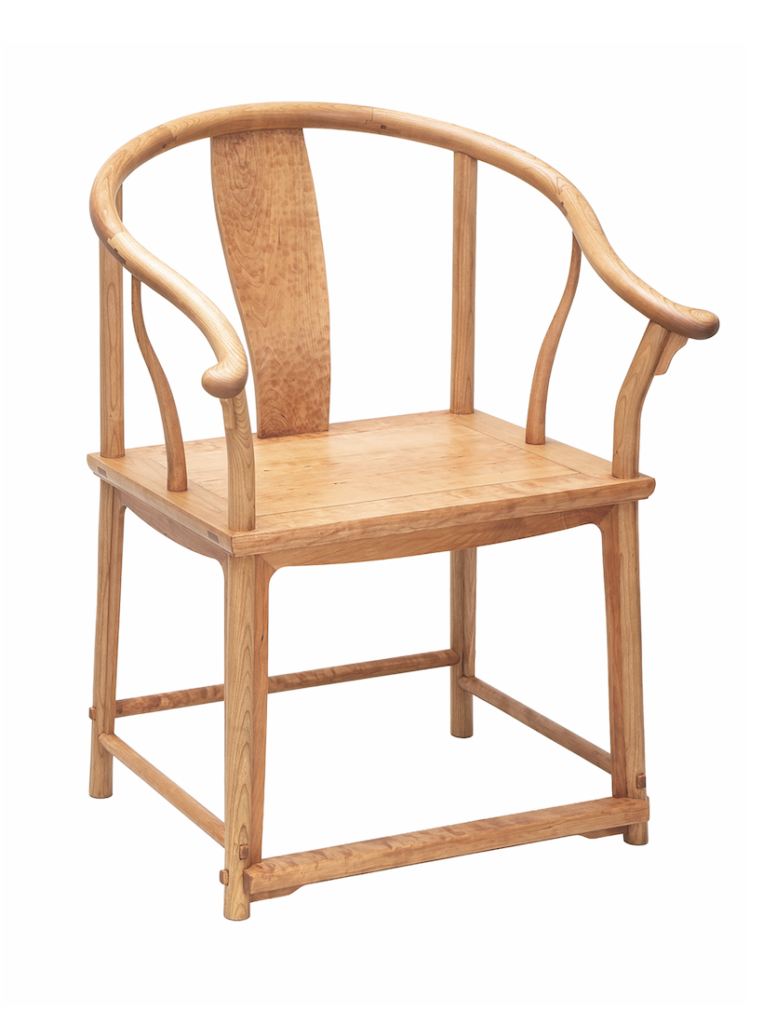
Woodworker Hugo Nakashima-Brown has long been curious about primary sources in design history and actively works its ambiguities into his forms. At first glance his varied interests may seem contradictory; after growing up with, and later working for his extended family’s design business, founded by George Nakashima in the 1940s, he made a deliberate departure to the more conservative craft education in furniture making at the North Bennet Street School. The tendency there was to mix antique forms with twenty-first-century ideas, and this is certainly true of his work, which features meticulous, interlocking joints, and elegant but contemporary reinterpretations of Ming and “Queen Anne” styles.
This juxtaposition highlights the importance of chinoiserie, an idiom resulting from a centuries-long feedback loop of Western imitation of imports from China, as well as elsewhere in Asia, often idiosyncratically combined. Nakashima-Brown explains that European clients were commissioning what they thought was “Chinese furniture,” sending drawings across the world that showed their own fantasy of what an exotic chair or cabinet should look like. Chinese craftspeople, in turn, interpreted those sketches as instructions for making “English” furniture. The pieces they produced were therefore hybrids twice over—Western dreams of the East, retranslated by Eastern makers and executed with Chinese joinery. Over time these distortions made their way into the American design lexicon. Nakashima-Brown notes that “even some of the furniture in the White House, which we see as quintessentially American, was meant to be chinoiserie.”
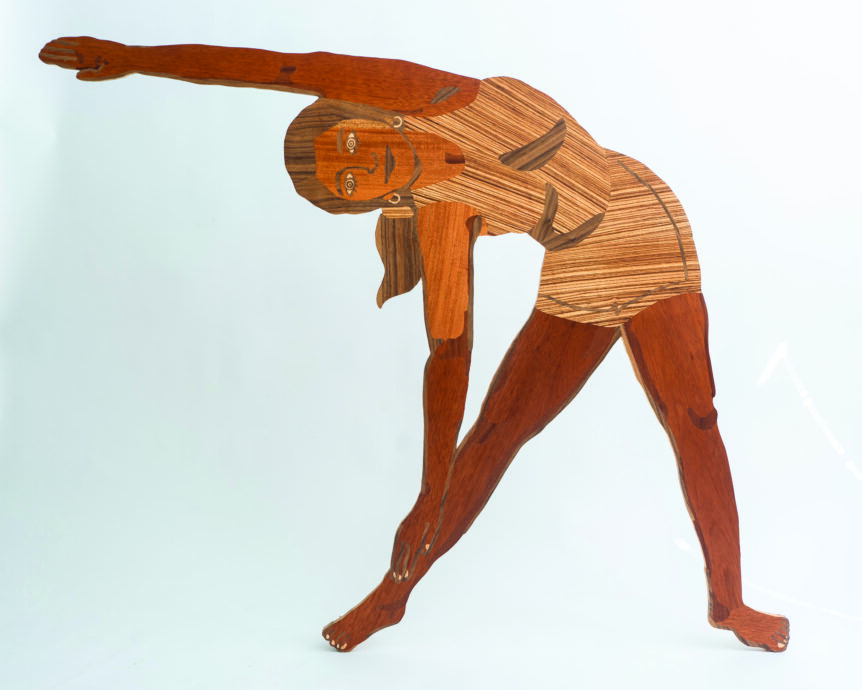
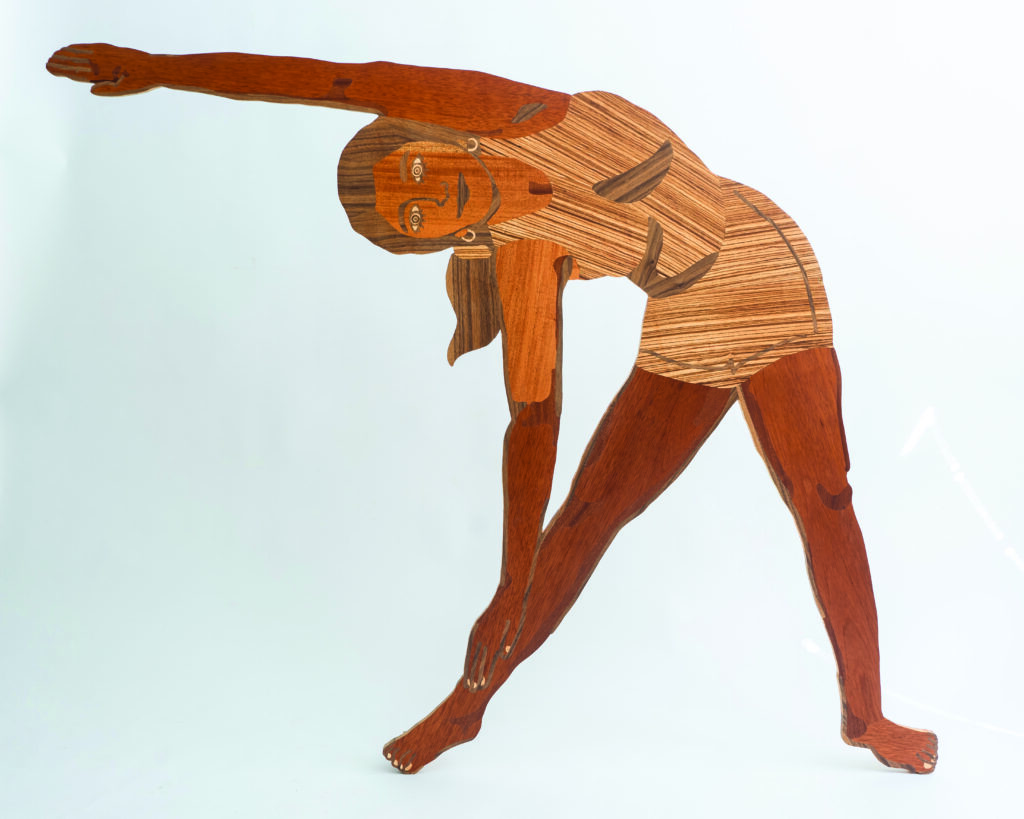
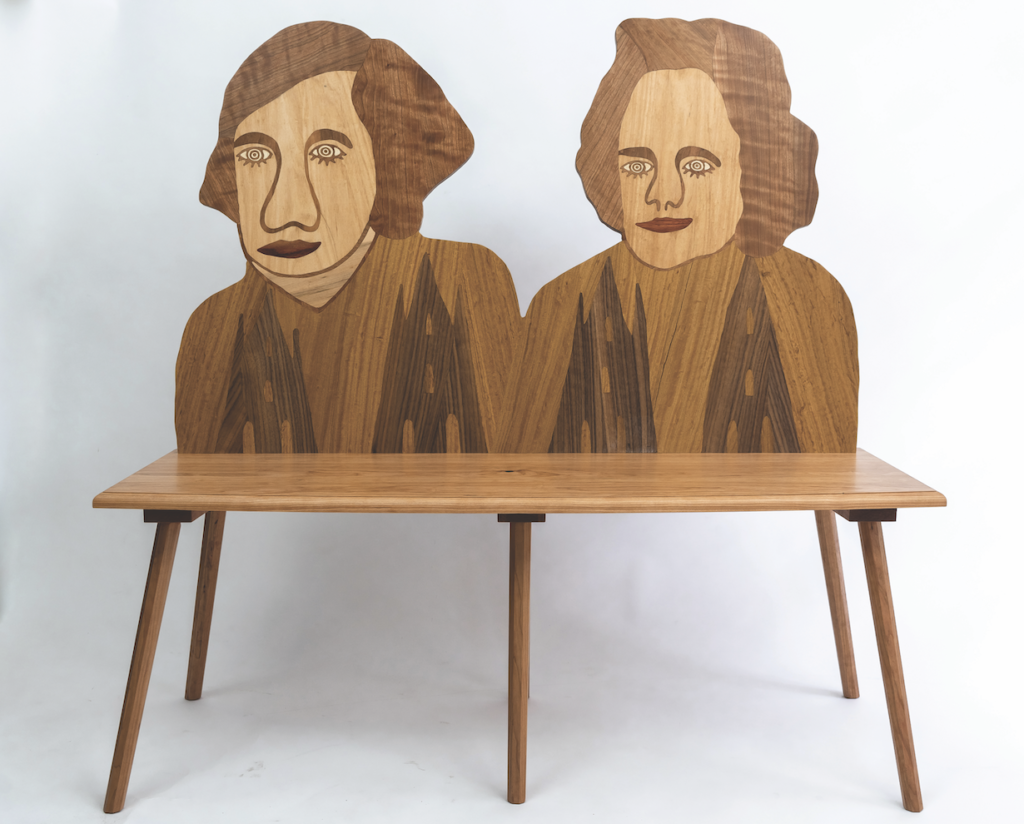
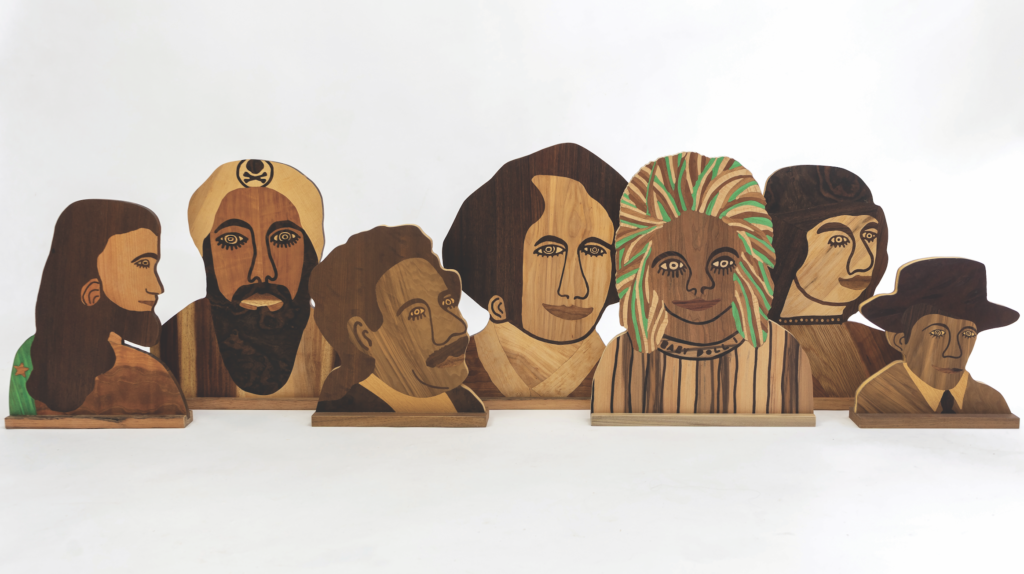
Nakashima-Brown’s contrarian stance on derivation is perhaps seen most clearly in his marquetry. If his chairs are cultural mutants disguised in masterful craftsmanship, then works like his Washington Kissing Bench are just the opposite: compositions that look quick, straightforward, and a little silly, but are made with slow, painstaking precision. The portraits are homages to Howard Finster, the iconic American folk artist and Alabama preacher. Nakashima-Brown’s grandfather, who was friendly with Finster, once recalled the time that he wryly described his work as “like that of Rembrandt.” The absurd line stuck—and gave Nakashima-Brown the idea to make portraits with Finster’s stylized eyelashes through the tricky, time-honored technique of wood veneer. In his 2025 exhibition Familiar Faces | Living Spaces at the Harvard Ed Portal’s Crossings Gallery, these furniture pieces collided with sculptures resembling life-size cardboard cutouts of people doing yoga poses, all in marquetry. “How do you prevent something from being a one-liner?” he asks. “I think a big part of it is taking the joke too far and making it too beautifully or too well.”
As Nakashima-Brown’s work demonstrates, the American aesthetic—with its inadvertent transmutations and “outsider art” inclinations—is defined not just by its murky origins but by translation, mutation, misunderstanding, and lore. But that’s on a good day, when everyone involved does it in good faith. Hindsight will point out, however, that ignoring its parallel foundations in exclusion and erasure is impossible.
This is precisely why the Atlanta-based furniture maker Robell Awake pushes back against the language that organizes American material culture. For Awake, the term “Americana” carries negative connotations, and is bound up in the mythmaking of whiteness and ownership. “I’m not interested in what that term has to offer,” he flatly states, adding that “creating an archive is the act of excluding information before it is an act of inclusion.” Regional prejudices are also part of this problematic legacy; as Katherine Jentleson explains in a recent essay, the influential folk art specialist and Museum of Modern Art curator Holger Cahill, following a research trip in 1935, “left him with the impression that the South was infertile ground for the handcrafted objects he considered to be symbols of the American spirit.”
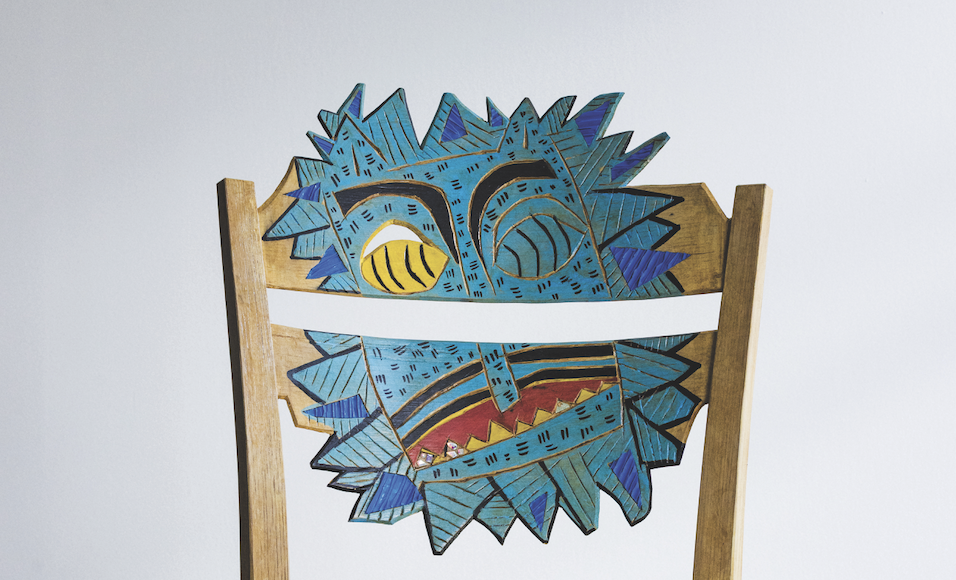
Awake has been a national leader in contesting the largely white, sanitized, and northern version of American material culture. His Short History of Black Craft in 10 Objects, published last year, rectifies matters by featuring origin stories of important, overlooked contributions to American design history. To him, history is largely about storytelling, “90% lore and 10% empirical,” and exposing racist revisionist narratives, countering them with rich anecdotal testimony, is a vital form of truth-seeking. As a largely self-taught artist, he recognizes the importance of shifting our attitude toward knowledge away from academic qualifications, encompassing the generational grammars and traditions passed down within indigenous, immigrant, diasporic, and enslaved lineages.
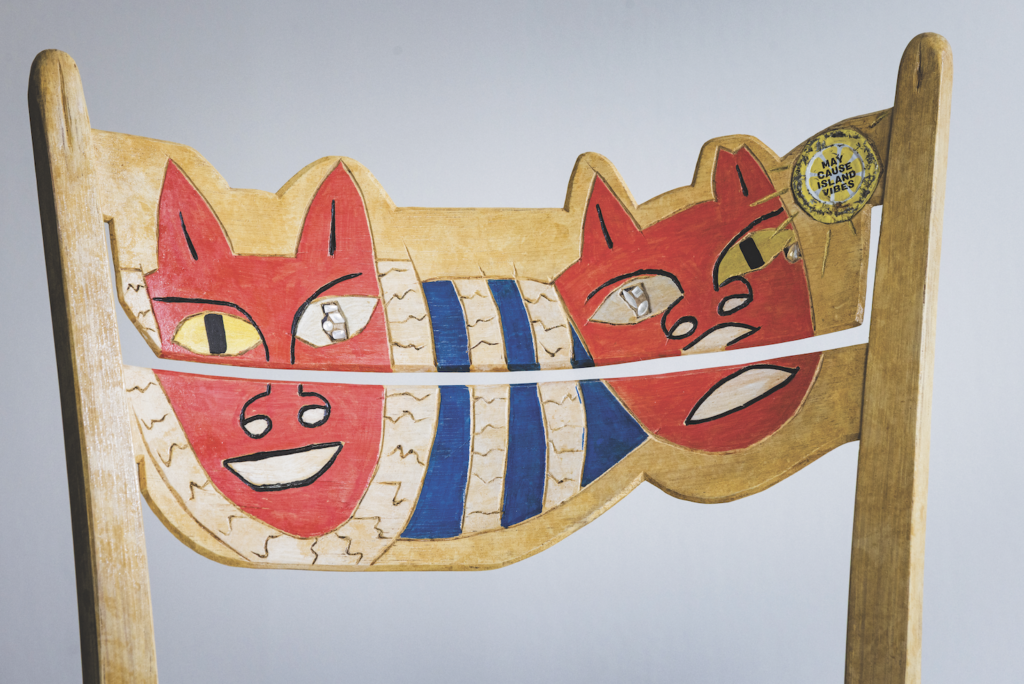
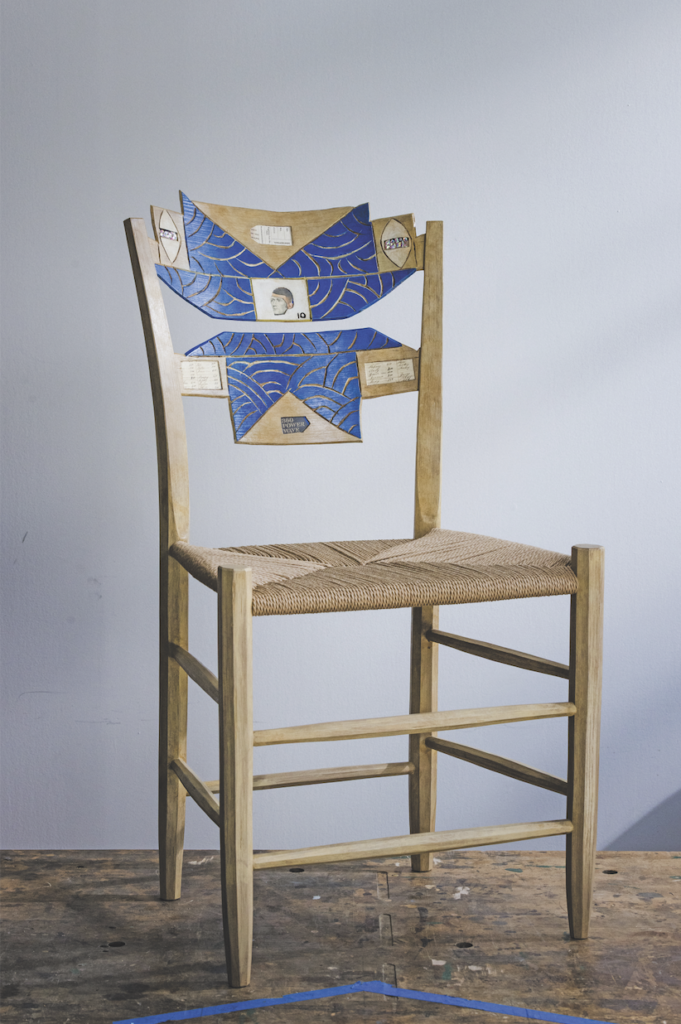
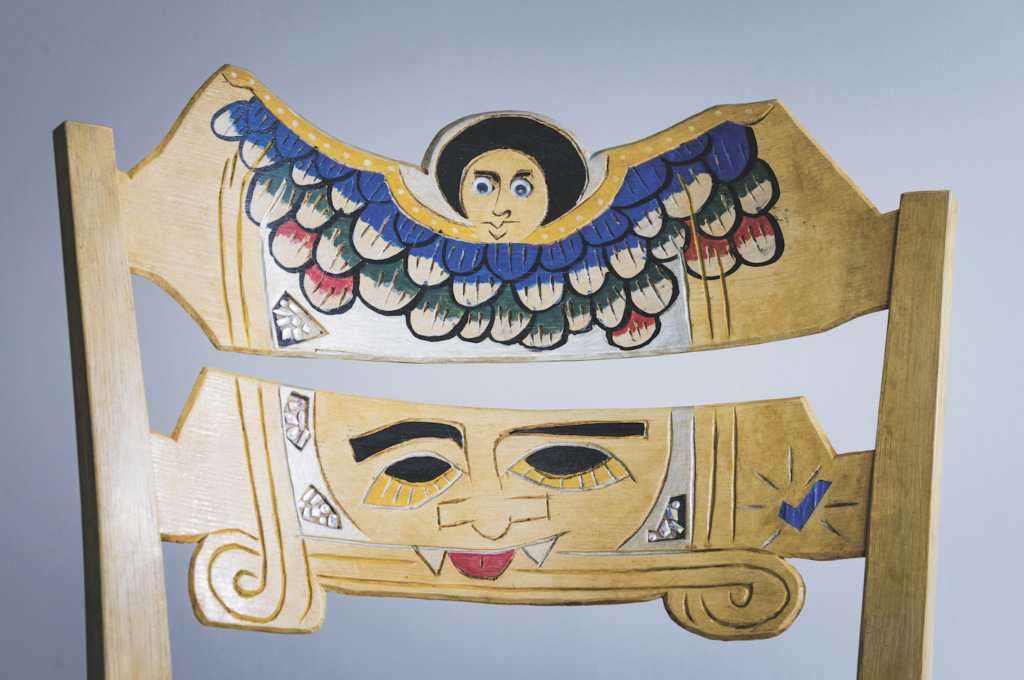
Awake’s work on the joiner Richard Poynor is a key example. Poynor was an enslaved carpenter and artisan who pioneered the widely copied “mule-eared” ladder-back chair, which featured signature woven herringbone seats in white oak. Almost two hundred years later, Awake is making chairs which combine rediscovered Poyner techniques with notions of American assemblage art and syncretic aspects of Black art and culture in a dazzling, critical, and consecrated mix. Despite the historic allusions, his titles and materials—often incorporating found objects like nail crystals, vintage tech, and sneaker waste—are very much grounded in the now. For example, in WorldStar, titled after the website WorldstarHipHop, he collages Alexander Hamilton’s face from a $10 bill with found hair-care packaging; the satire is partly aimed at the hit musical Hamilton, whose laundering of the founding fathers through hip-hop aesthetics seems to him rather vulgar. Awake links viral video trashiness to America’s appetite for rebranding violent histories as feel-good mythologies.
One could argue that everything we say and do in the United States is connected to settler colonialism. Our terminology subsumes, our symbolism appropriates. Take denim jeans: there’s nothing more iconically American, right? But the cultivation of indigo has its roots in slavery, and any history of jeans must acknowledge its transition from being “Plantation Negro Clothing” to the ubiquitous garment of white capitalist America. The quilts of Gee’s Bend come to mind as a great example of artworks that disrupt this smoothed-over narrative; so too do the works of Coulter Fussell, who mends fabric scraps of all kinds back into marvelous expressions of her childhood in southern mill towns from Georgia to Mississippi.
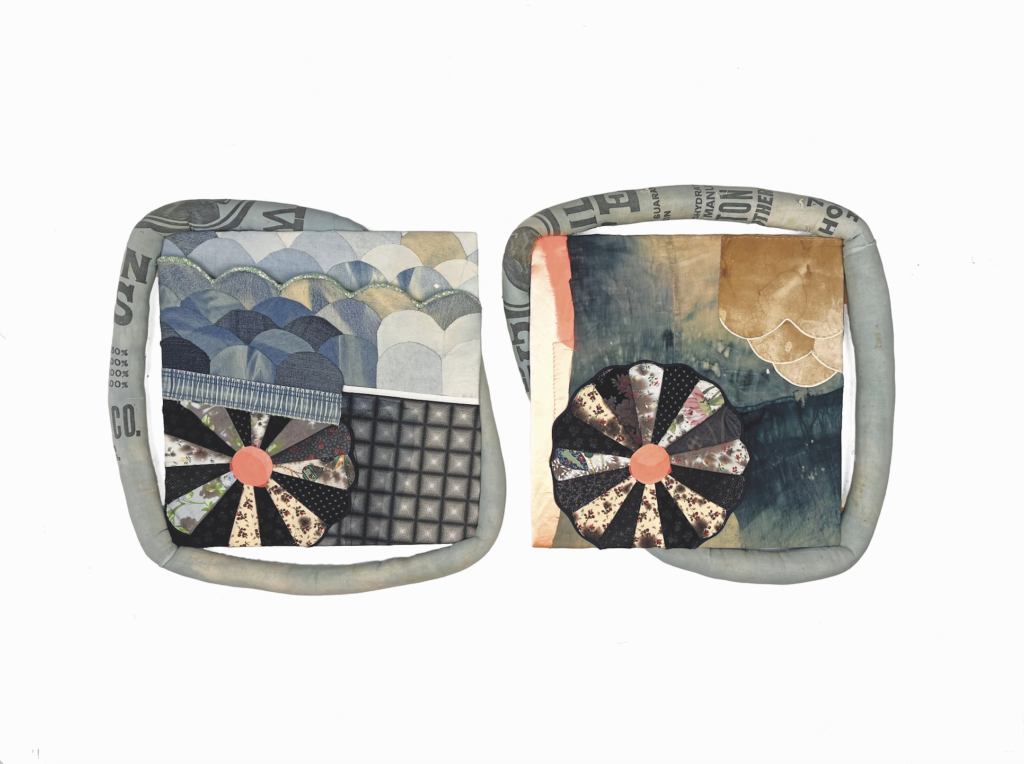
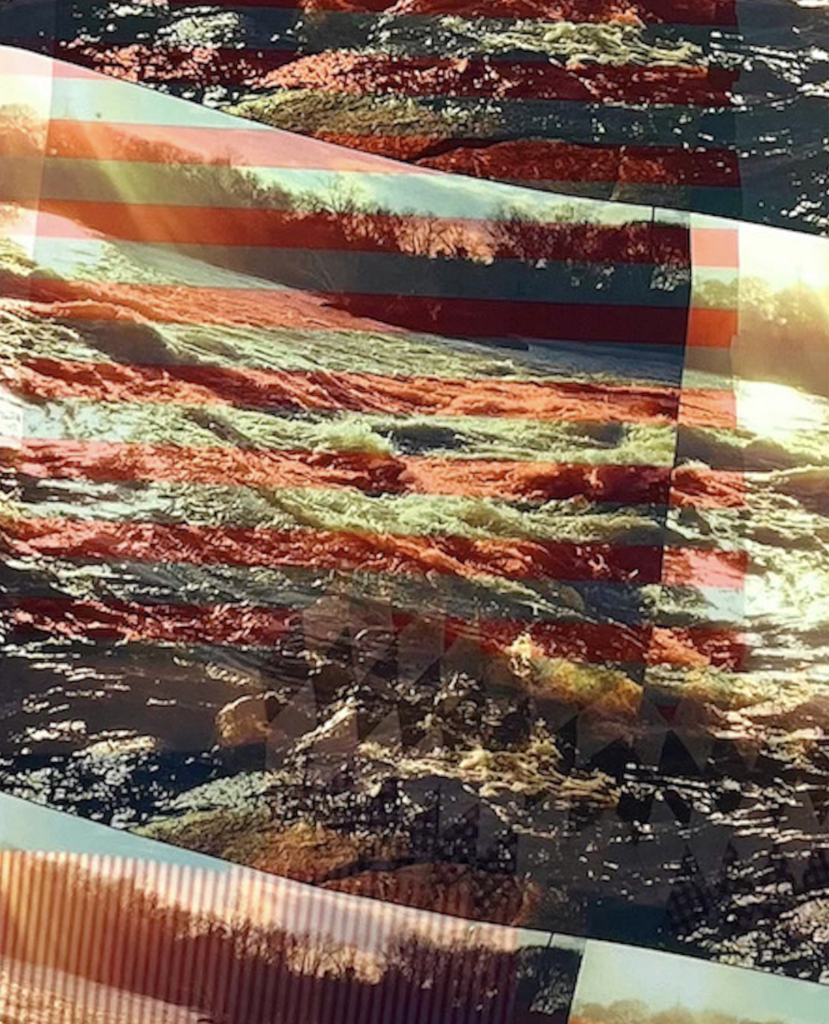
Fussell’s diptych Mill Lot #1 & Mill Lot #2 refers to the Eagle and Phoenix Cotton Mill and its smokestacks in Columbus, Georgia; the works are hand-sewn into a traditional scallop quilt pattern, extremely difficult to achieve in denim. In other assemblage works, she incorporates cell phone video screenshots of rural landscapes, as in The Fall Line, a flag-like but fractured composition of fireworks and splashes of river water made by her son, all painted on chiffon. Fussell works largely with donated scraps, and through this process has discovered that “any sort of ‘patriotism’ in terms of America, at the end of the day, just signals your political party. Actual heartfelt allegiance to place is to your state. People are Mississippians or Georgians first, above anything else.” She feels that her fabric donations reflect this: in the last ten years, she has only ever received two flags and one yard of flag-motif fabric in her donations.
Basil Kincaid, a multi-generation Black quilter and embroiderer based in St. Louis, also works autobiographically, creating narratives about the liberation of spirit in his large-scale panels. He recently showed a giant three-quilt installation titled Flower Song: Through Dappled Shade, Dancing on Our Faces, which “blends symbols, metaphors, color, and patterns to weave a rich, cosmic narrative of the American Dream.” Though he and Fussell both have bachelor’s degrees in art, their success can be attributed to what they learned from their families, not necessarily on campus. Craft has a social credibility that other types of creative output simply do not.
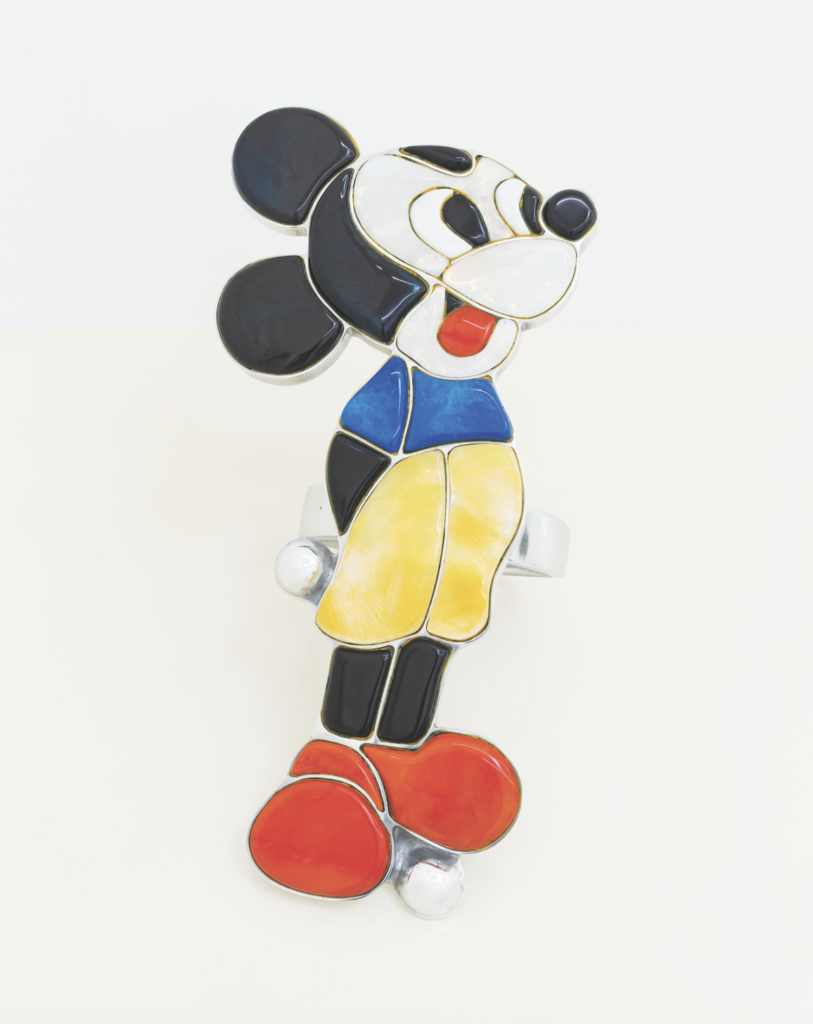
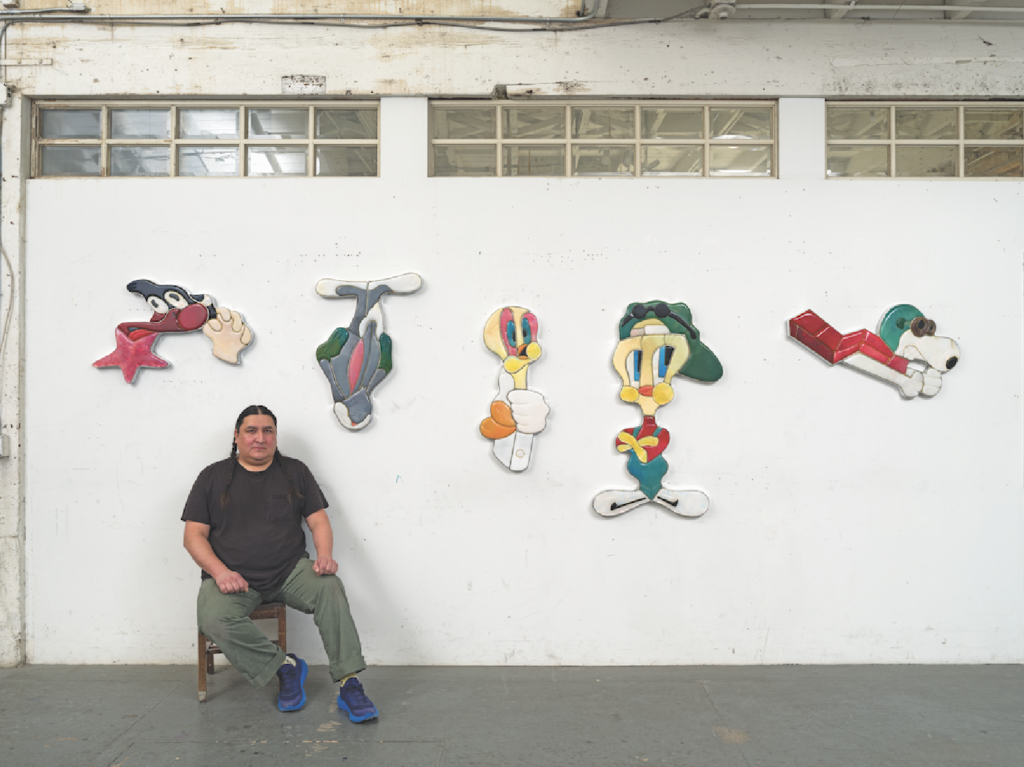
Through re-making, this new Americana enacts a kind of reconciliation, one that transforms contested lineages into something legibly American. In this act of “naturalizing,” if we can use that fraught word, the very idea of “Americana” is turned back on itself. We can see this in the work of Ishi Glinsky, whose large mixed medium sculptures of pop characters like the Pink Panther or Tweety Bird recall lapidary inlay techniques traditionally used in handmade jewelry from the Southwest. Glinsky, based in Los Angeles, was born in Tucson, Arizona and is a member of the bordering Tohono O’odham Nation. The region is known for a shared continuum for carved turquoise, coral, shells, and other stones, channel-set into silver and gold rings, brooches, and bolos with modern geometrical compositions. Less well known is the Zuni Pueblo subversion of cartoon characters into precious rings, usually unsigned—which first appeared in local tourist markets around the mid-1970s and became known as Zunitoons. Many that feature a hallmark come from Veronica Poblano (Nastacio), whose parents and grandfather were also inlay jewelers. She states that she continued with her own voice “as a way to climb out of poverty.” Ishi’s sculptures pay homage to that success, against the backdrop of the consistent exploitation of Native craft: the mining of techniques, symbols, and aesthetics by US culture industries and taste-makers, without credit or compensation. Ishi runs that tape backward, rematerializing Zuni inlay and borrowing back symbols of American pop culture (its corporate intellectual property), Indigenizing the present. Some of his sculptures are taken from cartoon stills, while others are direct collaborations with Poblano, like 1972-V.P. (Mickey Ring), a blown-up Poblano replica in the collection of the Smithsonian’s National Museum of the American Indian. Transparency is important to Glinsky: “I’ve always felt the original source objects should hold as much space as my sculptures do. I really want to emphasize Veronica as an originator of an unsung art movement and share with a wider audience the existence of her work and Indigenous inlay techniques in general.”
How should we explain the current revival of Americana? One simple hypothesis might be that the connection to the hand grounds us at a time when we feel out of control. Another, more specific to these makers’ biographies, is that people are making humble objects again to push back against polished art school tendencies. Certainly, a growing appreciation for craft-based mediums feels timely as higher education in the arts becomes disproportionately unaffordable; as artist Damien Davis writes, “the inequities are sharper for Black, brown, and first-generation students, who often find themselves with mentors who do not share their backgrounds.” Through vernacular authority, twice-translated forms, domestic theater, or the mending of what’s left over, can craft help mitigate this problem too? “The folk artist is an honest artist,” Wahl says. “They might be ‘untrained’, they may be ‘naive’—but Grandma Moses, we took her for truth.” If this handful of artists serves to define American craft as it evolves today, it’s by keeping visible a past, often problematic but sometimes very beautiful, that remains the raw material of our national imagination.
KELLIE RIGGS is an independent writer, curator and lecturer based between New York and Florence, Italy, interested in craft-based practices and making as identity formation.


