Silver still seduces—its art, craft, and stories exposing power, identity, and desire in every gleaming surface.
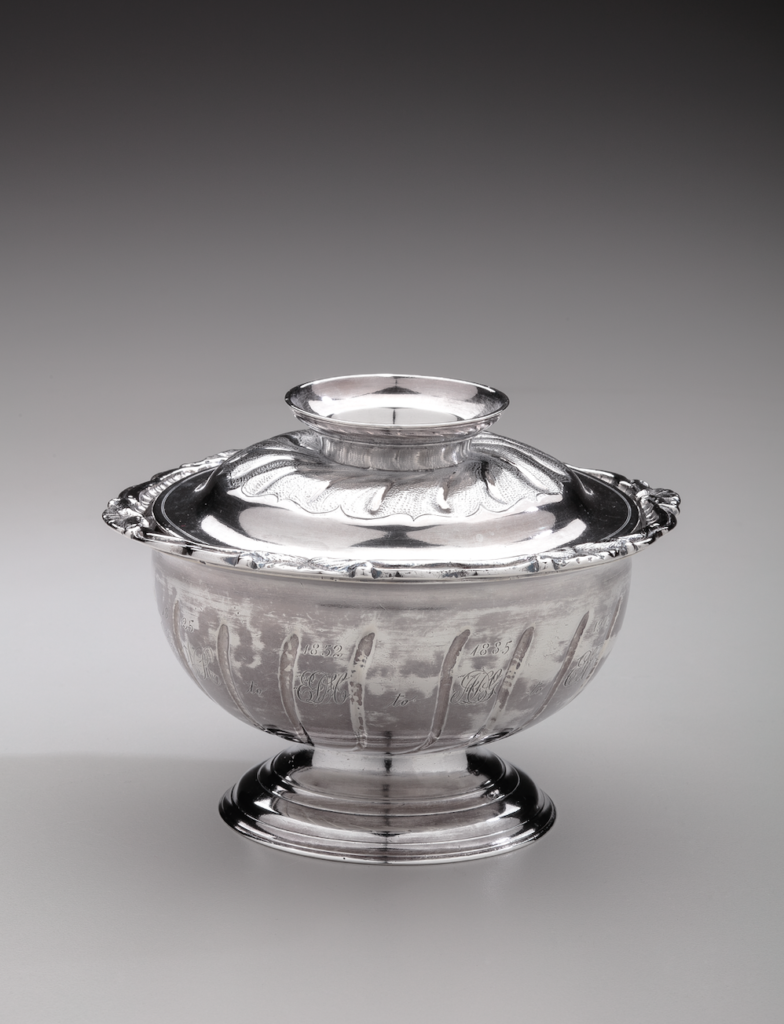
Silver; height 2 5⁄8, diameter 4 3⁄4 inches. Gift of Elizabeth Bates Carrick.
The objects illustrated are in the Newark Museum of Art, New Jersey.
Nobody needs silver. Nobody has ever needed silver; and yet, silver objects have somehow been a part of every major civilization and religion for millennia. Most art and cultural history museums in the world include silver objects. Over the long reach of human history, silver is money, and well into my own childhood, the United States Mint produced solid silver coins in the form of dimes, quarters, and half-dollars—coins that every American carried every day. The rise in the cultural importance of silver objects exactly paralleled silver’s use as cash, and its gradual decline seems to echo the disappearance of silver money in our culture. I suspect that, with its disassociation from wealth, the inconveniences of silver (i.e. tarnish and polishing) loom ever larger in people’s minds. Moreover, polishing silver is associated with the presence of servants, and in a world where even the very rich don’t have servants the way they did in previous times, silver has literally and figuratively lost its luster.
I was delighted to see Ralph Gardner Jr. make this same point in his Obscure Connoisseur column, “Has Silver Lost its Luster?” in this magazine’s November/December 2025 issue. Anyone remotely connected to the antique silver marketplace over the past two decades has witnessed this.
Gift of Louis Bamberger.
On a personal level, I had to laugh at Gardner’s truth-telling. I have loved silver since my teenage years and have a little stash of my own—some family, some collected. I must confess, however, that in the last decade or so I find myself letting my silver get rather brown with tarnish, only to rush around when friends come to dinner to make sure I am not shamed by the tarnish.
Bamberger gift.
The challenge of making silver “relevant” in a post-silver culture is real. While curators like me can collect all they want for the love of the material (I tripled the size of the Newark Museum’s American silver collection during my career), our culture’s connection to silver objects has clearly weakened. But the truth remains that the three core ideas—art, craft, and story—offer the potential to make any object relevant to any audience.
One of the earliest accessions of a piece of American silver at the Newark Museum was a bequest in 1921 from Marcus L. Ward Jr., a descendant of one of Newark’s seventeenth-century founders. Ward died a bachelor, leaving the museum the “bric-a-brac” from his ancestral Greek revival house, which itself was demolished to build the new Newark Museum building in 1926.
Collections Exchange Fund.
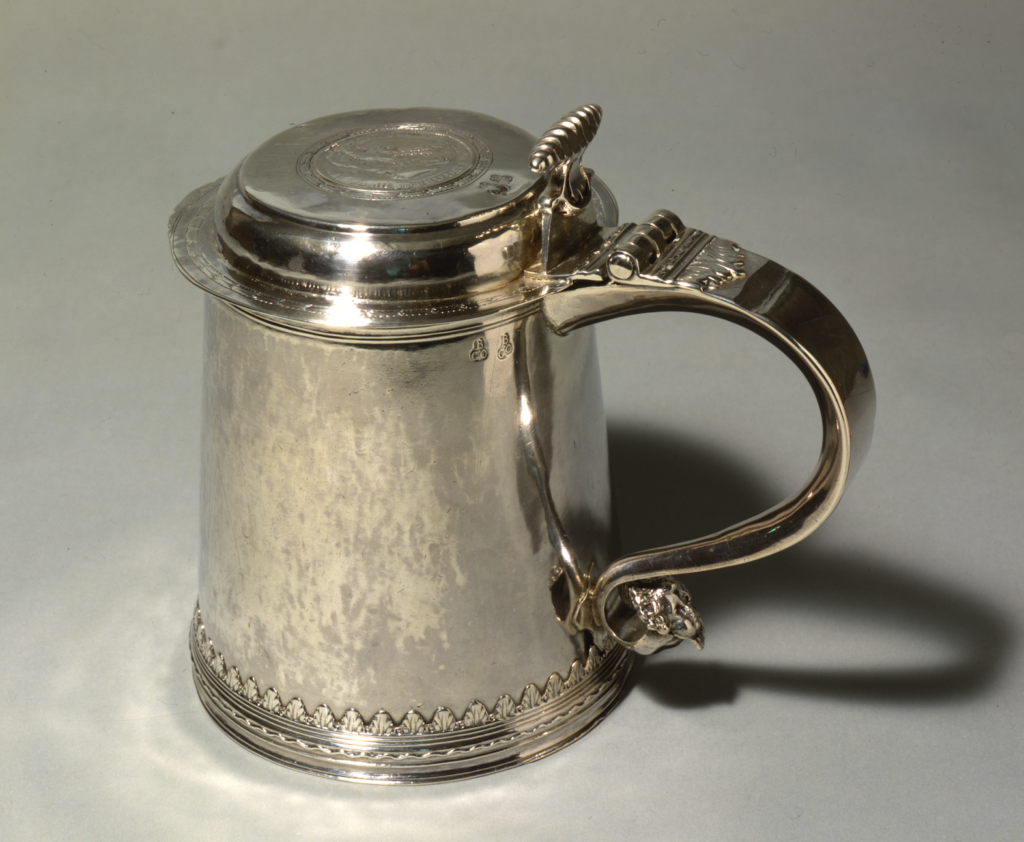
In 1921, the Ward tankard, made by New York silversmith Gerrit Onckelbag in the 1690s, was more a relic than anything else. Ward inherited it from his father, who had inherited it from Dutch ancestors in Newark’s early history. A European coin dated 1691 is embedded in the lid, commenting nicely on the association between silver objects and cold, hard cash in the colonial mind. That it is the only known piece of seventeenth-century New York silver with a New Jersey history was just one interesting thing about it in 1921. John Cotton Dana (1856–1929), the museum’s founding director, would have seen it as an object from the mists of American history that reflected his driving curiosity about the combination of design and craft that produced objects he saw as the art of everyday life.
Silver; height 11 1⁄2, width 5 inches. Gift of Barbara Neal and Stephen Schatz.
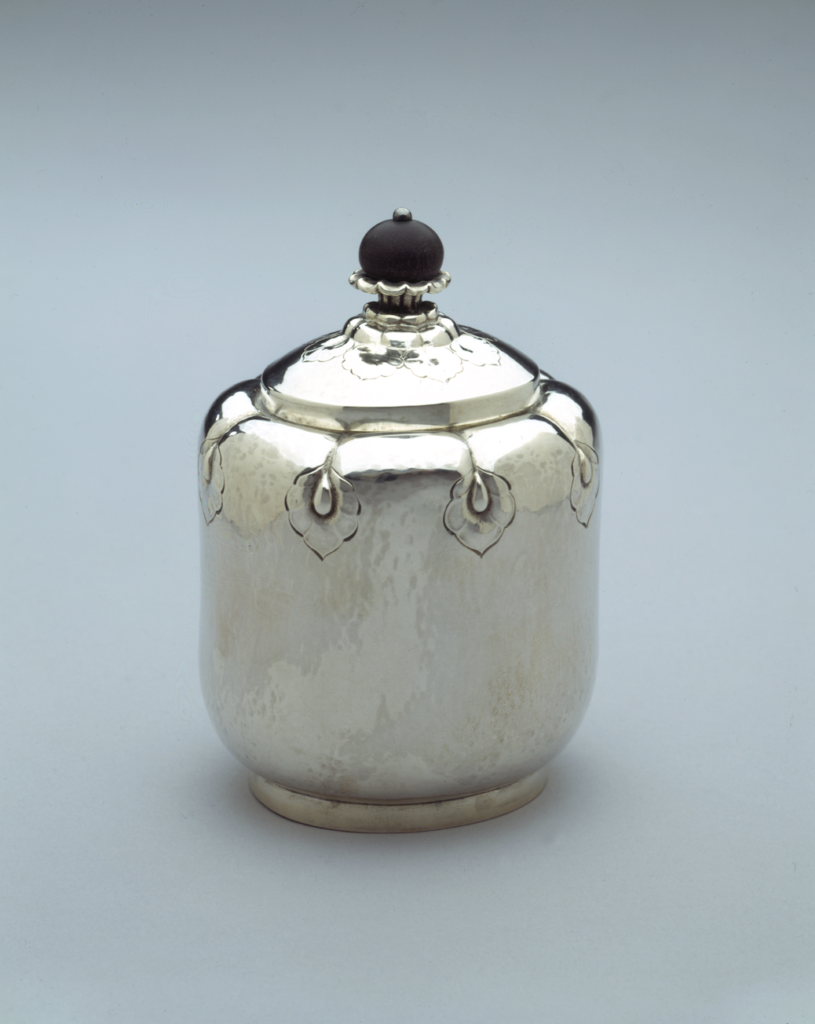
When founding trustee Louis Bamberger (1855–1944), owner of Newark’s greatest department store, donated a tea caddy by Danish silversmith Georg Jensen in 1922, he was in fact placing the first piece by Jensen in an American museum. More importantly, he was echoing his friend John Dana’s interest in modern design and craft. Both appreciated its elegant modern design, high level of craftsmanship, and evident function: this was a work of art that was useful in a modern American home. Both Dana and Bamberger believed the museum’s audience could learn from that.
Louis Bamberger Bequest Fund.
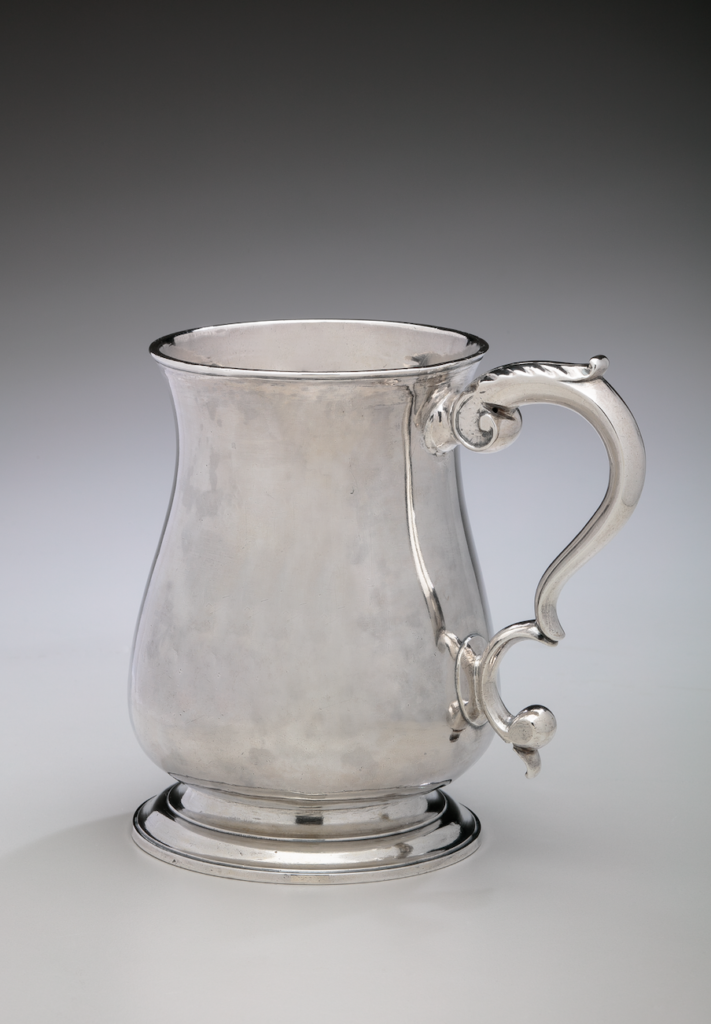
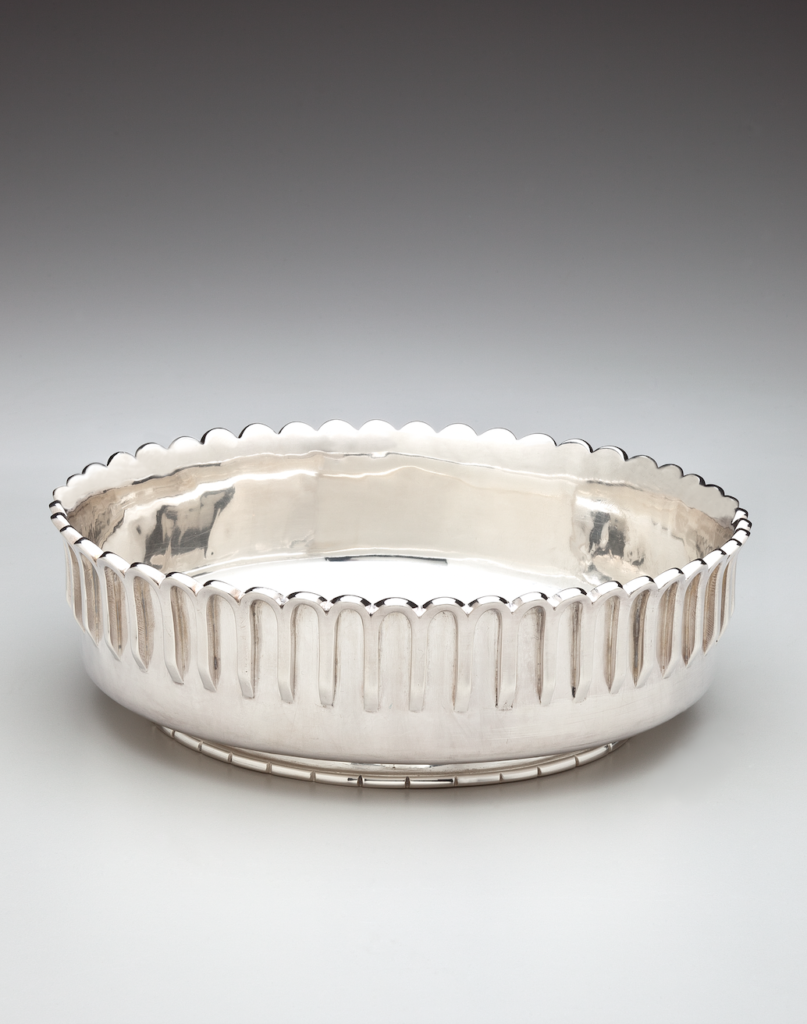
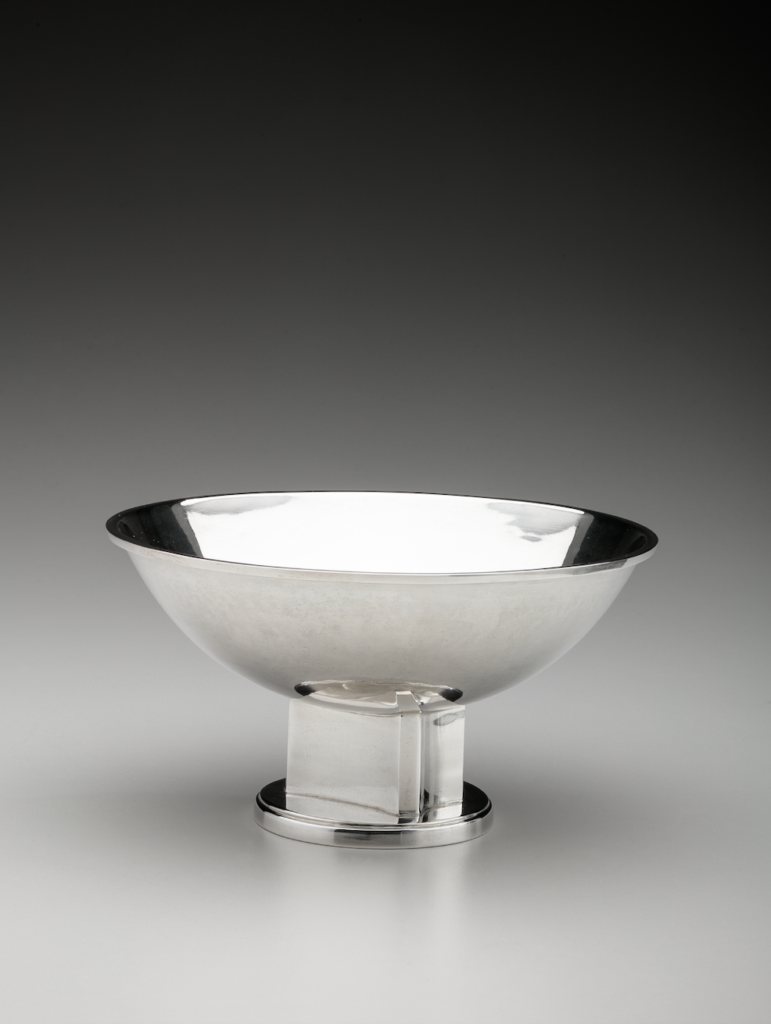
Two more pieces of silver acquired in 1929 underscored the art and craft aspects of the fledgling silver collection: a pear-shaped colonial mug by Bostonian Daniel Henchman donated by Bamberger and a striking modernist bowl by immigrant craftsman Peter Müller-Munk, purchased from the museum’s Modern American Design in Metal exhibition. The mug was an intentionally modest object—not the kind of thing connoisseur collectors like Francis Garvan or Henry du Pont cared much about, but it embodied the notion of elegant, functional design and fine craft in an everyday object. To apply modern notions, it was relatable to the people who visited the museum. Müller-Munk’s sleek low fruit bowl—its cutting-edge design combined with traditional craftsmanship—likewise would have been accessible to the museum’s audience.
“Story” was a powerful element in addition to art and craft with the 1995 gift of a rare (likely unique) covered sugar bowl donated by the last female descendant of Ann Dunkin (1740–1832) of Philadelphia, for whom the bowl was made by Elias Boudinot in the 1740s. The sugar bowl passed first to Dunkin’s granddaughter, then through generations of women until it reached the donor—who decided to give it to the museum rather than let her only child, a son, inherit it. This unbroken and intentional female line of descent adds a powerful story to the piece. The fact that it is visually amazing—a mixture of a Chinese porcelain form with French-accented rococo decoration—might be beside the point to a modern museum visitor.
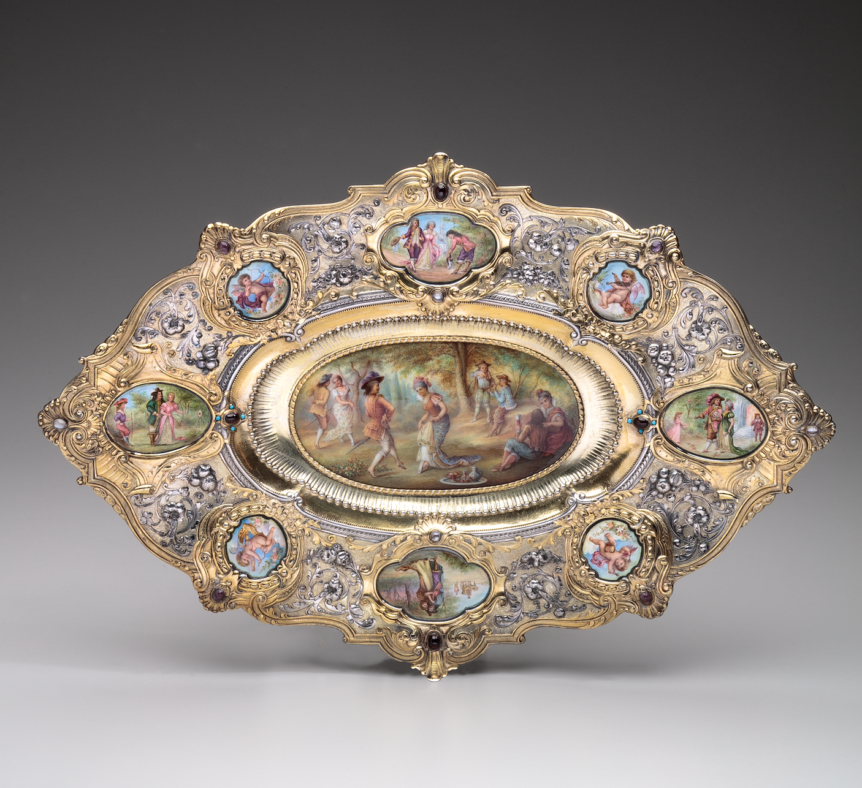
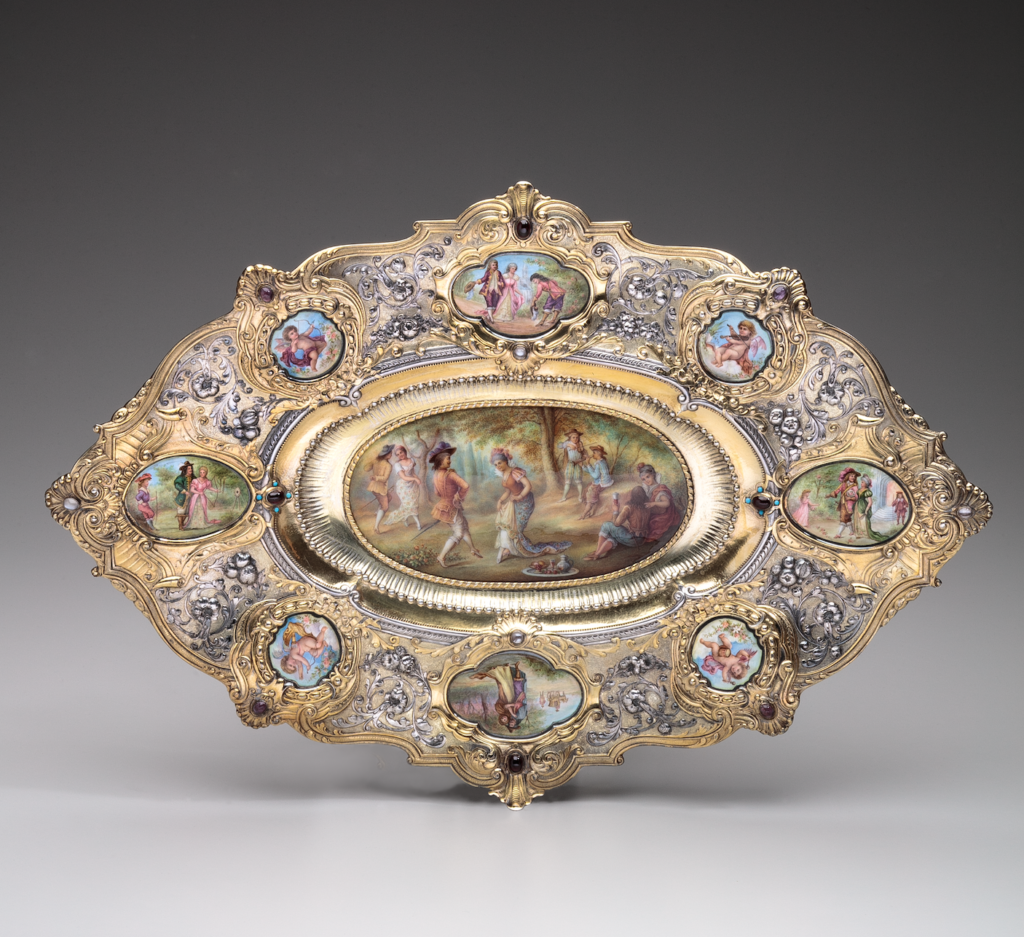
On the other hand, sometimes it is all about the art and craft. “The Dancers,” as its maker, the Gorham Manufacturing Company, called the lavish Gilded Age tray shown, was exhibited at the 1893 World’s Columbian Exposition. Showcasing both the high style European aesthetic of the moment, and the unsurpassed skills developed in American factories (thanks in large part to immigrant artisans), it was purchased as an ornament, not for function. A ring was mounted on the back so it could be hung on a wall—like a painting! This speaks volumes about the fine line (in some people’s minds) between art and decorative arts, at least in the 1890s.
Mass-production expanded the silver “story” by making owning silver a possibility for a large part of the American population by the late 1800s. American factories, using production-line technology, brought silver flatware into American homes on a scale never previously imagined. For example, a factory-made art nouveau service by the Durgin Company was purchased in Beloit, Wisconsin by an African American couple, Dora and Hiram Mays, as their wedding silver in 1904.
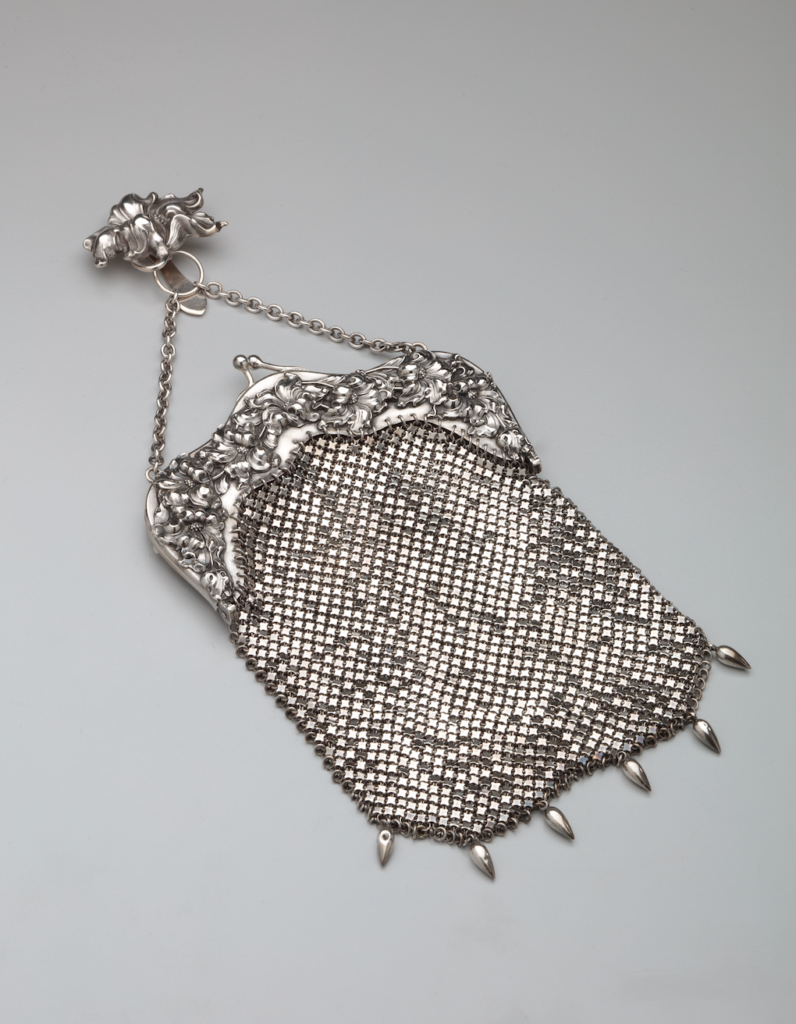
Likewise, silver jewelry and accessories, aided by the low cost of the metal (65 cents per ounce) and the use of die-stamping machinery, became accessible to a wider audience. A silver sash purse by Newark’s Unger Brothers—one of many variations offered in that firm’s wholesale catalogue—would have been affordable to middle-class consumers in 1900, whereas in 1800 it would have been unthinkable at any economic level.
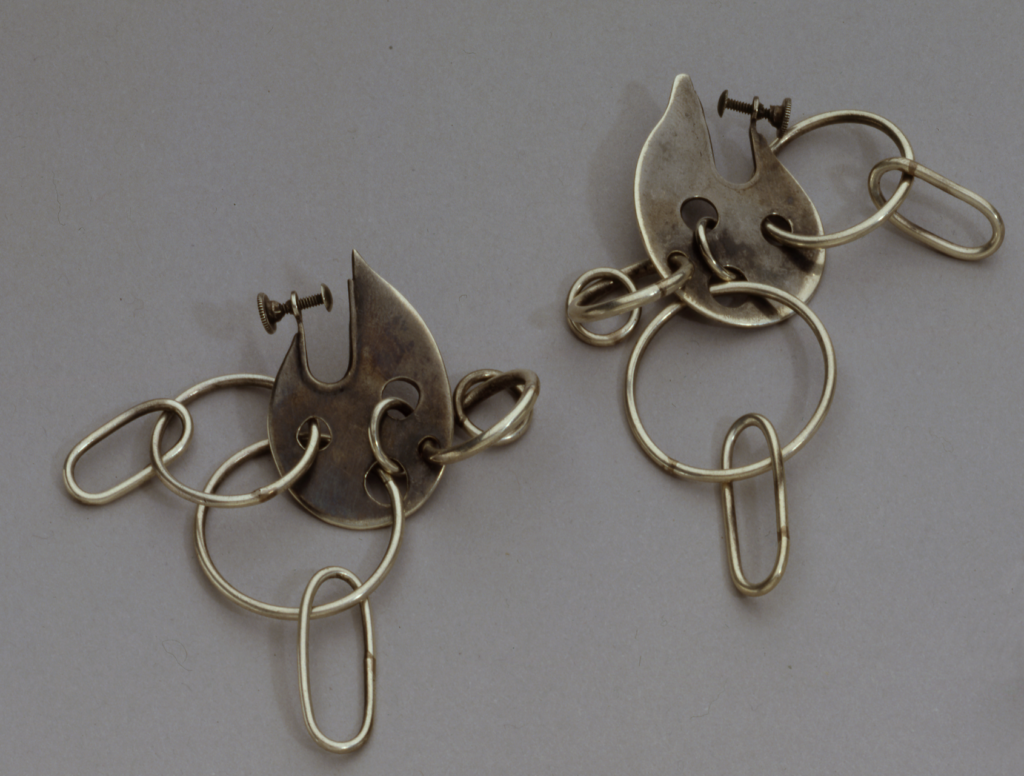
Gift of Barbara and Michael Press.
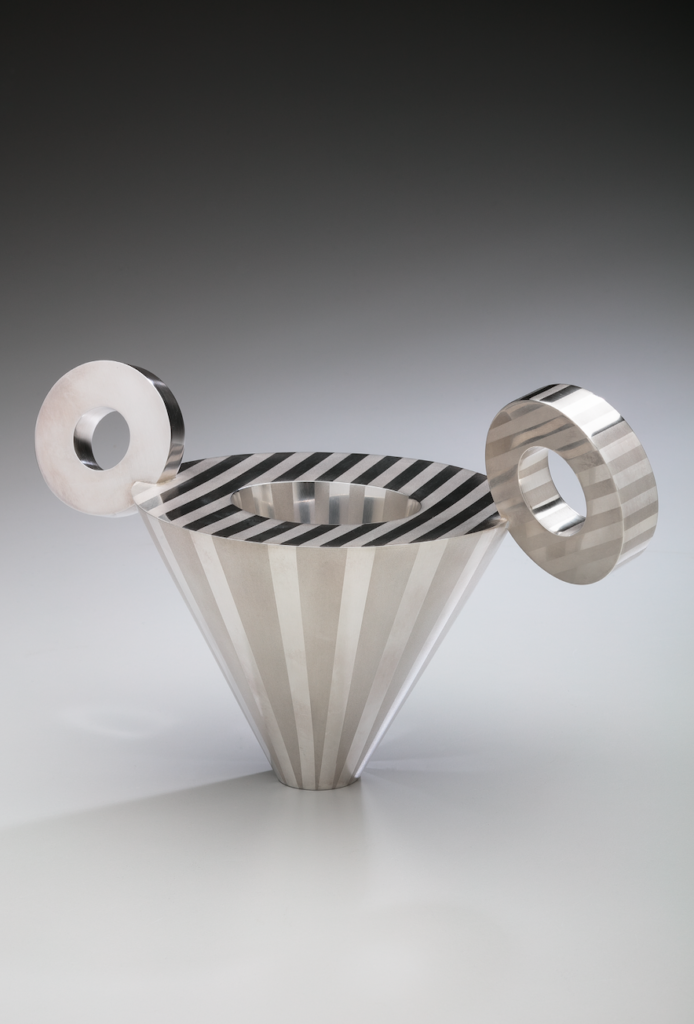
The emergence of the contemporary craft movement in the years just after World War II gave a new sort of relevance to silver objects, thanks to young designer-craftspeople. Margret Craver, a college professor in Wichita, Kansas, promoted herself as the first woman silversmith in America. By the time Susan Ewing was teaching metalwork at Miami University in Oxford, Ohio, in the 1980s and 1990s, women metalsmiths were no longer unusual. Craver and Ewing’s lives generated the history that make each piece they made a marker of its time and place.
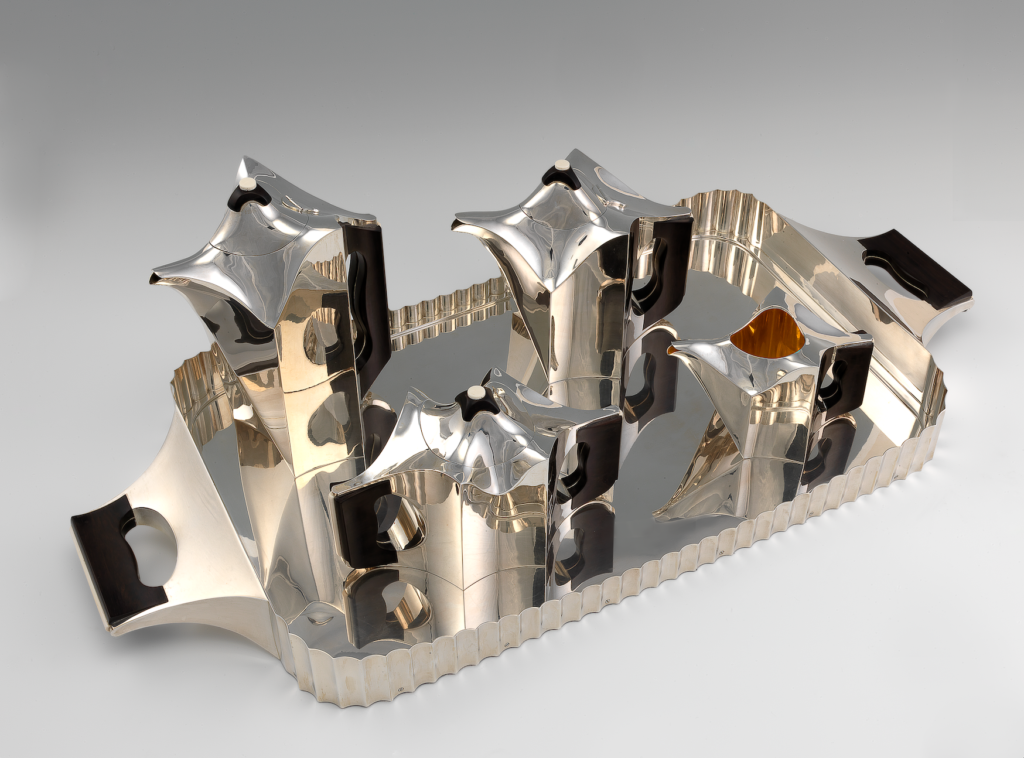
When I commissioned Italian immigrant silversmith Ubaldo Vitali to design and produce a full tea and coffee service to mark the Newark Museum’s seventy-fifth anniversary in 1984, I wanted him to create a modern interpretation of a classic American form. In my heart, I knew that the very concept of the tea service was going the way of the dinosaur; but I counted on art and craft to dazzle the audience and get them to think about the historical meaning of silver. Vitali’s story as an immigrant to Newark in the 1960s makes his work particularly appealing to the museum’s visitors.
Silver jewelry, which I also pursued as a curator, is possibly more popular now than it was a century ago. The production of one-to-five-dollar silver brooches in Newark in the early twentieth century made jewelry a part of everyday life. Thinking of the story as well as art and craft, it was important to include hand-crafted jewelry by artists like Art Smith—a gay African American artist living in New York’s Greenwich Village in the 1950s—and Fred Peshlakai, a Navajo (Diné) artist who sold modern Native jewelry out of a shop in downtown Los Angeles in the 1940s.
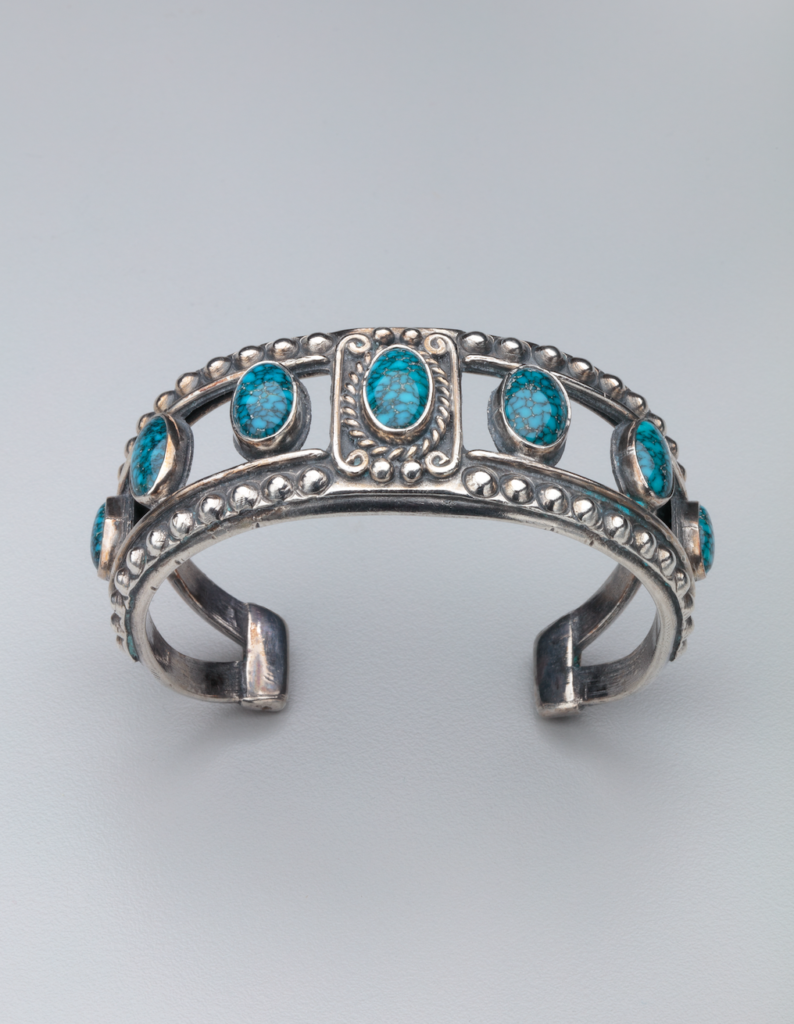
inches. Catherine Viviano Fund.
I would argue that the more irrelevant silver becomes in the evolving context of American culture, the more essential it is that it be collected, studied, and exhibited in museums. In a world where fewer and fewer people engage with silver objects in their lived experience, it is only through the power of museums talking about the art, craft, and story behind every object that the history of the material world will survive the current cultural trend toward oblivion and ignorance.


