
Save the date for a dinner party hosted by the Museum of Fine Arts, Houston because it is going to take you back all the way to the 1950s. Midcentury Menu: Dining in the Atomic Age will be on view through the end of July. This showcase of post-war food culture in North America will be a feast for the eyes and the hearts of those who enjoy putting delicious foods in their mouths and equally delicious designs before their eyes.
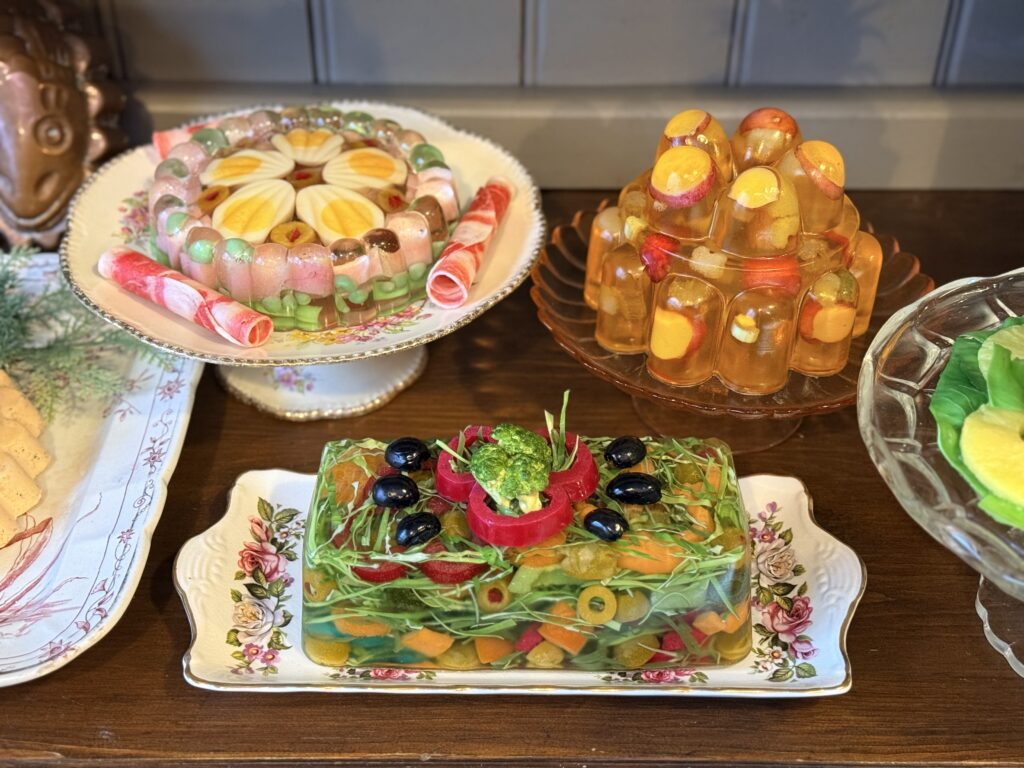
Set in the house previously owned by Harris and Carroll Sterling Masterson, Rienzi is a tasteful example of neo-Palladian architecture of the Space Age realized by John Staub. Completed in 1954, the building now houses an impressive array of decorative arts and material culture collections, including food-related ephemera ranging from the 1930s to the 1960s. Midcentury Menu touches upon “gastro” consumer culture in America after World War II, a time that witnessed the restructuring of traditional gender norms, the mass manufacturing of food products, and the emergence of a visual aesthetic that took over the marketing industry, paving the way for a new flavor of advertising. Rienzi Curator, Misty Flores, focuses a portion of the exhibition on weekly periodicals from 1952 to invoke a sense of the societal domestic ideal.
The men had returned home from the battlefields and had brought back with them the nostalgia for the times before the War. In contrast to this sentiment, the women who had run things while the men were away were ready to enter the job market with more confidence in their abilities than ever before. Marketing of household products witnessed the promotion of two forms of femininity – the one of the “homemaker” and the one of the “career woman.” This translated to the availability of quick meals from ingredients that were easy to manipulate into delicious feasts in the on-trend buffet style.
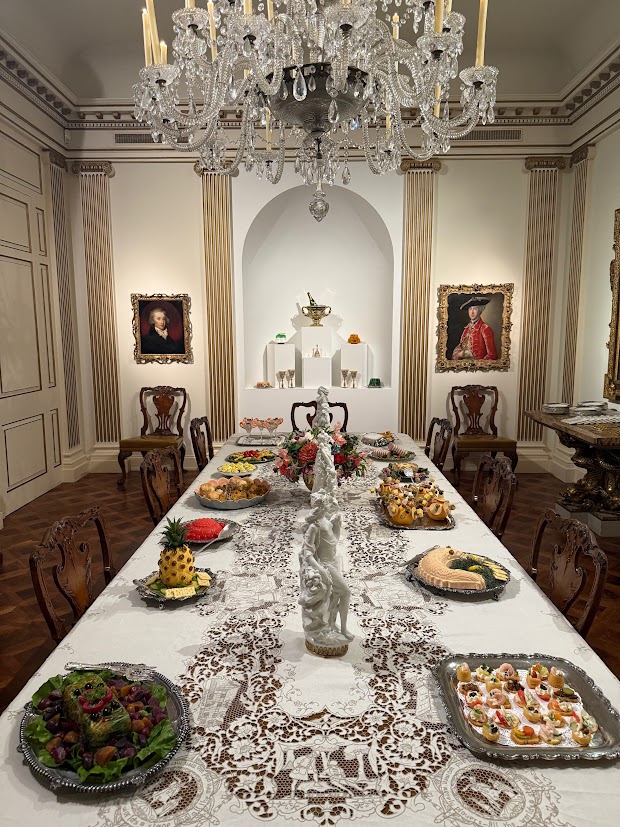
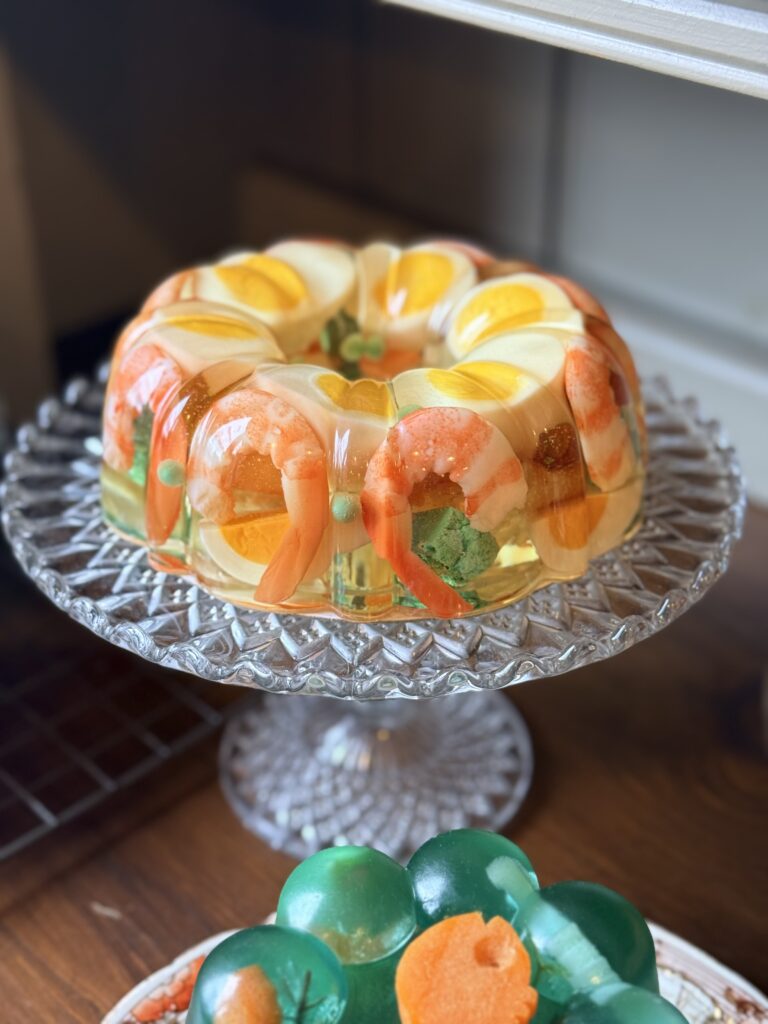
A knee-jerk reaction to wartime rationing paved the way for the dawn of the mass production of goods. Materials technology quickly evolved with the incorporation of long-lasting polymers such as Melamine and other plastics. In keeping with the synthetic-chic aesthetic of plastic, the popularity of gelatin witnessed a second wave (the first being in the Victorian era) with the era’s recipes proposing the use of the peptide in outrageous yet visually evocative preparations such as savory jellies paired with mayonnaise (the reason for which is yet unknown) and desserts in the form of household aquariums.To recreate this 1950s dinner table, Flores collaborated with food historian Joyce White along with Scotland’s Fake Food Workshop and London’s Replica Ltd. The result of this collaboration produced gelatin food replicas incorporating molded wax, a method especially used in countries like Japan and South Korea for the creation of “presentation” foods in gastronomic marketing.
A fine dining experience indeed, with a paradoxical lack of the ingestion of food makes this journey through the Rienzi even more mouth-watering. Do RSVP yes to attend this banquet – the memories alone will make for the perfect party favors.
Midcentury Menu: Dining in the Atomic Age. • Rienzi Gallery, The Museum of Fine Arts, Houston • to July 31 • mfah.org


