
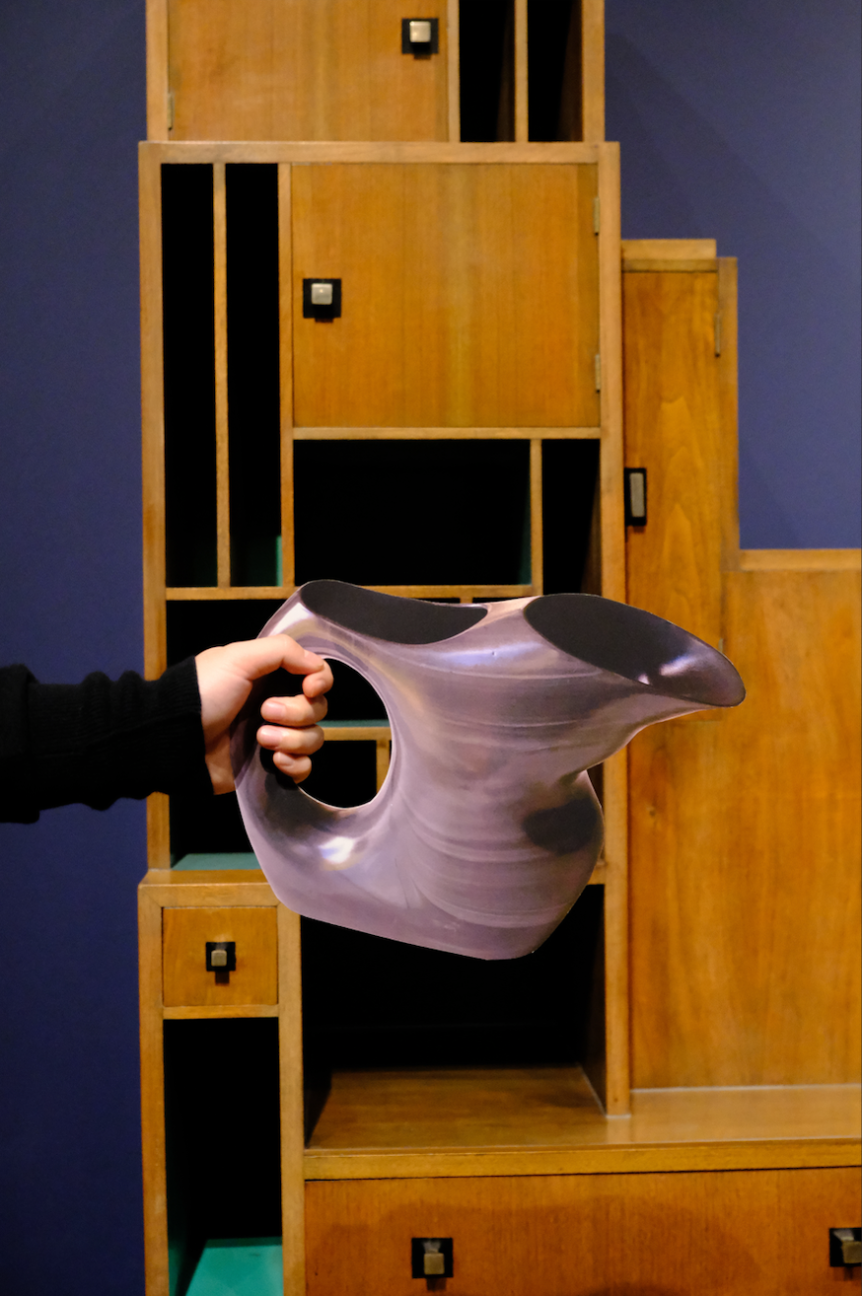
From ancient kylix to plastic jug, household vessels embody generosity, memory, and the changing meanings of abundance.
A central function of art in the home is to signal the perception of abundance. The generous form of the pitcher is one of the most democratic signs that a host is ready to share and to give succor literally. A full-bellied vessel suggesting more than one measure might be the least ostentatious symbol of plenty that comes in varied forms. We know it and feel it when we see it—whether we call it a carafe, ewer, or jug.
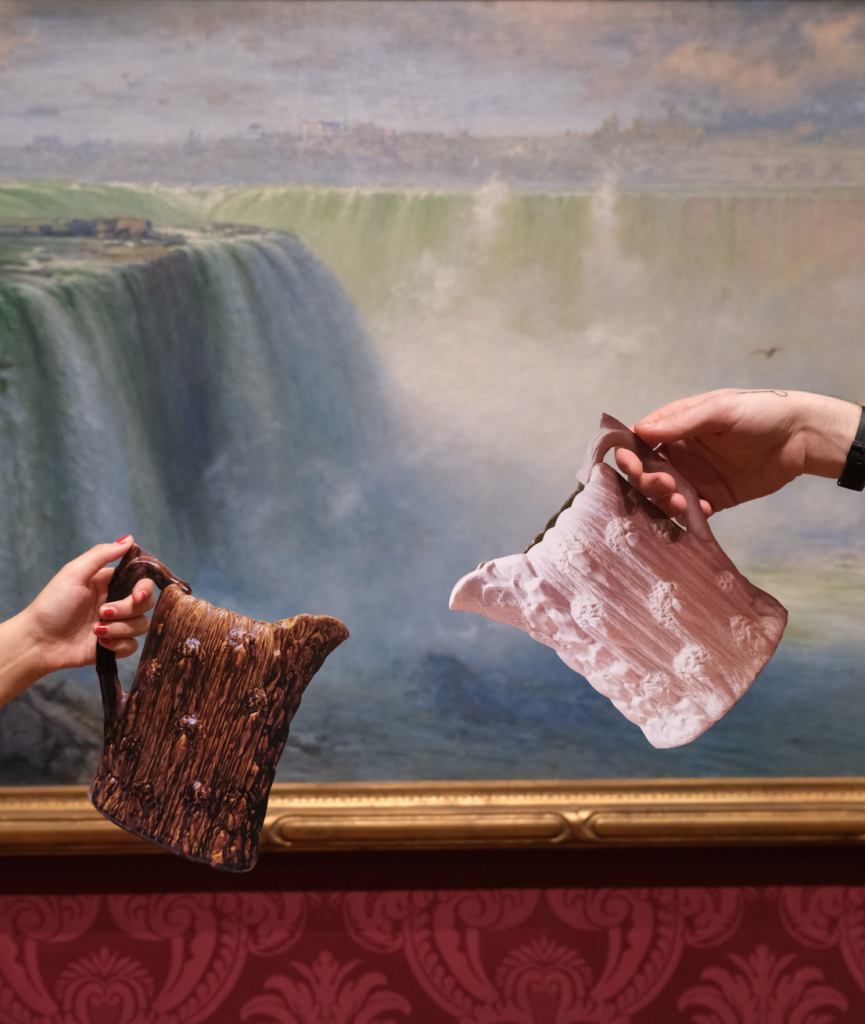
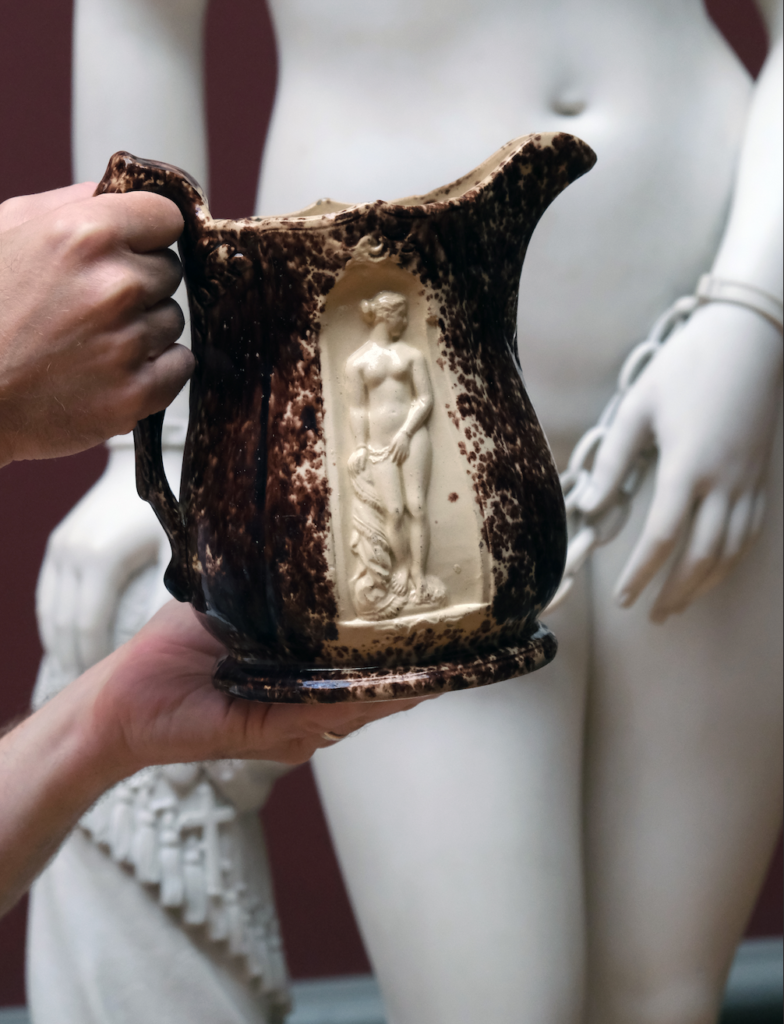
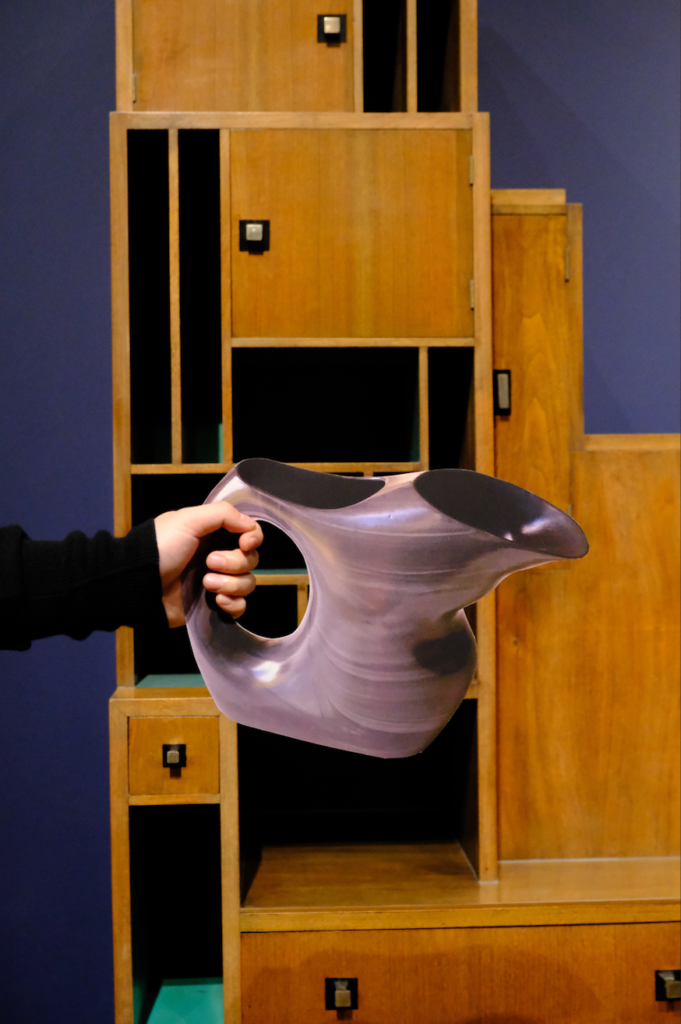
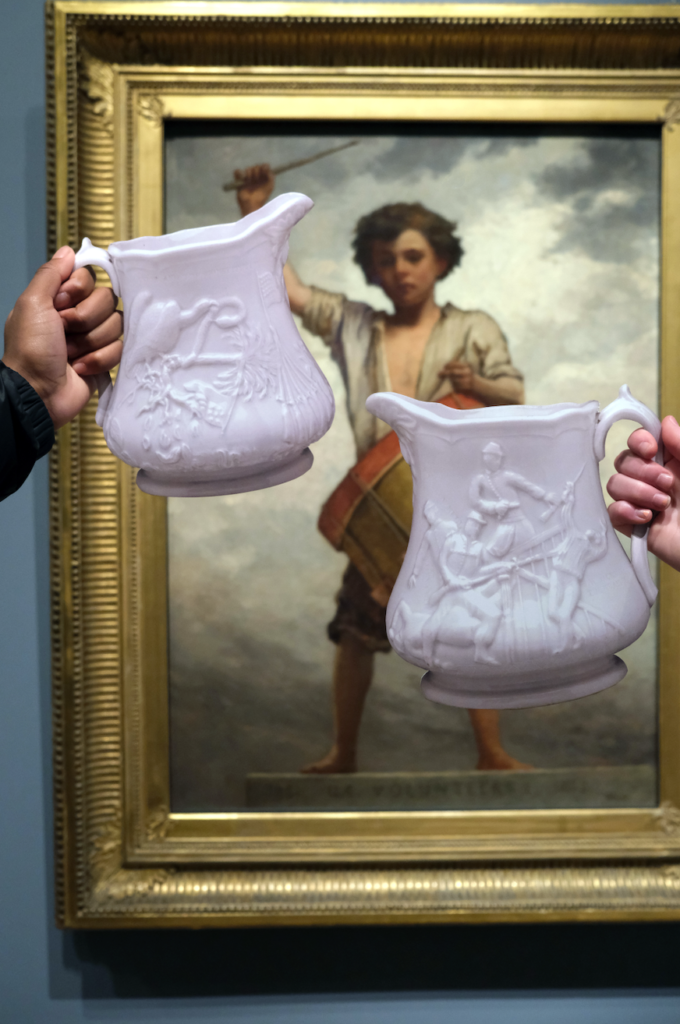
I began to write my book by playing with paper cutouts of museum-quality pitchers and admiring the ways that my iPhone snapshots created the illusion of utility. I started by clipping a color printout of the molded mid-nineteenth-century Cascade design, called Niagara Falls by some, that depicts a cataract and rocks in bas-relief: this design made “Manifest Destiny” a hand-held potable slogan. Attributed to the United States Pottery Company operating in Bennington, Vermont between 1852 and 1858, the image of propulsion and power had virile connotations and alludes to a nation harnessing water to further industry. Imagine consumers appreciating the jug’s suggestion of potential wealth through industry: the products of Paterson’s and Lowell’s textiles mills, the breads made with Rochester flour, or their houses built with lumber from a local sawmill. Cascade miniaturized the popular getaway Niagara Falls and one of the compelling attractions of the 1876 Centennial Exposition, the artificial “Great Cataract” in Machinery Hall. Condensing nature with artifice, the jug was made in what was then called Parian, a porcelaneous stoneware, and in earthenware with a brown Rockingham glaze.
The design was considered thunderously American and still renders the concept of untrammeled, unending resources into tactile belief. Using scissors, I turned that day’s PowerPoint slide talk into a teaching prop to hold in front of the MFA Boston’s paintings of Niagara Falls: learning by proxy and facsimile is the norm in art history. Holding a three-dimensional commodity usually out of reach under a vitrine gave my students a chuckle. And it gave me an idea for a book and for illustrations that reintroduce the pleasures of vessels within reach.
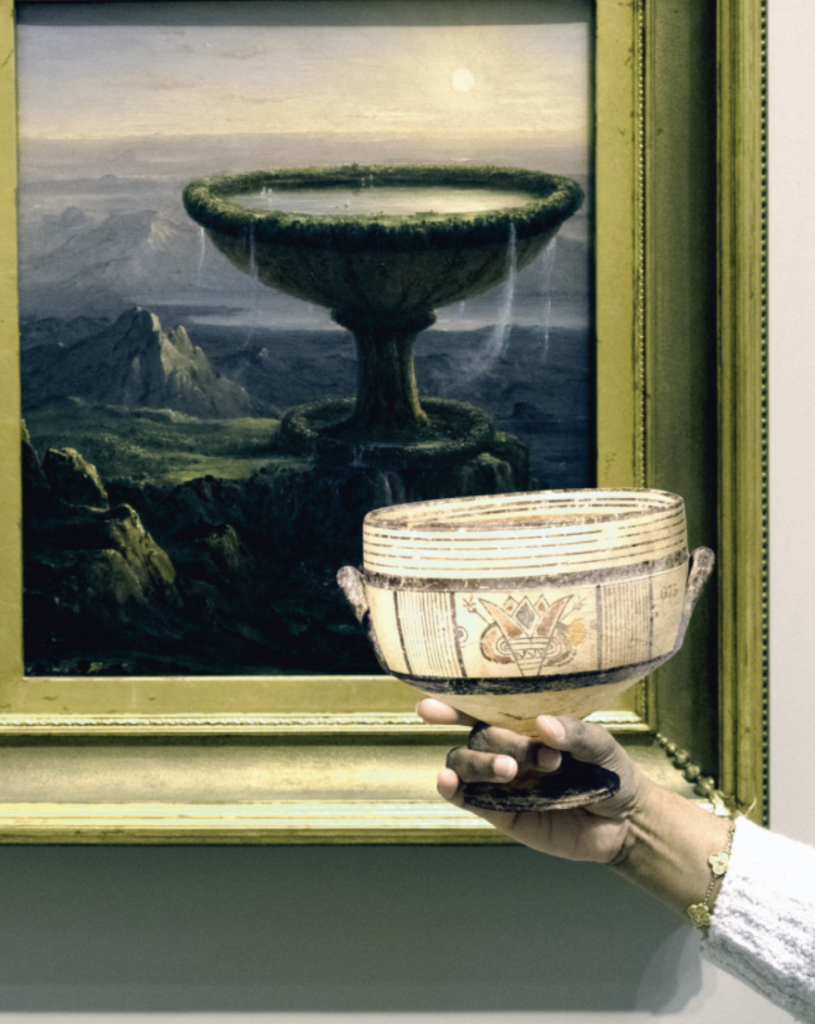
My own sense of home and feasting is embodied by two vessels, a Cypriot version of a Greek kylix and an orange Rubbermaid pitcher. The ornament on the former beguiled and terrified me when I was a child, whereas the colorful plastic was symbolically apt for the juice my family mixed in it each morning. My uncle had purchased the ancient pot at an antiques shop as a wedding gift for my parents. These examples begin and end my new book, Pitchers of American Life: Art Within Reach (Bloomsbury), and if they seem preposterous to situate in the same breath, let me sketch out their overlap in my Venn diagram of “art in the home.”
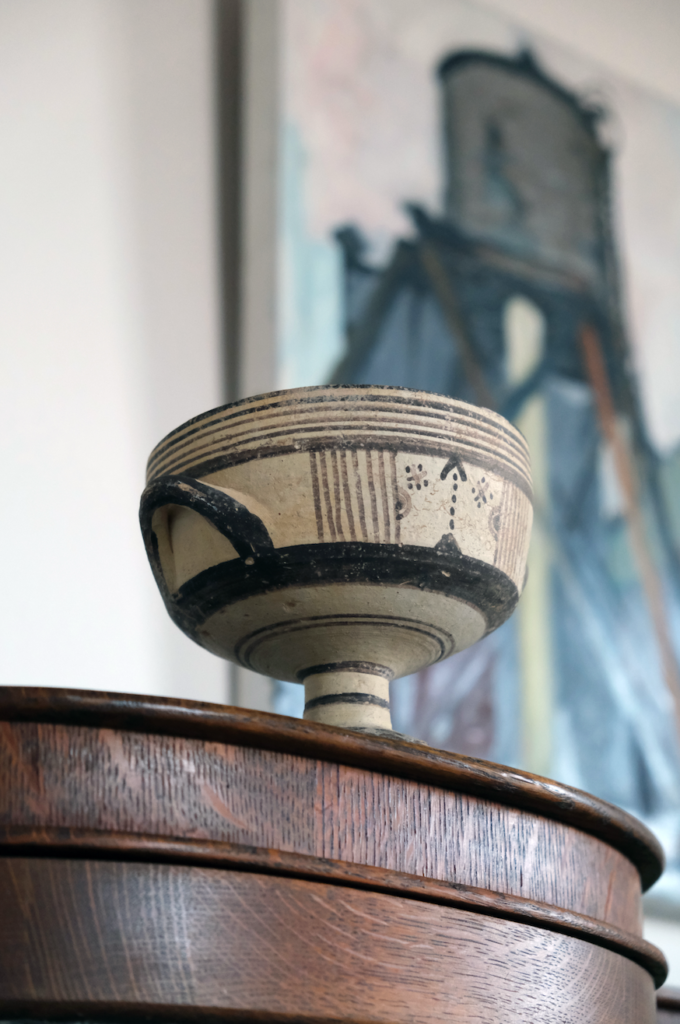
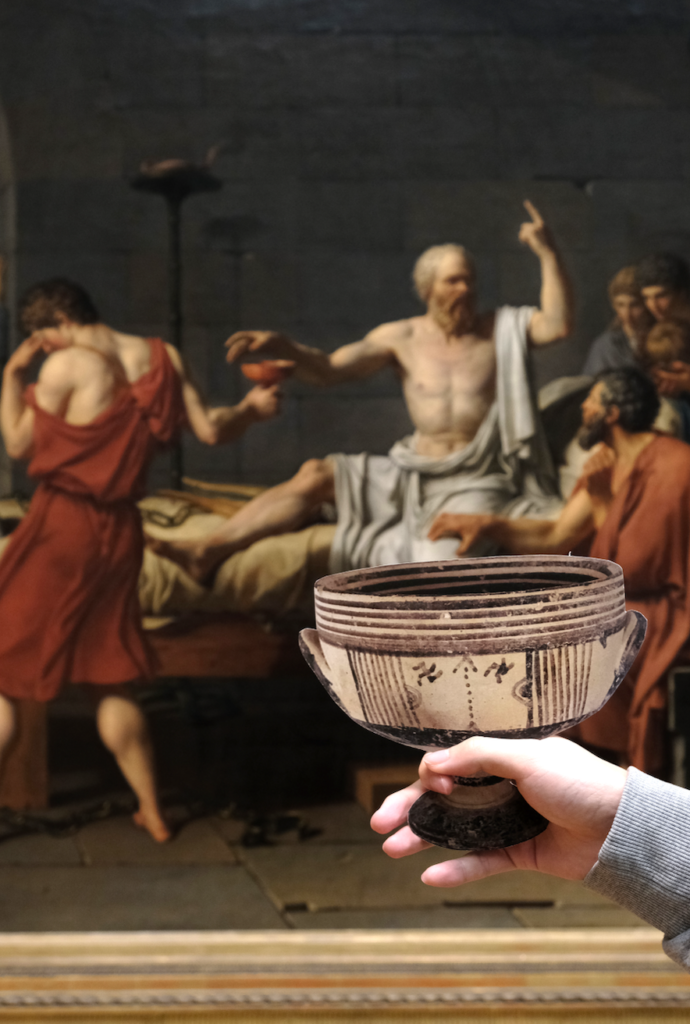
The old bowl-on-stem was roughed up and grittier than our plaster walls blistered by radiator steam. As the first antique I encountered, it embodied all that word can signify to the ignorant child, both decrepitude and endurance, veneration and obsolescence. The surface decoration conspired into a beguiling menacing face. Since the brittle historic vessel was art, I was not to touch it. And yet I imagined sipping from the shapely form and—to conceive of art as a wondrous usable tool—as a stratagem for sharing.
This wedding present was preserved up above our paws, and it seemed to look down on us. When I worked up my courage to touch it, standing on a wobbly plastic stool, I gained my first inkling of how an inert object might resonate psychically. It connected me to imaginary worlds and fantastical geographies. The big cup appeared ambiguously portable and monumental—and obviously relational, to hold more than one portion. Art was a communal tool. Although this is not a stereotypical jug form, it is where I began to think about how drinking vessels function as art.
This form is usually classified as a kylix. Using the Greek term is an example of the evasiveness of ancient art—and of hierarchies in our imprecise nomenclature of Mediterranean cultures. The Iron Age antique has dark linear marks, iron-rich brushstrokes on a creamy terra-cotta body. The confident painting was struck on a decorator’s wheel. It is paradoxical that my romanticization of an archaic world unsullied by industry grew roots inside such a streamlined instrument. Today, seeing the ornament as a design mechanically applied on a wheel enriches my appreciation for this vessel.
Before you warm up to it, you might ask whether its likely findspot in a burial might undermine its charm of implying domesticity. Feasting and funereal functions remain as divergent as the terms popularized by Friedrich Nietzsche—Dionysian intoxication in contrast to Apollonian clarity. Do we see the commodities used in interment as resonating with life or death? My foggy childhood fantasies about it have dispelled. I thought I knew it and that it was my friend; now I recognize that I know little about it with certainty.
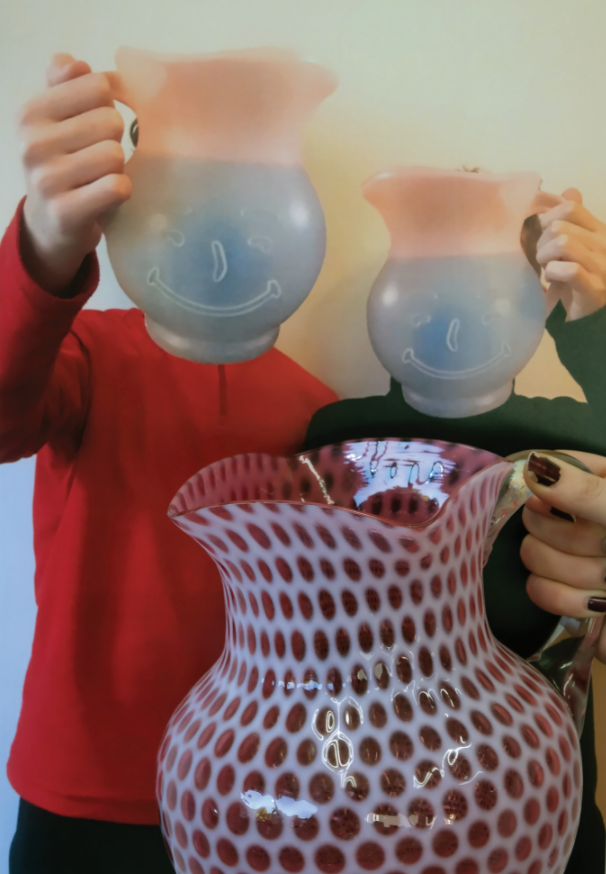
When the Metropolitan Museum of Art opened, it displayed a large collection acquired by Luigi Palma di Cesnola, an American ambassador to Cyprus for a decade. Along with the reputation of this former Civil War officer, the art was at first revered and then demoted. By the end of his tenure as museum director his connoisseurship and the relationship of the more than six thousand artifacts to classical ideals were increasingly regarded as a con job. In 1880 the New York Times declared, “There are too many of these Cyprian objects. They may illustrate quite exhaustively a certain early period of art, but then it is bad art, and shocking bad art at that.” By 1900 the museum had replaced some of its Cypriot collection with plaster casts, a canon of greatest hits of European sculpture and architecture. The museum sold much of the Cesnola collection at auction in the 1920s, reaping more than $100,000. Such cycles of hype and devaluation beach antiques far from their origins, enabling the average middle-class family to acquire an ancient Greek kylix.
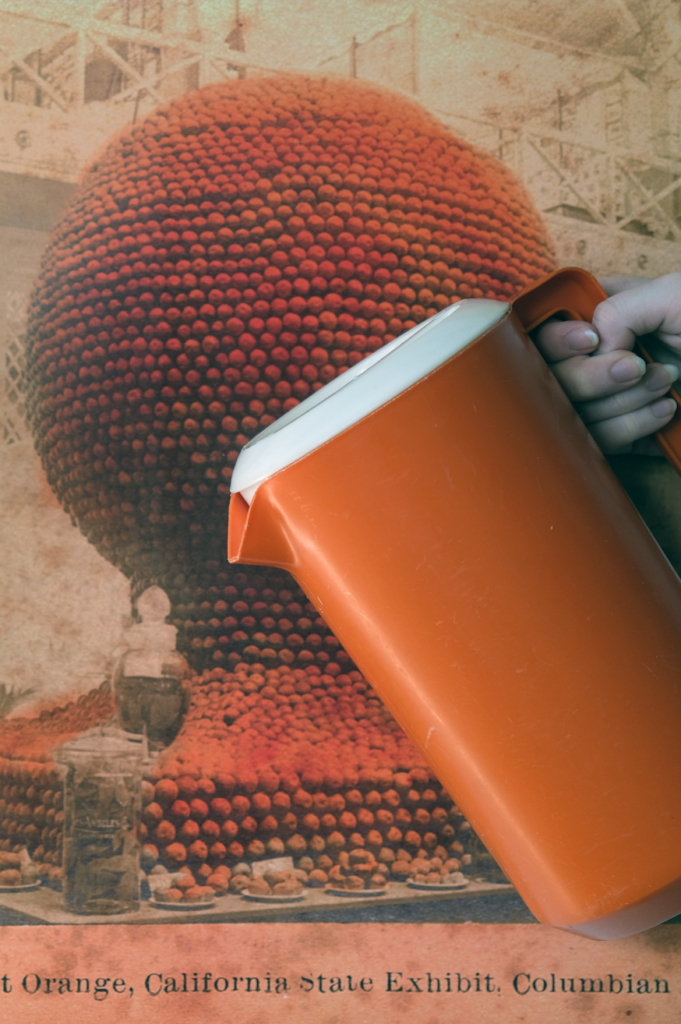
In contrast to this bona fide antique, I regard the first jug I used daily, the plastic pitcher in which my family diluted orange juice concentrate with water, as another archetype. It taught my fingers balance and introduced me to the world of hand-held tools. Today, paradoxically, it personifies the environmental permanence of plastics and the dysfunctional habits of convenience in an affluent society. However, some on eBay do treat it as a “collectible” and grant it the honorific “vintage.”
The jug is not merely my own souvenir but a means of appreciating the historicity of plastic, which is often casually dismissed as “useful, affordable, but as soulless as a traffic cone.” And yet, when we are lost in a fog, the appearance of a roadside orange marker can be beautifully soothing in the most useful way. Our orange pitcher had a seductive presence in my childhood—it was a statuesque form. Plastic made this tool “child safe”—accessible.
Plastic conflates our sensorial antipodes between lust for shiny new commodities and revulsion at ones that are irrevocably grubby and scratched. No other material toggles so quickly in the consumer experience between clean and grotesque—like the downward trajectory of a toothbrush. While a plastic jug manifests such extreme emotional highs and lows in consumer culture, it maintains the role of archaeological shard as a temporal diagnostic, like ceramic. The chemical permanence of polymers now situates this artifact as a marker of “petromodernity,” the “Plasticene,” or the Anthropocene—take your pick of pessimistic categorizations. It would leach out toxins and endocrine disruptors if I once again began to keep orange juice in it. New high-density polyethylene is marginally less worrisome. Regard the Rubbermaid also as a fossilized aesthetic made of fossil fuel: it occupies a previously unimagined condition.
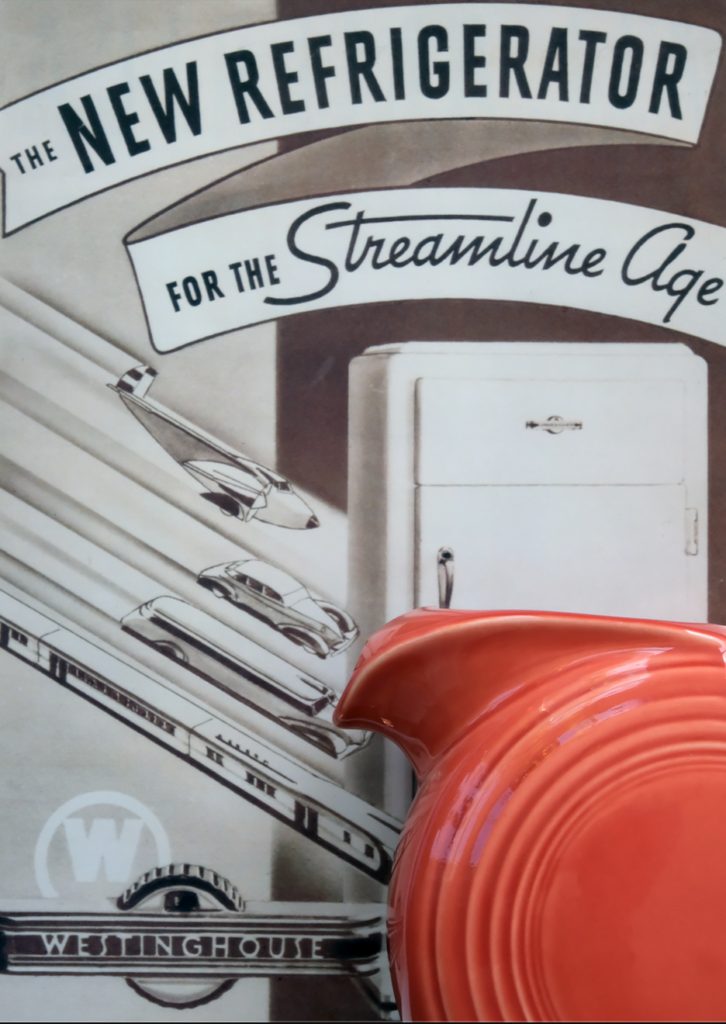
Can we touch such temporal and aesthetic complexities in a mid-century middle-class jug? The taut cylinder embodies pure geometric form. The sturdy handle is shaped like an I-beam, good for both young and old hands to grasp. The inserted white top could rotate from being fully open to a gated position that functioned as an “ice shield.” The handle, lid, and body are pleasure-giving interfaces when I touch them once again. Diluting frozen concentrate with a wooden spoon into a slurry and then a potable beverage was a task requiring diligence. The orange muck could slither out from the cardboard tube as one unit. If the contents melted completely, the job was difficult and messy. I hoped the gate would save me when the jug was near empty from the lumps of sickly-sweet pulp that I loathed.
The patent holder on my childhood jug, Richard D. Dilyard (1938–1986), lived in Wooster, Ohio, where the Rubbermaid brand was created in 1957, and he designed it in 1971. Comparing the schematic drawing of his patent application with the previous registrations acknowledged, Dilyard’s form is more rigidly cylindrical than the more curvaceous tapering bodies that preceded it and came afterward. His geometric design is emphatic because there is a minimal foot; earlier and later designs had fluted inset bases. It echoes an extrusion of pipe. At first glance, Dilyard appears to have integrated European design examples, as it relates to Carl-Arne Breger’s plastic juicers made for Sweden’s Gustavsberg factory in 1967. Dilyard’s patent application diminishes in this light to being derivative of Scandinavian design such as Sven-Eric Juhlin’s double-walled lidded jug made by Gustavsberg. Perhaps a Rubbermaid executive handed a bunch of advertisements clipped from European shelter magazines to Dilyard to synthesize. If the Ohio designer only Americanized Swedish modernism’s clean lines and inset gated lid, his design still connects to a constellation of forms: this jug has museum-grade kin.
None of us want to become antiques or relics, we prefer to caress such things as if they asserted our dominion over time and space. Anti-aging devices often come in pill or injection these days, but those of us who prefer to touch ceramic, books, oak, glass, or silver might admit that the dual pull of kylix and Rubbermaid together provide some rapport with our fates and fissured mental states. “To be modern,” Marshall Berman wrote, “is to experience personal and social life as a maelstrom, to find one’s world and oneself in perpetual disintegration and renewal . . . . To be a modernist is to make oneself somehow at home in the maelstrom.”
Uncertainty still dogs me each time I ponder how we might “make ourselves at home in a constantly changing world,” as Berman was a fixture on the Upper West Side of Manhattan of my childhood whose girth and high-pitched voice seemed monstrously undomesticated. The lolling gait of the philosopher and his occupancy of a full Broadway sidewalk made me cross the avenue to avoid his inquisition or self-absorbed eyes. And yet I have stubbed my toe upon his words in dozens of art catalogues and cultural histories. Berman identifies the paradox of making a home in a maelstrom. Our touchstone objects, like the kylix and plastic jug keep us guessing whether all humans only know how to make a momentary perch. If houses endure two generations, they appear marvels. Art reminds us how we are made and how to remake ourselves, or at least it does if we can touch it and sidle up to it, like when we pet a dog or another body traveling through the game of life.


