
At Feather & Form in North Carolina’s Northern Outer Banks, ducks, decoys, and coastal tradition take flight.
When a pitch landed in my inbox inviting ANTIQUES to cover Feather & Form—a weekend in March dedicated to North Carolina’s storied waterfowl heritage in the Northern Outer Banks, hosted by The Sanderling Resort—my mind drifted, unexpectedly, to the 1999 rom-com Notting Hill.
You know the scene. Julia Roberts plays Hollywood starlet Anna Scott opposite Hugh Grant’s travel bookstore owner William Thacker. Caught off guard when what he thought would be a private rendezvous at the Ritz turns out to be a press junket, Thacker poses as a journalist from Horse & Hound to gain access. Feather & Form, Horse & Hound—my feathers ruffled with excitement. After all, I’m also just an editor, sitting in front of her laptop, asking myself if I love a story’s potential.
I accepted the invitation to attend the three-day immersion in the town of Duck. Unfamiliar with duck hunting and decoys (I’ve never even seen an episode of Duck Dynasty), I felt, at first, like a journalistic imposter—much like Thacker. But Feather & Form proved educational, offering as much to the novice as to seasoned collectors aboard our Feather & Form flock.
The curated weekend celebrated the region’s deep connection to waterfowling, decoy carving, and coastal conservation—cornerstones of Currituck County culture since the late nineteenth century, when industrialists discovered what locals already knew: Currituck, an Algonquian word, translates to “land of the wild geese.”
Duck and its neighboring towns preserve—confit, even—an extraordinarily rich coastal culture. The Outer Banks, a two-hundred-mile chain of barrier islands shaped by sea and sound, is often associated with the Lost Colony or the Wright brothers. Yet another history unfolds along the Atlantic Flyway.
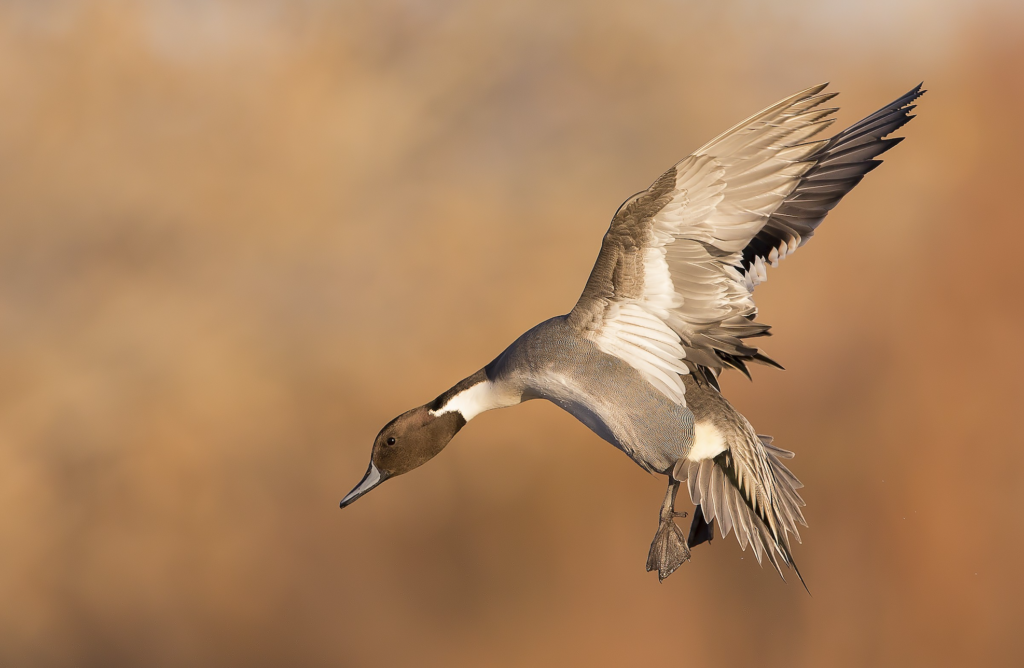
Each winter, migrating birds descend on marshes to rest and refuel. There are accounts of skies blackened by birds and hunters killing seven to eight hundred a day. From this seasonal rhythm emerged a distinct way of life: market hunting (exporting duck meat to northern restaurants and feathers to hat makers), grand Gatsby-like hunting lodges, and increasing demand for locally built boats, decoys, and expert guides. From 1870 to 1900, Currituck was recognized as a sportsman’s paradise. By 1900, a goose could fetch $2.00 ($52.57), a Red Head duck $2.50 ($65.71), and a Canvas Back $6.00 ($157.71)—serious sums and a way for families to fatten their income.
Photograph by Christine Hildebrand.
After writing my first travel article, I realized it is one thing to write about antiques and another to encounter them in the landscapes that produced them. Decoys, carving tools, oyster plates, and old oyster cans are not isolated artifacts, but objects embedded in place.
Photograph by Baxter Miller of Sandbox Collaborative.
In Kitty Hawk, antiques shops offer glimpses into local material culture. At Freedom Antiques, owner Susanne Norris—who has been collecting for over thirty-five years—notes that many visitors come specifically in search of decoys. Outside, hand-painted duck-shaped signs point the way; inside, walls lined with oyster plates reward closer looking. On one, a tiny red crab scurries across a bed of lettuce, as if escaping before being swallowed—perhaps a stowaway from the sea.
Driving south on Highway 12 toward The Sanderling, the road narrows. Live oaks bend toward one another, forming a tunnel sculpted by wind. At sunset, it’s worth pulling over along the sound side—or at sunrise, heading straight to the beach. No two skies are the same. You may even find yourself quoting Thacker: You are lovelier this morning than you have ever been.
Miller photograph.
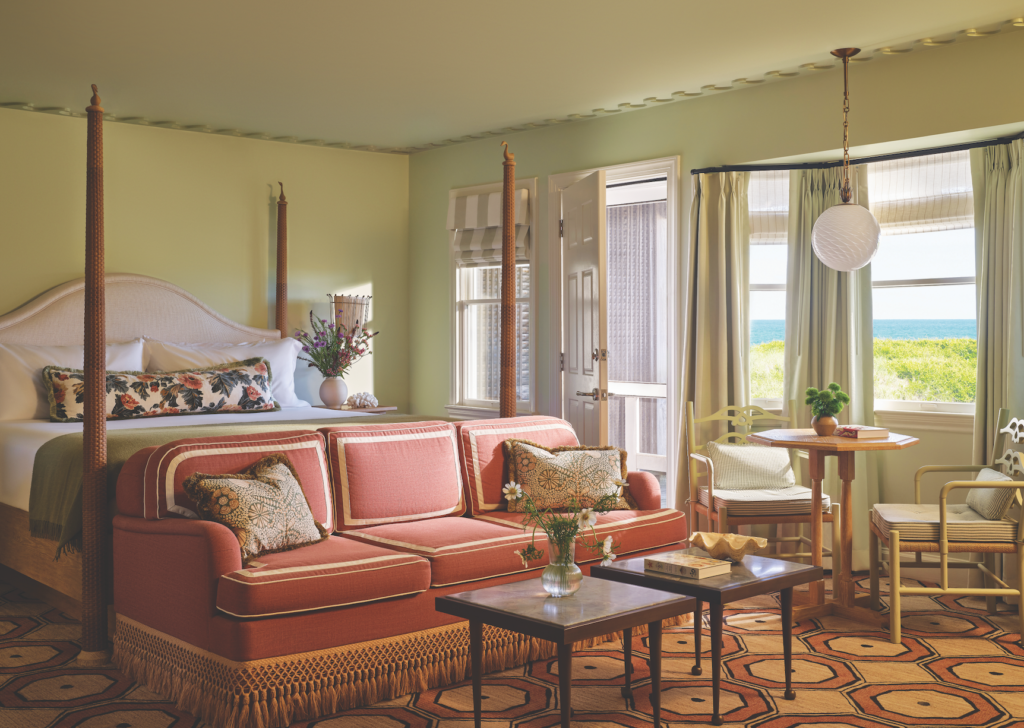
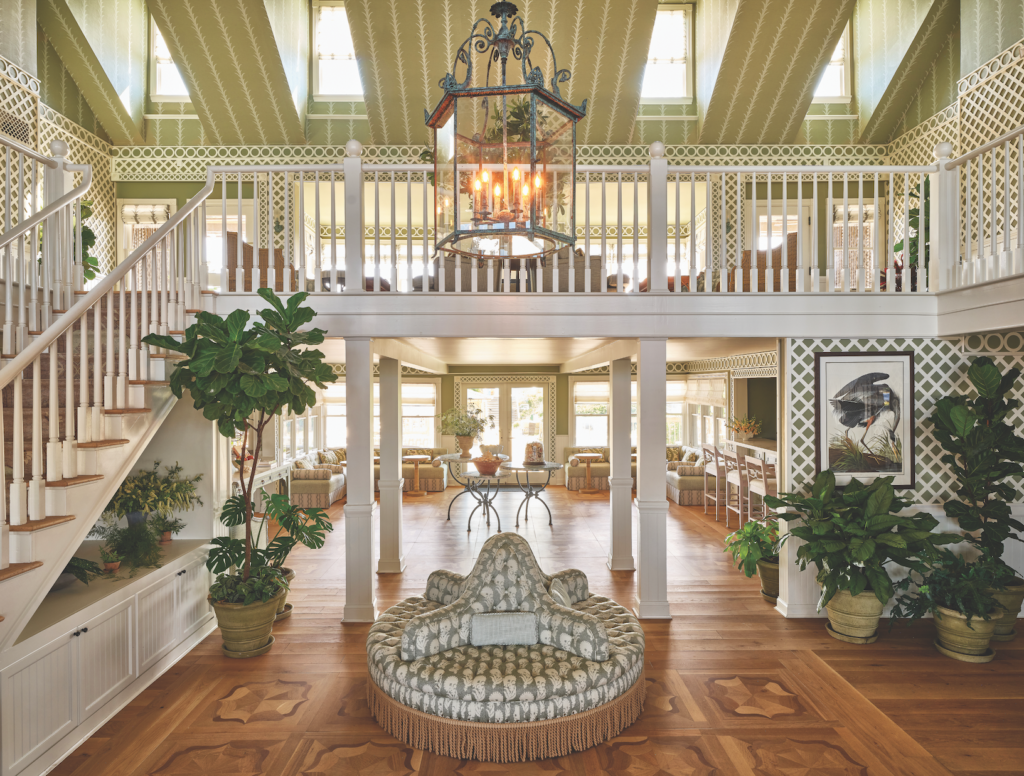
At The Sanderling, coastal ease meets refined charm. The interiors feel lifted from a Serena & Lily catalogue—light-filled, relaxed, quietly elegant. A communal library invites reading and games; outside, a fire pit draws guests for s’mores and stargazing. Bikes and binoculars are available to borrow. There is a bocce court, a number of pools, and a spas—but the true draw is the ocean.
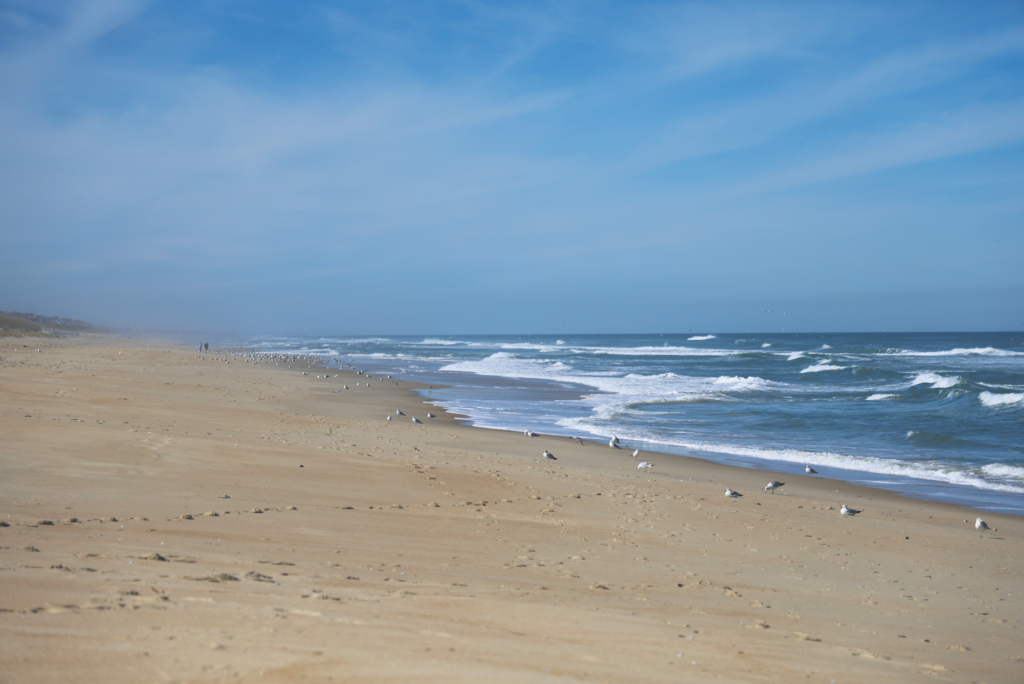
A short walk over a dune reveals a wide, white sand beach. Shells scatter the shoreline—some intact, others chipped, some glowing with mother-of-pearl—alongside the occasional half-eaten crab leg. Here, observation becomes ritual. Bring a sketchbook if you feel inclined to channel your inner Audubon, and a small bag to tote treasures (though the largest shell will inevitably hold the rest). In the off-season, the beach can feel entirely your own—a foreign concept come summer.
To understand the region, a visit to the Currituck Maritime Museum is essential. Locally built boats rest inside, while black-and-white photographs line the walls—men with their ducks lined up, a woman surrounded by labs at the beach, everyone smiling. A business card reads: “John N. Aydlett. Entertainer of sportsmen. Goose shooting specialty. Down where fowl fly—.” The snapshots and artifacts feel like flipping through the town’s personal photo album—evidence of a heritage passed from one generation to the next.
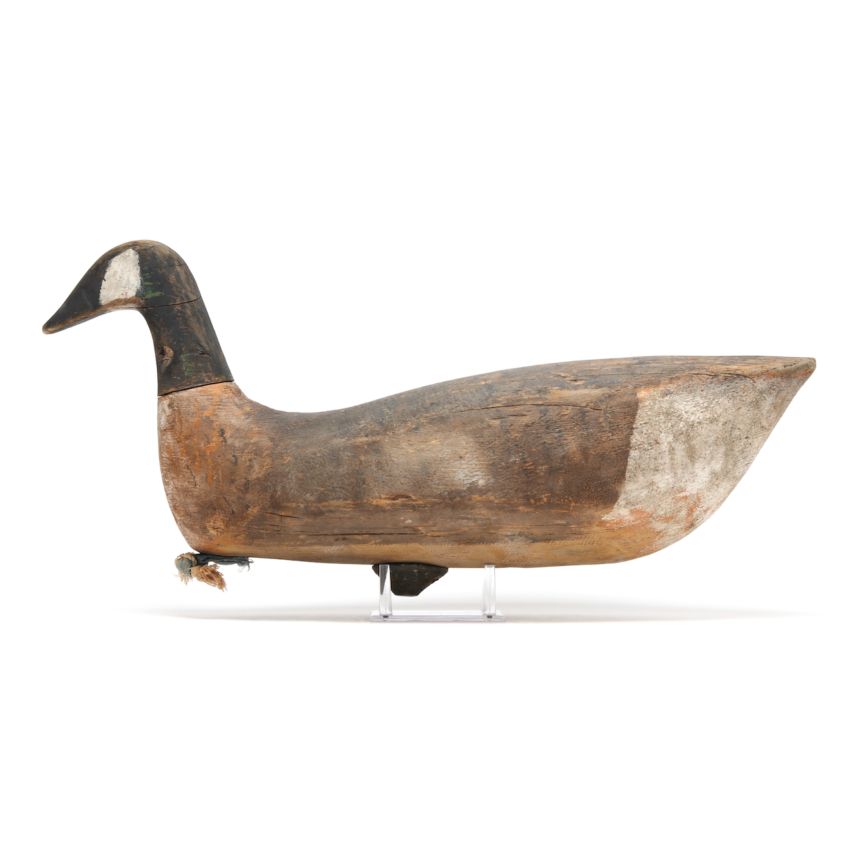
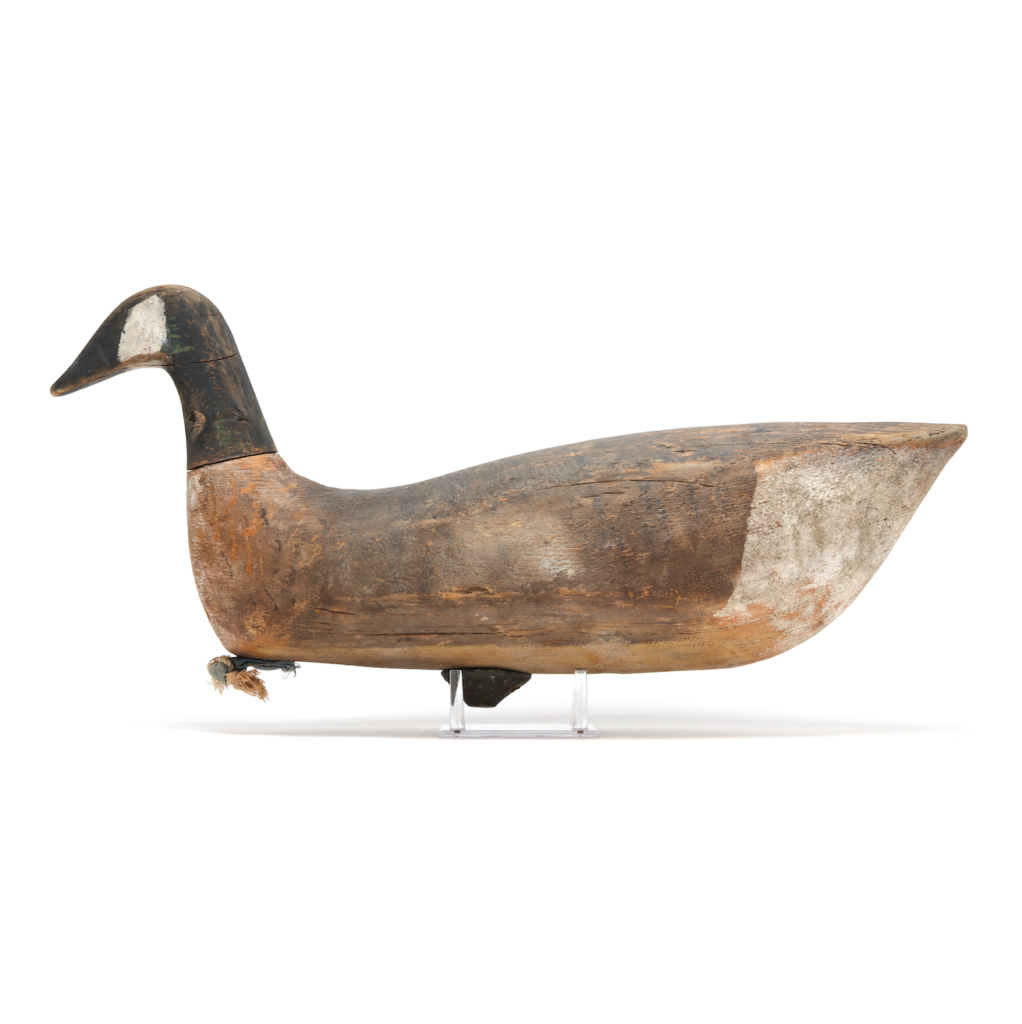
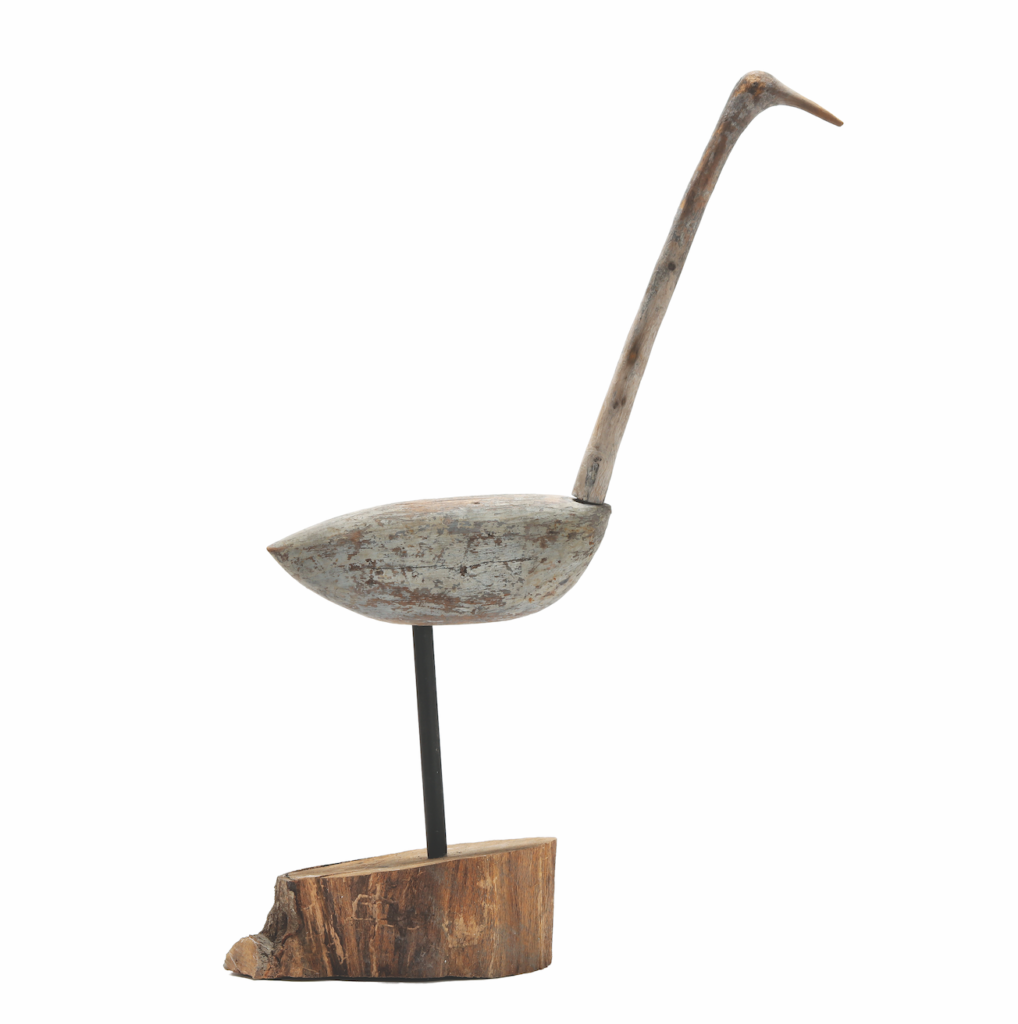
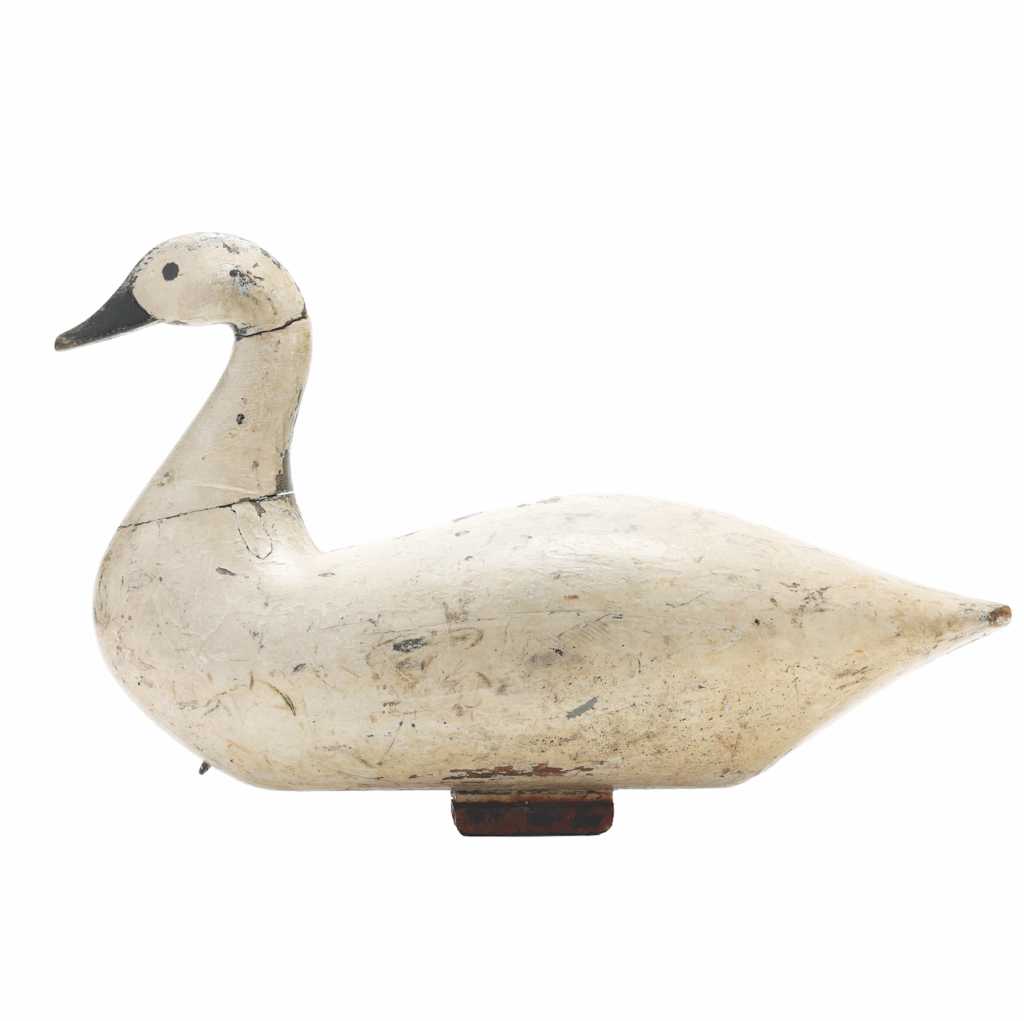
At the center of this world is the decoy—once purely utilitarian, now considered a uniquely American form of folk art. Carved from juniper sourced in the marsh and shaped with simple tools, decoys were built for function. Nails became beaks; fingers replaced paintbrushes. Some were crude, others remarkably refined. “There were those pushing their craft,” says Robbie Smith, director of Sporting Arts at Leland Little Auctions. Artisans like Alveriah Wright and Mitchell Fulcher represent distinct regional carving traditions.
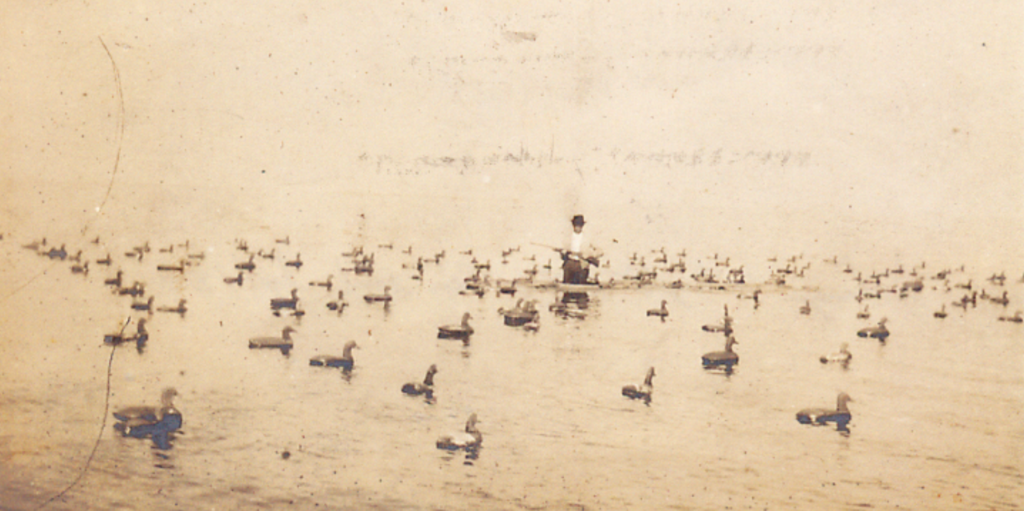
photograph courtesy of Currituck County Department of Travel & Tourism.
“Decoys are the finest indigenous American form of folk art.” Many carvers never signed their work, yet experts can identify them at a glance. The most prized examples—those retaining original paint and heads—can command significant sums.
Hundreds of local carvers made decoys for personal use before selling them to clubs and hunters to earn money. With the arrival of plastic decoys in the mid-1950s, wooden ones were often discarded or destroyed, making surviving examples rare. Once tools of deception, they now attract collectors. “Decoys used to bring in birds,” Smith notes. “Now, they bring in people.”
Hildebrand photograph.
Still, the Outer Banks has always drawn outsiders. In the late nineteenth century, northeastern industrialists built private hunting clubs along the Currituck Sound—winter enclaves on the edge of wilderness. Days began before dawn, guides ferrying hunters to blinds lined with decoys. After hours in the cold, sustained by brandy and consommé, they returned for elaborate meals featuring the day’s bag. Evenings were spent in conversation, games, and more brandy—even during Prohibition. “These men trusted each other around rifles, but they didn’t trust each other with their liquor,” Smith laughs—hence liquor lockers alongside gun rooms to keep possessions safe.
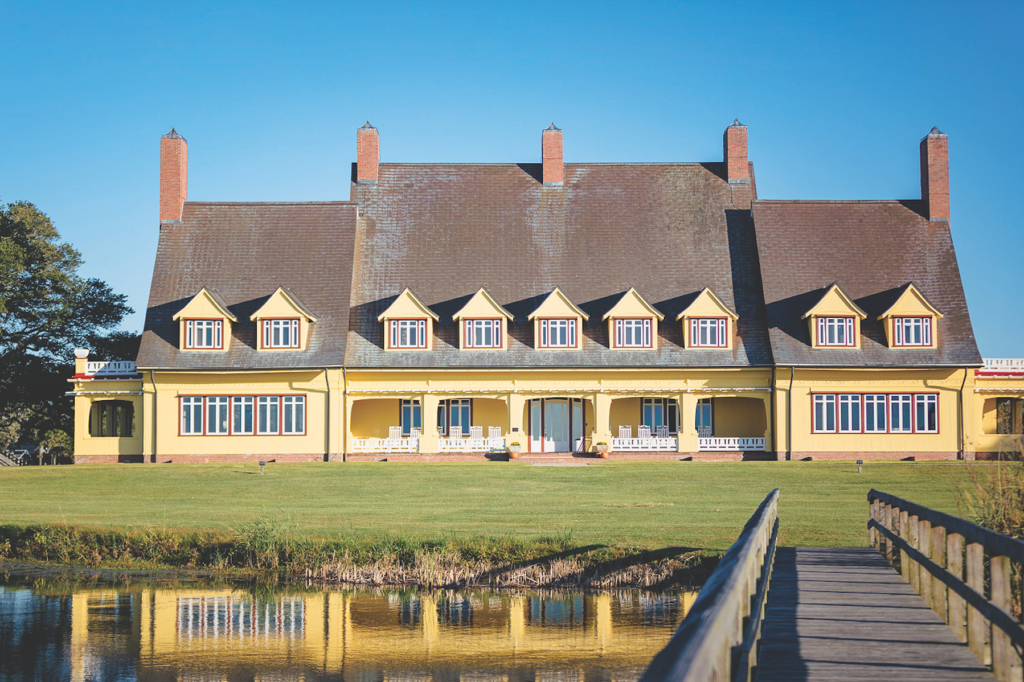
At Whalehead in Corolla, this world endures. Built by Edward Knight Jr. and his wife, the art nouveau residence features carved mahogany doorways, duck-head details, and Tiffany fixtures. The original waterlily sconces in the dining room are especially striking. Once abandoned to sand and wildlife (rumor has it that raccoons once occupied Mrs. Knight’s Steinway), it has since been restored—a relic of a particular American moment.
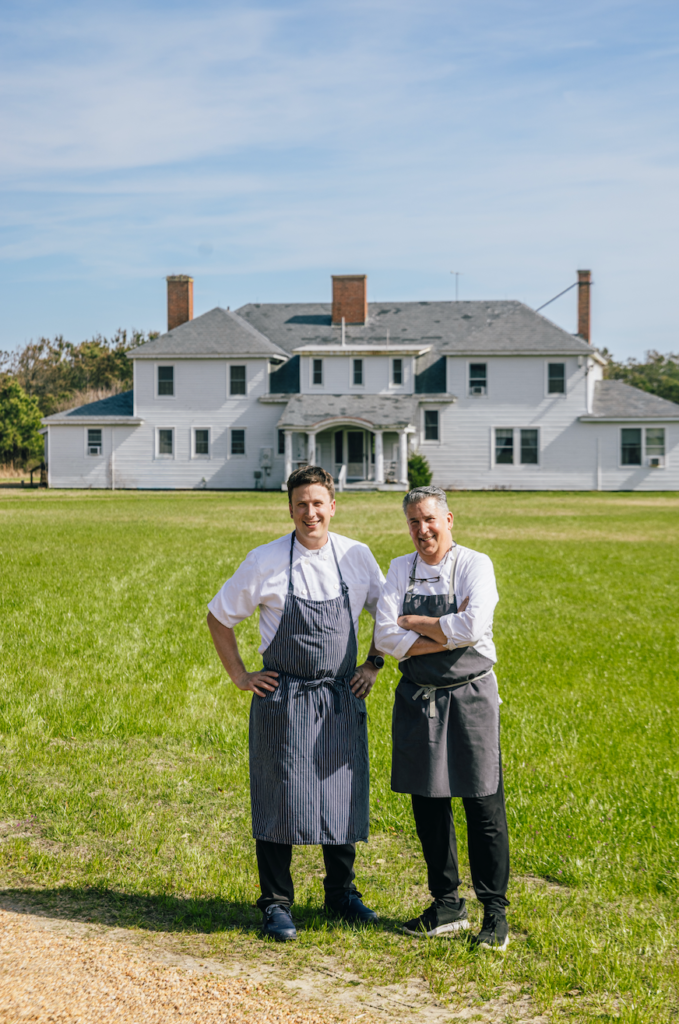
1913, after serving their “field-to-table lunch” at the Pine Island Audubon Sanctuary.
Miller photograph.
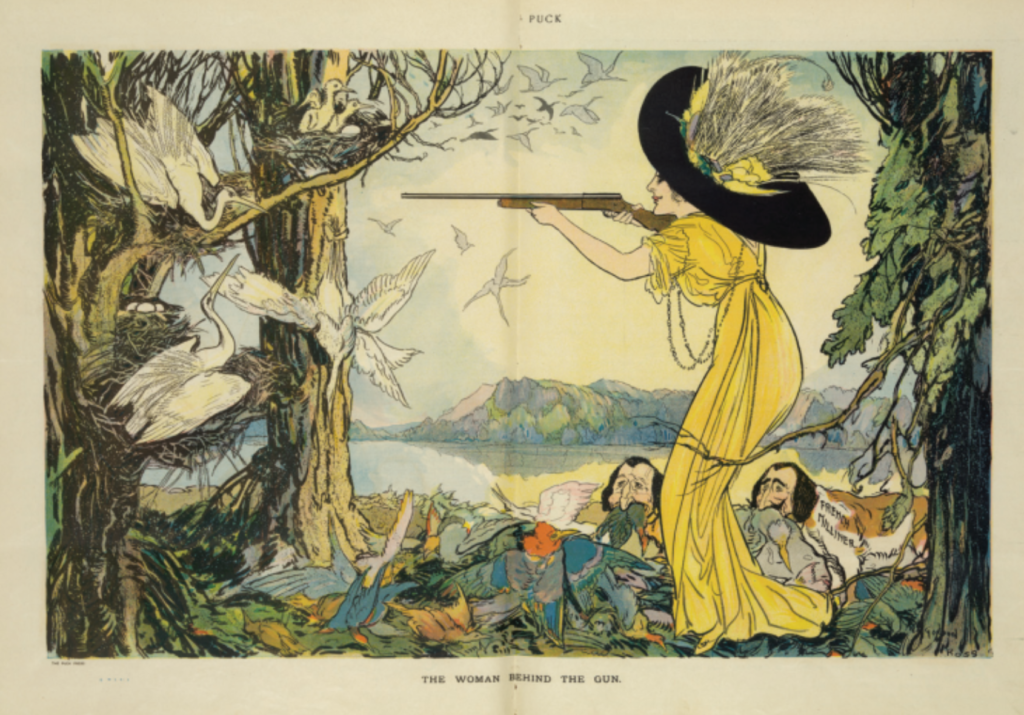
Yet abundance proved finite. Market hunting and fashion took their toll. By the late nineteenth century, “murderous millinery” had driven the slaughter of millions of birds for feathered hats, pushing native species like the snowy egret to the brink of extinction. The Carolina parakeet, however, did not survive the combined pressures of hunting and habitat loss. By 1918, the species went extinct.
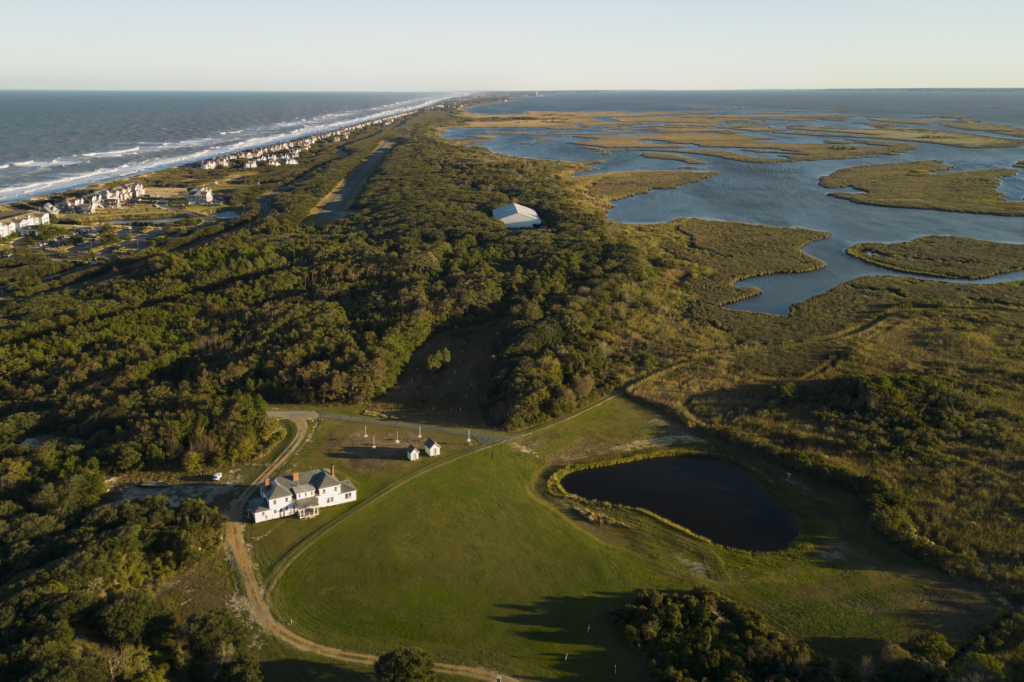
The devastation helped spark the modern conservation movement. The founding of the National Audubon Society in 1905, followed by the Migratory Bird Treaty Act of 1918, reshaped the relationship between people and wildlife. Later, Ducks Unlimited (founded in 1937) advanced wetland conservation. Today, places like Pine Island Audubon Sanctuary—once a hunting estate—reflect that shift.
Miller photograph.
At Feather & Form, this balance between past and present is central. Chandler Sawyer, an eleventh-generation waterman, and the Director of the Currituck Maritime Museum, demonstrated decoy carving, connecting tradition to contemporary practice. “Decoys are my decor,” he said.
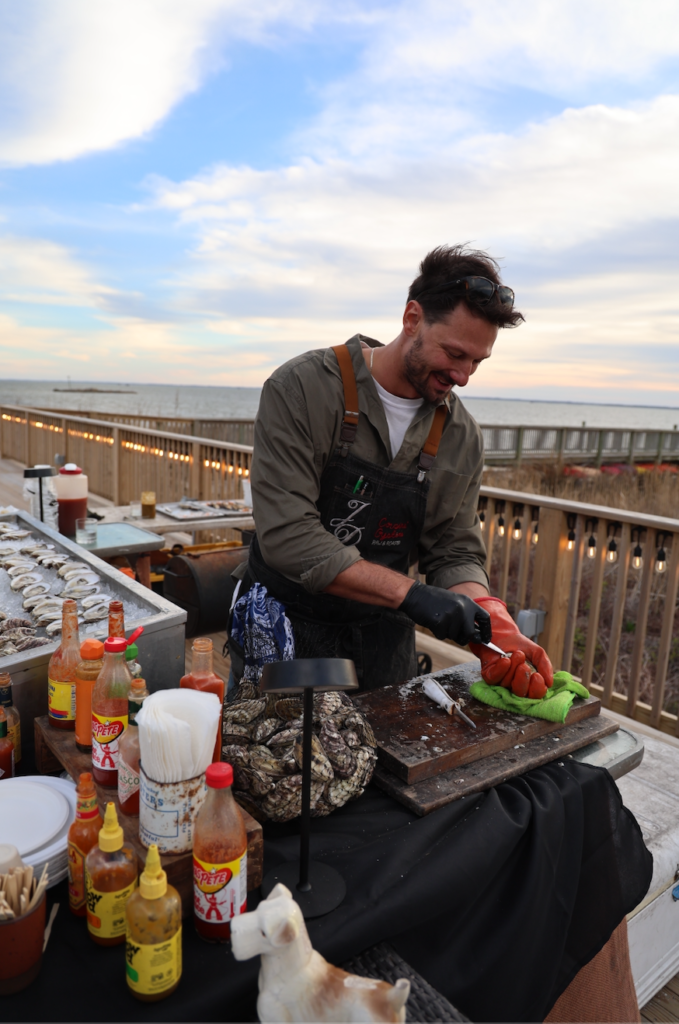
If decoys represent one kind of interaction with the environment, oysters represent another. At the opening-night party, a mobile oyster bar run by cousins Johnny Dilworth and Josh (Marty) Martier of Cousins’ Oysters drew guests in like seagulls. Their oysters—harvested just hours earlier—were served raw, roasted, and dressed with inventive mignonettes and relishes, including flavor profiles like “The Pappy,” named after their Italian grandfather, topped with Calabrian chili garlic butter, capers, guanciale, and Parmigiano-Reggiano.

Photgraph by Katie Slater, courtesy of Outer Banks Distilling.
“Oysters are blank canvases,” Dilworth explains. A range of dressings creates an interactive—and delicious—experience for guests while also offering an educational element. Oysters themselves are ecological engineers, filtering water and supporting reef systems; in North Carolina, their shells are even recycled by law. As the cousins continue hosting on-site oyster roasts, they hope to open a brick-and-mortar location in the future. The Outer Banks is home to small oyster farms that often self-distribute. The cousins take pride in their work and the strong relationships they’ve built with local growers. “Here, there’s a history of people making a living off the land and water. Many people have carried multiple jobs and seasonal work for generations. Doing what we do makes us feel connected with a profound sense of place,” says Dilworth.
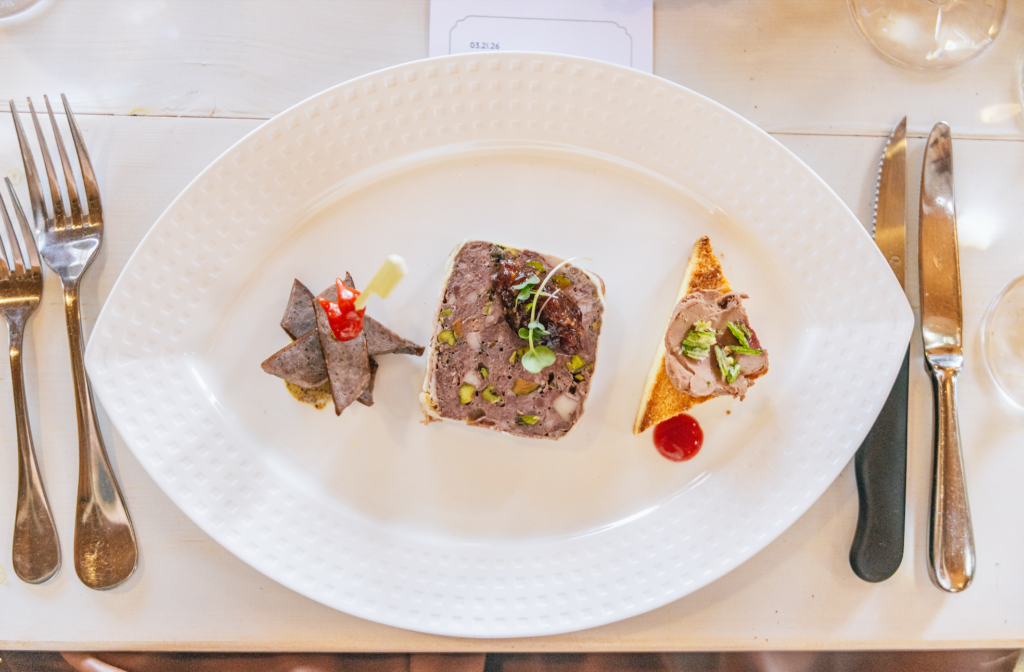
Throughout the weekend, food served as a throughline. Waterfowl, after all, was sustenance as much as sport. Father and son chefs Jeffrey and Mac Buben prepared a field-to-table lunch of chestnut soup and duck pâté, terrine, sausage, and confit, echoing historic hunt club meals.
Photograph by Sydney Walsh, courtesy of Pine Island Audubon Sanctuary.
At The Sanderling, dining ranges from the Lifesaving Station—a restored rescue outpost—to Theodosia, led by executive chef Vivian Howard. Over the weekend, rum flowed freely thanks to Outer Banks Distilling, a nod to maritime lore. Long known as the “Graveyard of the Atlantic,” the coast is steeped in shipwreck stories and pirate legend, from buried rum barrels in the sand dunes to Blackbeard’s pewter plates washed ashore. Once called “kill-devil,” early rum was said to be potent enough to kill the devil himself—a fitting excuse for a daiquiri or two.
The weekend concluded with a dinner by James Beard Award finalist chef Dean Neff of Seabird, featuring wild game, local seafood, and a menu that invited curiosity—including, for the more adventurous, a fried duck head.
Photograph by Ann Pacheco, courtesy of Pine Island Audubon Sanctuary.
What becomes clear is that nothing here exists in isolation. You may arrive, as I did, slightly out of your depth. You may leave with sand in your shoes, shells in your bag, a taste for duck, and a deeper affection for this place—along with new friends.
“It’s more about maintaining balance than forcing things to remain the same,” says Pine Island Sanctuary director Robbie Fern. Everything ties back to the rhythm of the sound.
Even in the off-season, there is a quiet romance to the Northern Outer Banks—a chance to connect to history, environment, and a way of life sustained over generations.
Feather & Form is expected to return in 2026. But even if it doesn’t, the experience is yours to re-create.
Consider this a roadmap.


