
Inside the world of a female merchant in early Boston.
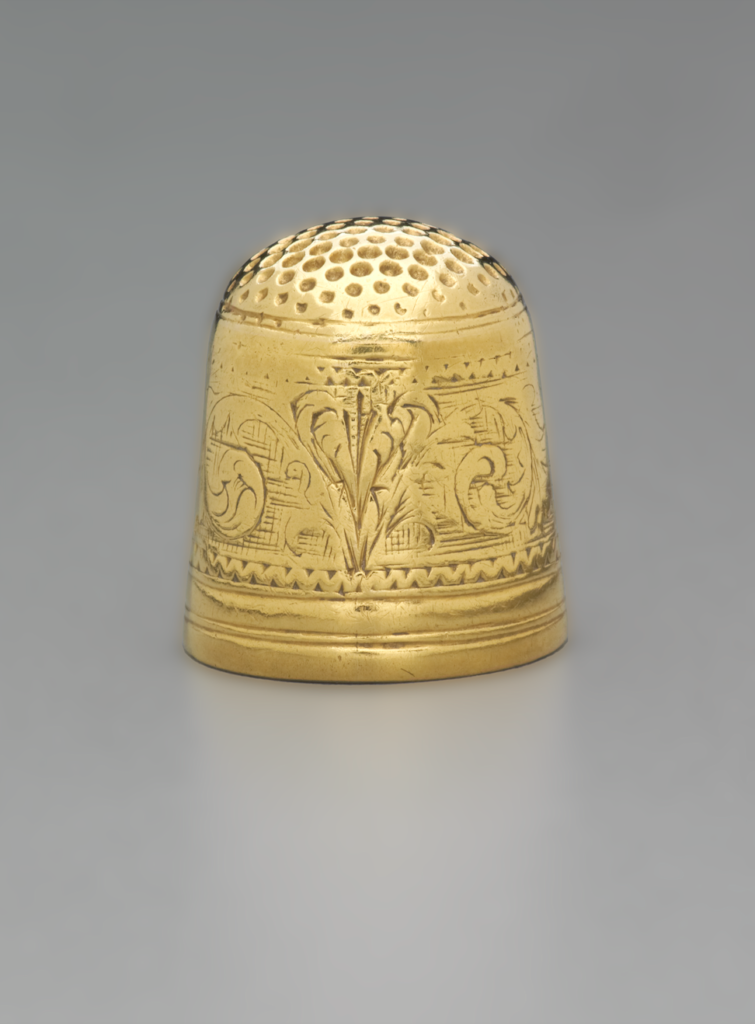
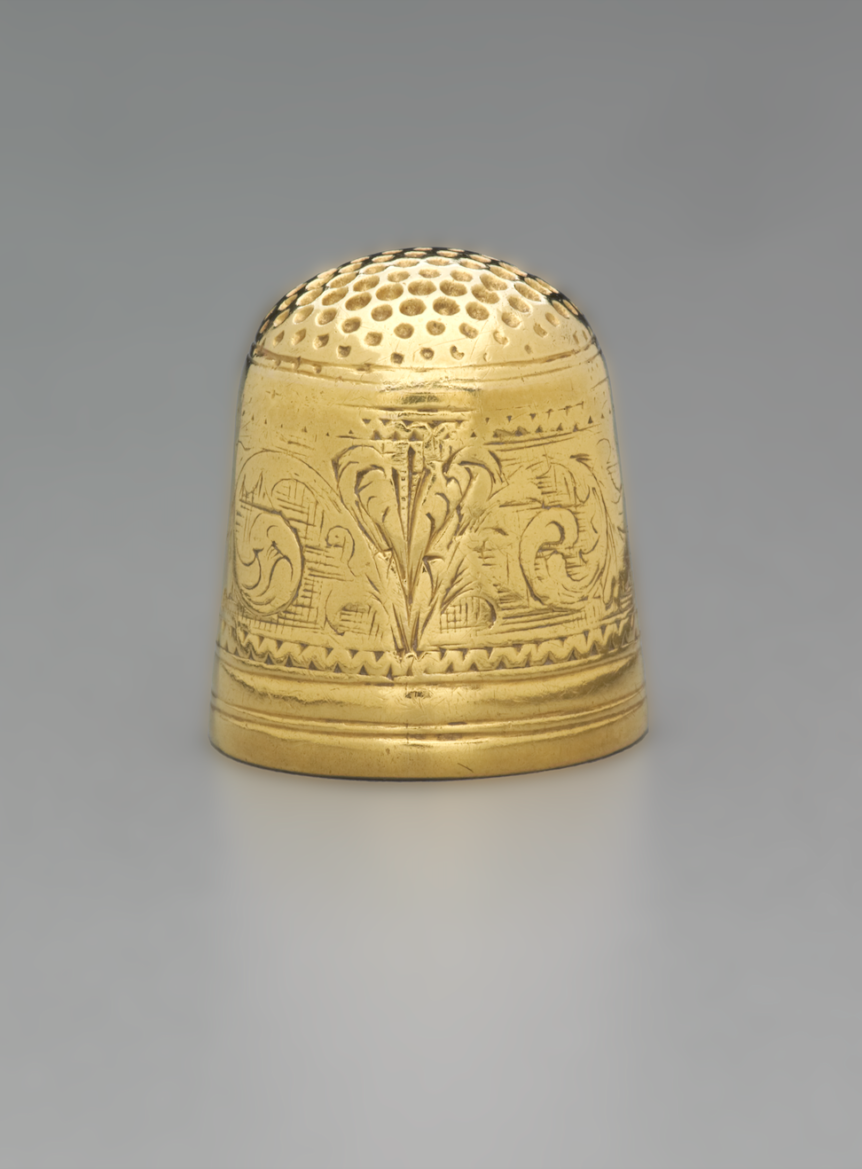
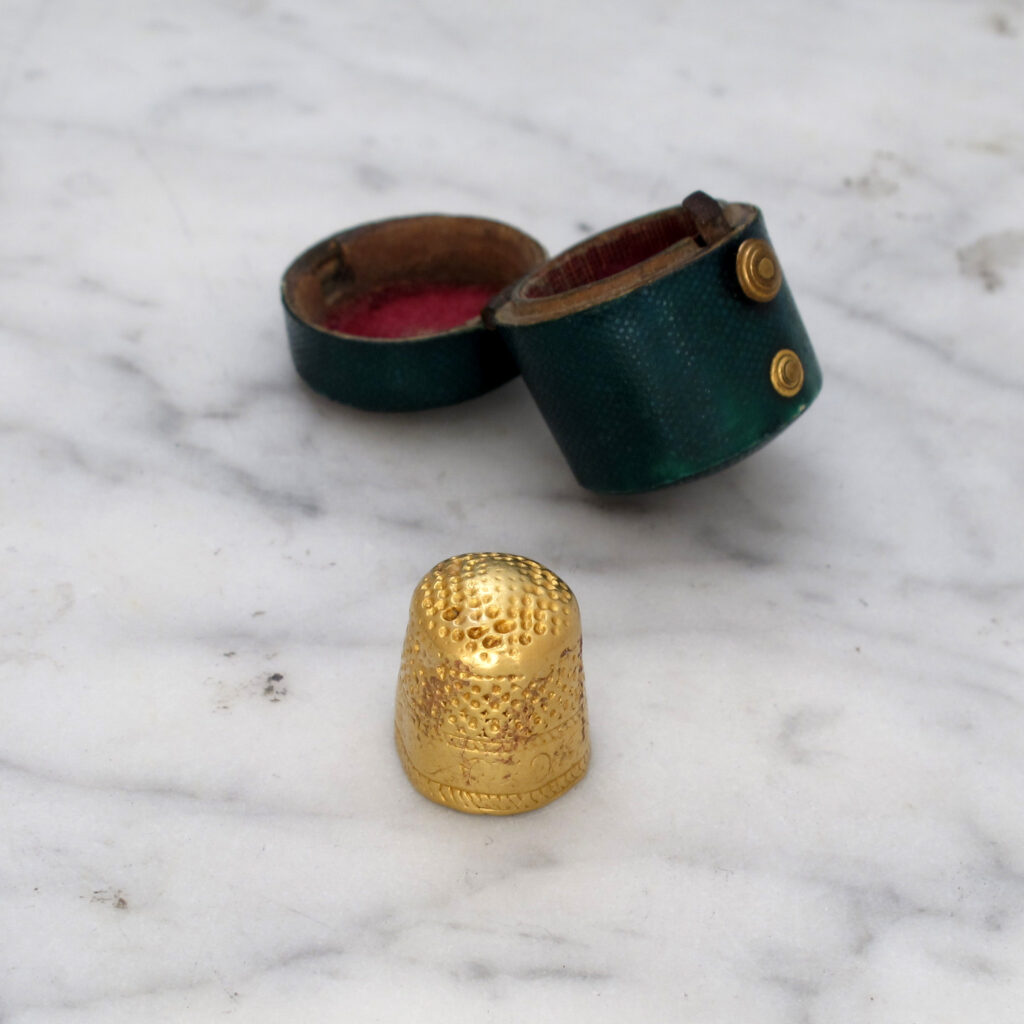
No larger than one’s fingertip, a gold thimble marked by Jacob Hurd of Boston in the 1730s is more than a sumptuous domestic tool; it gives us access to a previously overlooked, enterprising woman and the world she inhabited. The thimble was first published in 1940, in the second of two articles Mrs. Russel Hastings wrote for The Magazine ANTIQUES about a collection of Benjamin Franklin–related items that descended through the Hubbart family of Boston. She conceded that “but few of these treasures actually belonged to Franklin” and were instead associated with “the great man’s brother John, postmaster of Boston, [who] married Mrs. John Hubbart, a widow with several grown children.”. Still, she interpreted each painting, textile, and fine domestic object through a Franklin-tinted lens, including a small gold thimble. For eighty years, the thimble remained associated with Franklin until recent scholarship has shrugged off this hagiographic interpretation to focus on its original owner, the dynamic Elizabeth Gooch Hubbart.
Elizabeth Gooch was born in Boston to James Gooch and his second wife, Elizabeth Peck. James was a minor merchant, selling Madeira wine and other goods that arrived in Boston harbor from across the sea. His three sons followed him as merchants; all three also participated in Boston’s slave economy, advertising the sale of enslaved domestic laborers.
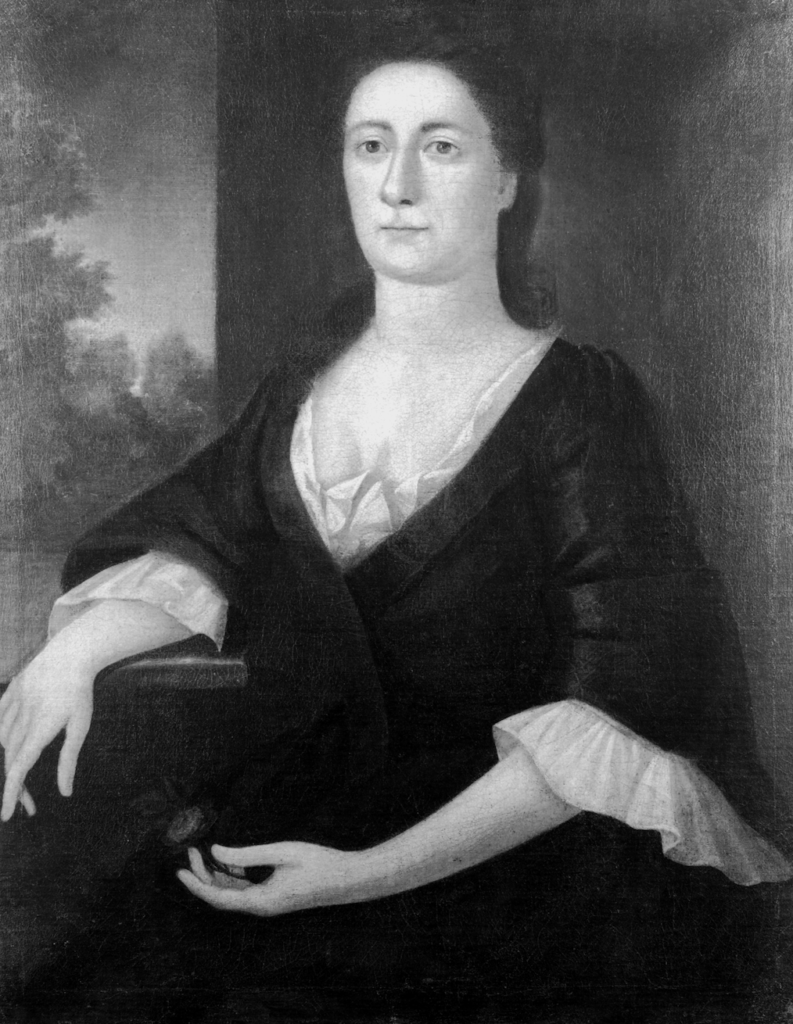
On November 24, 1714, Elizabeth married John Hubbart (1694–1734) at the First Church of Boston. Hubbart was a sea captain, and his voyages took him as far away as England and Barbados, likely as part of the transatlantic trade of enslaved people, raw materials, and refined goods such as the wine, rum, and sugar the Gooch family sold. Elizabeth, often left alone during Hubbart’s extended voyages, raised their children, six of whom lived to adulthood. At some point in the 1720s Hubbart gave up his peripatetic career and began a “considerable trade” in hats, opening a store on Cornhill Street near his in-laws. He suffered a stroke in December 1732 and died in March 1734. The bulk of his modest estate passed to “my Dear and well beloved Wife Elizabeth Hubbart.” Suddenly a widow with a family to care for, Elizabeth needed a plan. In an unorthodox move that suggests a determined and gregarious personality, she followed in her father and brothers’ footsteps and became a merchant.
By spring of 1735, Elizabeth Hubbart offered “sundry sorts of Haberdashery, imported in the last Ships from London” at her shop on Cornhill Street, likely continuing the lease held by her late husband. She advertised bolts of linen, superfine cambric, and sheer cottons in spotted patterns as well as a host of embellishments, such as gold and silver trimmings for jackets, tassels for hoods, and fine Mechlin, or bobbin, lace. Her finished luxury goods included fans, masks, necklaces, pins, and hose for both men and women, fragile items that were costly at the time yet rarely survive. A cunning pair of wax figures made by Sarah Gardner in Boston in the early 1720s have clothes edged in the type of gold laces Hubbart marketed. Eventually Hubbart also sold green and Bohea (black) tea. Her wares spanned the globe with baubles from England, textiles from Europe and India, and tea from China.
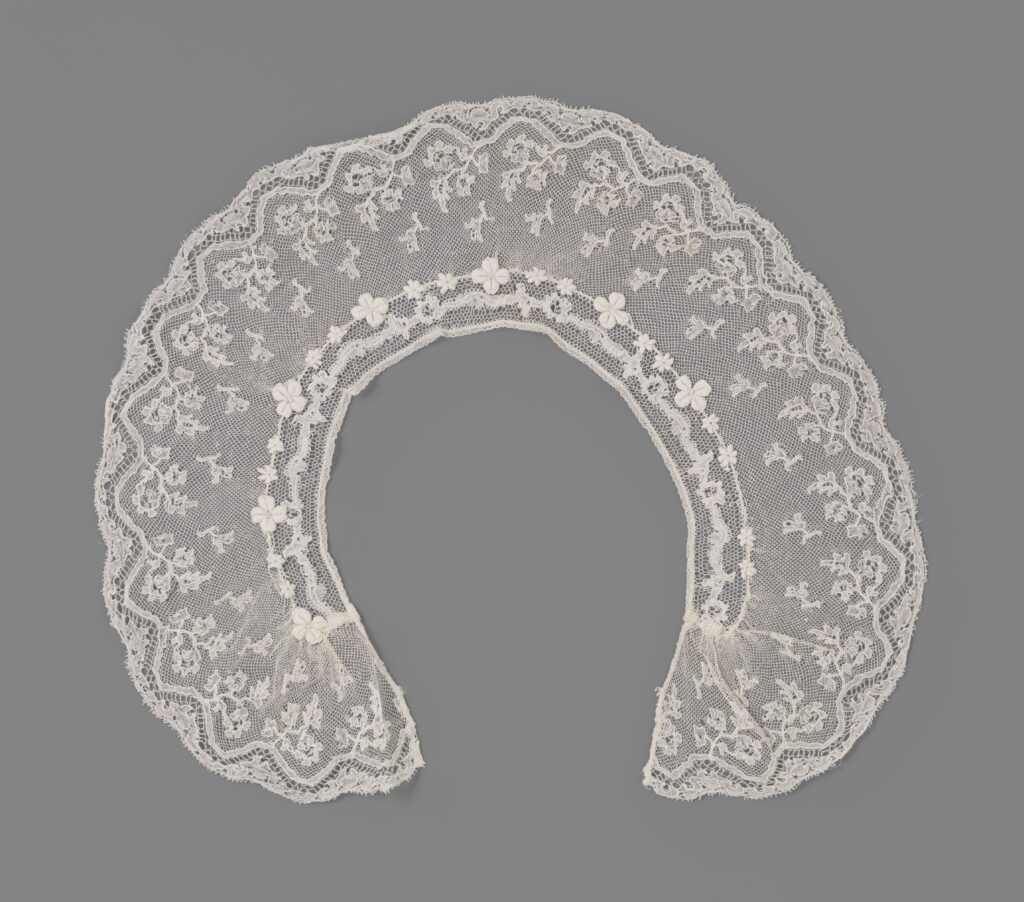
Hubbart was among Boston’s “she merchants,” a coterie of women engaged full-time in trade. Under English common law, married women were subject to coverture and in most cases could not own property or conduct business in their own names. Unmarried women and widows had more legal agency, and widowhood also came with a level of social respectability, which Hubbart subtly alluded to when she referred herself as “Mrs.” in advertisements. “She merchants” engaged in a range of activities from running taverns to overseeing wharfs, although the majority were milliners or haberdashers, offering their wares to a largely female audience. Coming from a mercantile family must have opened doors as well. She was one of the few women patronized by the Massachusetts General Court, which reimbursed her in 1738 for “Hatts Lace &c” distributed to the Penobscot and Norridgewock as diplomatic gifts.
Private collection, photograph courtesy of S.J. Shrubsole.
Hubbart’s place on Cornhill Street was about two blocks from the workshop of goldsmith Jacob Hurd on Pudding Lane, both in the heart of Boston’s mercantile district. Hurd ran what would become one of the most productive shops in the city; by mid-century he and his skilled workmen produced more silver flatware and hollowware and more gold and silver small luxury goods than any of his competitors. After establishing himself in the mid-1720s, his clients soon included a number of the colony’s prominent families and churches for whom he produced increasingly sophisticated objects, such as a globular teapot engraved with the Townsend coat of arms and dated 1738. Despite the title “goldsmith,” Hurd and his peers worked primarily in silver; there are fewer than a dozen pieces of gold marked by Hurd, including a handful of mourning rings, sleeve buttons, a snuffbox, and this thimble.
The thimble has a domed top with dimples, elaborate foliate engraving bordered by meander wires, and a molded base. It was not a tailor’s thimble—with dimples on the sides and an open top to aid manual dexterity—but the thimble of a gentlewoman. It was more showy than functional, for repeated contact with steel needles would wear and eventually puncture the softer gold metal. More prevalent were thimbles made of ceramic, brass, or plain or gilt silver with steel tops. This thimble’s delicacy may have been the point as it supported the polite work of the gentry, or in the case of Hubbart, an entrepreneurial merchant aspiring to be gentry.
Museum of Fine Arts, Boston, gift of Mr. and Mrs. John P. Remensnyder.
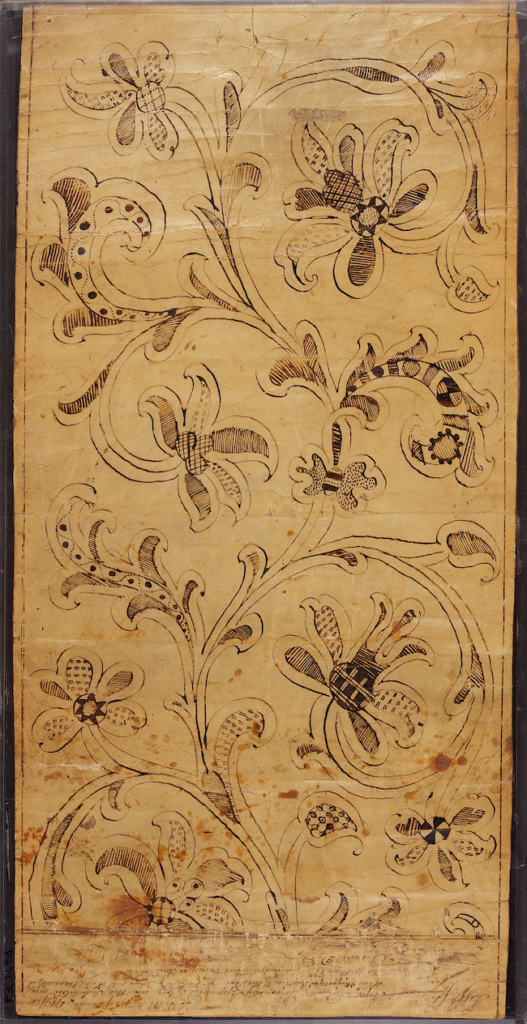
The engraved band of scrolling acanthus leaves echoes the floral patterns found on ceramics and woodwork, but more relevantly on crewelwork embroidery, woven damasks, and other fabrics coveted by the colonial elite. It implies the thimble’s role in transforming the textiles and trims Hubbart offered for sale: yardage to be sewn into finished goods, ribbons or lace with which to update one’s apparel, or thread for fancy needlework. Hubbart encouraged customers to buy her wares and to refashion them at home using their own thimbles. In turn, their purchases allowed Hubbart to acquire a gold thimble that proclaimed her own abilities, not just in the conventionally female world of needlework but also in the male-dominated world of commerce.
Gold thimbles were precious and bemoaned when lost, and their small size made them tempting to thieves. The documented losses outnumber the survivals; the only other known eighteenth-century gold thimble marked by an American silversmith was made around 1720 by Samuel Vernon of Newport, Rhode Island. Both the Hurd and Vernon thimbles have decorative engraved bands flanked by rope-twist borders, and both are worn, affirming years of use.
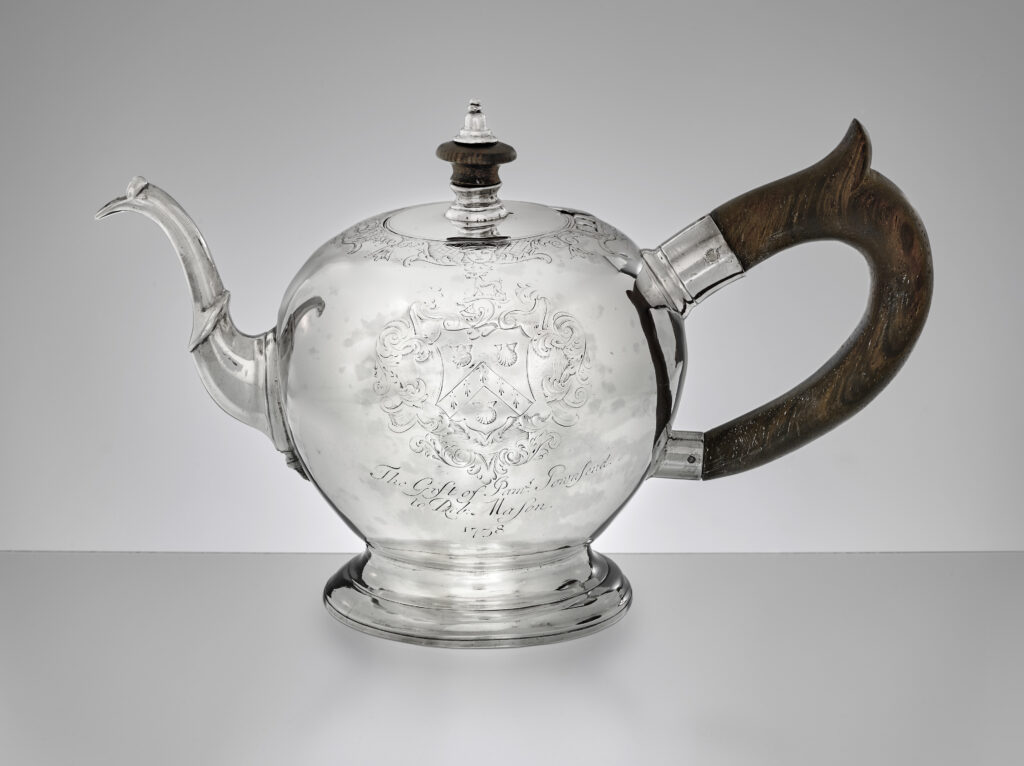
Inscribed “The Gift of Jams Townsend / to Reb Mason. / 1738” and with the Townsend arms and crest in scroll and acanthus cartouche. Silver; height 5 3⁄4, width 9 1⁄4, depth 3 5/8 inches. Yale University Art Gallery, Mabel Brady Garvan Collection
Even from the Federal period only a few gold thimbles are known, including an austere example dating to the early nineteenth century now at the Museum of Fine Arts, Boston. Its elongated shape became prevalent in the late eighteenth century although it was not always popular. In 1783 the Philadelphia-based silversmith brothers Joseph and Nathaniel Richardson complained to their agent in London: “The thimbles you sent us tho good in their quality are so very deep that common people cannot wear them.” . The MFA’s thimble is engraved with the name “Maria Revere Balestier,” a daughter of Paul Revere who married Joseph Balestier in 1814. Maria was educated just outside Boston at the Young Ladies Academy in Woburn, and in addition to grammar, geography, and math, she learned needlework. Maria may have acquired her gold thimble for school or at the time of her marriage. It is unmarked, yet the family history suggests it came from Revere’s shop. Thimbles were part of his vast repertoire: silver and steel-topped thimbles appear in his waste book, and his son continued making thimbles after Revere’s death in 1818.
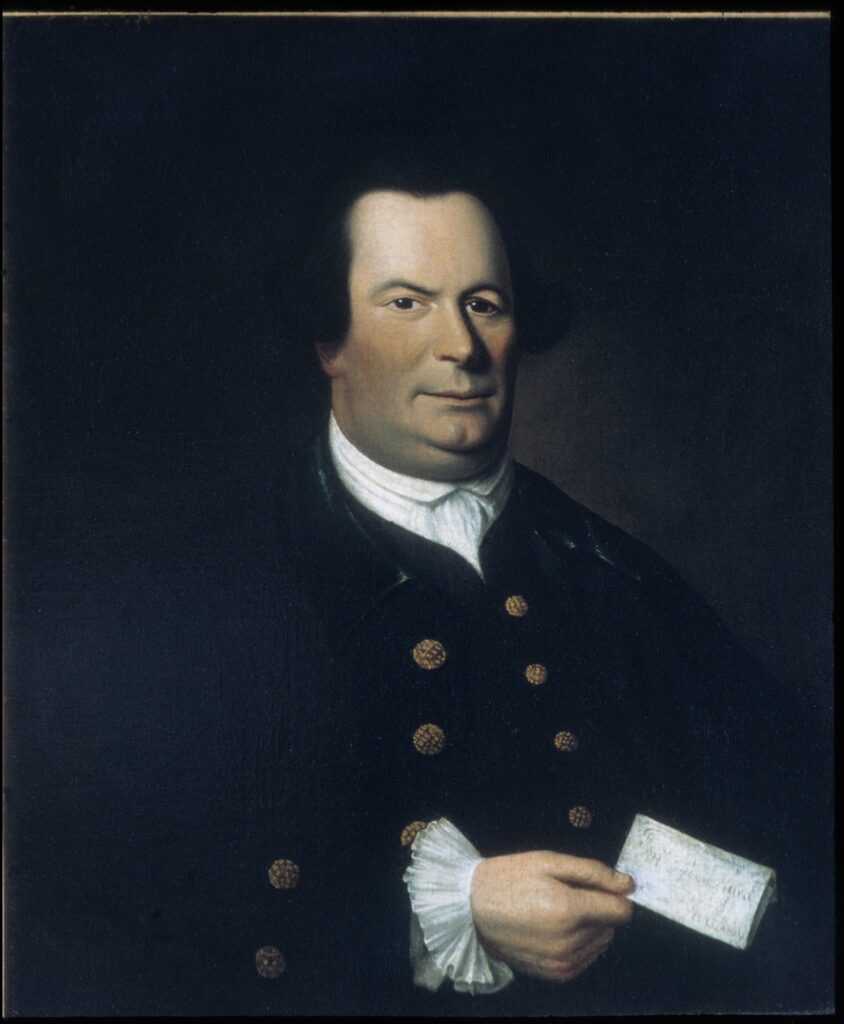
Both the Balestier and Hubbart thimbles became family heirlooms. Around 1740 Hubbart married John Franklin, the eldest brother of Benjamin Franklin. John inherited their father’s trade as a chandler and soap maker in addition to serving as Boston’s postmaster. Hubbart took an active role in her second husband’s life. She aided him as postmistress and, after his death in 1756, continued to produce the family soap. Resuming her role as a widowed “she merchant,” she sold her soap at the post office (much to the consternation of her sister-in-law, Jane Franklin Mecom, who felt she stole the family recipe). After her death in 1768, the thimble passed to her eldest daughter, also named Elizabeth, and then through generations of nieces and daughters, who each used it to add a stitch onto their wedding dresses.
Oil on canvas, 30 by 25 inches. Metropolitan Museum of Art.
In 1828 Emily Parsons Sumner received the thimble. By then it was housed in a small, silver case with “EH” engraved on the top, for either mother or daughter Elizabeth Hubbart. Sumner had her own name and the year engraved in script around the side of the case. Late in life she married and became Emily Robeson. When she eventually drew up her will, she carefully listed every bequest and toward the end of the document started a new section titled “Old Family relics.” The first item was “Old gold thimble in silver case marked Elizabeth Gooch 1714, case marked E. H. & Emily Sumner, 1828.” This extraordinary reference illuminates the thimble’s progression from a precious, functional item to a receptacle of legacy and memory. The term “relic” has religious connotations of something to be protected and venerated. She likely intended “old” to describe the age of the thimble, but it could also apply to the age of her family. Robeson wrote her will in 1892 during the height of the colonial revival, which blossomed following the nation’s Centennial celebrations in 1876. Numerous Americans—still scarred by the Civil War and wary of how immigration was shaping the country—looked with nostalgia to the colonial past and emphasized their personal connections to early settlers. For Robeson, the thimble was a tangible expression of her family’s legacy and links to early Boston.
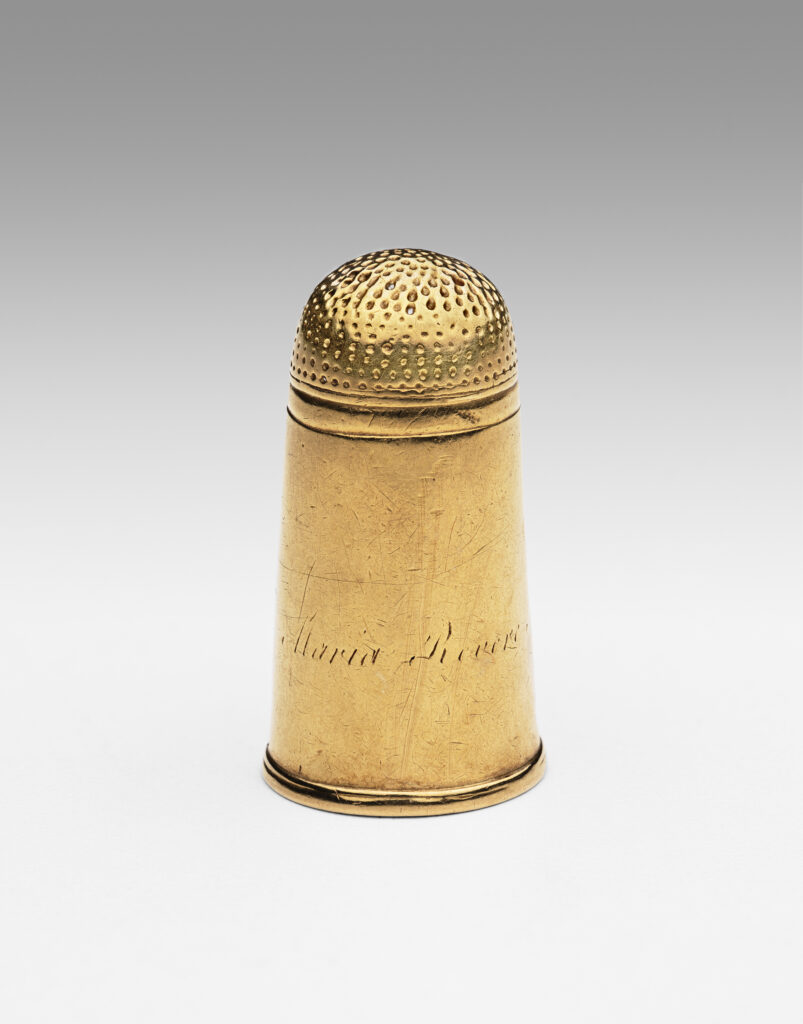
Museum of Fine Arts, Boston, gift of Mrs. Henry B. Chapin and Edward H. R. Revere.
The thimble is a rare survival: one of two-known gold thimbles marked by a colonial American craftsman and one of the few pieces of gold produced by Jacob Hurd, the finest metalsmith working in mid-eighteenth-century Massachusetts. Rarer still is the story that accompanies it of Elizabeth Hubbart’s personal trials and her professional success as a merchant in Boston, of its ties to domestic labor and the luxury market in textiles, and of its embodiment of continuity and inheritance as it transmuted from functional object to family relic.
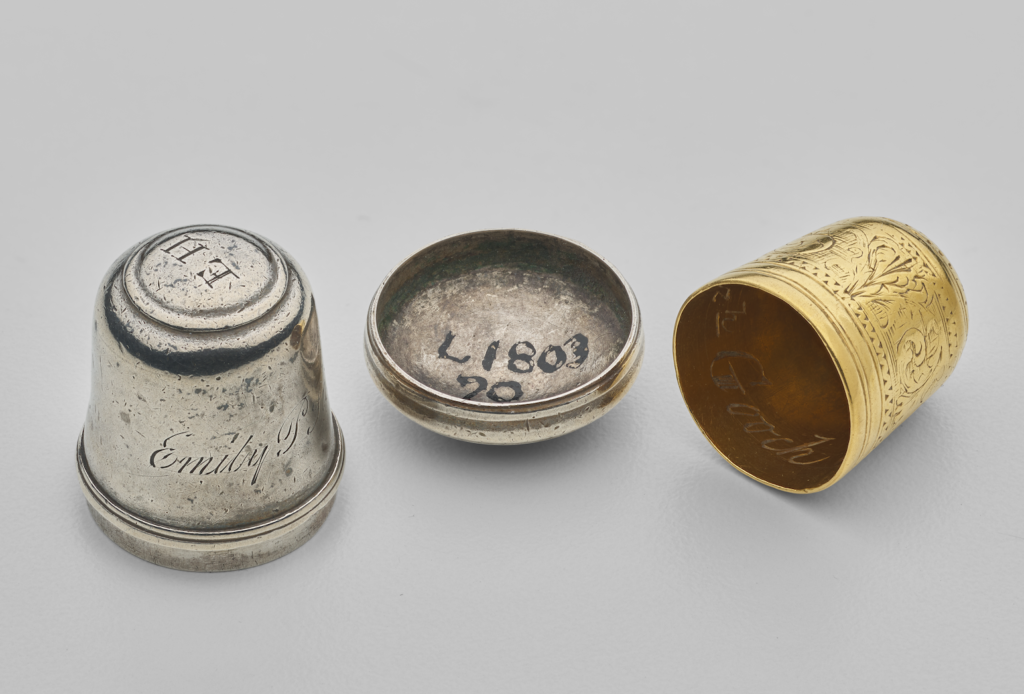
Yale University Art Gallery, Mabel Brady Garvan Collection.
JOHN STUART GORDON is the Benjamin Attmore Hewitt Curator of American Decorative Arts, Yale University Art Gallery.


