
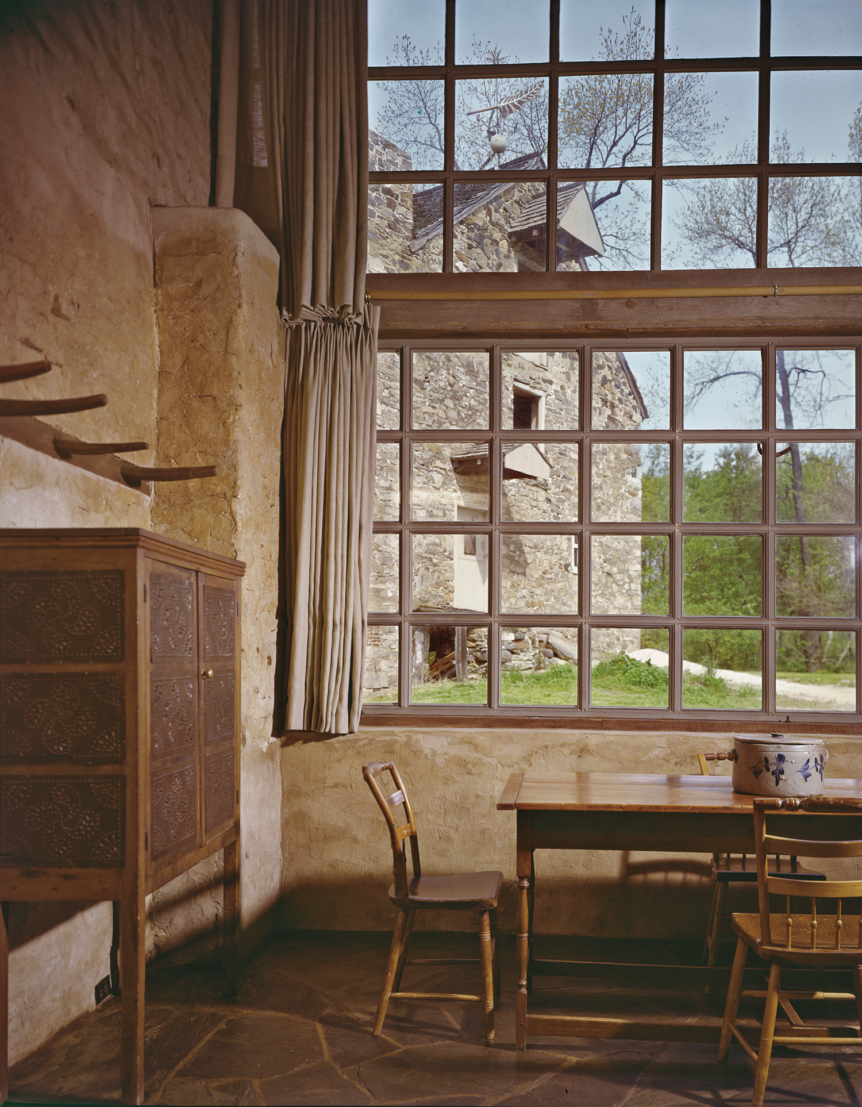
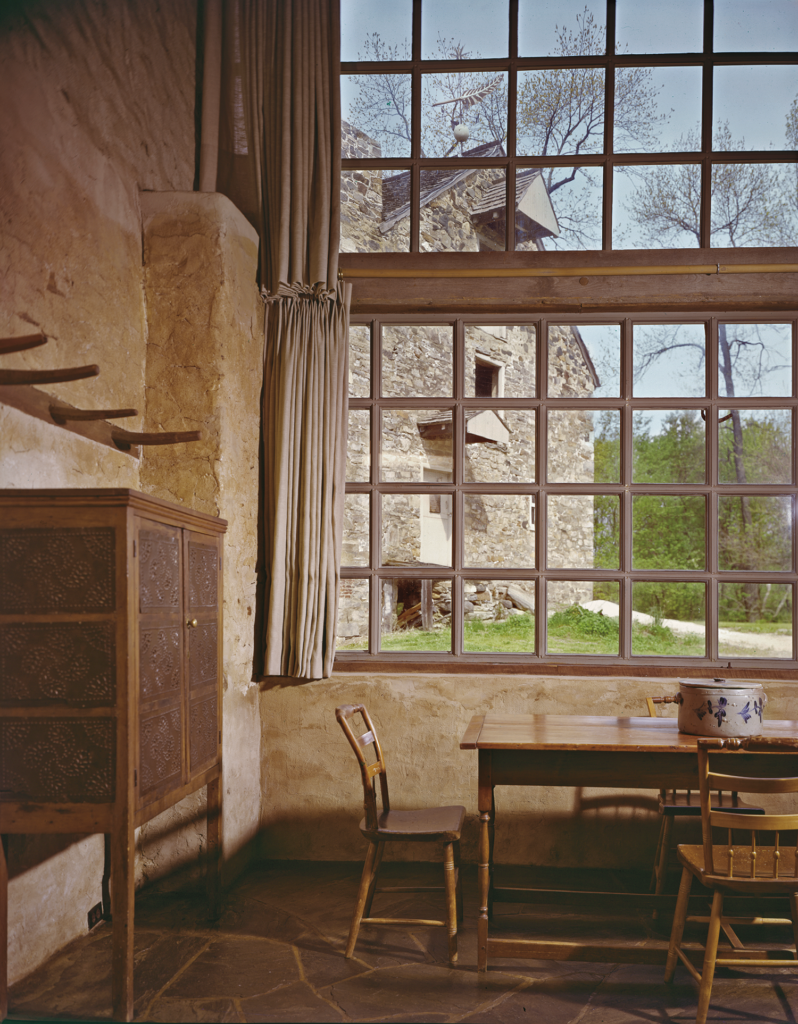
The November 1964 issue of ANTIQUES included an article in its continuing “Living with
Antiques” series that featured the Pennsylvania home of Andrew and Betsy Wyeth. With words
by Alice Winchester, this piece marked a moment in time: the completion of Betsy Wyeth’s subtle and original transformation of a largely ruined grist mill property into an imaginative campus of eighteenth- and nineteenth-century associations. As such, the article and its photographs have been crucial evidence for a new exhibition and book that focus on the untold story of Betsy’s remarkable design legacy between Pennsylvania and Maine, and the essential role she played in the work of her artist husband by quite directly shaping many of the subjects he painted.
By Design: The Worlds of Betsy James Wyeth is a collaboration between the Brandywine Museum of Art in Pennsylvania, the Colby College Museum of Art, and the Farnsworth Art Museum, both in Maine. Running generally from June through December of 2026 simultaneously at all three institutions, each of which stewards certain of the buildings, landscapes, and collections Betsy Wyeth formed, the project shares the untold story of an inspired life in three dimensions that pushes against received categories of artistic practice, pulls in many different directions, and, through its own exceptional nature, invites new questions about other instances of creative partnership in art history.
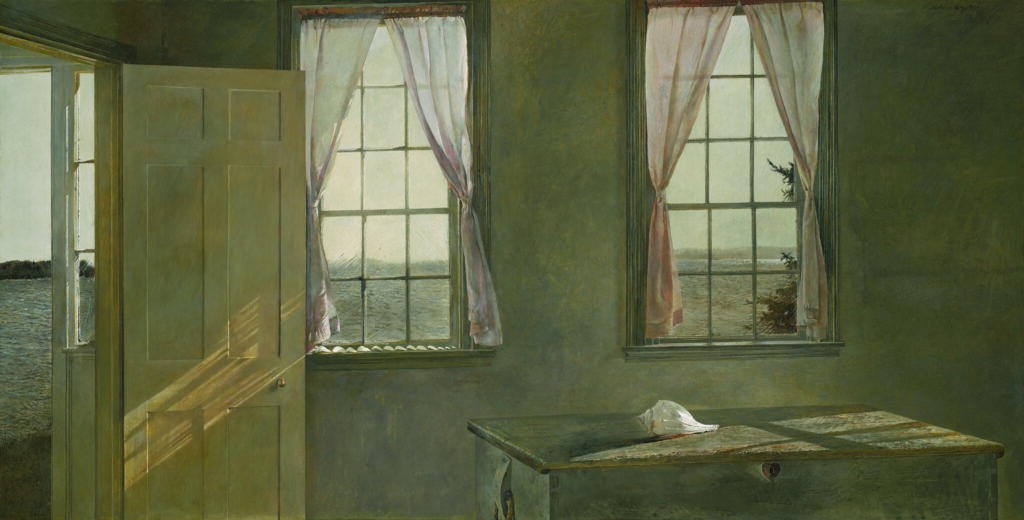
The exhibition includes key examples of the furniture, ceramics, metalwork, and more that Betsy collected and arrayed around her distinctive interiors, even recreating whole room surrounds in the gallery along with original paintings by Andrew Wyeth that demonstrate Betsy’s impact; new audio and video recordings that bring her remote environments into the museums, and previously unseen archival discoveries about her design practice.
Commissions from four leading contemporary artists in response to Betsy’s worlds complete the project. The book, published by Rizzoli Electa, brings together new research and inside perspectives from twenty-four contributors, forming a foundation for future research on this elusive maker. Betsy Wyeth articulated a coherent theory of historically informed design across more than five decades and at least as many different sites that should be understood holistically rather than in isolation. Her work included: land transformation across two states and hundreds of acres, with the construction of miles of roads and paths, earth contouring, view shaping, pond-building, archaeological investigation, and horticulture; architectural design of new buildings; adaptive reuse and major relocations of pre-existing structures; interior design and research-based collecting, including the strategic use of historic woodwork, furniture, metalwork, ceramics, textiles, and assorted Americana; and a core commitment to historic industries,
including returning her mill to full water-powered grinding capability, the return of sheep grazing for land management on a remote island, and diverse engagements with marine resource extraction and aquaculture.
The sites she impacted are similarly varied. Brinton’s Mill, in Chadds Ford, Pennsylvania, was her first test case of a wholesale transformation of a neglected working property into a composite of regional vernacular motifs. In Cushing, Maine, she designed her first new structure at Broad Cove Farm and transformed the interiors of multiple buildings in what would become a characteristic stark mode. Nearby, she was fundamental to the transformation of the Olson House of Christina’s World fame into a public historic site. Southern Island near Tenants Harbor, Maine, offered a discrete canvas and received an especially playful and theatrical treatment. The culmination of her extended project was the shaping of Allen and Benner Islands, a neighborhood pair five miles offshore in Midcoast Maine, with the transformation of both land and buildings on a monumental scale.
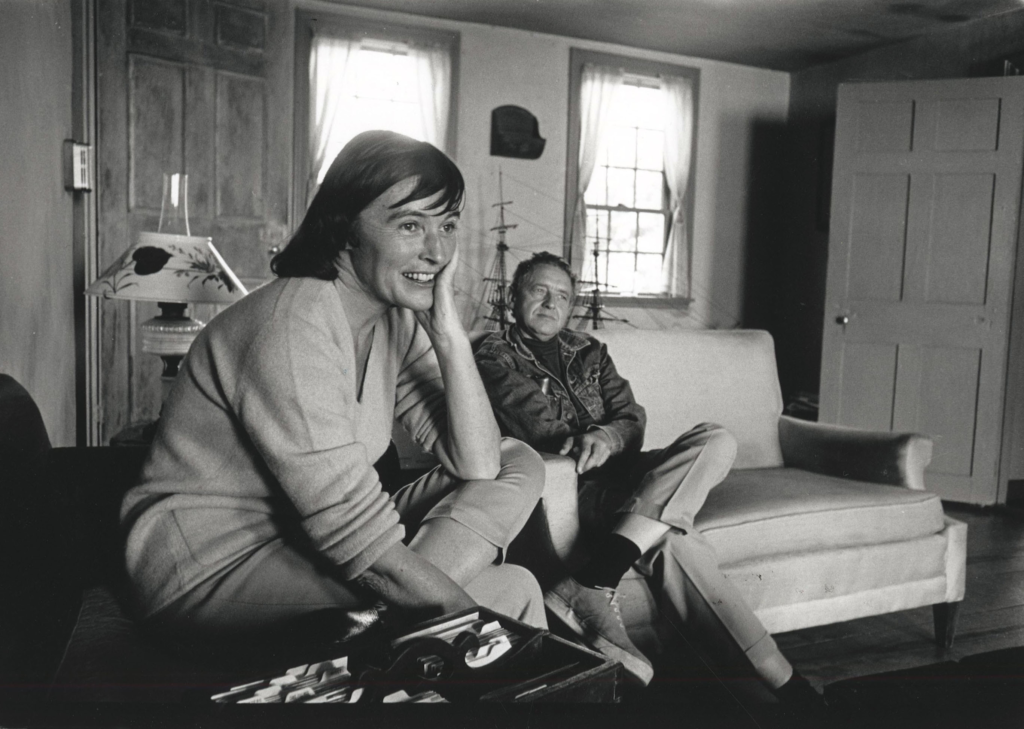
Despite the differences between these progressively more ambitious projects, there are some important commonalities. For all of the above, the evidence reflects that Betsy Wyeth was the primary designer and director, working with a core team of assistants to execute her ideas. The living staff who contributed to that de facto workshop practice model speak to the consistency of her goals across the decades and have remained fiercely loyal to her principles. While her husband inhabited and often depicted the worlds she shaped, all evidence shows that Andrew Wyeth was not a co-designer in any larger way but rather that the environments were Betsy Wyeth’s domain. Similarly, surviving documents and oral histories reflect that the outside specialists she retained to realize her ideas did just that, ensuring the structural integrity of her pre-existing concepts.
Betsy’s vision proclaimed its own descent from a vaguely eighteenth to nineteenth-century Euro-American past in which recognizably Quaker, Shaker, and Anabaptist vernacular stylistic markers were decanted with mid-century modern assumptions. The result was an austere Yankee minimalism characterized by open landscapes that evoke a nineteenth-century extremity of clearing and grazing before forest reclamation; minimally ornamented fieldstone or frame structures were closely modeled upon historical precedents and efface the signs of their own modernity, and stark interiors with arrangements of rural vernacular material culture amidst muted greys. By Design shows that these creations played no small role in shaping what an Andrew Wyeth painting looks like and raises important questions about other instances of creative partnership that have been similarly overlooked.


