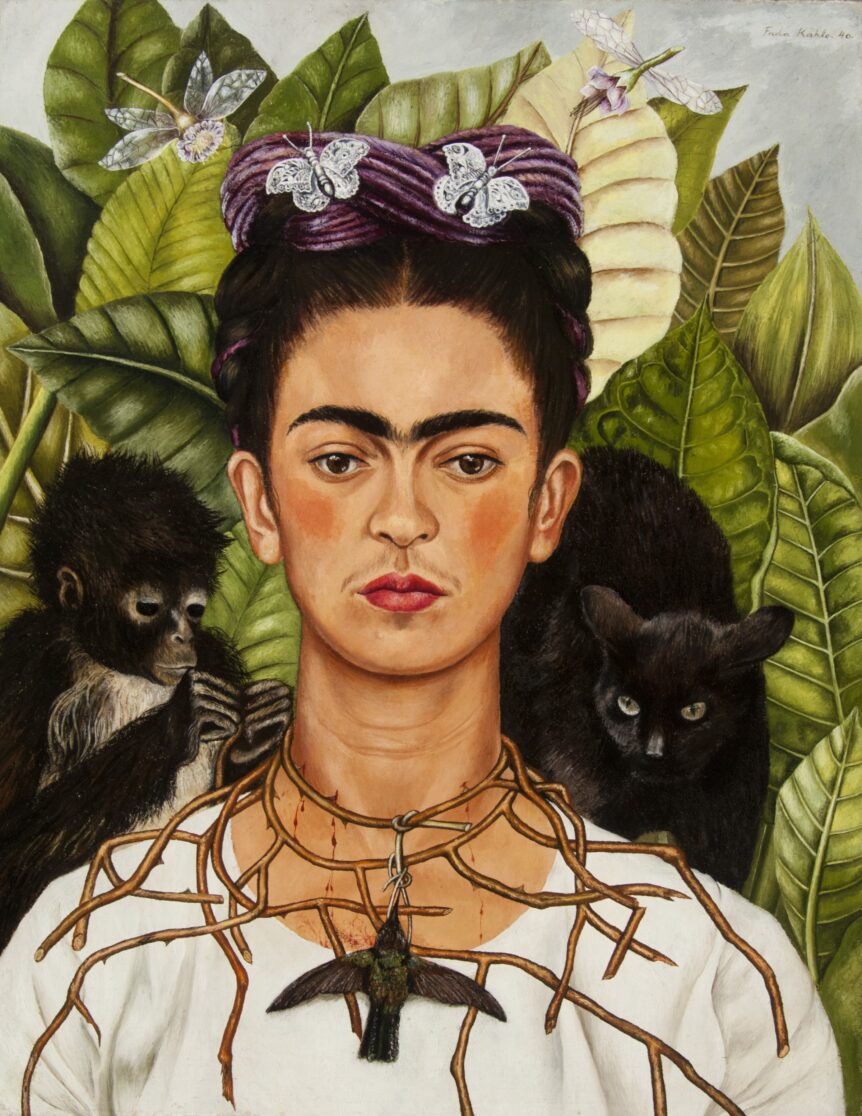
In 1984 the Mexican government declared the art of Frida Kahlo an “artistic monument of the nation.” Removing her work from the open market, this enforced scarcity occurred at the very moment when “Fridamania” was beginning to take hold across Europe and the United States. It is a paradox worthy of Kahlo herself: the fewer paintings that circulated, the more her image proliferated.
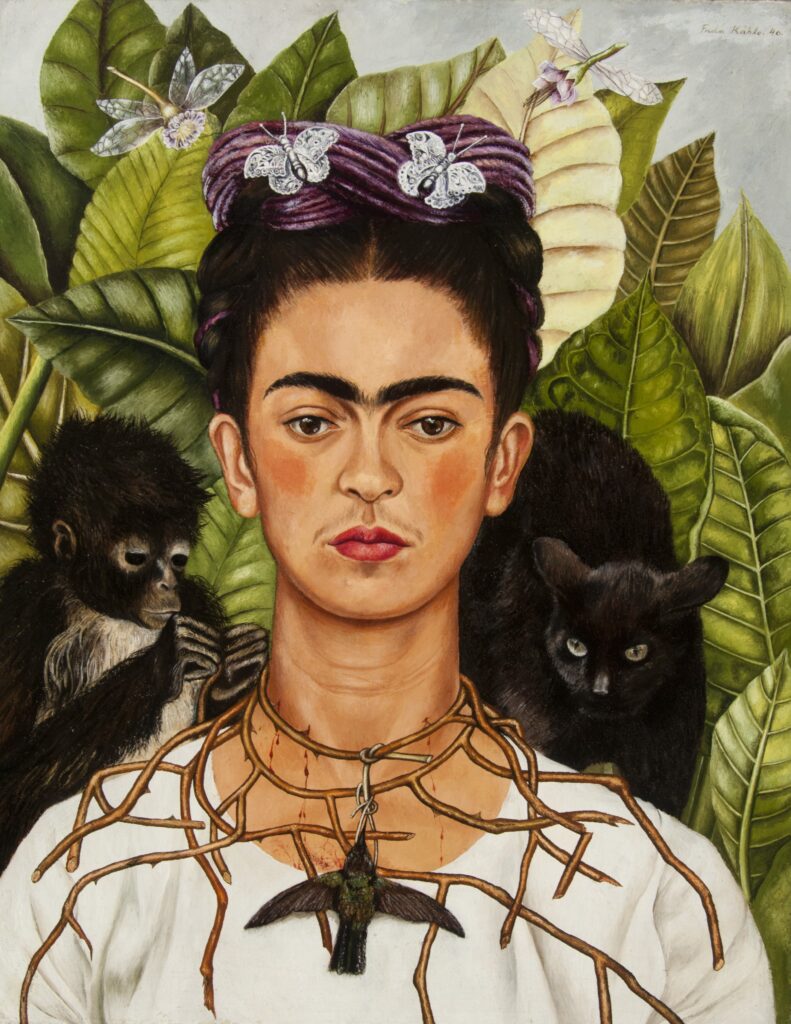
Occupying a global cultural territory more commonly associated with pop stars than painters, Frida Kahlo’s face has appeared on everything from tote bags and tequila bottles to peso bills and protest placards. Her instantly recognizable silhouette—the braided hair, the unibrow, the floral crown—suggests Kahlo understood the mechanics of image-making long before Warhol or the language of branding entered the art world.
In tracing her trajectory from cult figure to global brand, Frida: The Making of an Icon at London’s Tate Modern (organized with the Museum of Fine Arts, Houston) reveals that Kahlo’s greatest masterpiece may not have been a canvas, but the enduring image she constructed of herself. Focusing on her artistic evolution, as well as the circulation and subsequent commodification of her work, the exhibition explores how Kahlo migrated across movements and borders to become a pop cultural force who continues to attract blockbuster audiences today.
As the daughter of a photographer, Kahlo was comfortable in front of the camera and frequently positioned herself center frame. But, as co-curator Beatriz García-Velasco explains, “it’s impossible to know who she was playing” within each self-representation. From the adoption of Mexican Tehuana dresses (five of which are on display) to the deliberate cultivation of androgyny and the utilization of Catholic and pre-Hispanic iconography, Kahlo played with intersectional identities, “as artist, as wife, and as Mexican woman.” Along with personal ephemera, thirty works including Self-Portrait (With Velvet Dress) (1926) and Self-Portrait with Loose Hair (1938) are presented in dialogue with husband Diego Rivera’s Portrait of Frida Kahlo (c.1935), whilst María Izquierdo’s Dream and Premonition (1947) demonstrates the artistic and intellectual exchange that shaped her practice.
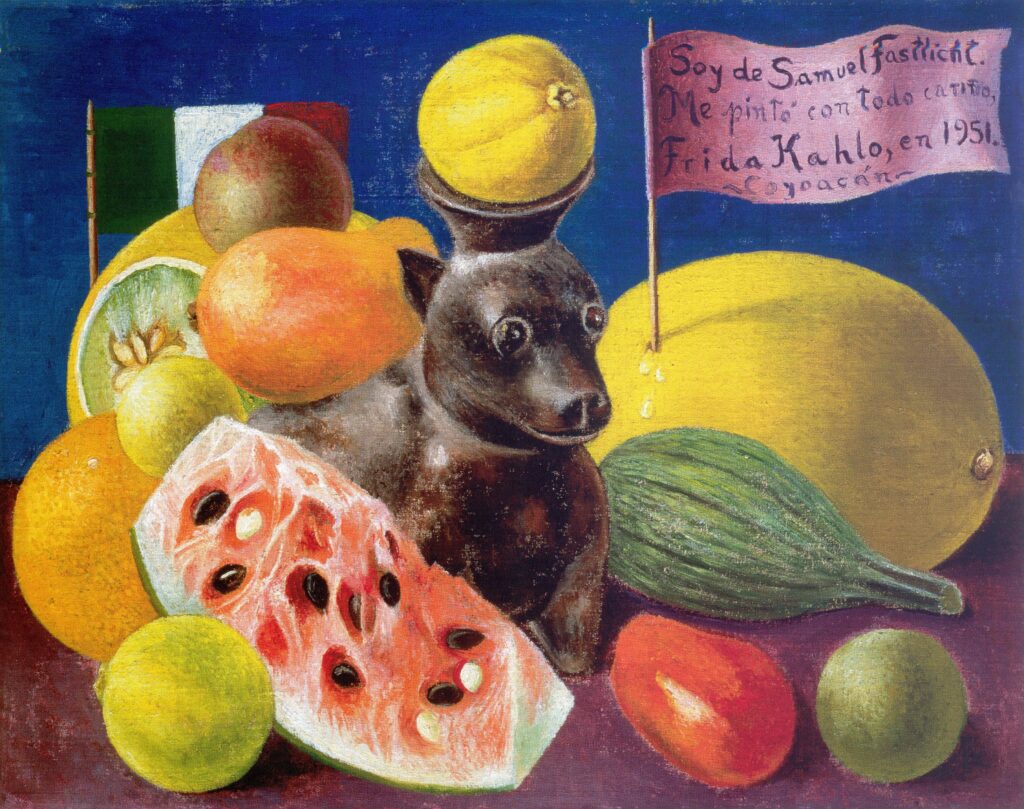
The exhibition also explores her relationship with the surrealist movement. After her smash 1938 solo show at the Julien Levy Gallery in New York, Kahlo was invited to exhibit with André Breton in Paris. Dubious of the exoticization of her work, and the movement’s interest in abstract theory over political reality, she resisted attempts at co-option and returned to Mexico to teach. With war destabilizing the art market, Kahlo was also blighted by a worsening health condition, enduring over thirty back surgeries following a near fatal bus accident in 1925. As a result, she never achieved commercial success in her lifetime and died at forty-seven in 1954.
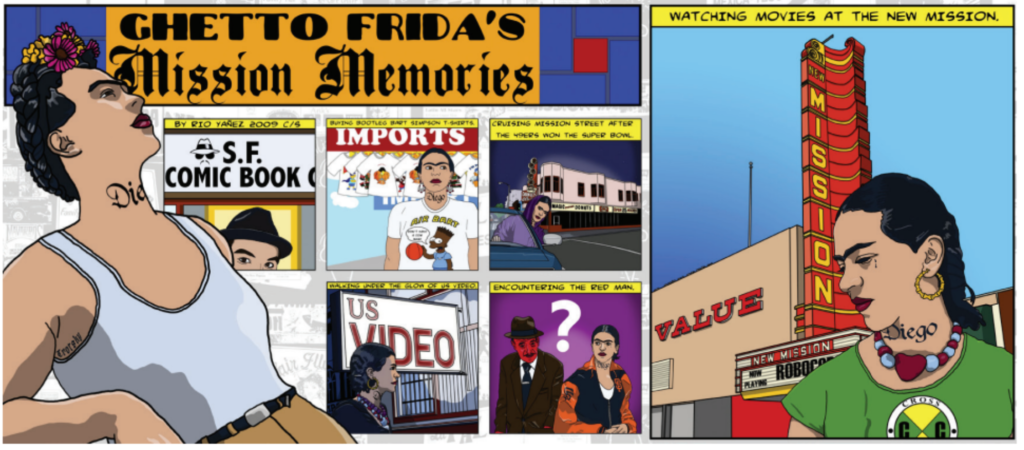
A decade later, Kahlo’s work began to attract the attention of activist networks. Highlighting her adoption by the Chicana/o movement of the late 1960s and ‘70s, as well as her lasting impact on ‘80s feminist artists Judy Chicago and Miriam Schapiro who embraced her “personal as the political” approach, the exhibition also explores how ‘90s neo-Mexican and queer artists appropriated her likeness to critique nationalism and patriarchy. Celebrating this enduring influence, visitors will also enjoy the contemporary work of Yasumasa Morimura, Martine Gutierrez, and Berenice Olmedo, which addresses race, disability, and gender fluidity.
Although academic resistance to Kahlo has often stemmed from a certain discomfort around her commercial saturation, for García-Velasco, that proliferation is powerful rather than problematic. With more than two hundred objects tracing the mass-market production of “Frida,” the exhibition reveals her transcension of museums, art markets, and global political movements. As an iconic artist whose empowering and generative work offers a “radical accessibility,” Kahlo secured a recognition that only a few twentieth-century artists ever achieved. –Kate Vines
Frida: The Making of an Icon # Tate Modern, London # June 25 to January 3, 2027 # tate.org.uk


