A look back at how clothing shaped daily life and signaled allegiance in an America on the brink of upheaval.
One need only think of red baseball caps to understand the powerful connection between clothing and politics. It was no less so in late eighteenth-century America. Fashion, in the volatile years before the Revolution, proved a flash point for political, cultural, and economic debates. Historic Deerfield takes on this subject in Dressing the Revolution: Fashion and Politics 1760–1789, on view at the Flynt Center of Early New England Life until January 3, 2027. Drawing on the museum’s significant holdings of historic garments, accessories, furniture, paintings, and works on paper, along with key loans from outside institutions, the exhibition illuminates the complex role of clothing at the time of the Revolution, while posing questions about fashion’s relationship with class, race, and gender.
In the eighteenth century, clothing was important. It was carefully maintained by its owners, bequeathed in wills, and formed part of the payment to indentured servants. Finished cloth, the basis for making garments, formed half of all British exports to the American colonies. While American colonists, especially in New England, spun fibers and wove cloth, it was never enough for self-sufficiency. Their products were coarse and generally reserved for home use or, better still, traded for coveted imports. For self-fashioning, both men and women preferred textiles imported from Britain.
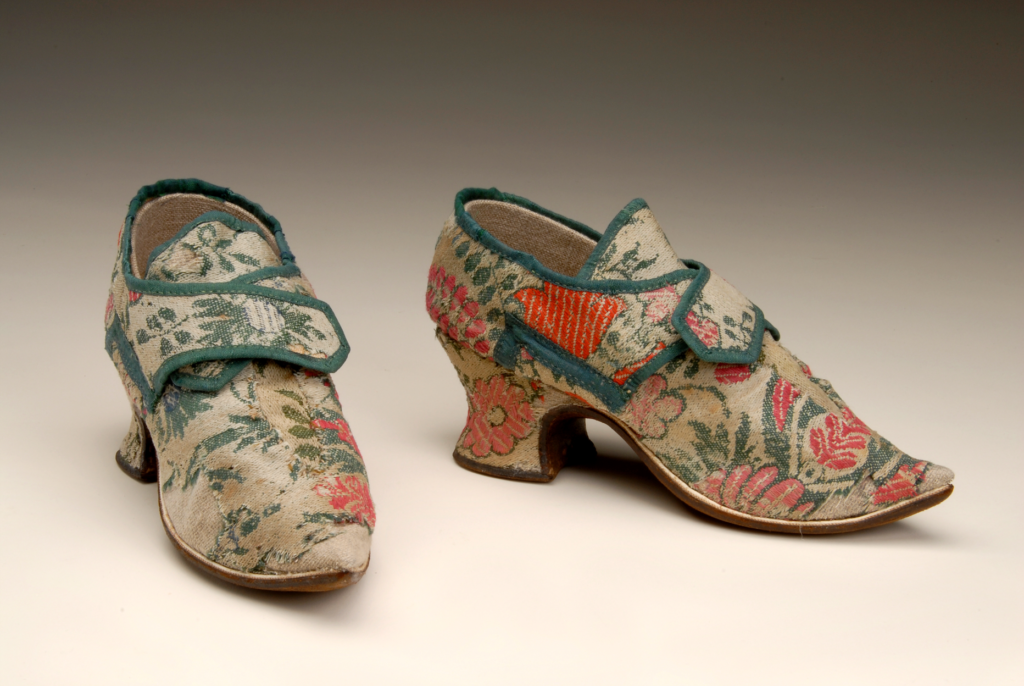
In the middle of the century, an expanding marketplace brought fashionable goods within reach of those of even modest means. Dubbed “Baubles of Britain” by Samuel Adams, these imports included Norwich wools, silk damasks, and brocaded Spitalfields silks as well as fine linens from Holland and France, cottons and silks from India and China, and such fashion accessories as shoes, buckles, buttons, ribbons, neckerchiefs, and gloves. Wool was by far the largest cloth import to the American colonies, but imports of fine woven silks steadily increased, reaching a value of £233,157 in 1761. Moreover, their consumption spread beyond urban areas.
Fine clothing presented people with new opportunities for self-fashioning. According to letters and diaries, men sought the benefits of fashionable appearances as much as women. Indentured servants and enslaved people participated in the marketplace by using dress not only for self-presentation, but also as currency, pawning items for freedom and reinventing identities. Account books kept by Deerfield store owner Elijah Williams between 1742 and 1765 reveal that local enslaved people frequently purchased such fashionable items as cloth, ribbons, shoe buckles, handkerchiefs, and buttons. They paid for these items with cash or by other means: in 1745 Caesar (enslaved by Ebenezer Wells) purchased a pair of shoe buckles and a knife at the Williams store by trading the pelt of a fox he had trapped. The freedom to acquire better clothing, with its potential for upward mobility, gave rise to a distinctly modern dilemma, as traditional patrician privilege began to express anxiety around the social ambitions of mixed classes.
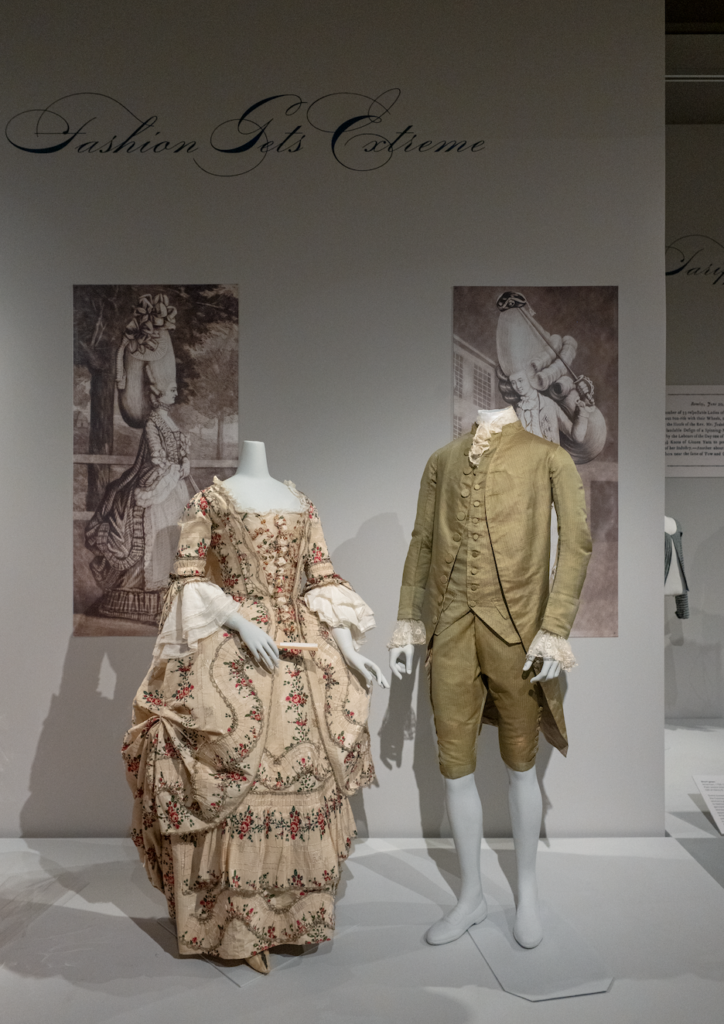
As knowledgeable consumers providing for their families, women played a vital role in the emerging political economy. Yet the imported items under their charge—textiles and tea—were the same ones that proved problematic when tensions with Britain flared. Tea drinking had become popular in England by the mid-seventeenth century and by the mid-eighteenth, American colonists had firmly adopted the practice. Popular not only among urban elites, but also the middling classes and rural folk, tea was the signature of a new polite society expressing notions of gentility. Central to the performative aspect of tea drinking was the use of fine ceramics, polite conversation, and fashionable clothing.
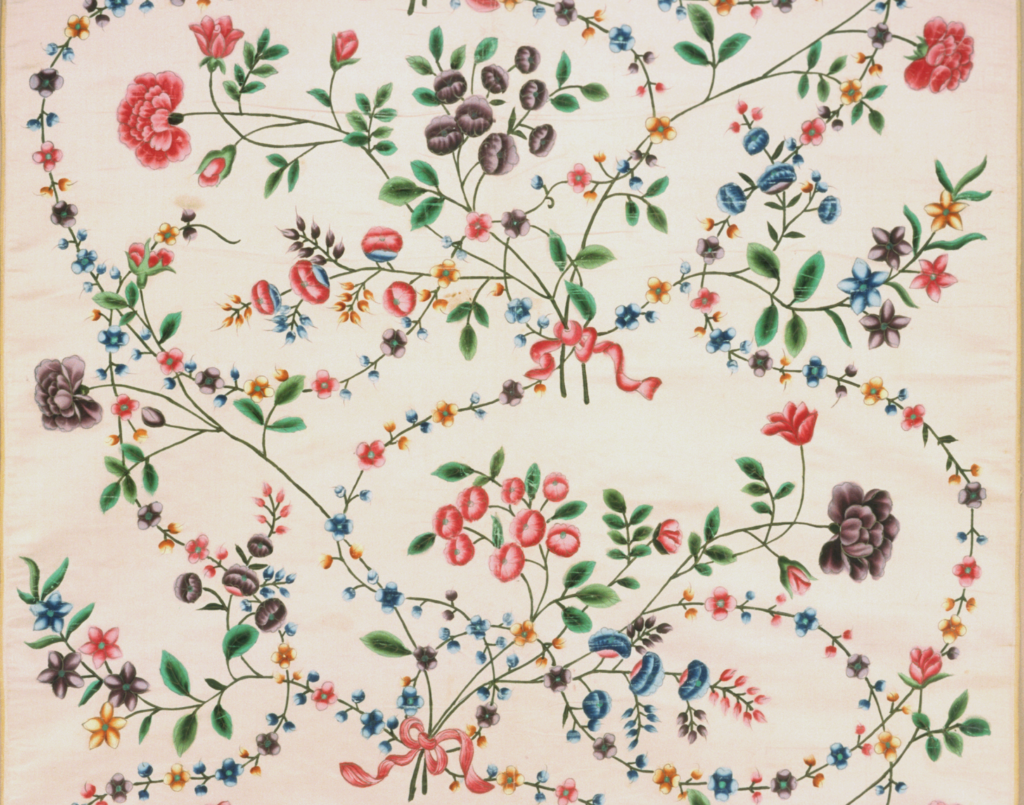
A backlash against tea ensued when Britain imposed onerous tariffs on the colonies in the 1760s. At the same time, perceptions around fashion began to change. The Sugar Act of 1764, the first tariff of its kind, imposed duties on molasses but also on “all wrought silks, bengals and stuffs, . . . of the manufacture of Persian, China, and East India, and all calico painted, dyed, printed or stained there, and for and upon all foreign linen cloth called Cambrick and French lawns.” American colonists responded with a novel strategy of non-importation and non-consumption, a form of political self-fashioning. Patriotic colonists exhorted their neighbors to wear modest, American-made clothing (called “homespun”), targeting women especially. Patriotic women were encouraged to renounce their agency in the marketplace and take up production of cloth. As expressed in the Newport Mercury on September 4, 1775:
Your modes of dress and Tinsel Garbs forsake
And useful Cloathing for your Country Make.
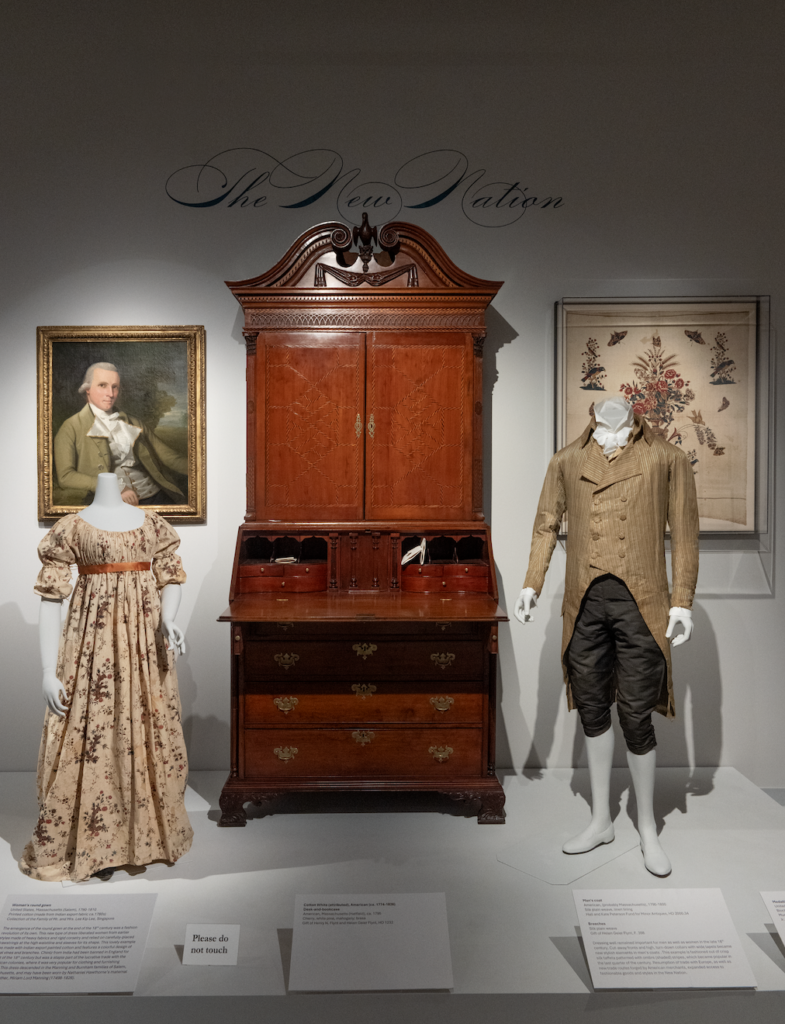
Many colonial women rallied to the cause, stepping into new political roles by gathering in highly publicized spinning events called matches, where young women spun quantities of flax and wool into yarns. Homemade clothing was never universally adopted, however, and the homespun movement remained largely symbolic. Nevertheless, it garnered enormous emotional and political weight in the years before the Revolution and contributed to a shift in the narrative around clothing, connecting modest dress and industriousness with patriotic virtue. Non-importation strategies made an impact. John Hose, a London shoemaker who exported thousands of shoes to the American colonies for decades, testified before Parliament on February 13, 1766, that he could no longer pay his workers due to the colonists’ responses to the tariff.
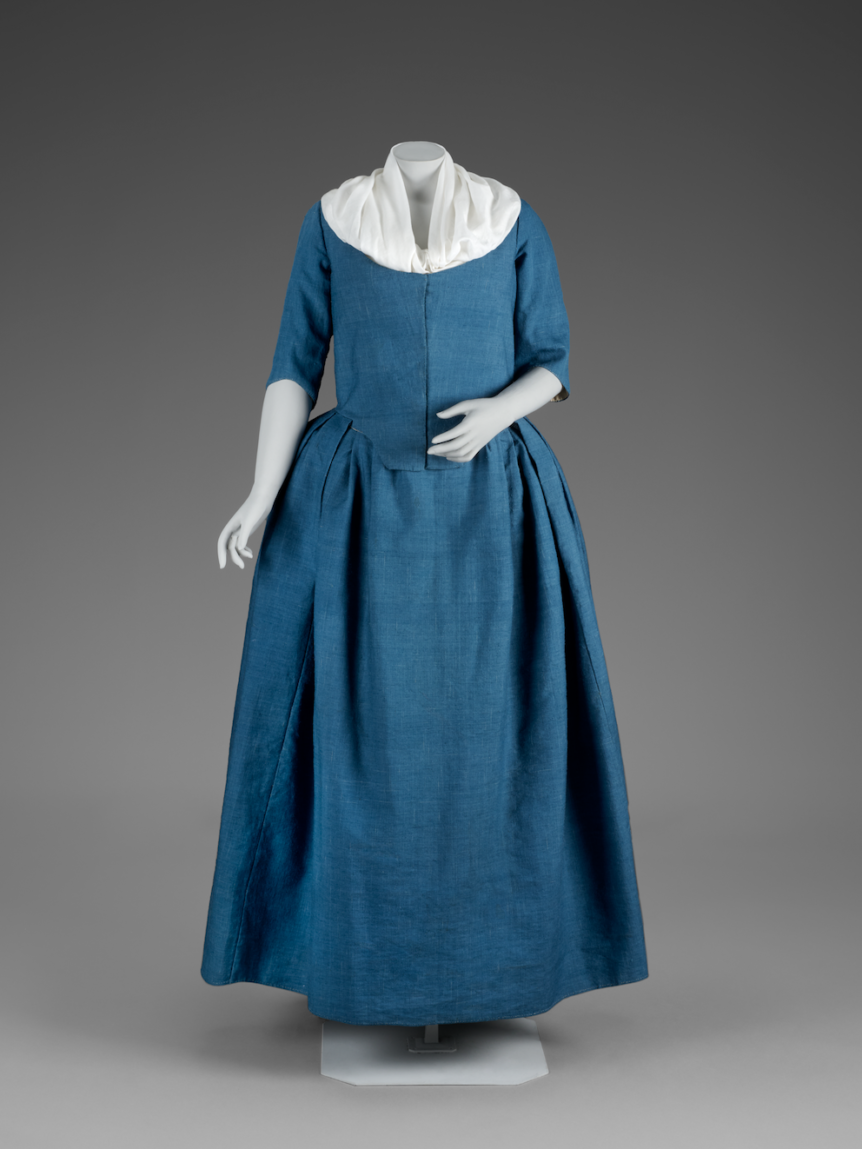
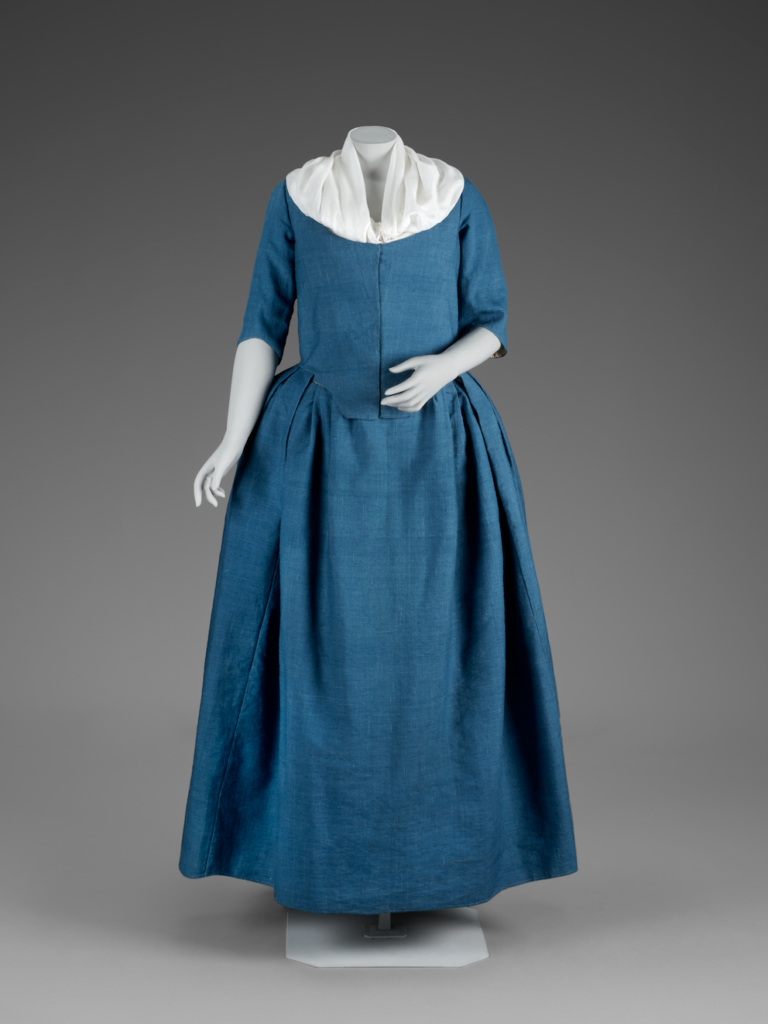
When most British tariffs were lifted in 1770, consumption of imported goods resumed, including fashions from England and Europe. Yet, in the volatile years prior to the Revolution, tensions fueled increased public scrutiny around what people wore. Colonial women who considered themselves stylish adopted new tastes in dresses; one of the most popular was the robe à la polonaise (literally the Polish dress), which featured a skirt gathered up into poufs. Yet, the non-consumption campaigns of the 1760s had effected change. Women who wore high-style fashions became increasingly seen as frivolous. Ten-year-old Anna Green Winslow of Boston expressed conflicted feelings about fashion in her diary, when she wrote in 1771:
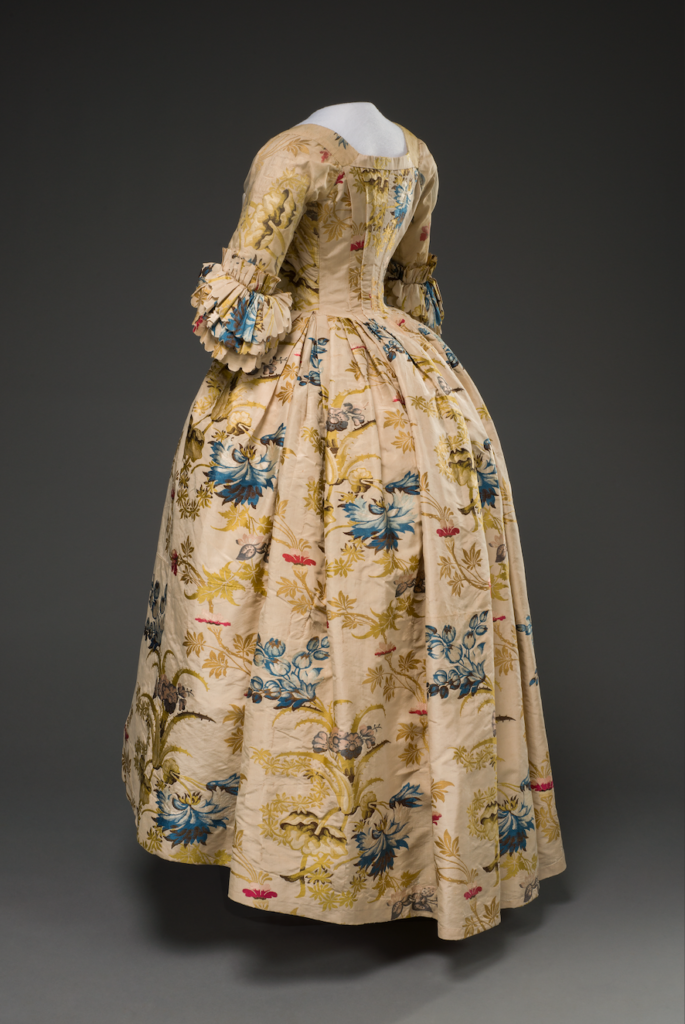
patterning, plain weave linen lining. Gift of Helen Geier Flynt.
I purchased with my Aunt Deming’s leave, a very beautiful white feather hat, that is, the outside, which is a bit of white holland with feathers sew’d on in a most curious manner white and unsullyed as the falling snow, this hat I have been saving my money to procure for which I have let your kind allowance, Papa, lay in my aunt’s hands till this hat which I spoke for was brought home. As I am (as we say) a daughter of Liberty, I chuse to wear as much of our own manufactory as pocible.
Men were also subject to scrutiny. Extreme dressing for men might incur the label “macaroni,” a pejorative term for effeminate, ultra-fashionable men who adopted European fashions after their Grand Tour. Worse still, excessive fashions could be seen as unpatriotic. William Whipple, New Hampshire’s delegate to the Continental Congress and signer of the Declaration of Independence, wrote with alarm that the Massachusetts delegate, Robert Treat Paine, had lately dressed his head in the “macaroni style.”
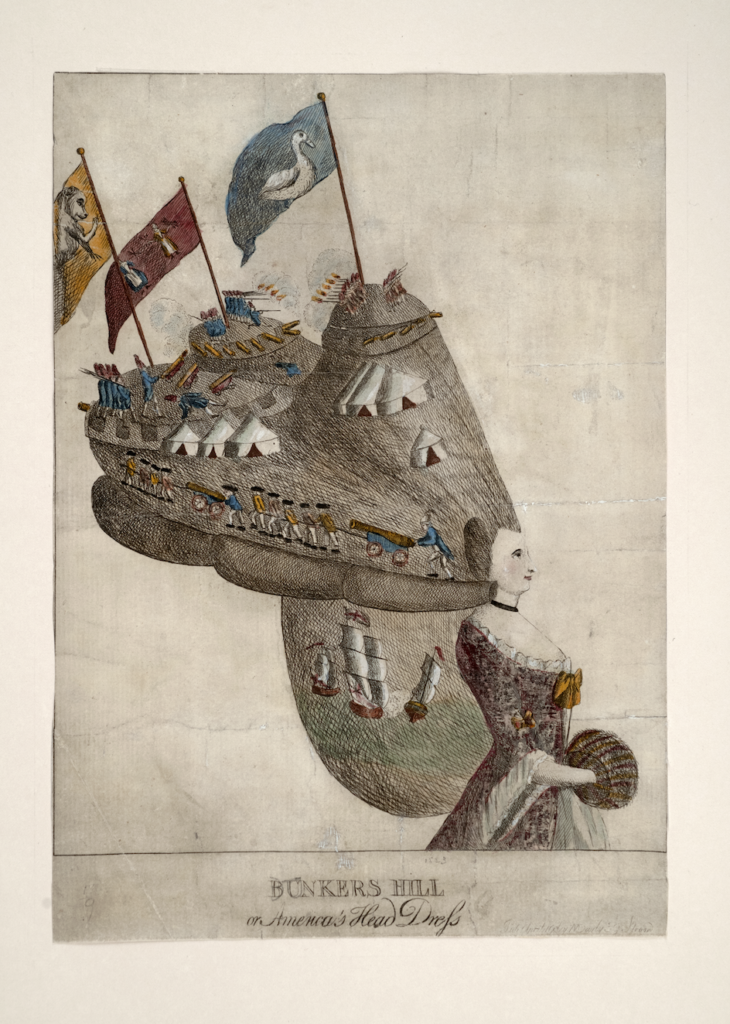
The 1770s saw the rise, literally, of extreme hairstyles such as the “high roll,” a dramatically vertical hair arrangement popularized first in France by Marie Antoinette. A flood of satirical prints employed images of extravagance in hair to poke fun at political events in the American colonies. Among the most successful were those created by husband-and-wife team Matthew and Mary Darly, who operated two print shops in London. In Bunker’s Hill, or America’s Head Dress, the Darlys used enormous hair to lampoon pretentious colonial rebellion—but also British ineptitude at the Battle of Bunker Hill, which took place on June 17, 1775. Atop the exaggerated coiffure appear tents, an artillery train, a sea battle, and three redoubts with infantry and artillery firing at close range, all representing the battle, which, while technically a win for the British, was an embarrassment, with many more British than colonial losses. The absurdity of the struggle and the British loss to uncouth colonials is expressed in the three flags flying above the battle on which appear a monkey, women holding arrows, and a goose.
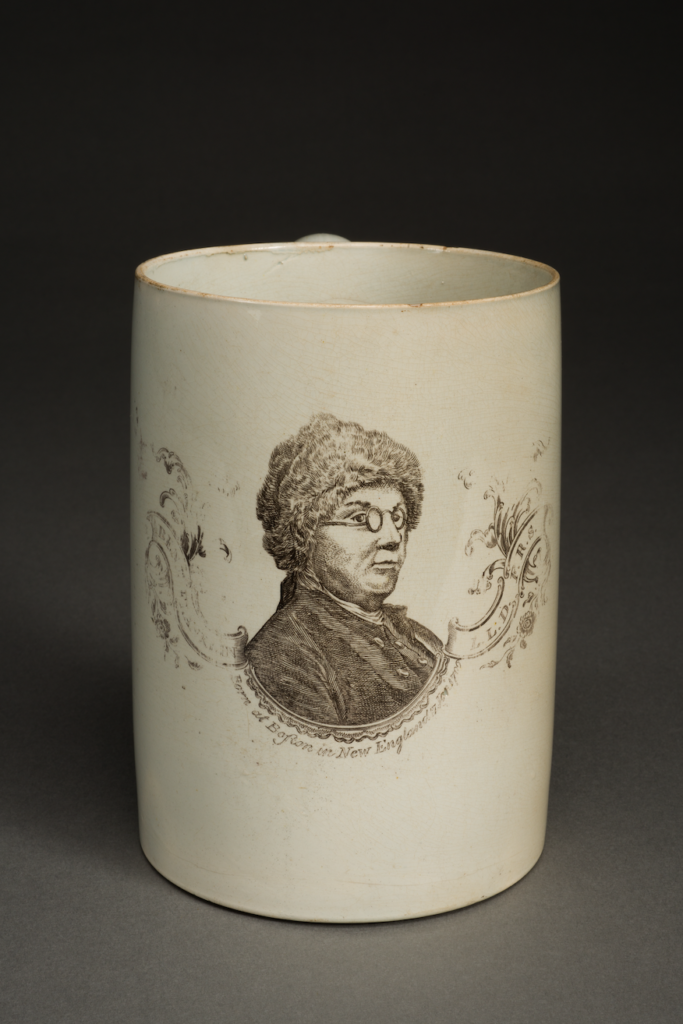
Benjamin Franklin, colonial America’s most famous citizen, understood the power of clothing to communicate ideas. In the 1770s he adopted an anti-fashion look of unpowdered and untied hair, fur-trimmed, loose fitting frock coats, and a beaver hat. Through this deliberate sartorial construction, Franklin deployed rusticity and simplicity as an emblem of American authenticity, especially when in France to lobby the government for financial backing. His look owed a great deal to a portrait of another famous rustic philosopher Jean-Jacques Rousseau, painted by Allan Ramsay in 1766. By then, Rousseau had become the chief proponent of Enlightenment notions of virtue in nature, simplicity, and feelings through his works Émile and On the Social Contract. Ramsey depicted him in a frontiersman’s cap of shaggy fur along with a fur-trimmed cloak, hallmarks of naturalness and authenticity borrowed by Franklin a decade later.
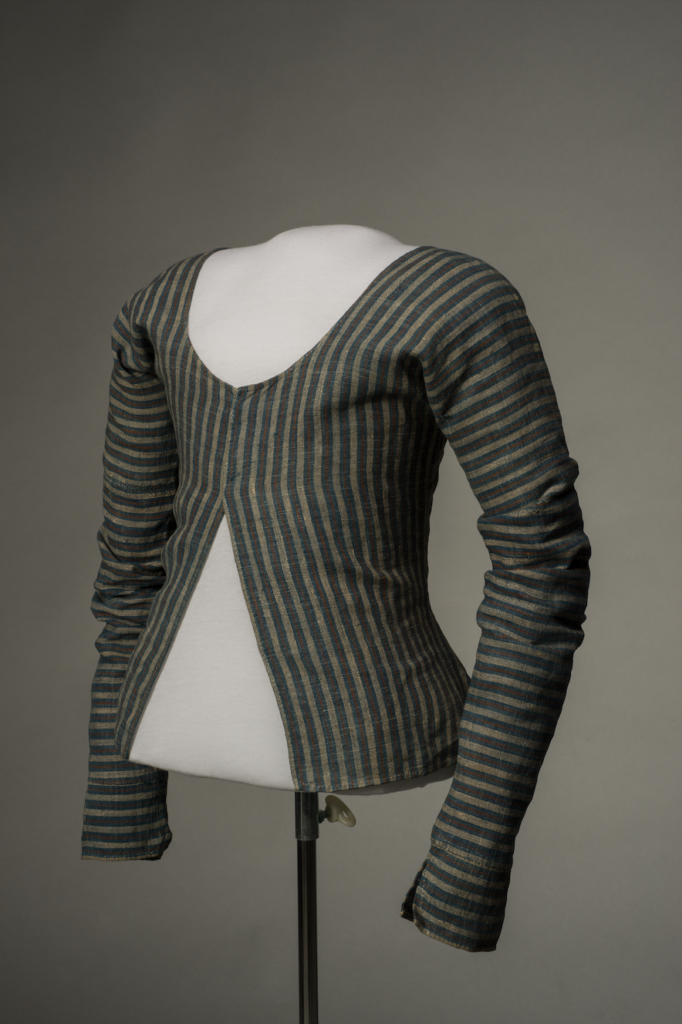
When war commenced, it brought increased public surveillance around dress. Adherence to high-style fashions could invite suspicion of Loyalist leanings. Middling and poor colonists experienced the realities of wartime through the need to make do, especially the women. With men away serving either in the Continental or British armies, wives, mothers, daughters, grandmothers, and aunts coped with their absence by knitting socks, spinning and weaving, and sewing up clothes for immediate family and soldiers. In March 1776, Abigail Adams wrote to her husband of the scarcity of goods and her labors, “I find as much as I can do to manufacture cloathing for my family which would else be Naked.”
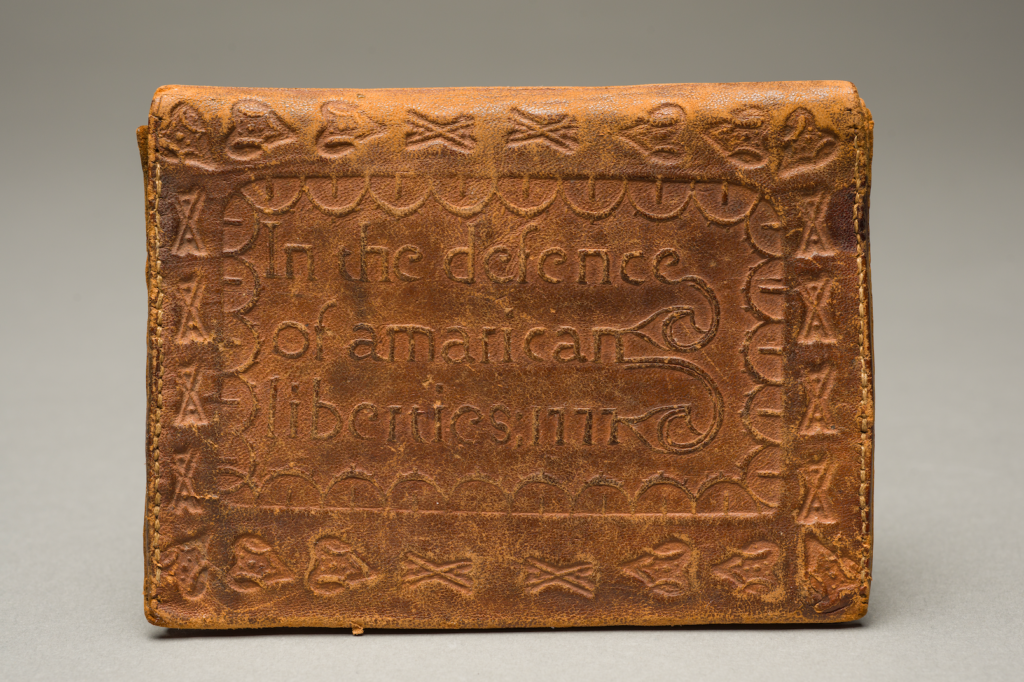
Colonists adopted inventive strategies to keep up appearances. Updating older clothing to newer silhouettes proved a common practice, as was making clothing from stockpiled imported fabrics. Some creative women block-printed their own linens with decorative patterns, while others patched and mended garments, and unraveled old stockings to get enough fiber to re-spin and knit new socks and gloves. War also inspired patriotic responses. A rare surviving man’s leather double-fold wallet was proudly inscribed on all four sides by its owner with “in the defence of amarican liberties 1771.”
After the war, America still found itself economically dependent. But for some, the resumption of commercial ties with England was unthinkable, prompting calls for patriotic leaders to wear American-made cloth. George Washington asked his trusted advisor, Henry Knox, to find decent American-made wool broadcloth for his inauguration suit. This turned out to be a difficult task, but Knox eventually secured enough brown fabric from the fledgling Hartford Woolen Manufacture, an enterprise founded by Jeremiah Wadsworth and Peter Colt. Washington’s decision to wear American-made cloth was a symbolic gesture of support for local manufacturing that linked clothing with national pride.
In contrast to the virtuous republican calls for eschewing fashion, others favored increasing consumption. They called out high tariffs on imports as an illegal assault on personal property, their argument, in effect, being one of “freedom to” rather than “freedom from,” which invites consideration of the role of material goods in expressing America’s political and social power. Eventually, American ingenuity (and a bit of industrial espionage) sparked domestic textile production. Yet even on August 9, 1799, the New York Gazette railed: “No tax is more unreasonable and oppressive that that of Fashion,” confirming that fashion and politics were still firmly connected in the public mind, and remain so today.
LAUREN D. WHITLEY is the curator of historic textiles and clothing at Historic Deerfield.


