
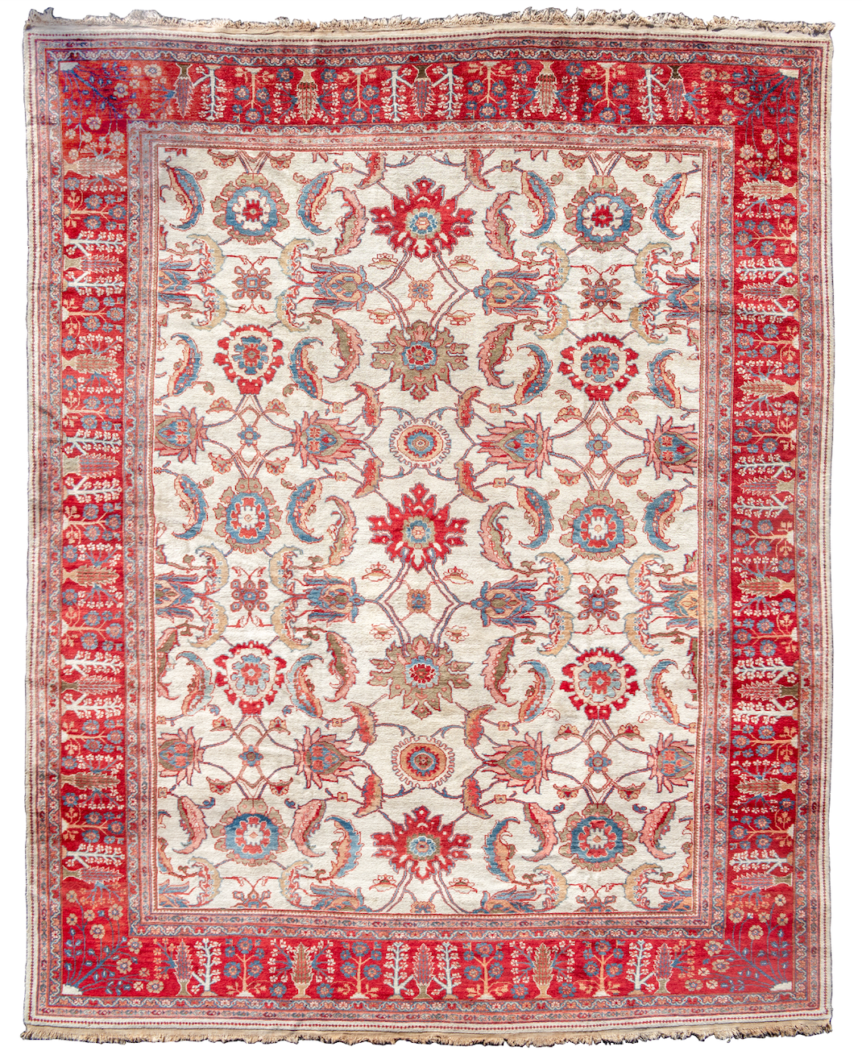
Changing tastes, minimalist interiors, and modern design culture transformed the antique rug market and fueled the practice of bleaching antique carpets.
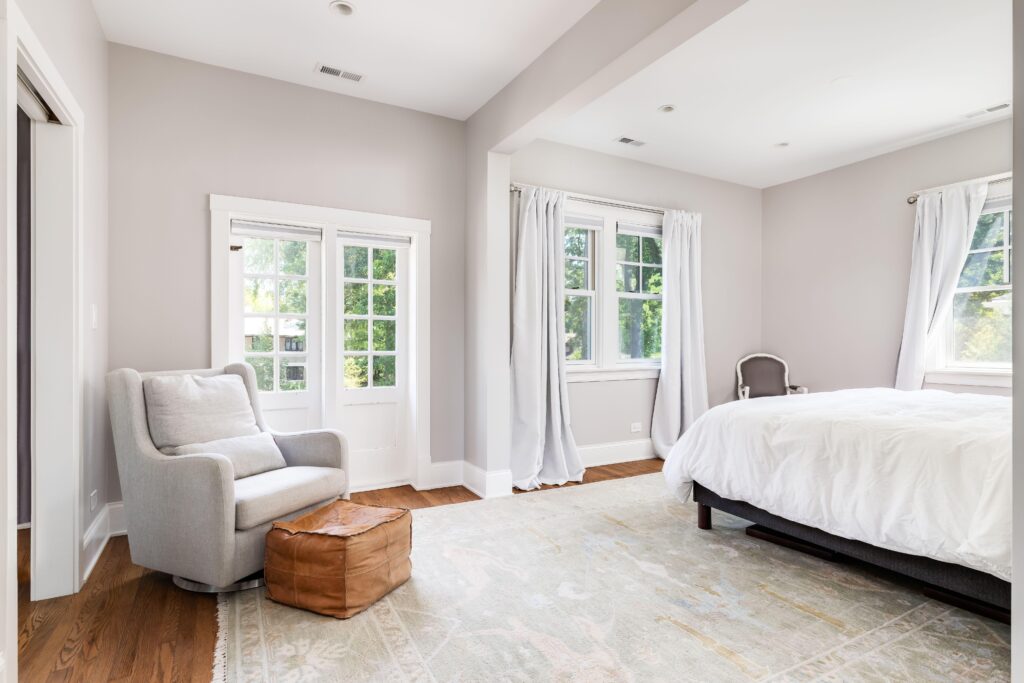
Today, when homeowners or designers are shopping for an antique rug their first thought is that they want it to go with everything; not make too much of a statement. It wasn’t always this way.
The Orientalist movement of the late nineteenth century gave birth to a love of colorful, expressive rugs, most of which had intricate patterns and rich, deep saturated colors of red, indigo, greens, and golds. The use of these rugs in palatial estates such as Fredric Church’s Olana overlooking the Hudson River, and Hearst Castle may have led the way to the preferred deep color palette seen in most export rugs well into the first half of the twentieth century. Great rug collectors of the early to mid-twentieth century (among them Joseph McMullen, whose collection went to the Metropolitan Museum of Art) focused on classical carpets of the sixteenth and seventeenth centuries. Wyoming Senator Clarence D. Clark built an important collection, and in the 1920s gave it to the Corcoran Gallery of Art in Washington, DC. The collection was deaccessioned at auction a decade ago, and an iconic Persian rug from the Safavid period was underbid bid by me (on behalf of a foundation) for a world record $33 million.
I consider the third quarter of the nineteenth century the “sweet spot” for export rugs, as it represented a renaissance in weaving and the designers and workshops looked to the great classical carpets for the color and design inspiration. The first inkling that Western taste would begin to influence rug production in the East can be seen starting in the late nineteenth century. Some Western firms began weaving in Turkey and Persia, and for the first time they produced rugs with light backgrounds and unusually large-scale field designs. Oushak and Ziegler Mahal carpets were a direct response to the arts and crafts rugs being woven by the William Morris workshop and the Donegal workshop employing designs by C.F.A. Voysey and Gavin Morton. A taste for light-colored rugs in Europe was being satisfied by French Aubusson and Savonnerie rugs, and a move to target the European market’s taste for paler rugs resulted in more traditional rugs being woven with light backgrounds. Saturated colors in rugs remained the mainstay up until World War II, but in the 1950s the rug industry responded to the growing minimalist trend in the US and the popularity of wall-to-wall carpeting by creating pastel rugs for the first time.
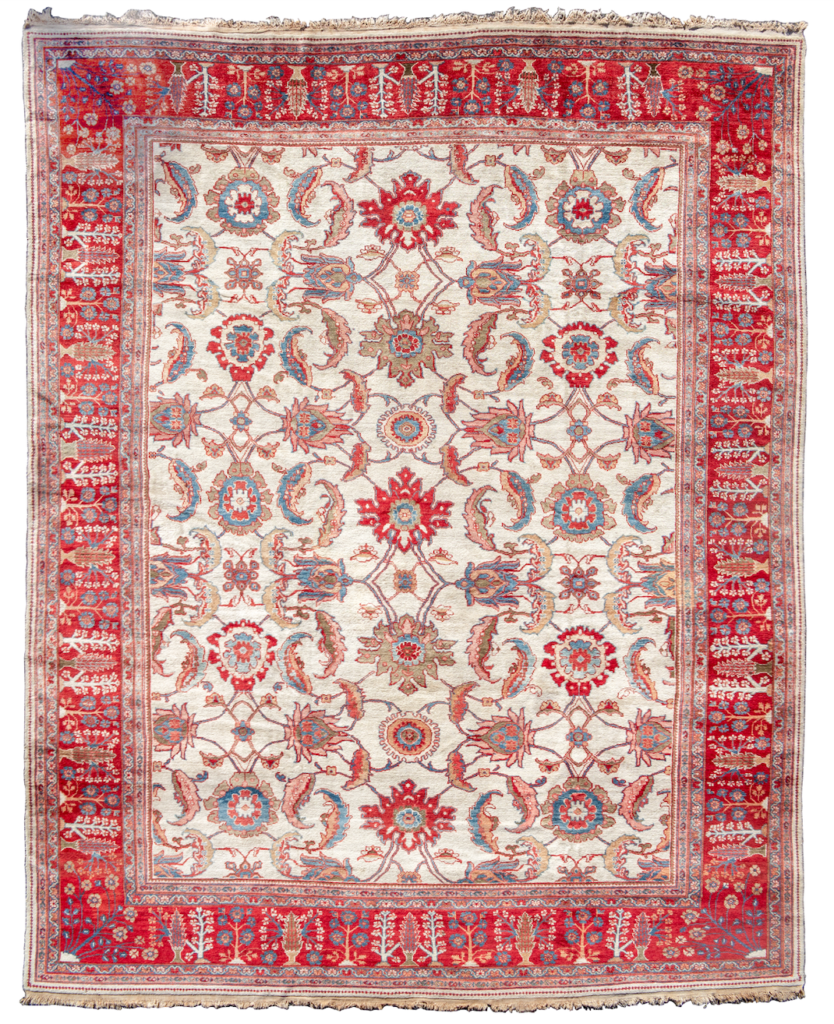
Photograph courtesy of Peter Pap Rugs, Dublin, New Hampshire.
Colorful antique rugs were so difficult to sell in this era that antiques dealers during the 1950s and ‘60s recalled that when they purchased an entire estate, the first thing they did was drop off the rugs at the dump. It was common for beautiful rugs to be found on the sidewalk on trash day. Fortunately for the oriental rug market, the 1970s postmodern movement brought back the popularity of colorful antique rugs. By the early 2000s this robust market began to take an unfortunate turn. Designers began losing the bandwidth of their clients. Rather than finding a rug first and building the room around it, rooms were designed without a rug in mind, and the “color story” was set by the fabrics and color preferences elsewhere in the space. It was a rude awakening for dealers like me when designers would visit with their fabric swatches and paint colors and react that all the rugs being opened for them were “too strong” or had too much of one color.
Many dealers began bleaching their antique rugs to satisfy this demand for the rugs to be subservient to the decor. Dealers and auction houses sometimes used the misleading term “antique washed” to describe these artificially lightened rugs. Major online sales platforms became awash (pun intended) in these rugs. And they were not sold at a reduced price—on the contrary, the list prices were often two to three times what the rugs were worth before bleaching. The consequences were severe for dealers who insisted on selling carpets in their original historic condition. One legendary dealer who was considered a pioneer in the antique rug market in the ‘70s and ‘80s sold the business, and a landmark auction of the inventory of the successor firm resulted in the sale of millions of dollars in bleached carpets, bolstered by glowing testimonials from leading designers of the day.
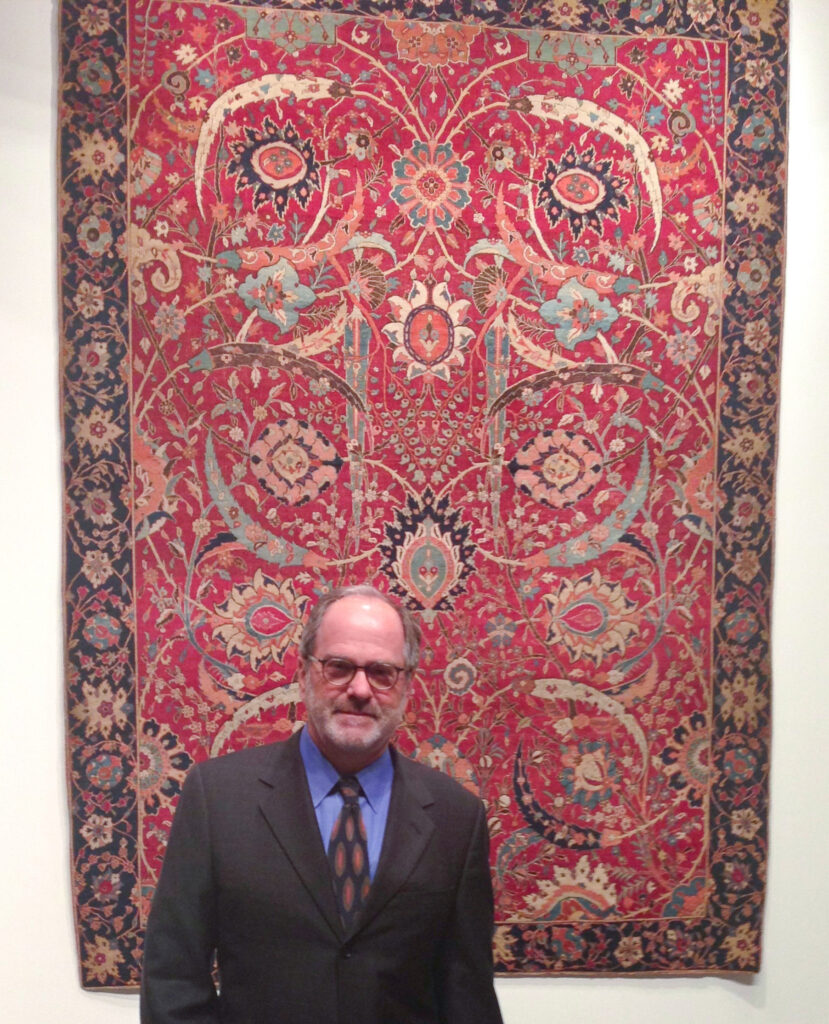
Peter Pap Rugs photograph.
Much of the public perception of what an antique rug looks like has aligned with this idea of washed-out colors and a “distressed” appearance. For two decades, I’ve rarely seen a colorful antique rug shown in a shelter magazine. Whereas earlier generations of designers would have taken their fiduciary responsibility (as responsible buyers) to their clients seriously, now the importance of “a look” has become paramount, and these rug purchases are often buried in overall budgets for a room or a job where the client never sees the line items.
Thankfully, classically beautiful objects never completely go out of fashion. Finally, we are seeing the pendulum swing back to more use of color in fashion and interiors—and collectors and connoisseurs can only turn to unadulterated antique rugs for their decor. Since the major auction houses are no longer accepting consignments of bleached rugs and the dealers that sold them won’t take them back, I fear for the unsuspecting buyers who spent tens or hundreds of thousands of dollars on these perceived investments. Will they paint the antique rug market with one broad brush, or will they seek out forthright dealers when they redecorate? Will the French term marchand de tapis (literally “rug seller,” but figuratively “snakeoil salesman”) continue to earn its reputation?


