I joined Christie’s in 2014 to stabilize and develop the market for self-taught artists on a high-profile international stage. This has been so successful that, this year, I have started including outsider art in our major postwar and contemporary sales. An overwhelming number of new buyers and bidders for outsider art are now concurrently engaging with “mainstream” modern and contemporary material, and this is consistent with what I’ve seen in museum exhibitions and the wider marketplace. Where galleries devoted to self-taught and outsider artists have established the category, increasing numbers of new galleries show works by both trained and untrained artists. Powerhouse international galleries like David Zwirner and Hauser & Wirth now wade into the self-taught space on an artist-by-artist basis.
At the moment, the outsider market is strong and stable for the “old master” creators—William Edmondson, Adolf Wölfli, Bill Traylor, and others. Female artists, such as Minnie Evans, Madge Gill, Nellie Mae Rowe, and Della Wells are showing a significant rise in popularity. Collectors new and established yearn for the next big discovery. As the market matures, boundaries between outsider and mainstream will blur in service to larger cultural narratives and collection designs, biographies will exist increasingly in support of great objects (rather than the other way around), and stellar works will become increasingly valuable. —Cara Zimmerman
This past year, for the first time, three Los Angeles galleries mounted and virtually sold out the work of three different self-taught and outsider artists. Castle Gallery mounted a one-person show of Leopold Strobl, an Austrian outsider artist living and working out of the Open Studio Program at the Gugging House of Artists, about thirty-five miles northwest of Vienna. This was followed by a one-person show at Maison d’Art featuring the work of William Hawkins, a self-taught artist from Columbus, Ohio, who died in 1990, just shy of his ninety-fifth birthday. Lastly, Sebastian Gladstone opened a one-person show of works by Franne Davids, a neurodivergent artist who worked for forty years in a basement-studio in Connecticut. Regarding the state of the self-taught and outsider art market, all I can say is that after more than forty years of continuous public gallery operation in New York City, having three different Los Angeles galleries mount three very successful one-person shows in the span of nine months pretty much tells the whole story. —Frank Maresca, Ricco/Maresca Gallery
The market for self-taught art in America’s 250th anniversary year is as broad and deep as it has ever been. Decades of hard work by scholars, dealers, and auctioneers have made household names of some of this country’s best self-taught artists: Castle, Darger, Dial, Edmondson, Traylor. That kind of market maturity means high prices for the best-known artists, putting them out of reach for many collectors. Instead, many buyers have turned their attention to newly discovered artists and, in America, there’s a sense that we’ve only just scratched the surface. Heightened demand for unknown talent is going to make things very interesting in the years ahead. Artists like Mary P. Corbett, whose figure drawings from the 1940s were discovered by chance near the end of her life are finally having their day. — Thomas Parker, Hirschl & Adler, New York
The market and overall audience for artworks by self-taught artists seem to be steadily growing and becoming more aligned with the broader contemporary art world. To me, this is very exciting, as shedding labels and descriptions like “outsider” and “folk” feels imperative for real growth, and these artists deserve to be taken seriously alongside all their peers, not marginalized.
While there is no denying that the core intentions guiding truly self-taught artists differ vastly from those of their trained counterparts, the lines and distinctions that once cast these artists apart now feel blurrier and less necessary than ever. Great art always prevails, as it should, and true invention is not limited to specific knowledge and training, or the lack thereof. —Scott Ogden, Shrine, New York
The outsider market seems to be growing. At this year’s Outsider Art Fair, attendance exceeded expectations, with the fair reaching capacity multiple times and long lines forming. Self-taught artists are increasingly integrated into museum collections. We can now appreciate artists without formal training, or disabled artists like Nnena Kalu, who won the 2025 Turner Prize, simply as compelling artists, without the “outsider” label. In terms of the market, greater exposure and institutional interest are driving momentum. —Debra Brehmer, Portrait Society Gallery, Milwaukee, Wisconsin
The outsider/folk art market is expanding in many areas that mirror the diversity of art forms in the overall generic grouping of self-taught and outsider art. More and more galleries are featuring work by artists who have been marginalized from formal education and exposure to established tenets of historically accepted art forms. These include isolation for different reasons: geographical factors, medical separation, incarceration, psychological estrangement, cultural acceptance, and others. Today, we are more open to the work of previously unrecognized artists from different cultures, geographical areas, and use of available materials. Many of their works give us insight about history, lifestyle, point of view, and use of materials outside the realm of previously recognized art standards It is our hope that the umbrella terms “folk,” “outsider,” “self-taught,” “naive,” and “vernacular” art will eventually be dropped in favor of just “art.” —Susan Baerwald, Just Folk Gallery, Summerland, California
The state of the outsider art market seems, in many ways, to be what it always has been: extremely talented and passionate artists who are overlooked for one reason or another pushing boundaries and forging their own paths, with or without the guidance of institutions. Artists are continuing to come up with new and exciting ways to get their work in front of people, despite various obstacles, and when asked about gallery representation, for some, it often feels unnecessary or even a barrier. Due to artists’ independence and freedom to speak their mind, show their art when and where they want, and the interconnectedness of social media, the outsider art world feels more worldly, connected, and alive than ever. These self-taught and outsider artists continue to reflect the global anxieties felt not only by American artists but also by artists across the world who have struggled over the past 250 years, as growing authoritarianism causes fear and destruction worldwide. We can only hope that these artists, in this country and around the world, will continue to fight and help us make sense of the uncertain and confusing times we live in. — Adam Oestreich, @folkartwork
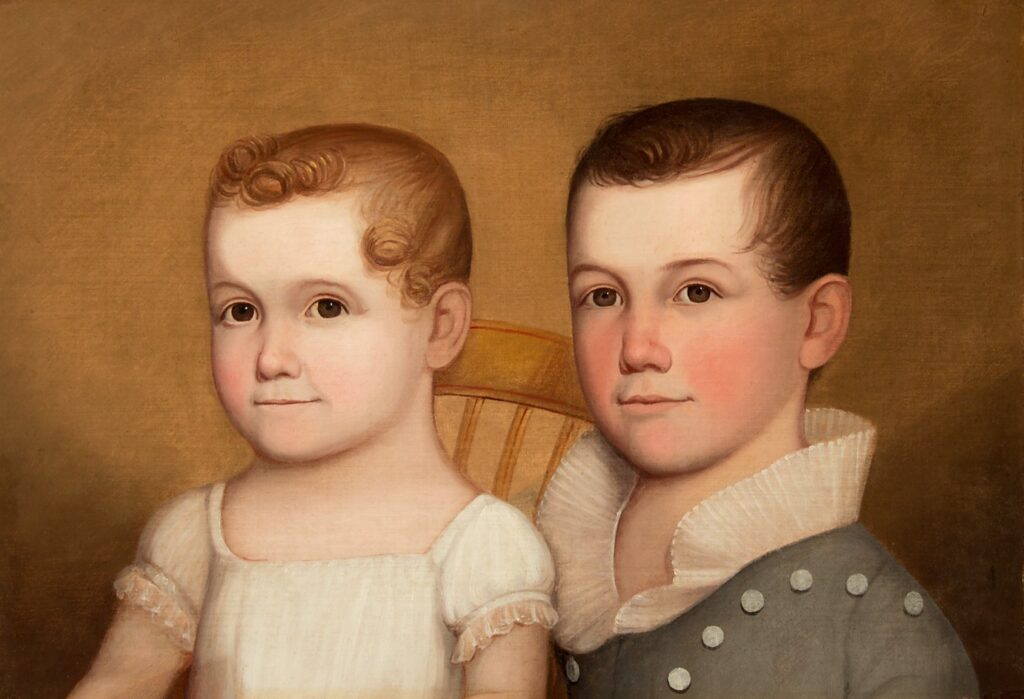
There are many remarkable American folk art collections still in private hands. When these spectacular groups of objects come to market, I see great opportunity for the next generation of collectors to fully embrace the category and become custodians of the material. Based on current market trends, I suspect many of these new collectors will incorporate folk art in their homes and lives differently from their predecessors. The great folk collections of the last fifty years were built with a sense of discovery. New collectors want that also: to feel they are forming ideas, conversations, and tastes of their own, rather than inheriting pre-approved pieces (and prices) from their parents.
The folk art market today is a fluid conversation between history and the omnivorous nature of contemporary taste. As such, many folk objects will make their way into collections that include a wide range of material, from folk art to contemporary art to mid-century design. A beautiful stoneware vessel may live next to a Basquiat. An Edward Hicks Peaceable Kingdom may hang above a Lalanne sheep. New collectors create a sense of “discovery” by curating objects in innovative ways.
This approach may seem a dismissal of a category we all love. However, it is simply reassessing earlier classification. By placing tavern signs from the Northeast, cigar store figures from New York, furniture from the mid-Atlantic, and stoneware from North Carolina together in ways their makers never intended, previous generations created the current look of “folk art.” Much of what we think belongs together is not intrinsic to appreciation of the art itself.
Christie’s recent masterpiece auction, We the People: America at 250, embraced eclectic types of objects to tell a story. Departing from the connoisseurship focused, comprehensive Americana sales of years past, this incredibly successful auction included fewer, carefully selected pieces and bridged collecting categories to serve a story and vision. It perhaps will inspire new collectors already doing the same. —Cara Zimmerman
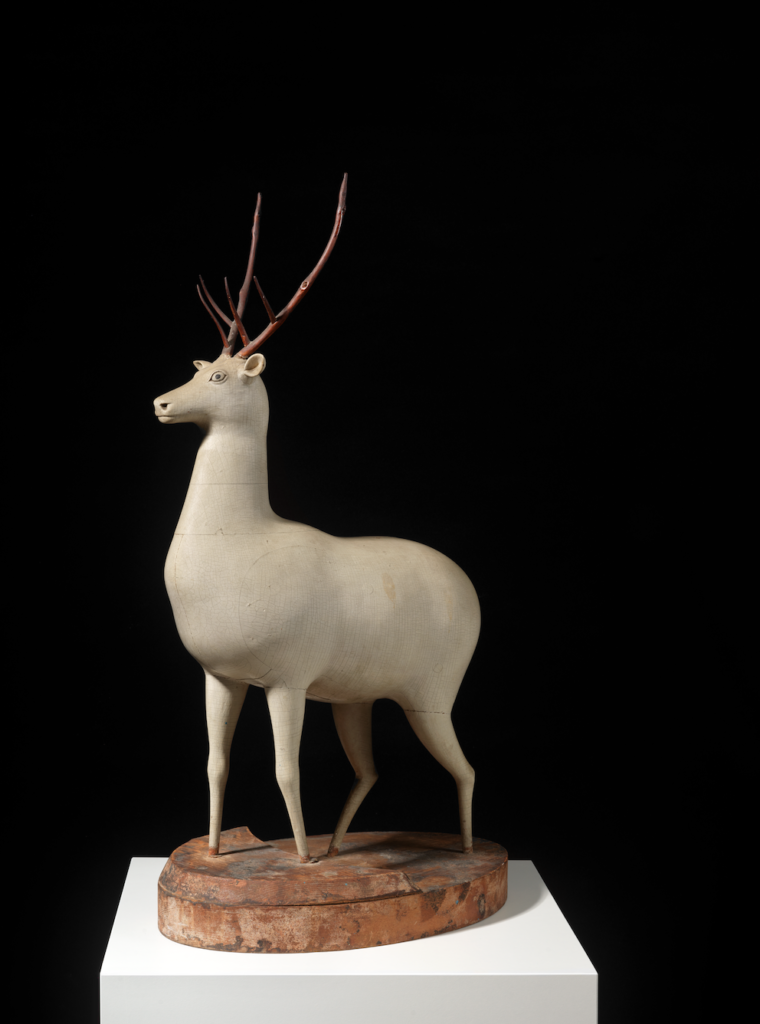
Having opened our business at the time of the Bicentennial, we have been witness to a period of unprecedented growth in the folk art world as the boomer generation embraced America’s decorative arts history with great enthusiasm. The strength of interest and the subsequent prices rose continually as the many dealers tried to satisfy the demand. Now, fifty years later, on another commemorative point in our nation’s history, the market has changed dramatically because of the supply and demand dictum of capitalism, changes in generational interest, and a directional shift in the American art market toward contemporary and twentieth-century material. The “best” is no less great than it was twenty to fifty years ago, but the prices have certainly adjusted, providing an opportunity for today’s collectors to acquire good, often great, material at attractive prices. —Patrick Bell, Olde Hope Antiques, New York and New Hope, Pennsylvania
Now is the ideal moment to collect fine Americana. Due to a combination of factors, buyers currently have access to outstanding items at highly competitive prices. While a few categories and masterpieces still fetch hundreds of thousands and millions of dollars, the majority of works are affordable to collectors without unlimited wealth. We are presently working with a small group of canny new collectors, several in their thirties, who are taking advantage of these favorable market conditions. Although their numbers may be smaller, these new collectors are enthusiastic with the same appreciation for refined aesthetics and keen interest in American history as their predecessors. The objects remain the same. Only the price and whims of “taste” have changed. In this bear market we recognize opportunities. —David Schorsch, David A. Schorsch and Eileen M. Smiles American Antiques, Woodbury, Connecticut
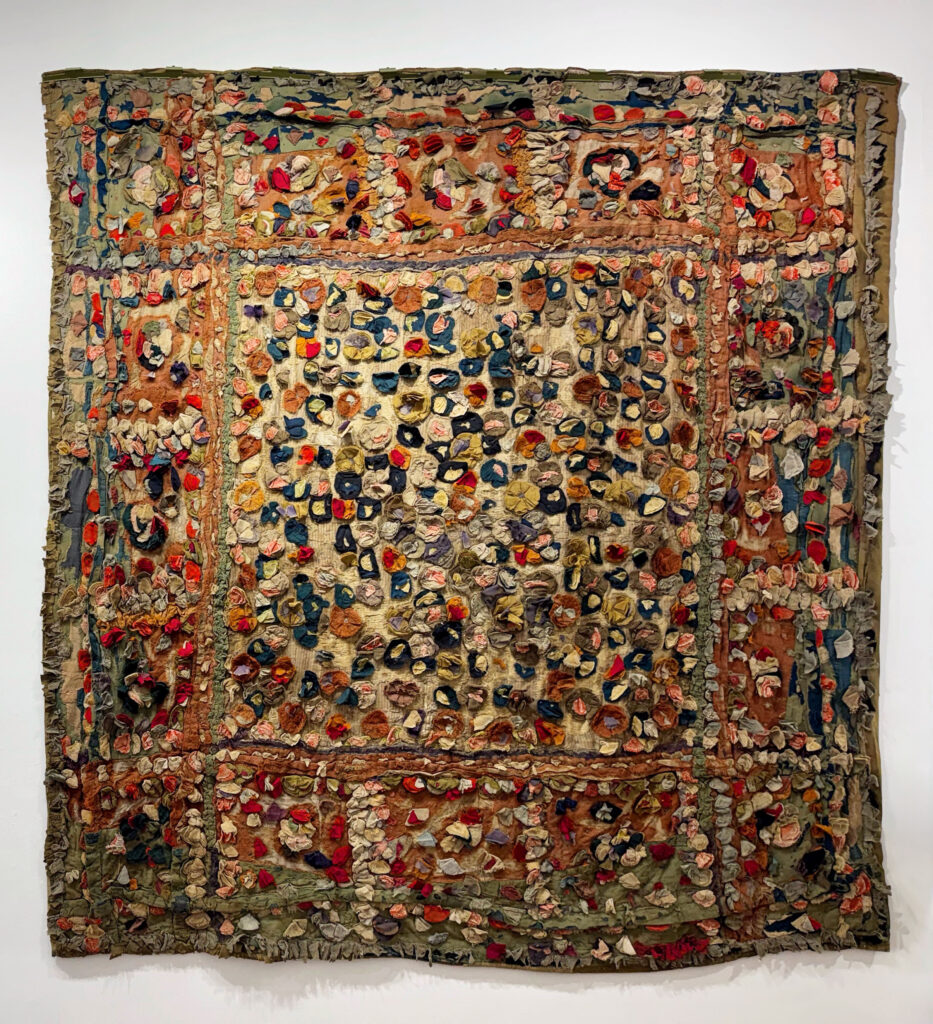
The market for period American folk art has clearly reached a mature state. Over the decades the “discoveries” have been mostly made, judged, and found their way to museums and private collections. A supply of this material is sorely needed for dealers to maintain and create interest among collectors, as many works are being directed as donations to museums and to auction sales. —Allan Katz, Allan Katz Americana, Madison, Connecticut
Last year, the most wide-reaching and critically successful exhibition at our gallery was a survey of American textiles from 1820 to 1940, all of which were made by unknown women creators. Many visitors commented on how “contemporary” they looked. And, indeed, textile and fiber arts are having a moment in contemporary art. I think people will continue to look to the past for inspiration in works that were originally created for utility but are now appreciated for their art and craft. —Steven S. Powers, New York
In an era of declining trust in experts, collectors are losing their appetite for being told what to like. Outsider and folk art offer the promise of something different: the feeling, real or illusory, that you can define your own taste. Up-and-coming collectors want to control their own narratives, and stepping outside of long established, mature markets is an intuitive way to do it. This raises the question of how long outsider art can continue to feel “outside,” before it too becomes a systematized and institutional field. —Ben L. Miller, Curious Objects, New York


