
A reflection on Émile Gallé’s lesser-known ceramics, a cherished Saint-Clément fruit basket, and the enduring beauty of objects meant to be used, not merely admired.⬬
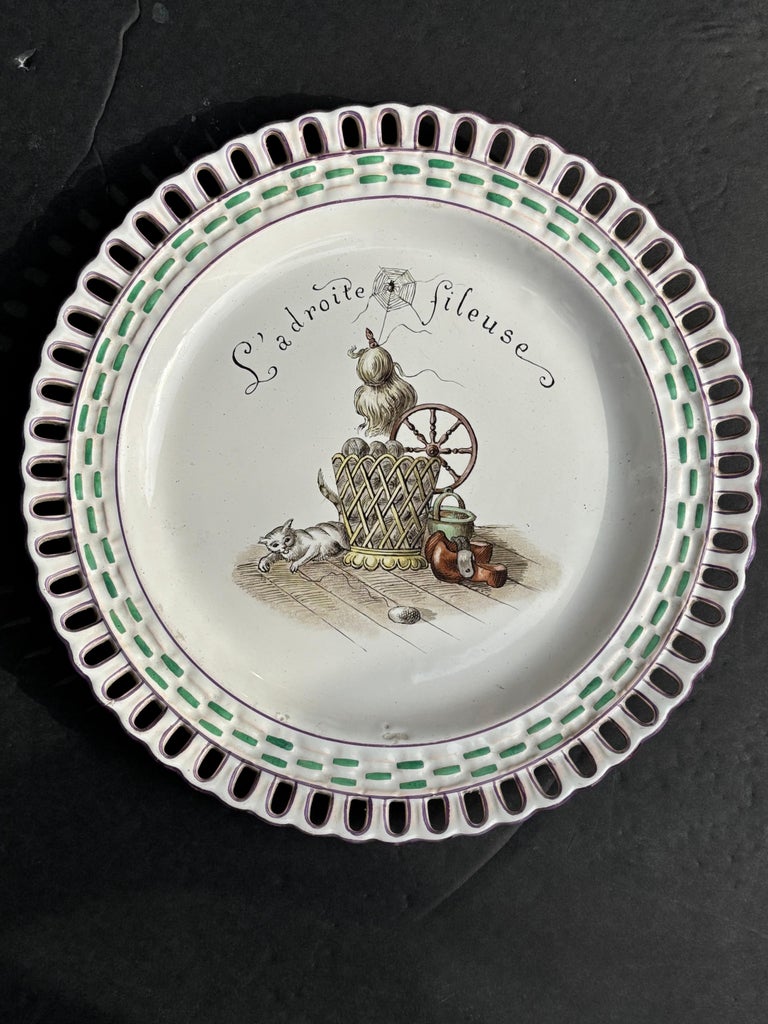
One associates Émile Gallé with glass, especially glass of the art nouveau period: weirdly, poetically beautiful. But for a time, the pioneering French designer was also associated with traditional ceramics, particularly faience. “To do full justice to Emile [sic] Gallé in every branch of his art activity would require a volume,” critic Henri Frantz observed. In his youth, before returning to Nancy and his father’s business, Gallé worked for Saint-Clément, a firm that counted Marie Antoinette among its admirers.
Though Gallé famously experimented—notably what he called cameo glass, inspired by readings of Hokusai and Baudelaire—he also oversaw Saint-Clément’s production of its more usual and lucrative models, notably smiling cats, frowning bulldogs, and lots of pierced and painted plates. (His agitator wife, Henriette Gallé-Grimm, on the other hand, was the mother of the École de Nancy and had an enormous peony, one of my favorite flowers, named in her honor; her husband got a gladiolus.) My husband and I own a Saint-Clément fruit basket, which we keep brimming with whatever is in season, such as clementines; unlike most examples on the market, our basket has a matching square tray, usually either broken long ago or sold as dishes. “I knew somebody would love that basket as much as I do,” said the Virginia antiques dealer we bought it from for $100.
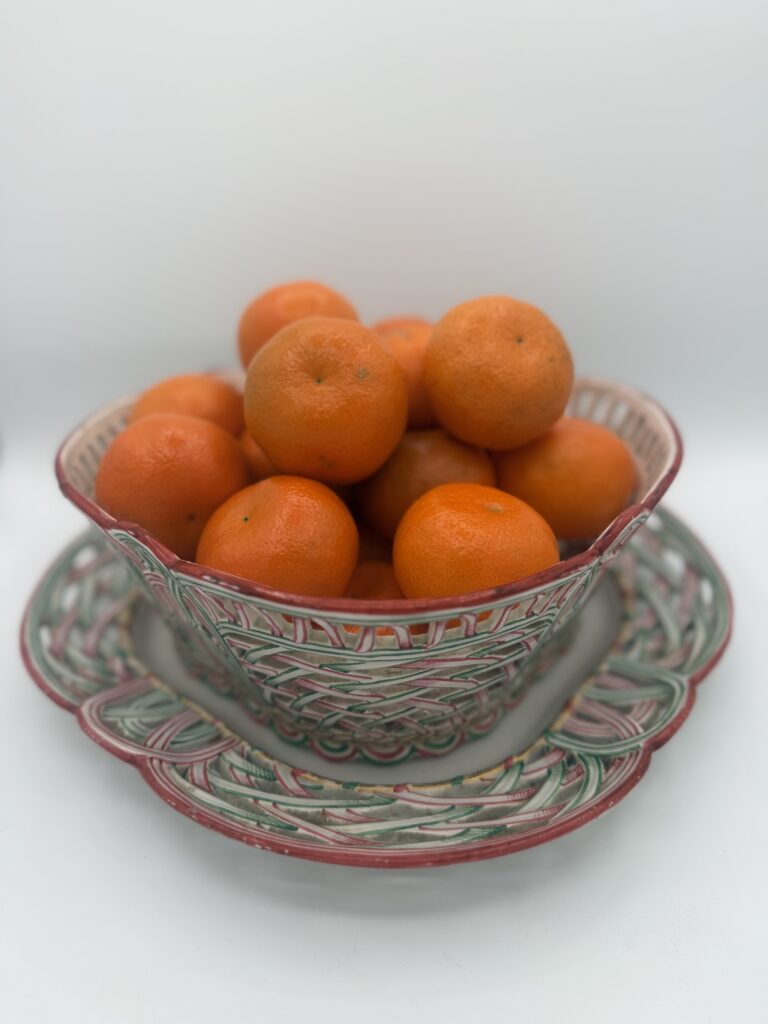
Made around 1890 and arguably by Gallé—a swirling red mark, very like his signature of the period, exists on the tray’s reverse, though degraded—the basket is handsome and colorful, with a network of interwoven and overlapping scallops that are trimmed with thin lines of emerald green and ruby red. The rest is white. There are rivets, too, just a few, enough for us to know the ceramic basket was used. That is the important thing: to deploy, not merely admire.


