
How these ocean treasures transformed from priceless royal gems into accessible symbols of beauty, creativity, and personal style.
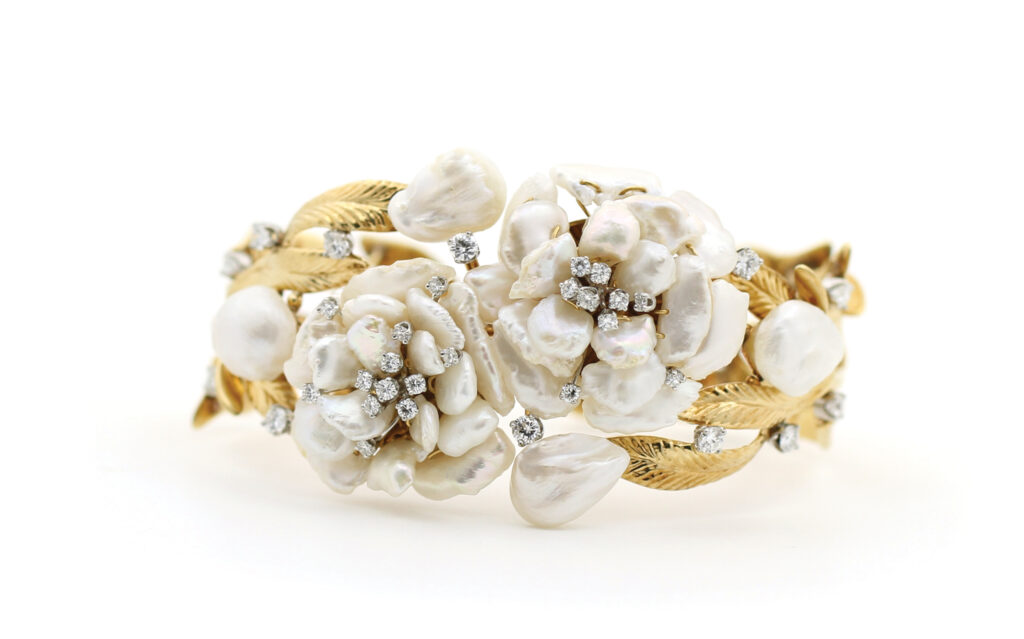
Photograph courtesy of A La Vieille Russie, New York.
For thousands of years pearls have inspired artists, sparked wars, and fascinated collectors. Portraits by Titian, Rembrandt, and Vermeer feature beautiful, idealized women adorned in pearls representing beauty, purity, and innocence. For most of history, pearls were defined by their extreme scarcity and exorbitant cost, which endeared them to royalty and influenced empires. Julius Caesar invaded Britain in 55 BC partly to gain control of Scottish freshwater pearl beds. Cleopatra dissolved an enormous priceless pearl earring in a cup of vinegar and drank it to win a bet against Mark Antony. The great and extravagant rulers Elizabeth I, Marie Antoinette, and Alexandra of Russia adorned themselves in the largest natural pearls money could buy and power could demand. As recently as 1917, Pierre Cartier traded a natural pearl necklace valued at $1 million for the Morton Plant Mansion that is still the firm’s Fifth Avenue headquarters in New York.
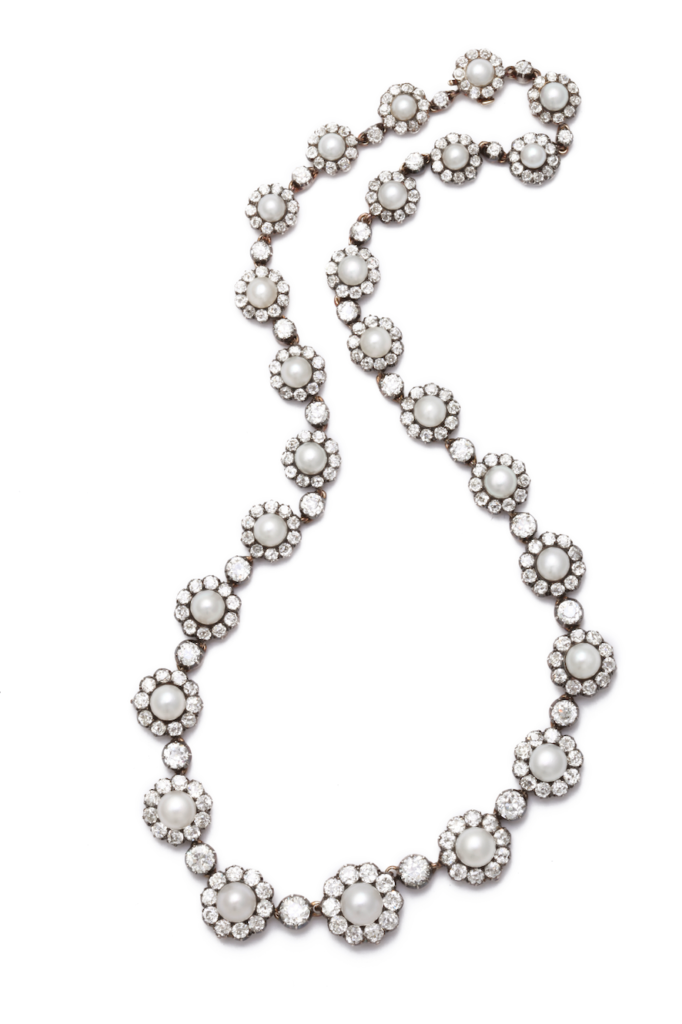
Shortly after this trade, the natural pearl market collapsed when Kokichi Mikimoto developed a method to culture pearls. For eons pearls had been formed rarely and by chance by marine oysters and freshwater mussels as a natural defense against an irritant entering the shell. To protect itself, the mollusk slowly encases the irritant in nacre, a shell lining material also known as mother-of-pearl. Prior to modern technology, harvesting natural pearls required dangerous free dives, often in shark-infested waters, to gather the creatures. It took opening ten thousand oysters to generate one good pearl, and to create a perfectly matched necklace meant opening hundreds of thousands. Mikimoto changed the equation. Suddenly pearls were easy to get, and until the advent of X-ray technology, they were indistinguishable from natural pearls.
photograph by Gabriel Dorneles on Wikimedia Commons.
Today, Adam Patrick, managing director at A La Vieille Russie, says he has seen a renewed interest in the natural pearls they sell, but with a twist. “People are more interested in unusual decorative pieces containing baroque pearls, mishappen pearls, or blister pearls that form on the inside of a shell,” he says. “There is more to pearl jewelry than a typical strand. A good piece of pearl jewelry comes down to the design.” He points to a mid-century bracelet by William Ruser featuring Mississippi River pearls forming two roses sprinkled with diamond dew. Such designs embracing the form of the pearl have a long history: Renaissance masters created elaborate gem-encrusted mythological creatures (including centaurs, mermaids, and sea monsters) using natural baroque pearls for the body.
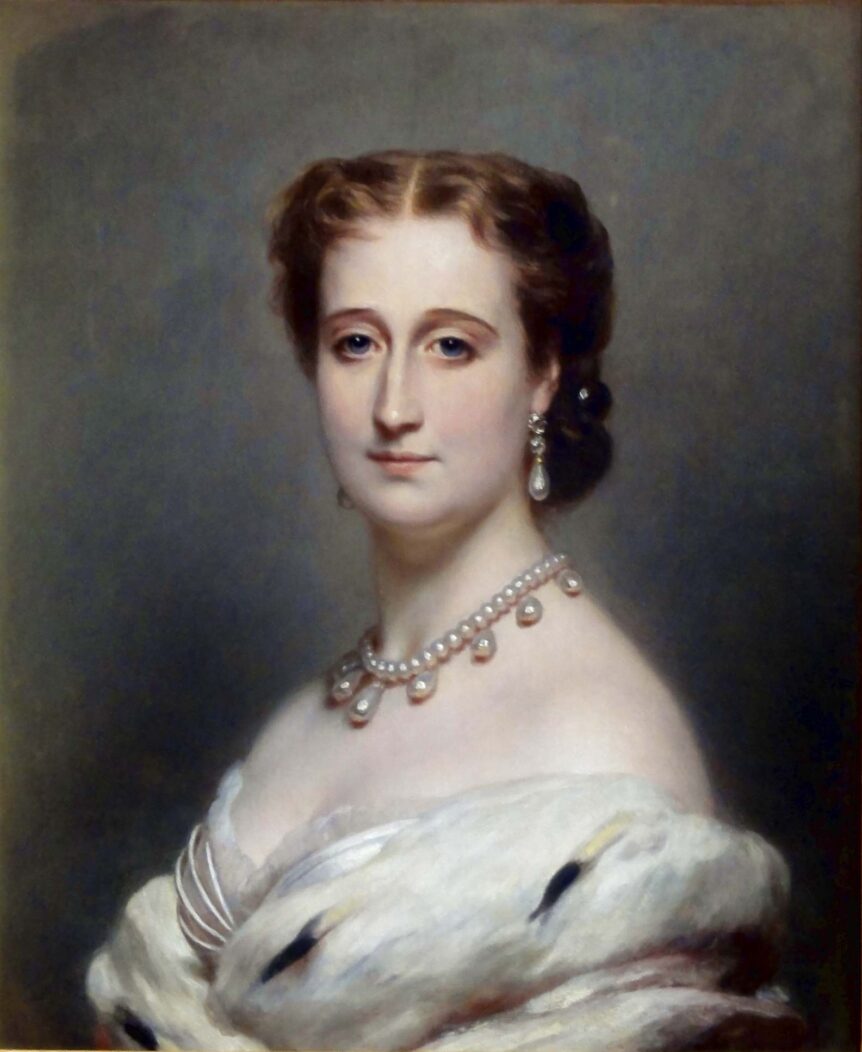
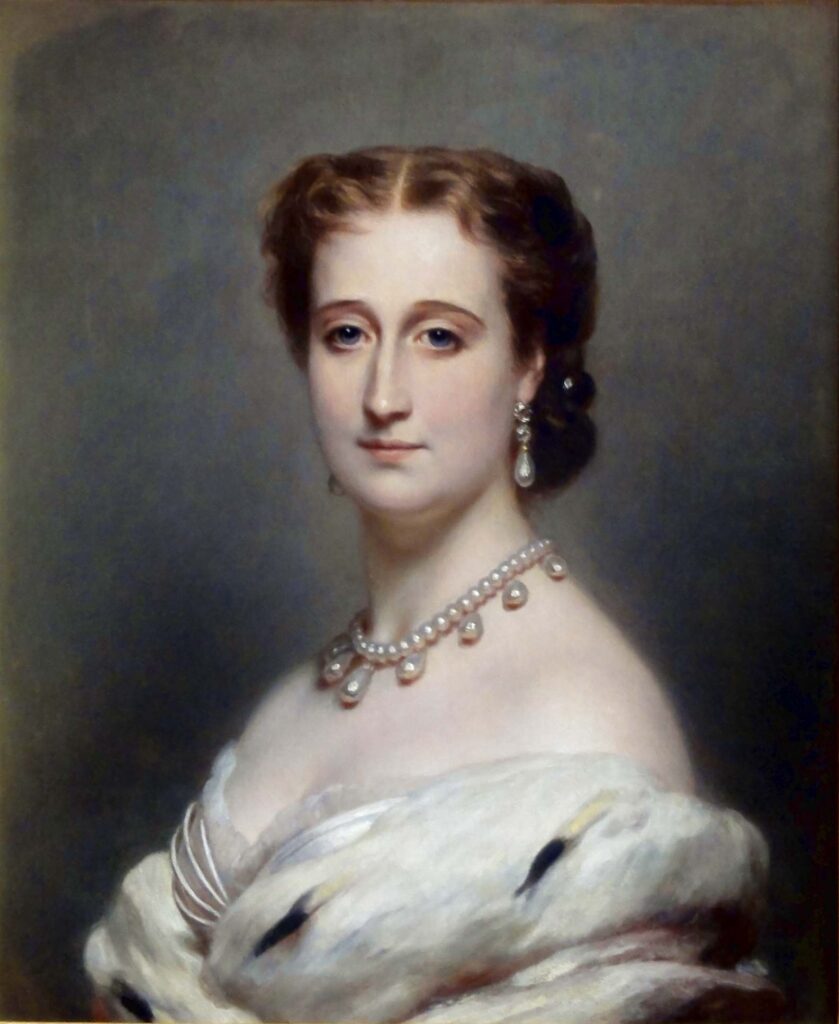
The pearl market is enormous, and a solitary pearl can cost anywhere from pennies to the $36.2 million paid at Sotheby’s in 2018 for the single baroque pearl and diamond pendant owned by Marie Antoinette. On the other side of the market, the New York firm Susan Alexandra sells kitschy costume jewelry often incorporating cultured and imitation pearls. Its Rocio necklace features baroque pearl drops and freshwater pearls knotted on a rainbow silk cord, evoking a pop take on the priceless necklace in the 1864 Franz Winterhalter portrait of Empress Eugenie. Owner Susan Korn says, “I love a time-traveling piece. I have always been drawn to pearls. They’re cheaper than diamonds and gold but just as fabulous.” The Rocio necklace is $268, about the price of a nice dinner for two.
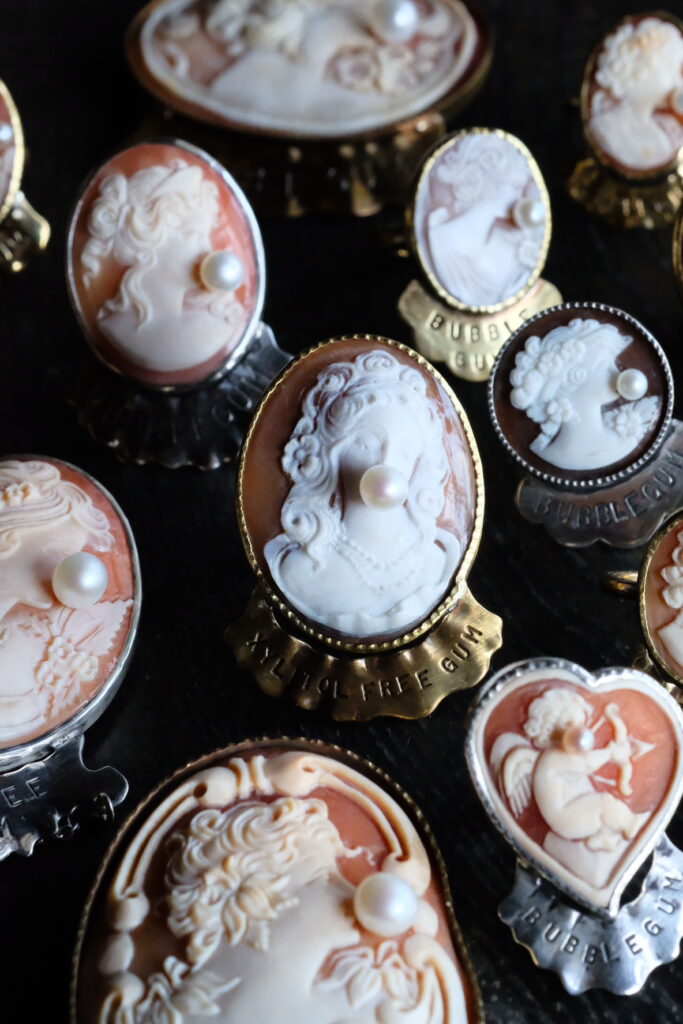
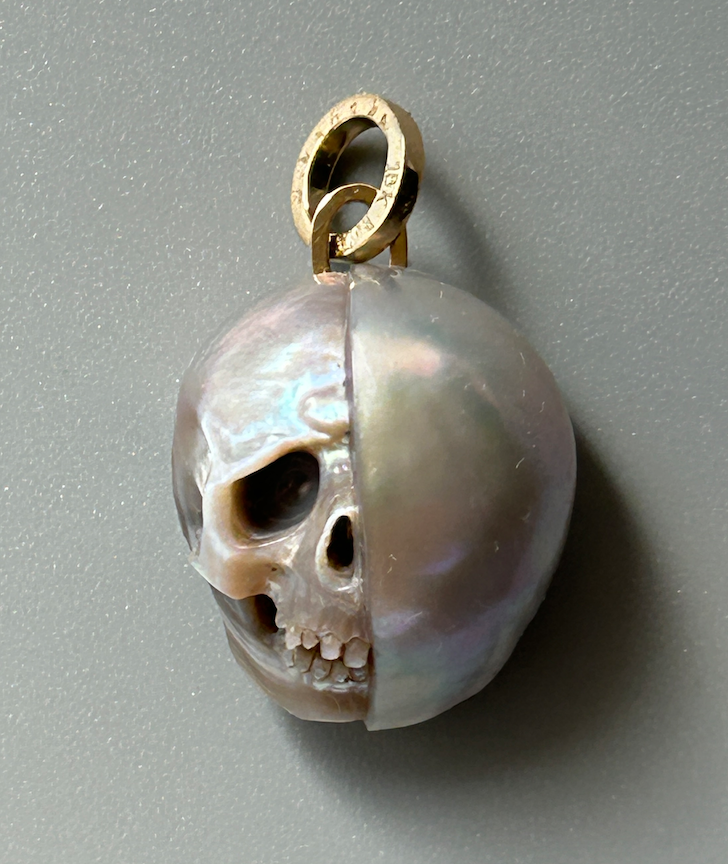
Pearls encourage playfulness, both in wearing and in designing. Shota Mino and Shinji Nakaba are contemporary Japanese jewelers who play with the perception of pearls as fussy and old fashioned. Mino’s joyful and funny Bubblegum series features pearl “bubbles” affixed to found cameos. Shinji Nakaba is best known for the meticulously carved pearl skulls he calls “fairy skulls.” He says: “I believe pearls are among the most contemporary materials we have. They have existed for thousands of years, yet they continuously change their meaning with each generation. A pearl can be elegant and traditional, but it can also be rebellious, humorous, or deeply personal. Materials themselves are never old-fashioned—only our assumptions about them are.”


