
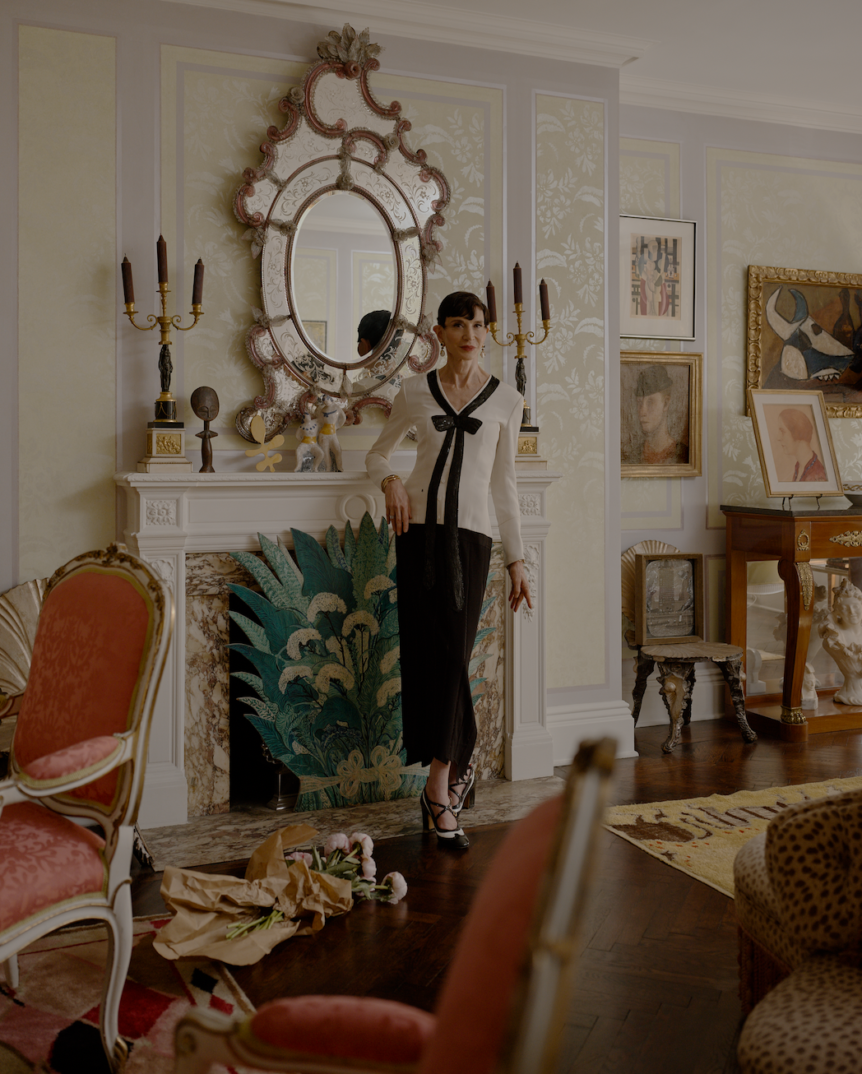
A reflection on the colors, textures, and endless ambitions that shaped the world of cosmetics entrepreneur and obsessive collector Helena Rubinstein.
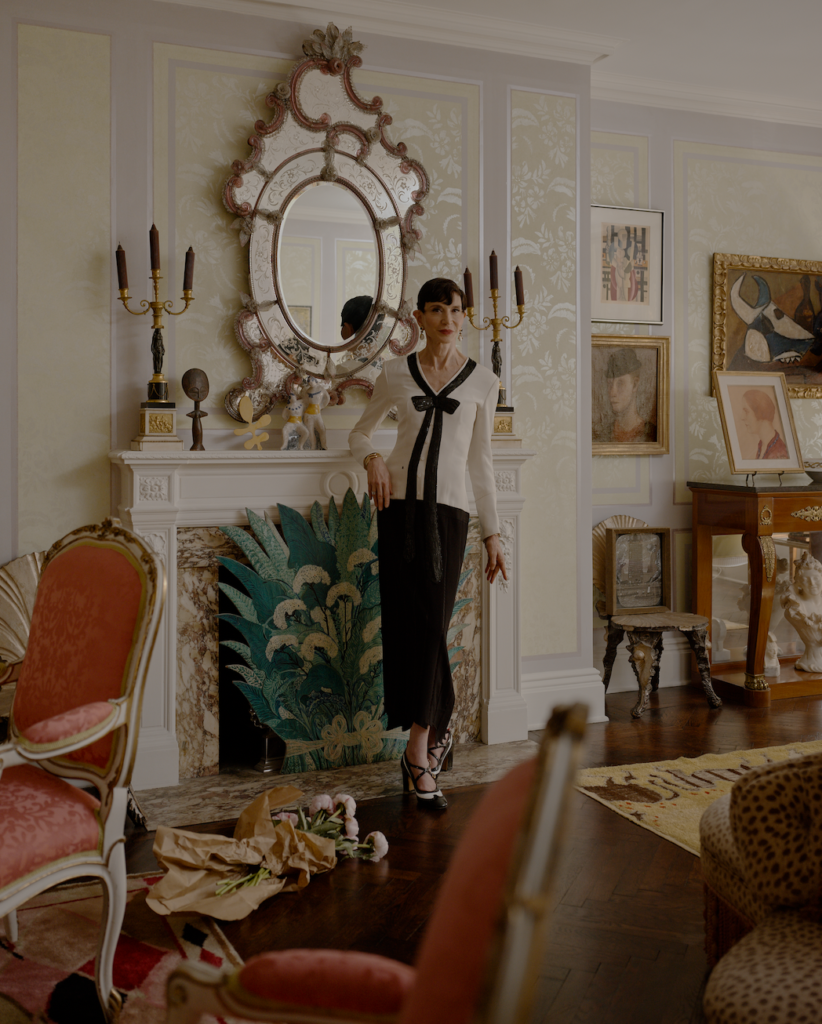
Imperial rulers from Alexander the Great to Napoleon and Queen Victoria have typically presided over a taste all their own, and Helena Rubinstein, empress of beauty, was no exception. The scale of her houses—numbering up to seven at a time—the vastness of her collections, and the scope of her empire (all in inverse proportion to her four-foot-ten-inch frame) bring to mind Orson Welles’s Charles Foster Kane, but her gargantuan ambitions, if anything, surpassed even his. By the end of her life, Rubinstein’s original twelve jars of face creams, cooked up by a Krakow chemist at the end of the nineteenth century, had proliferated into a line of five hundred products manufactured by a beauty conglomerate employing thirty thousand people in one hundred countries.
Endowed with a preternatural vitality, Rubinstein worked ceaselessly, slept little, and still had plenty of energy left over to fuel her other passions—collecting and decorating. For her first skin-care salon, in Melbourne, Australia, the resourceful émigré, in a reverse Scarlett O’Hara maneuver, whipped up curtains from white dresses that she had taken with her from Poland. The salon’s three rooms looked “light and friendly and attractive,” she recounted in her autobiography, My Life for Beauty. By the time she opened the London branch of her beauty institute in 1908, she had traded “light and friendly” for “warm and passionate.” Her future husband, literary patron Edward Titus, had taken her to see the Ballets Russes, and there was no turning back. “The electric combinations of purple and magenta, orange and yellow, black and gold” in set designs and costumes by Léon Bakst and Alexandre Benois excited her, she recalled, “beyond measure.”
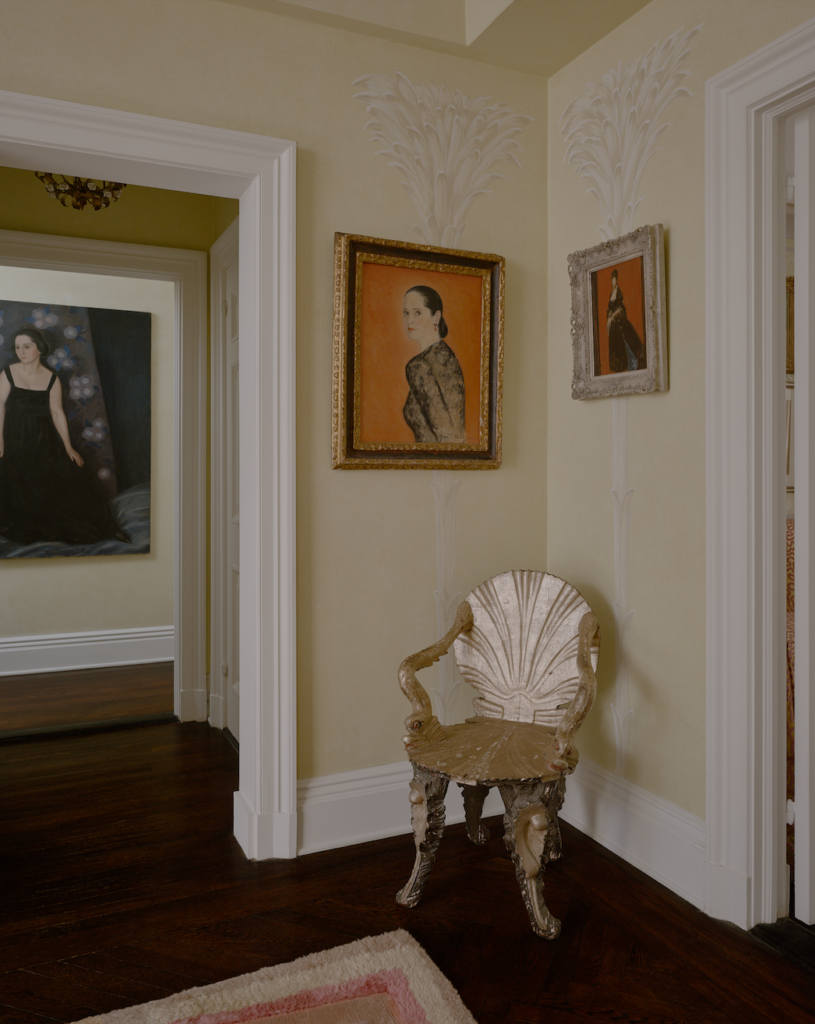
Venetian grotto chair is by Kurt Ferdinand von Pantz (1903–2003).
A law unto herself regarding color, and all else, Madame, as she was called, became famous for her chromatic table settings while entertaining her smart new London friends. She would lay out a pink dinner service on which guests ate “an all pink meal of salmon, followed by saignant roast beef, and then strawberry mouse . . . with a vin rosé,” she wrote. Among the habitués at Rubinstein’s color-coordinated dinners was sculptor Jacob Epstein, who introduced her to African art. Out of this alliance between his eye and her purse grew one of the finest collections of African art ever assembled. But her most memorable collecting coup during the prewar London years was a clean sweep of Eli Nadelman’s 1911 sculpture exhibition at Paterson’s Gallery. “She did not acquire merely one or two heads: she purchased the entire exhibition outright,” Lincoln Kirstein recalled in a 1948 Museum of Modern Art catalogue. Like her African objects, Nadelman’s suave, classicizing figures became fixtures in all her residences. Phalanxes of his creamy marble busts commanded the entrance hall of her New York penthouse, and they showed up in publicity shots, their idealized visages paired with Madame’s less regular but equally monumental profile.
Before World War I Rubinstein moved to Paris, where she was taken up by the far-seeing arts patron Misia Natanson (later Sert), who urged her to commission portraits from their avant-garde circle. By the end of her life Rubinstein had sat for scores of painters, from Marie Laurencin and Pavel Tchelitchew to Graham Sutherland and Picasso. “Good publicity, good investment, good for empty walls!” she reasoned. Salvador Dalí depicted the formidable entrepreneur as a female Prometheus, chained to a rock by her glittering ropes of emeralds. But Madame was not as in thrall to her costly possessions as the surrealist imagined. Never tidy, she stashed her precious baubles under her bed in a giant Hattie Carnegie dress box—concealed beneath several old girdles. Later an assistant improved upon this storage method by organizing her jewelry alphabetically in a filing cabinet—D for diamonds, R for rubies, and so on.
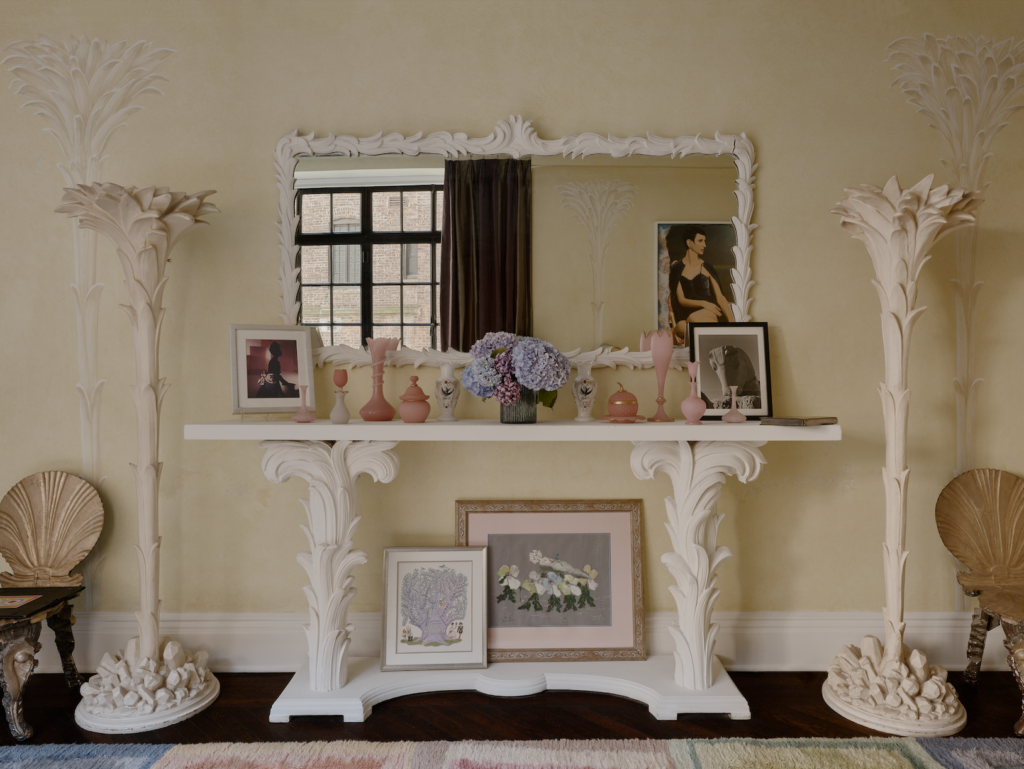
Soon after the war, Rubinstein and Edward Titus (whose Black Manikin Press published D. H. Lawrence’s Lady Chatterley’s Lover) built an apartment house in Montparnasse designed by the modernist architect Bruno Elkouken. Among its amenities was a 250-seat theater where Titus’s playwright friends staged their experimental productions. Nearby, at the Dôme café, a drug-addled Amadeo Modigliani hawked his pictures for a few francs each. “I have always preferred buying directly from the artist,” explained Rubinstein, whose divining-rod instincts, intact her entire life, would lead her to the door of a still obscure Willem de Kooning in the 1930s and to a little-known Andy Warhol in 1956. “Titus collected artists,” Rubinstein wrote in her autobiography. “I collected art.” To her deep dismay, Titus collected girlfriends too.
By the time Titus left her, Rubinstein had already planned an immense new Paris apartment building on the Île Saint-Louis. The sleek but austere structure, designed by deco master Louis Süe, blended so gracefully with the neighboring seventeenth-century Louis le Vau houses that it won a prize for the best construction of 1937. Crowning the iron-balconied edifice was a spectacular roof terrace, featuring a tiered fountain and a mirrored recess for sculptures. From this marble-floored aerie visitors could view “nearly every Parisian landmark known to the world,” Patrick O’Higgins recalled in his biography Madame. So intoxicating was this panorama, it was said to have cured André Malraux’s facial tic and nearly to have sent Coco Chanel plummeting vertiginously into the Seine below.
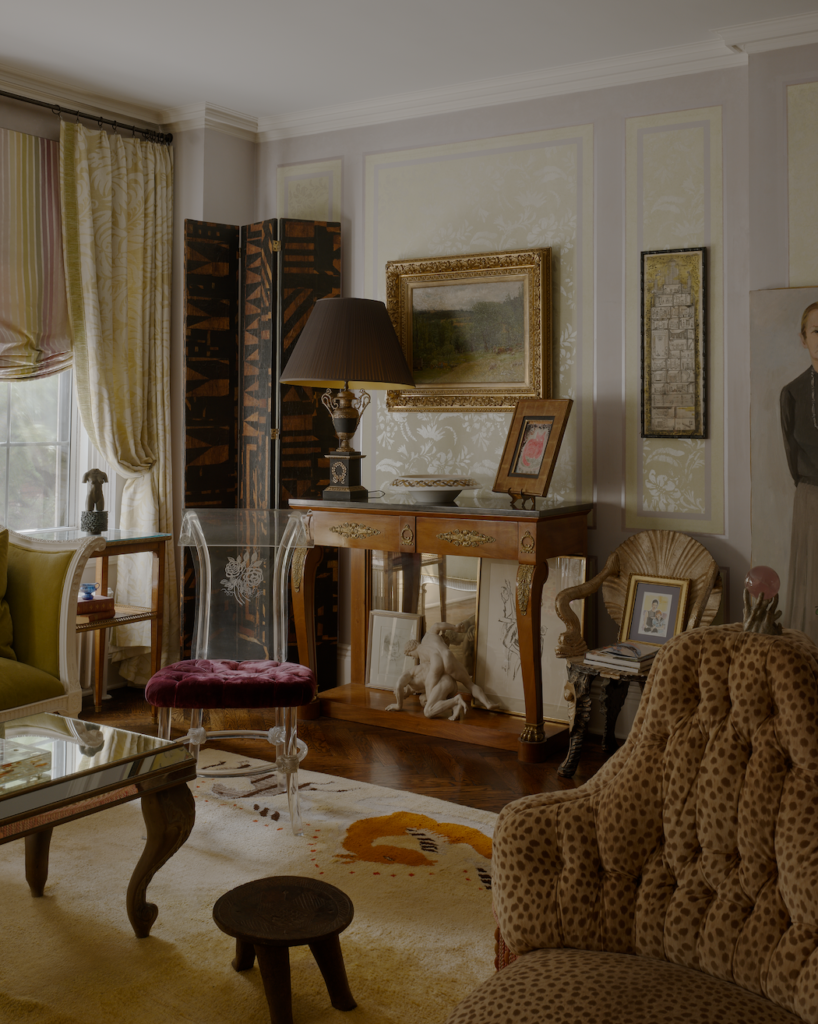
Inside, Rubinstein freely indulged her decorating heterodoxies, with assistance from artist friends Louis Marcoussis, Paule Marrot, and Max Ingrand. Within her multi-culti salmagundi of period treasures, Greek statuary kept company with the African sculptures, Savonnerie carpets mixed with Mexican rugs, Empire wallpaper coexisted with Miró canvases, and Belter furniture mingled with Boulle. As Vogue noted with some understatement in its August 15, 1938, issue, Madame was “an adventurous soul who deviates from established routes.”
More familiar to the American public was the so-called “Rubinstein Hilton,” the New York penthouse she acquired in 1941, after her marriage to her second husband, Artchil Gourielli-Tchkonia, a Georgian prince. When told she could not rent the eight-bath, twenty-six-room triplex at 625 Park Avenue because she was Jewish, she responded by buying the building. The top floor of this cavernous “castle in the air,” as she called it, was dedicated to a picture gallery, reached by a spiral staircase ascending from the middle floor, reserved for the public rooms. The lower floor contained six bedrooms, with Madame’s forty-foot-long pink chambers serving as the heart of the labyrinthine complex. Like Louis XIV with his levées, Madame, most mornings later in life, received her employees from bed, cluttered with papers and books. Walls of closets contained her couture collection, dating all the way back to Worth and going forward to Yves Saint Laurent, for whose debut collection in 1962 she provided the models’ makeup. Among the shimmer of Venetian mirrors and treasure-laden vitrines, the pièce de resistance was Madame’s Lucite sleigh bed, the handiwork of her package designer Ladislas Medgyes, the first to make furniture from this novel industrial material. Around the bed’s transparent frame, Medgyes concealed fluorescent bulbs, which when illuminated gave Rubinstein the aura of a recumbent, luminous deity.
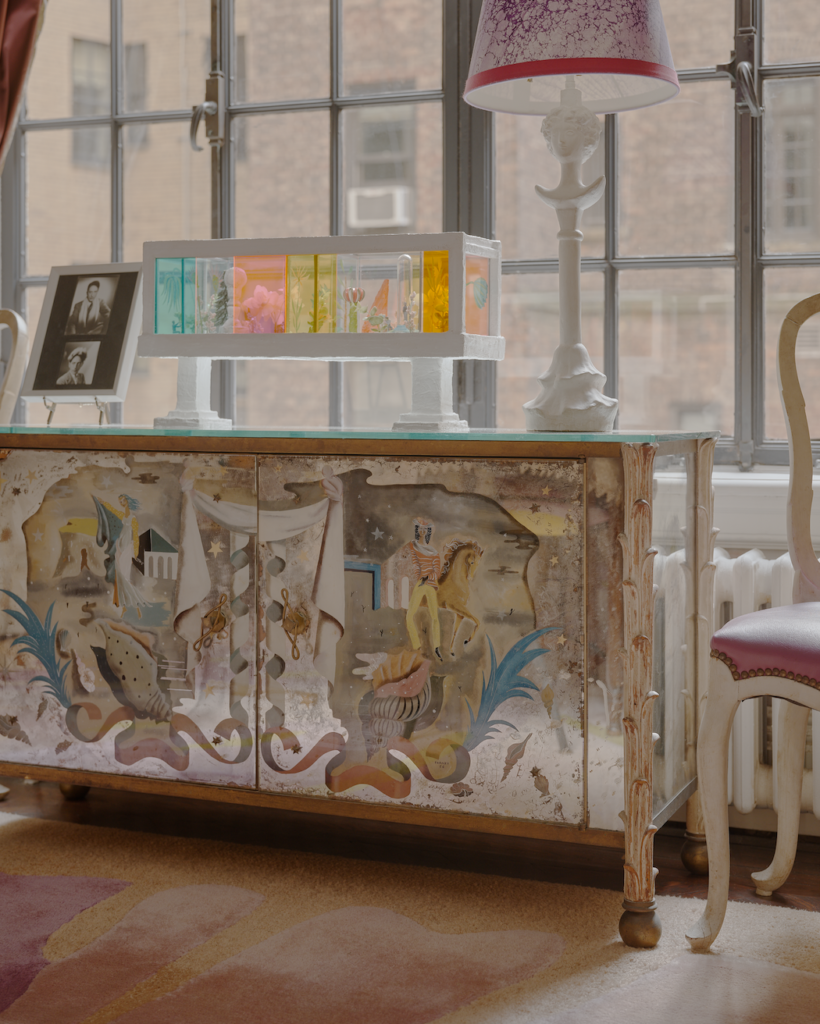
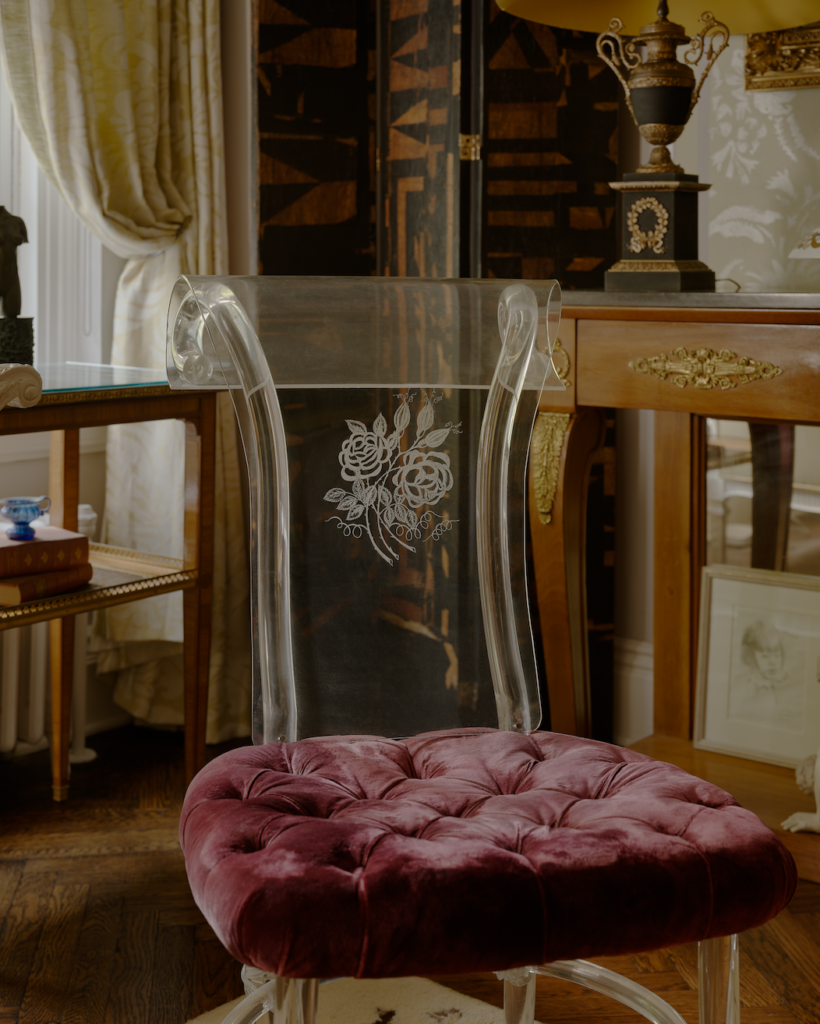
Most irresistible to photographers—Rubinstein welcomed camera crews to her home for fashion shoots as well as for her own ad campaigns—was the curved card room, for which in the early 1940s she commissioned Dalí to execute a trio of vivid landscapes, entitled Dawn, Noon, and Evening. Seating within this sanctuary consisted of silvery grotto chairs, writhing with dolphins, shells, and sea serpents, while overhead a florid blue chandelier dripped glassy stalactites. At one point the room also displayed more Lucite fabrications by Medyges, including a center table and tufted scroll-back chairs incised with roses.
Equally fanciful, if more restrained was Cecil Beaton’s transformation of the top-floor picture gallery into an ethereal Japanese-inspired folly, which, once completed, provoked Madame’s displeasure. Her consternation was fully vindicated when Beaton’s bamboo-lined walls had to be dismantled after the chatelaine discovered that they had become infested with beetles.
Still in the vanguard at ninety, Rubinstein, in 1960, asked David Hicks, England’s latest decorating sensation, to create a flat for her in Knightsbridge. When he inquired about her color preferences, Madame turned up the hem of her purple Balenciaga dress and snipped a swatch for him. Hicks then proceeded to cover her sofas, John Henry Belter chairs, and walls in scarlet, shocking pink, magenta, and puce, a heady palette that could have come straight from a Helena Rubinstein cosmetics compact.
Unable to comprehend, or even label Rubinstein’s flamboyantly idiosyncratic style, Vogue in 1945 invoked unearthly intervention. The New York apartment, the magazine reported, was “rather like a collector’s heaven where pixies have mixed up the collections. Everywhere ‘irreconcilables’ of Period meet in fabulous amity.” Rubinstein had no use for such airy interpretations. “I like my own taste,” she declared, “good or bad!”
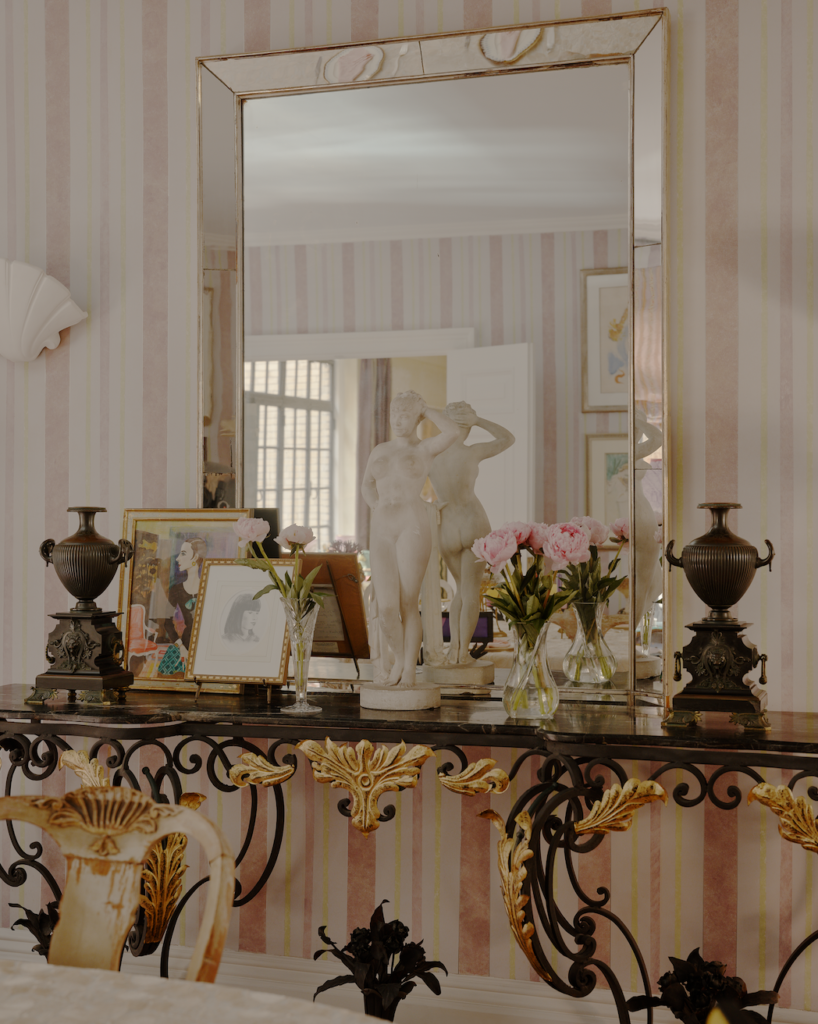
In the foreground is a chair designed by Syrie Maugham (1879–1955), a leading British interior decorator of the 1920s and 1930s.
After exploring Amy Fine Collins’s extraordinary collection of Helena Rubinstein’s possessions, Adam Charlap Hyman asks what it means to chase the past through objects—and why some collections never stop revealing themselves.
Adam Charlap Hyman (ACH): How would you describe your style of decorating? Fred Hughes described his as ghost-chasing, the theme of our issue. Do you consider yourself a ghost-chaser?
Amy Fine Collins (AFC): Narrative, colorful, allusive, layered, esoteric, personal, and a little aberrant. Like Francis Bacon (not the painter, but the seventeenth- century philosopher), I believe that “there is no excellent beauty that hath not strangeness.” Inasmuch as I am an historian, and my rooms evoke certain people, provenances, and lost worlds, I do think Fred Hughes’s term applies.
ACH: How did your fascination with Helena Rubinstein’s possessions begin? Where have you found them over the years, and how many things do you own that belonged to her?
AFC: It was not my fascination with HR’s possessions but my fascination with the woman herself that got me started. This fascination was ignited by Patrick O’Higgins’s superlative biography, Madame, a witty, irreverent account of O’Higgins’s tenure as her aide-de-camp, wingman, and walker. My Rubinstein objects came to me by way of research, friendships, auctions, and the very occasional purchase from dealers. I bought one item that I had been tracking on and off for about twenty years from a decorator, and it is probably the only Rubinstein thing for which I overpaid. I have never done an inventory, but if you must make me count. . . maybe five pieces in the country and twenty-five in the city?
ACH: What draws you to Helena Rubinstein? What is it about her taste that you feel so connected to?
AFC: My pull toward Rubinstein is rather mysterious and inexplicable even to myself. I have wondered about this affinity for a long time. I sometimes relate her to my grandmother, because she too wore her black hair skinned back into a chignon for most of her life, she was a willful woman, and her beauty rituals were like sacraments. But she was at least half a foot taller than Madame and quite good-looking. And as she was born here in America, there was no foreign accent, and never a malapropism. So who knows? So far as Madame’s aesthetics go, the oddness, the eclecticism, the indifference to convention, the lack of pretension, the bohemianism combined with haute glamour, the fearless palette, the relentless curiosity, the sense of fantasy, and the discipline mixed with excess all appeal to me on an almost chemical level.
ACH: What is the object you prize most that once belonged to Madame? What is the piece that got away?
AFC: I prize every object. But I suppose the most historically important pieces are the Madegys Lucite chairs. For that reason I shall say that those scroll-back wonders are the most beloved. I am tormented by all the pieces that got away—not because I never had a chance of owning them but because I did. I bought everything without my husband’s, a decorator’s, or anyone else’s involvement, much less approval, so sometimes I second-guessed myself. The bed that was en suite with the Madegys chairs perhaps is the numero uno regret. What was I thinking? “Where would I put it?” (And why did that matter—I always find a place for everything.) The [Christian] Bérard double portrait is maybe my number two regret—I let my antiquarian friend, whom I brought to the Sotheby’s sale, buy it while he was sitting at my side. Number three are the Belter chairs. Number four is the Tchelitchew portrait. That is enough—I am getting sick!
Madame’s idiosyncratic sensibility was ridiculed during her lifetime, and a residue of that mockery was passed on to me. There was befuddlement and an air of disapproval among some friends and family members about my deviant decorating. As the years passed, my dedication to Le Goût Rubinstein became vindicated by the Jewish Museum exhibition, to which I loaned numerous items, and by the brilliant Broadway musical War Paint, whose sets featured replicas of a few of my Rubinstein portraits.
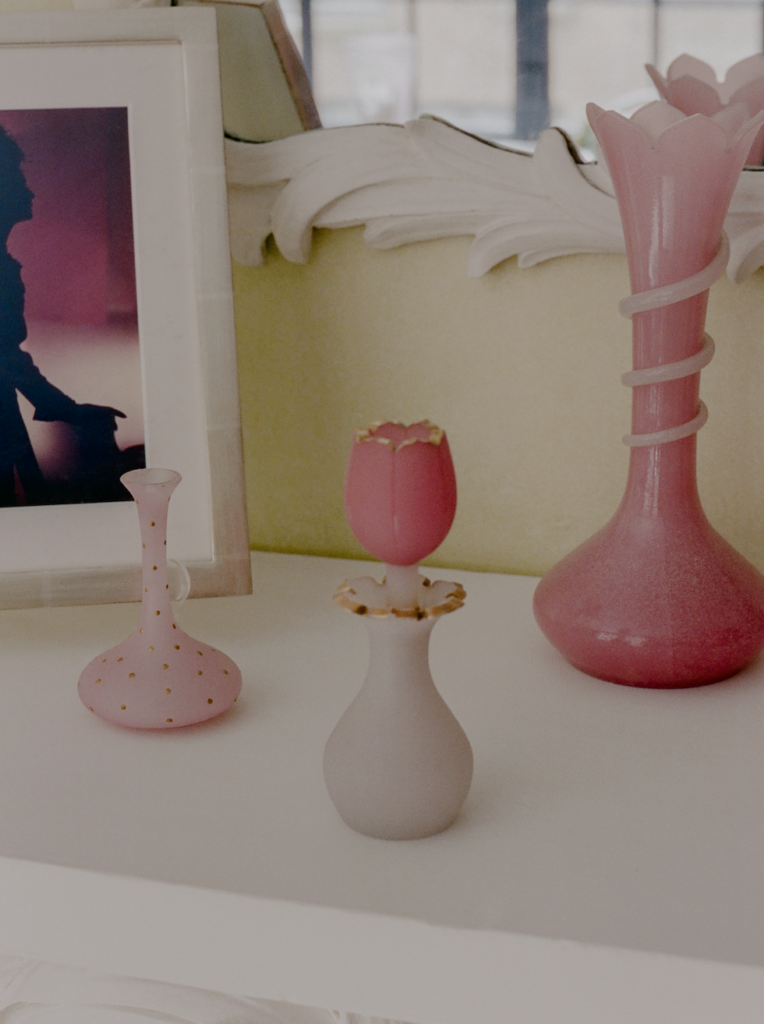
ACH: Do the objects that belonged to Helena Rubinstein have a special energy? What have you learned from living with these objects?
AFC: The more time that passes, the more the objects seem to have taken on lives of their own. They continue to reveal new aspects of themselves to me, and they are good company.
ACH: Is there a room or house of Madame’s that you keep returning to?
ACF: The images imprinted most indelibly on my imagination are the Louis Süe bedroom on the Île Saint-Louis; the NYC bedroom with the Lucite bed that I let slip away; the grotto room in NY with the trio of Dalís; the NY picture gallery with the Lurçat rug, the African and Nadelman sculptures, and the tapestries from Marie Cuttoli; the Knightsbridge living room with the magenta walls.
The triplex penthouse at 625 Park Avenue is my favorite Rubinstein residence.
ACH: I am compelled by Helena Rubinstein’s consistent and daring exploration of the line between the grotesque and the dazzling––what do you think about this?
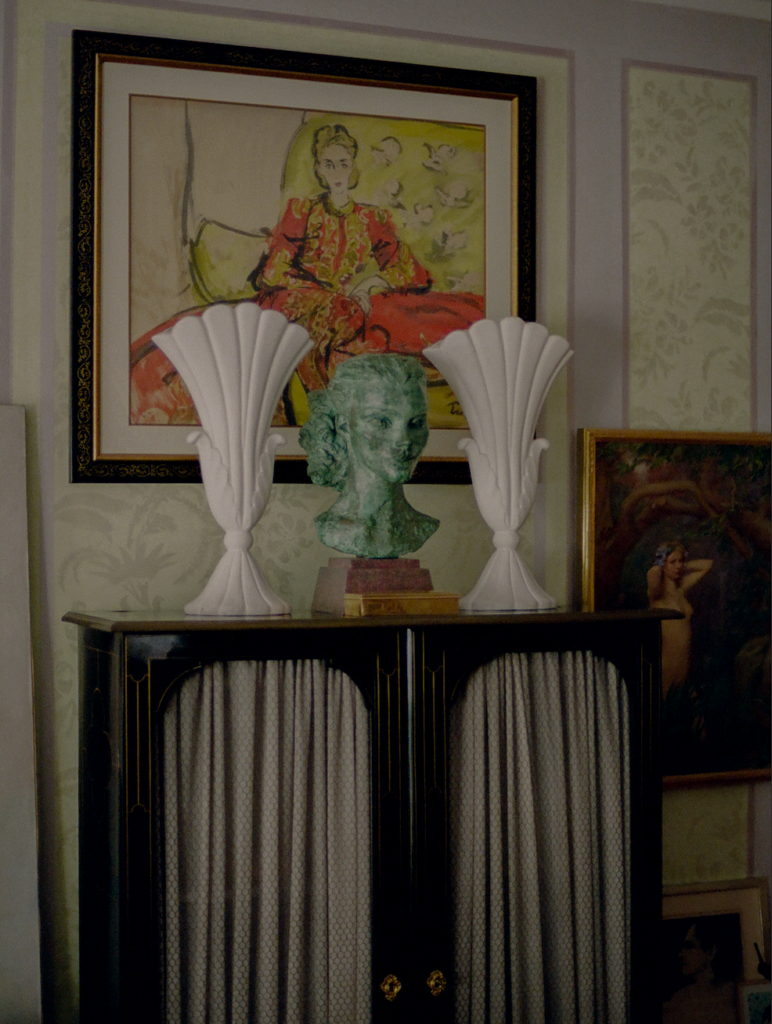
Above it hangs a portrait of American heiress and philanthropist Barbara Hutton by Carl “Eric” Erickson (1891–1958), and to the right is an
allegorical nude by Samuel Isham (1855–1914).
AFC: You put your finger on it, Adam. Walking that fine line is difficult to achieve, and the witchcraft lies in finding and maintaining the precarious balance between the two. The tension produces the excitement. To conclude, I refer you again to the statement by Francis Bacon quoted above, and also to Jean Cocteau’s famous admonition about knowing how far to go too far.


