
Joe D’Urso’s enduring philosophy of restraint, freedom, and interiors shaped by human presence.
An unusual feature of Joe D’Urso’s work is that it is often characterized by what isn’t there. As an interior designer best known for his minimalist work of the 1970s to the 1990s, his style is defined by an exacting editorial eye: there is little fat, just an immaculate, rigorously simplified frame. The design is, in his words, a “background for living,” and it is the living that is meant to take center stage.
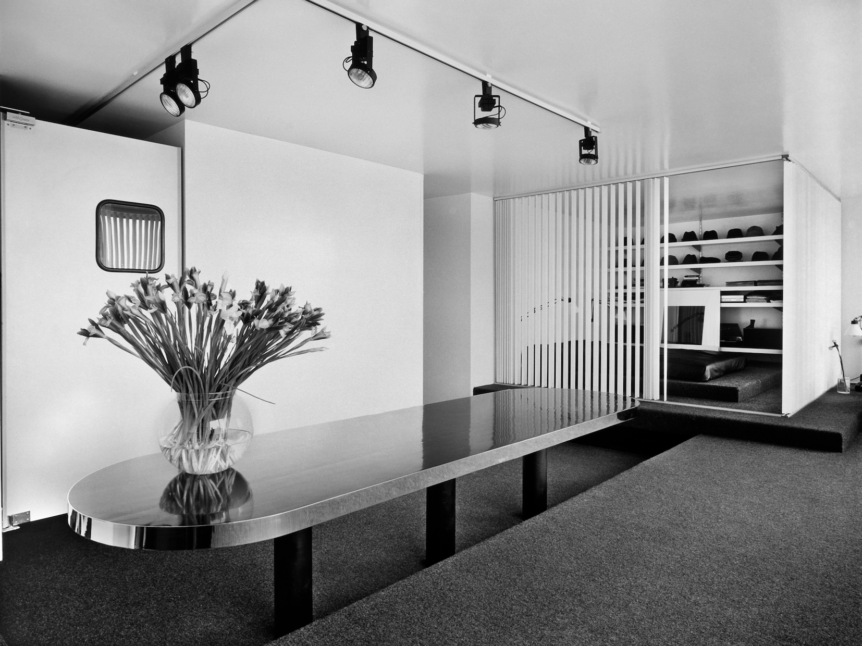
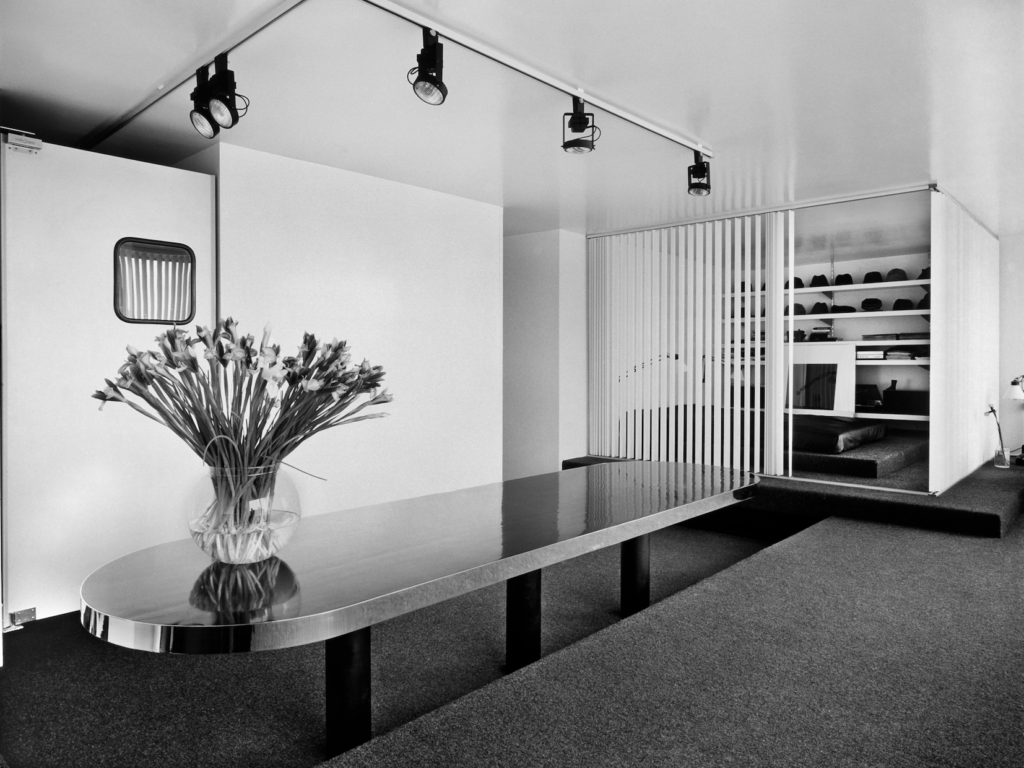
One of D’Urso’s first solo commissions, an interior design for the New York apartment of shoe designer Reed Evins in 1975 caused a sensation—the pared-back composition (a chrome “racetrack” table, platforms to bring the seated viewer up to the view, industrial carpeting, vertical blinds) was a provocation. Gone were the last vestiges of nineteenth-century parlor culture that still defined the last generation’s aspirationalism. Here was something starkly modern—a composition of intersecting planes born of earlier twentieth-century modernism now mixed with an industrial New York edge: a ceiling punctuated with black barn-door light fixtures, expanses of white glossed walls with no decoration. D’Urso had taken the American sensibility of his mentor, Ward Bennett, and stripped it of any remaining WASP affectation. The famous commissions for Calvin Klein (his personal apartments and his brand’s showrooms) followed. Over the course of the next decades, D’Urso would go on to design a series of ever-larger residences and commercial projects (including an Esprit store in Los Angeles and a social club in Hong Kong).
I spoke with D’Urso in June by video; he was home in Los Angeles. He now lives in a high-rise, in walking distance to the Grove and to the new LACMA, the interior of which he hasn’t seen (though he likes the suite of buildings). I asked him about his design approach, how he thinks of the elements in a room coming together. He explained: “When you look at a collage done by an artist like Kurt Schwitters or someone who is a really great collage artist, it’s all about different textures and different shapes and different placement and different interactions of color. That’s what doing an interior is like: yes, you have a program. You have a practical end to accomplish. It has to function beyond your leaving it, unlike a piece of art.”
I ask him about this “leaving it”—about abandoning a design to the clients’ tastes and lives. What is it like to leave your work behind?
“Well it’s probably no different than having a child and the child growing up and going off and being their own person. It’s the same thing. I mean when I visit somebody in a place I did it can
be either satisfying or a little depressing,” adding, “YI mean, you have to let go because if you don’t let go, then you don’t have room for the next thing.”
I asked about a trajectory I saw, from the austere minimalism of the Evins apartment to the more richly layered interiors of his later work. “I was much more rigid in my early days,” he explained. “I was much more doctrinal—I was much more beholden to doctrine. I was much more, no, or yes, I have to do it. And then as you get older and you get more freedom and you get better at what you’re doing, you get more—we use the word ‘inclusive’ so much. You get more, not even generous. Much less uptight. The rules are out the window about design. No rules. No rules, not even for yourself.”
It strikes me that D’Urso’s reputation as a minimalist misses what was more important about his sensibility. In an interview with the New York Times in 1978 he described his association with minimalism in art as a shared interest in an “eloquent use of the void.” The idea was never simply to design empty rooms, but rather to design rooms in which what was beautiful could actually be seen. His rooms function as edicules, the Roman niches designed to house sculpture.
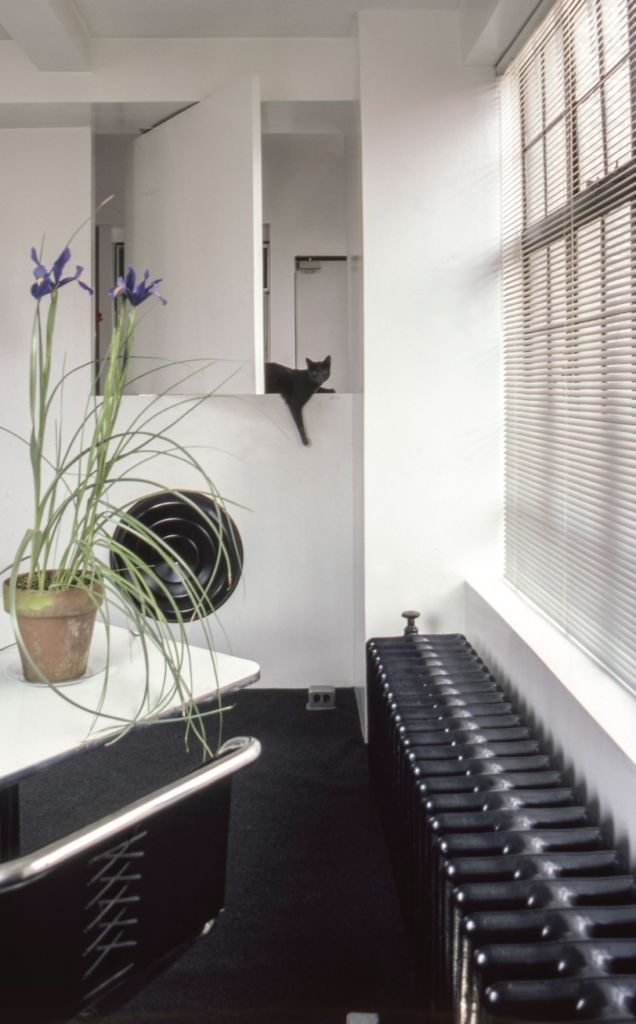
He designed around what is missing. The projects were meant to be enlivened by the people and the objects that they house. I asked him about a distinguishing feature of his project photography, which he tells me he art directed: “How do you think about the photographic dimension of your work? The florals are always a very particular detail. The photo is often weirdly ‘about’ the flower.”
“Absolutely. You’re right.”
“Because you have that line that I like so much that the apartment is a ‘background for living.’ And then what you see in the photographic moment is the thing that animates it, that comes alive.”
“The living thing. That’s the metaphor.”
“The most ephemeral thing in the photo is actually the thing that the photo is about. But it’s a beautiful thing about how to design a space.”
“Well, I read somewhere that flowers are a metaphor for life. They bloom and they die—quickly—and we have to keep that in mind as we’re living our lives.”
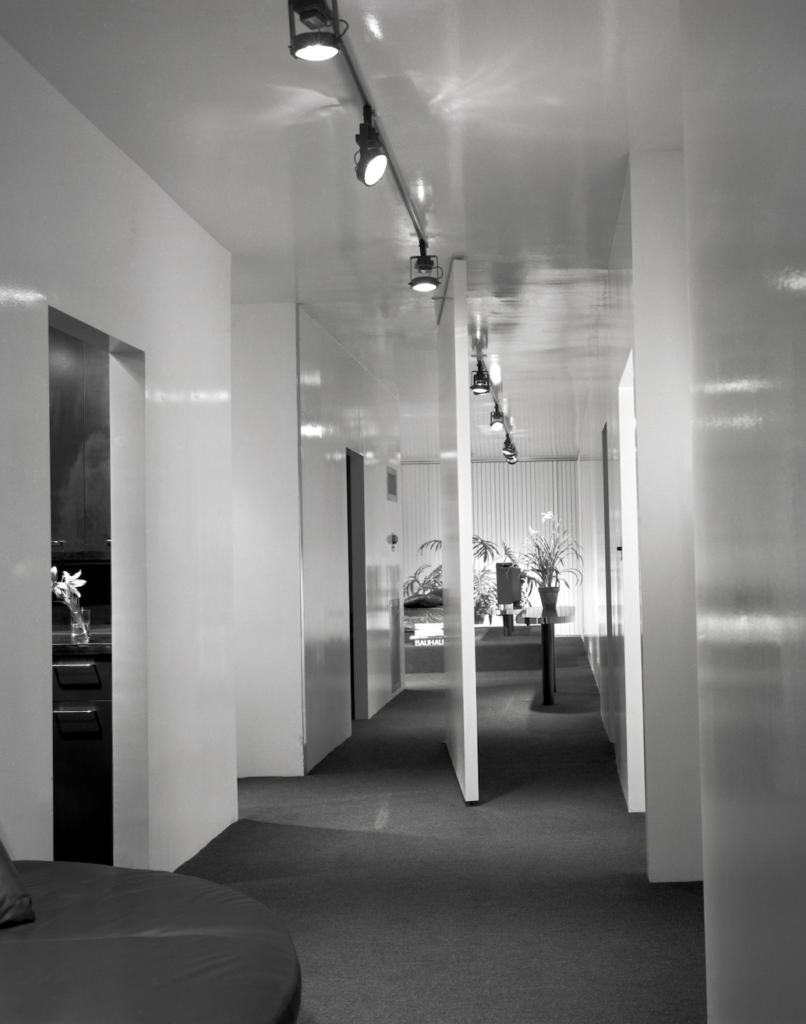
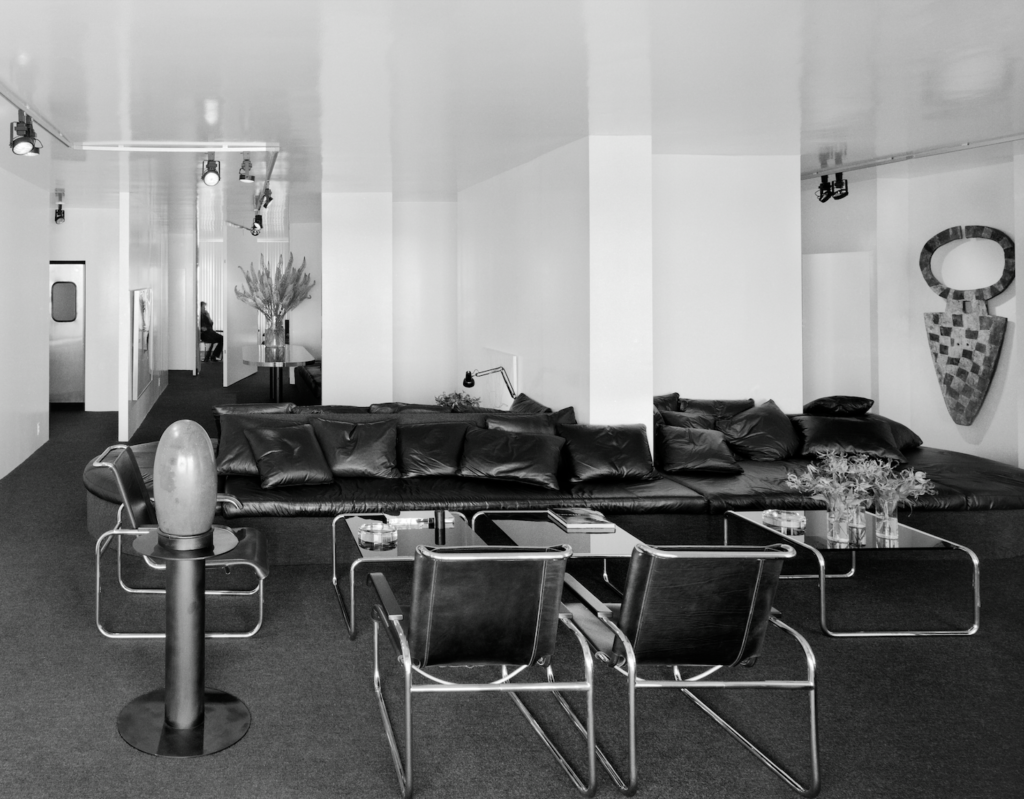
It strikes me that the photographs are also animated by the men in the photos: by D’Urso seated in Evins’s apartment, by Calvin Klein breezing through his own apartment. D’Urso sold a vision of an urbane male sexuality, gay in sophistication. Ward Bennett, whose initial interest in D’Urso was colored by his attraction to him, similarly evinced a kind of elliptically gay sophistication without camp. But it was in the muscularity of D’Urso’s work that we saw a new kind of gay interior emerge: in his apartment for Larry Kramer, for example, we see a background for friends, lovers, books; sex and conversation. No kids. As in the Calvin Klein apartment, D’Urso installed an elegant hammock on lally columns. There is an idea of sex, but nothing prescriptive. Just a background for a particular kind of life.
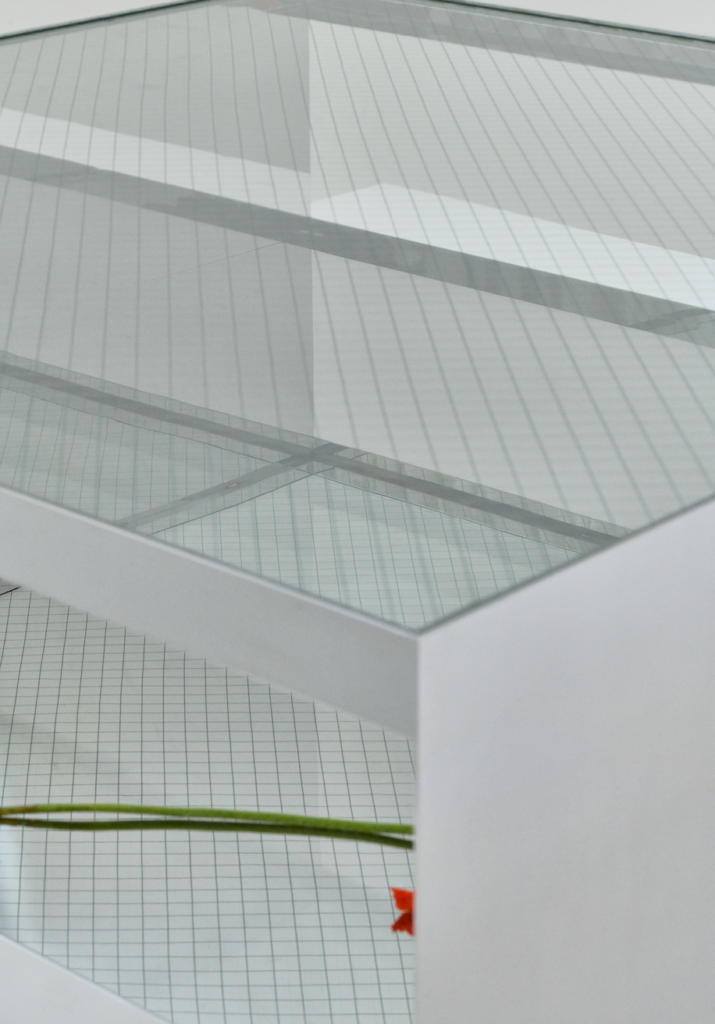
reissued. Photograph by Dominik Tarabanksi.
That the world of interiors is shaped, in important ways, by gay men is not news. And yet one would be hard pressed to find that fact mentioned in any of the magazines of record until the 2000s. A consequence of this is that the period of design that is perhaps most influential in the field right now, from the 1970s through the 1990s coincided with a parallel explosion and devastation in gay life that passed in silence. The photographic record of those interiors is the brief flowering of gay creative output that is rarely acknowledged. The idea is not that there was some “gay community” that made work together. Then, as now, there was plenty of sniping. Nor is there some shared unitary aesthetic sensibility.
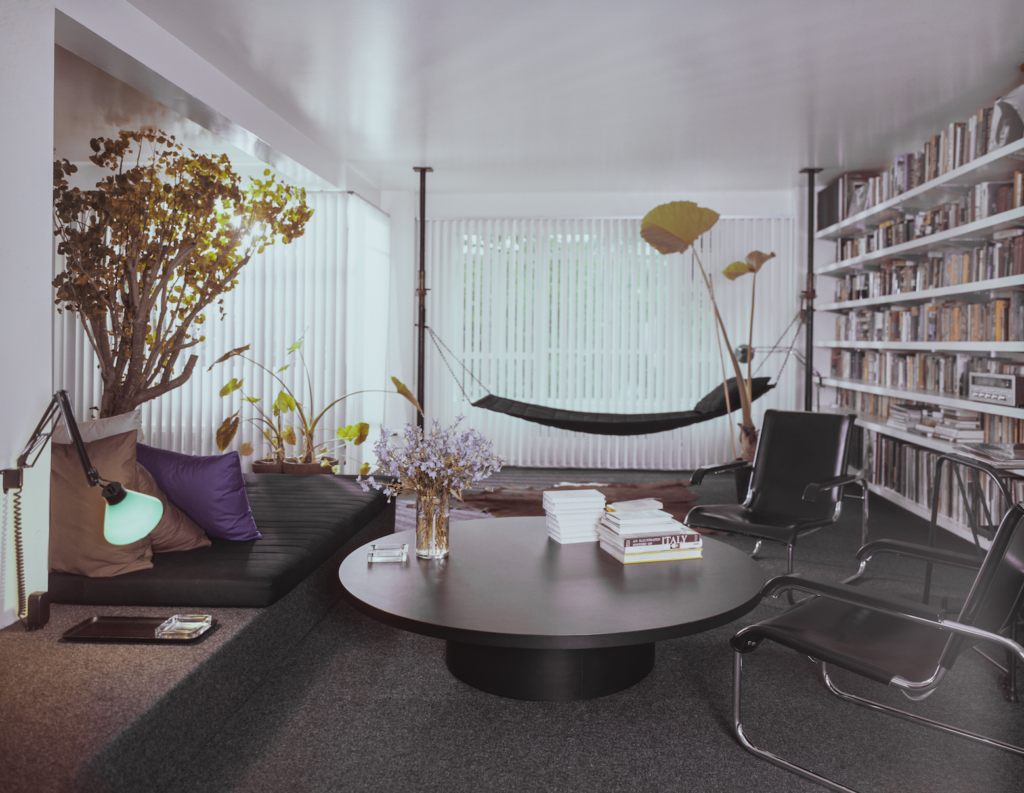
But as D’Urso’s own path suggests, design is the product of the informal social networks that bring the client to the designer, the photographer to the editor. D’Urso tells me about his own career beginning with a party in the Hamptons. The hostess didn’t like the flowers, and so he took them to the kitchen to rearrange them. As he was placing them in vases, the fashion designer Chester Weinberg walked in and was, apparently, taken. He became D’Urso’s client, and through him D’Urso met Weinberg’s best friend, Calvin Klein. Weinberg would be one of the earliest prominent victims of AIDS in 1985.
These days, D’Urso, eighty-three, is still open to work, though he has the luxury of taking only what appeals to him. His low tables in steel and glass have recently been reissued by Knoll. Original production of his furniture is now highly sought after. D’Urso, pioneer of the high-tech, has become the unlikeliest of things—a designer of the antique collectibles of tomorrow.


