An extraordinary collection examines how Shaker furniture, along with Pennsylvania German and New England folk art, expresses a distinctly American identity.
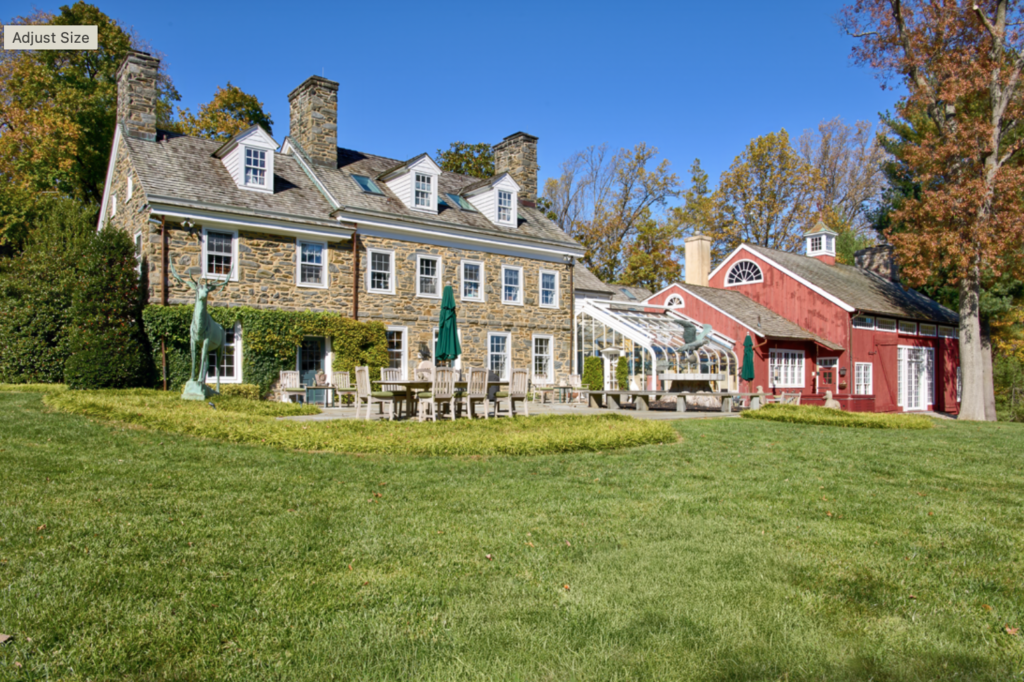
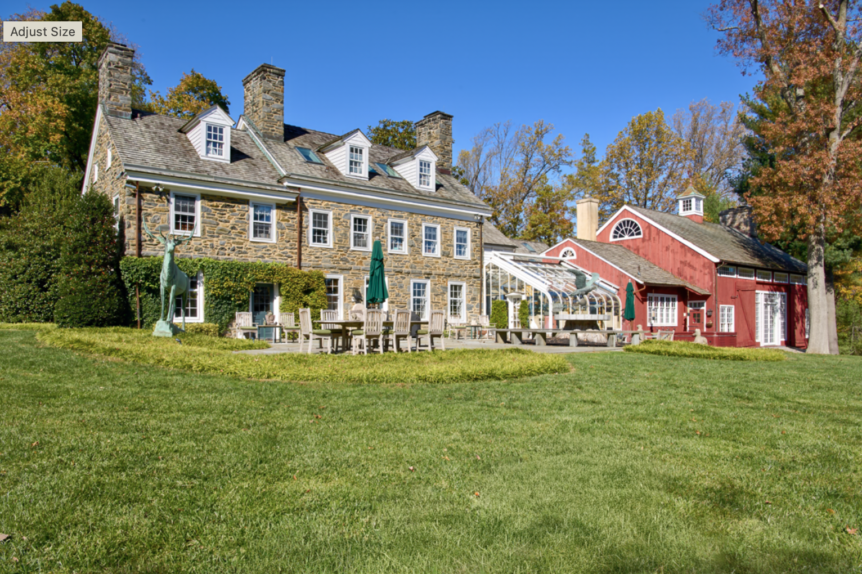
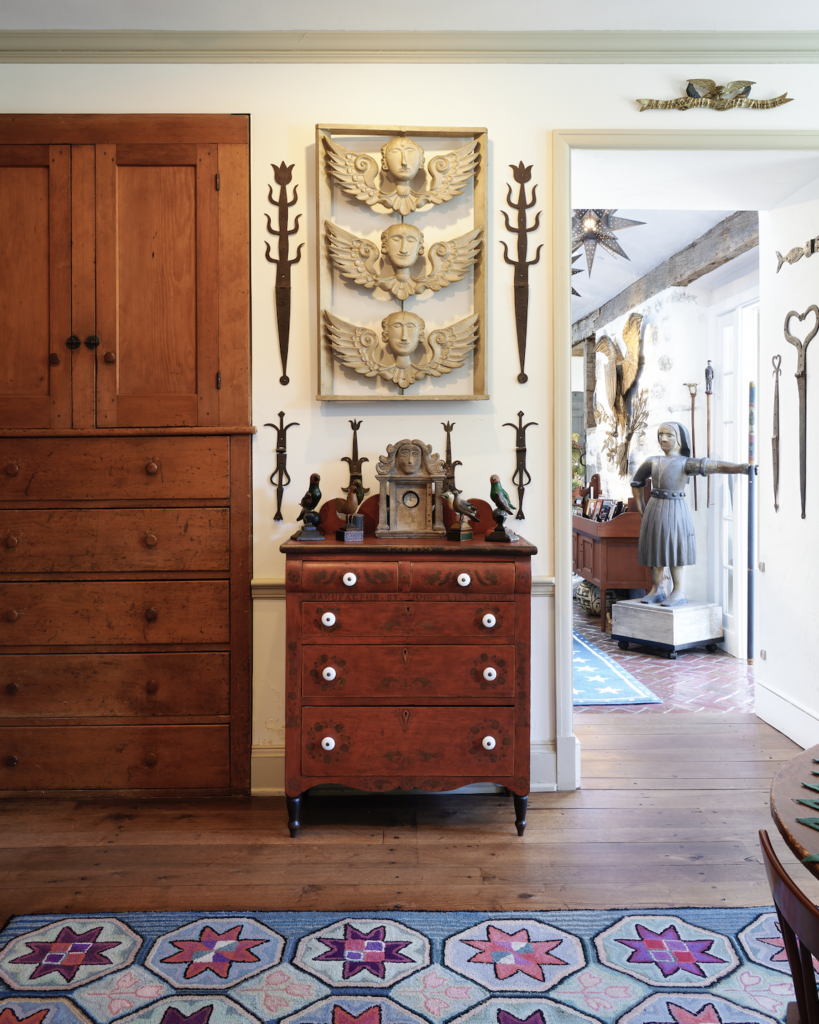
The story of America and its material culture unfolds throughout the home of Pennsylvania collectors Robert and Katharine Booth, whose shared passion began with the quiet discipline of Shaker design. Visions of Shaker perfectionism are nestled alongside Pennsylvania German folk art. Earthly and celestial imagery, floral motifs, and symbolic forms recur throughout, anchoring the collection in lived experience and belief.
Set within the leafy suburbs of Philadelphia’s historic Main Line, the collection reveals the colors, trades, patriotic symbols, religious faith, and whimsy embedded in American culture. Rather than focusing on a single geographic region, the Booths built their collection around personal history: Kathy’s Pennsylvania German ancestry, Bob’s medical career, and a shared affinity for both the Mid-Atlantic and New England. The result is a deeply personal narrative, in which objects speak across centuries through careful juxtaposition and storytelling.
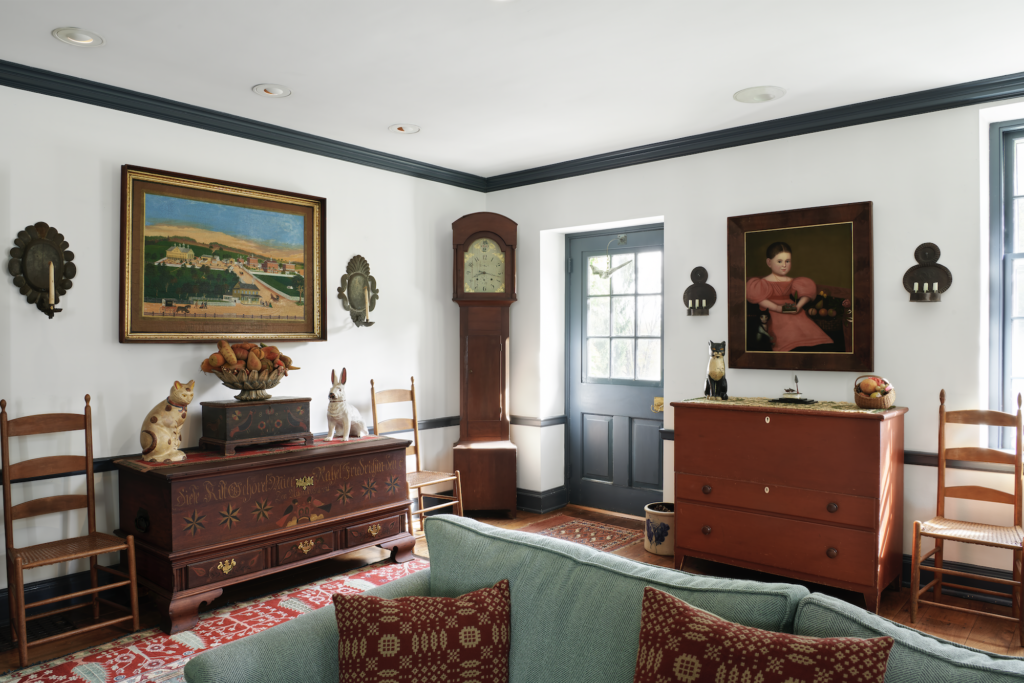
One grouping in the living room captures the couple’s gift for visual dialogue. A portrait of a young girl in a pink dress attributed to Zedekiah Belknap (1781–1858) depicts her standing beside a black and white cat and a fruit basket, holding a squeak toy; positioned directly in front of the portrait are a polychrome figure of a cat and an identical squeak toy alongside a woven splint basket filled with stone fruit and silk flowers. All rest atop a lift-top Shaker chest retaining its original red paint, closely echoing the palette of the portrait. Such thoughtful arrangements elevate the collection from display to experience.
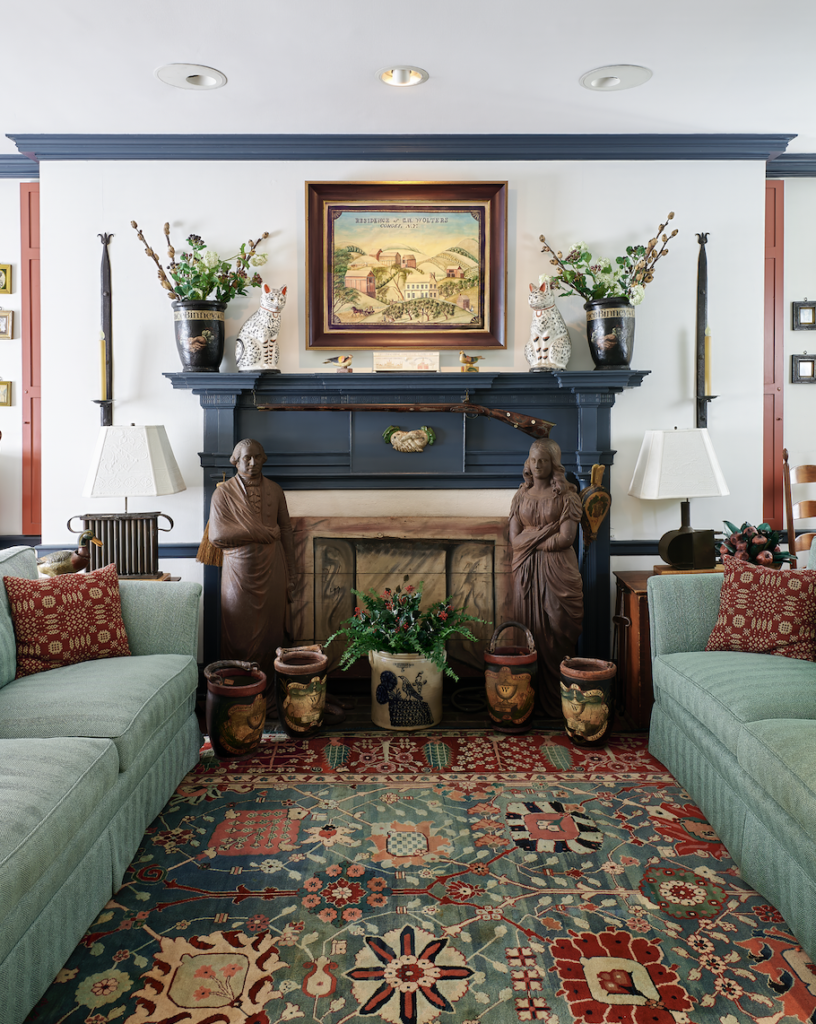
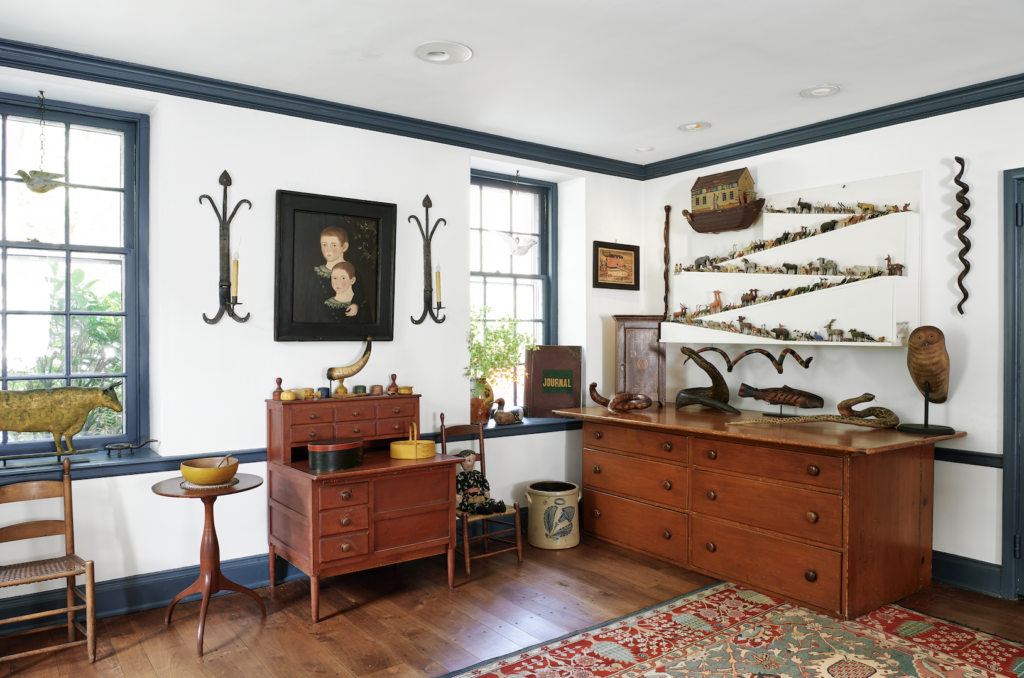
Since its inception early in their collecting journey, the Booths’ impressive Shaker collection has continued to expand. Most pieces retain original stained or painted decoration—a rare feat. Highlights in the living room include a pumpkin-colored tailor’s table and a pristine spider-leg candlestand, both from Mount Lebanon, New York. The red-stained desk from Enfield, New Hampshire is a perfect repository for small Shaker boxes and tools. Nearby, on a custom platform designed by Robert Booth, is a painted Noah’s Ark, often played with by children on Sundays. The ark—popular for its blend of play and biblical narrative—is flanked by a watercolor by the itinerant Pennsylvania German artist and religious zealot John Landis (1805–1851), whose unconventional life and writings form a striking counterpoint to the child’s toy. Above the fireplace mantel in the living room hangs the Residence of C.N. Wolters of Cohoes, New York, drawing guests into the rolling hills of the Hudson River valley, near Waterlivet, where the Shakers first settled.
The Booths’ collection of Pennsylvania German folk art, one of the most important assemblages in private hands, really shines in their library and study. The latter holds a virtual encyclopedia of redware pottery, as shelves on all four walls burst with red, yellow, and green tulips, birds, and other abstract forms. The couple strives to collect iconic pieces from noted potters, including Georg Hubener (1761–1835), Conrad Mumbauer (1761–1845), and the “Eight-Pointed-Star Artist,” formerly thought to be Solomon Grim (1787–1827).
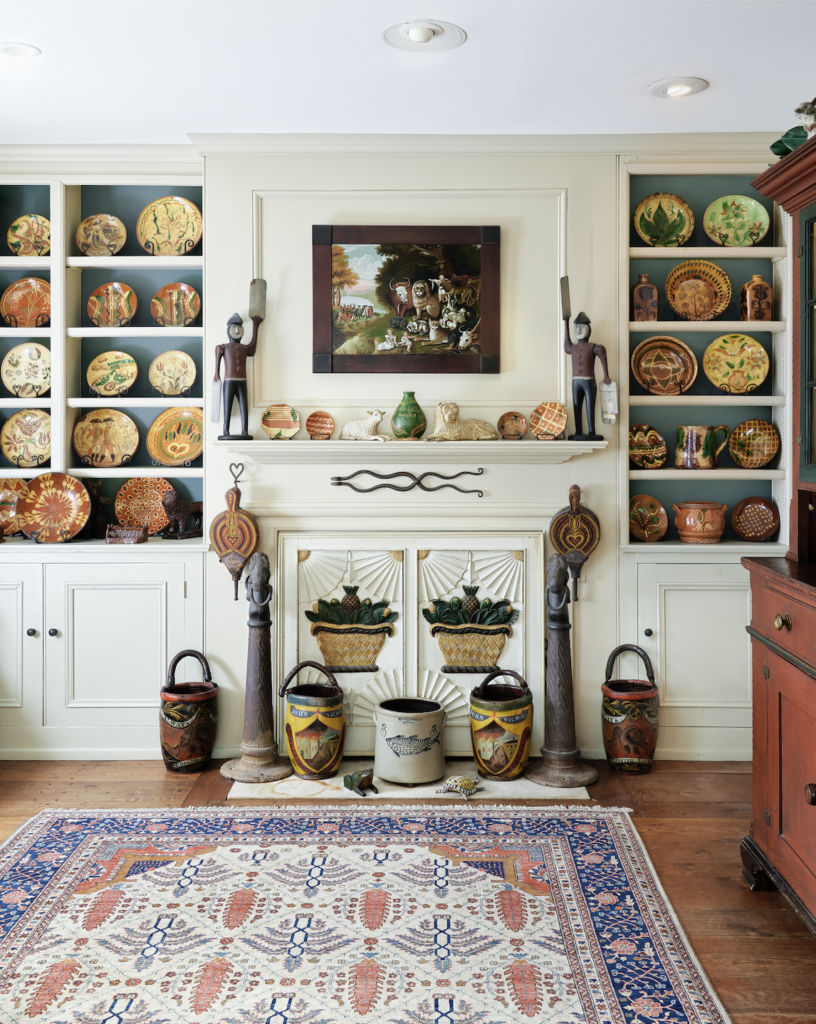
Also in this room is a “kennel” of figural dogs by the Bell family of Pennsylvania and Virginia and what the couple call the “pigsty”—a mix of redware pigs from the Anna Pottery in Illinois and a single example by the Shenandoah Valley’s J. Eberly and Company. This clay menagerie finds its counterpart above the fireplace in Edward Hicks’s Peaceable Kingdom, which the Booths consider the finest piece in their collection. Carved wooden figures of a recumbent lamb and lion on the mantel transform Hicks’s vision into three dimensions. Soft hues make the study a serene center of American folk art.
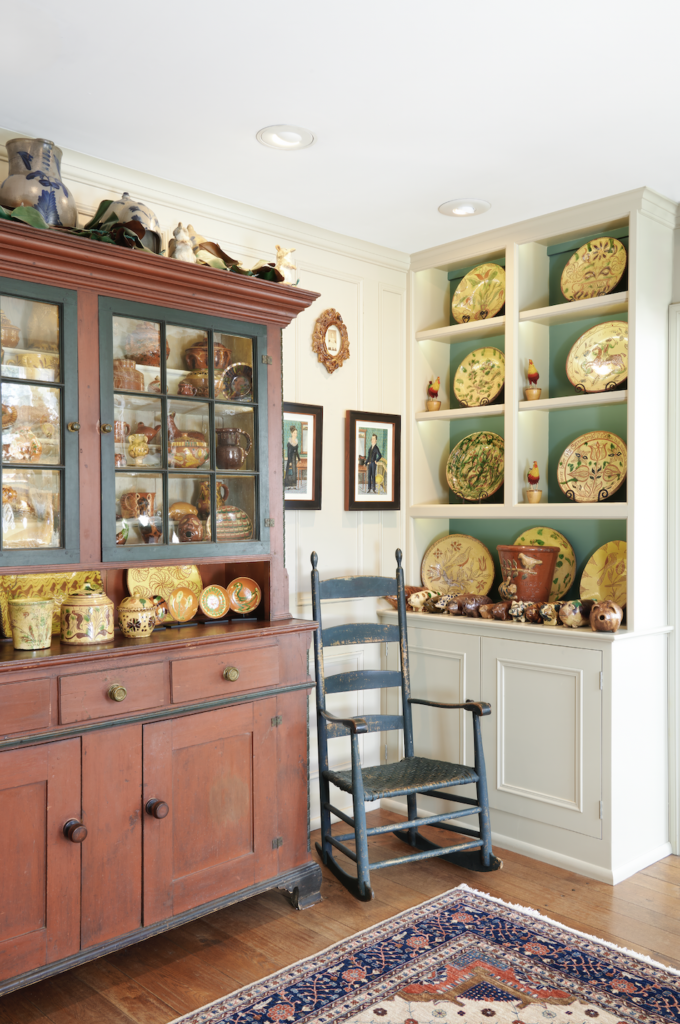
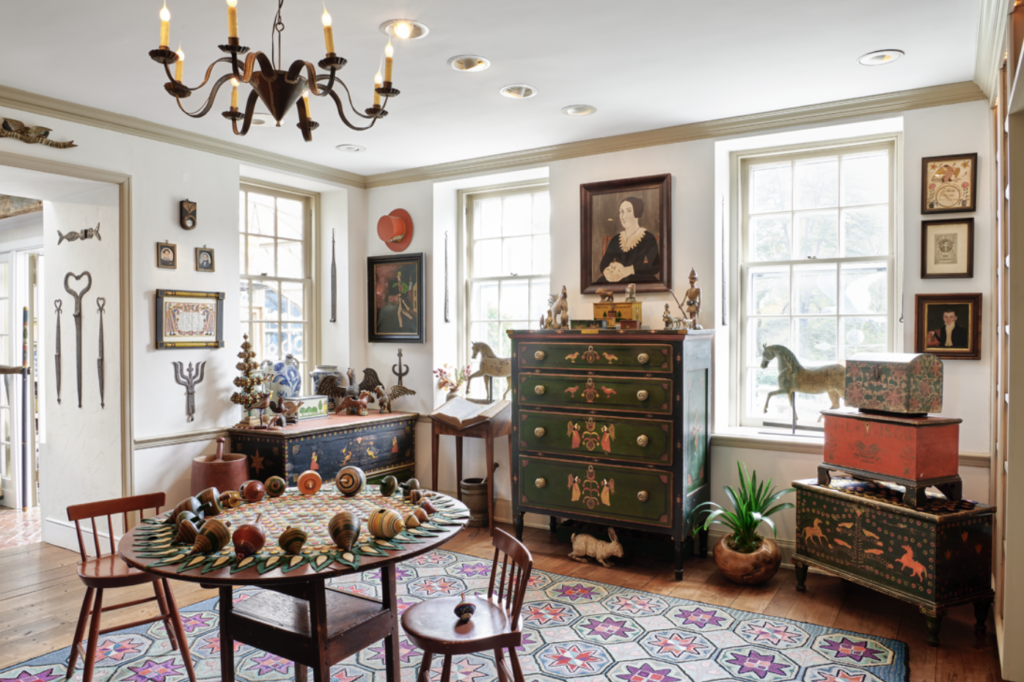
Natural light floods the adjoining library, illuminating paint-decorated Pennsylvania pieces, including three Mahantongo Valley chests as well as a nineteenth-century New England red-stained hutch tables, Antique painted tops are arranged on the table as if frozen mid-spin. Visitors may feel watched as they turn about the room—A Portrait of a Lady Reading a Poem, ‘True Friendship’ by Mary B. Tucker (1784–1853) eagerly awaits someone to listen to her recite. Most captivating is a trio of carved and painted angels, luring visitors into heavenly contemplation while they smile, wince, and grin at the folk art on view. The angels once adorned the cornice of St. Luke Lutheran Church in Schaefferstown, Lebanon County.
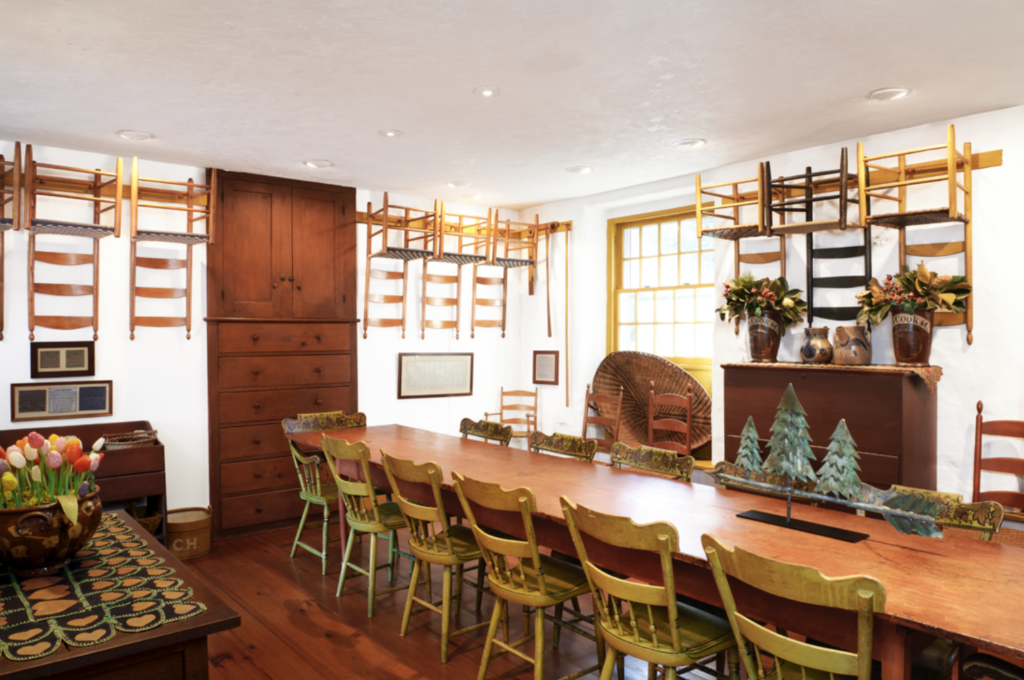
In the dining room, Shaker design takes center stage. The enormous table—its top made of a single board—dominates the room, while chairs are hung Shaker style on the walls, practically transporting one to a Shaker village. The table is surrounded by a set of nineteenth-century plank-seat chairs from an Odd Fellows Lodge in Berks County, Pennsylvania. Rare Shaker samplers hang beside an uncut sheet of chair decals made to identify chair types across Shaker villages throughout the country. The room balances utility with warmth, embodying the Shaker ideal of beauty through function.
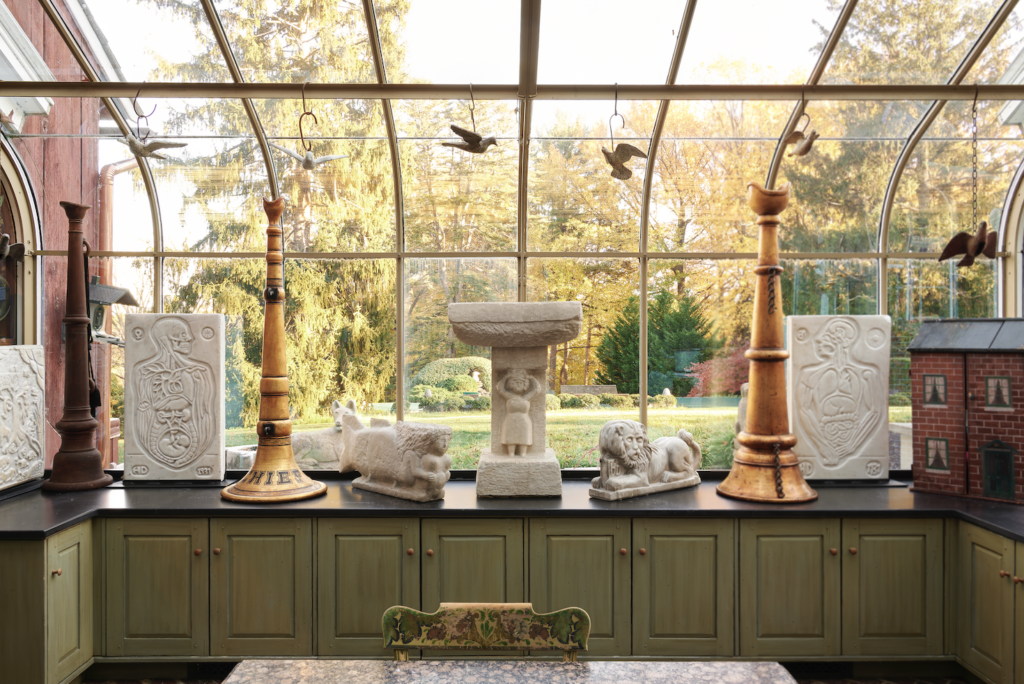
Across the hall, a converted greenhouse links the house to the barn. Green-painted cabinetry and nineteenth-century Pennsylvania German plank-seat chairs complement views of the surrounding foliage. Marble and stone sculptures adorn the counters, interspersed with large gilt and brass fire-parade trumpets, displayed beneath bird-shape gate weights. The sculptures capture the diversity and lived experience of twentieth-century America. Dominating the space is a figural limestone birdbath attributed to William Edmondson (1874–1951); to its left, Edmondson depicts a mermaid, echoing ship’s figureheads displayed in the adjacent kitchen. Born to formerly enslaved parents in Nashville, Tennessee, Edmondson began sculpting in 1931, often using discarded stone from grave markers and memorials.
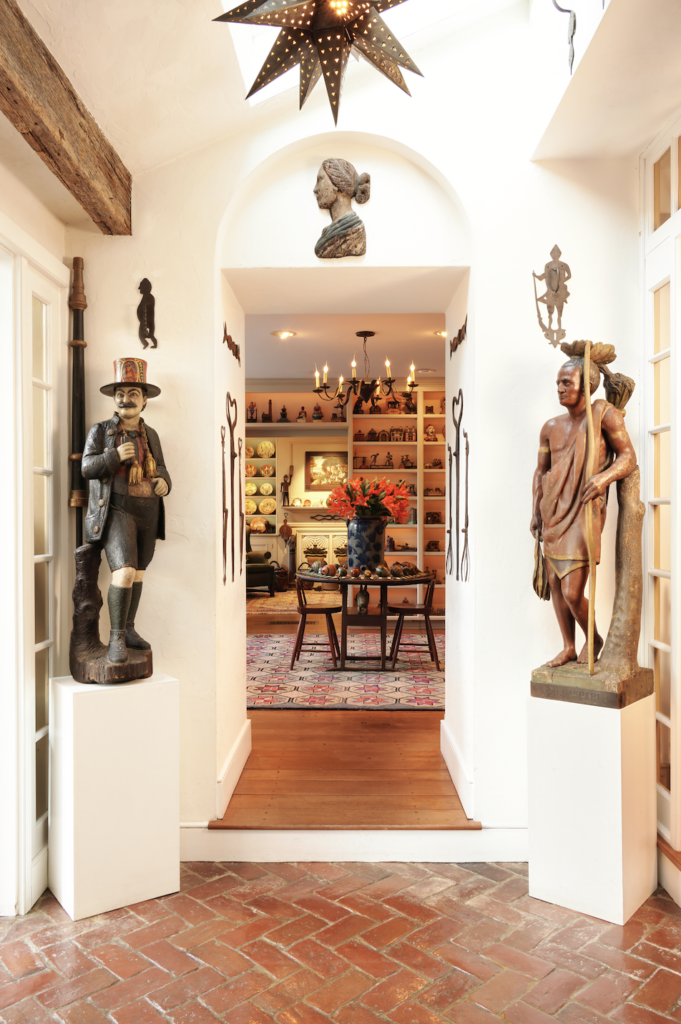
In addition to the Edmondson carvings here are sculptures by a hand identified only by the incised initials “HD.” This as-yet unidentified artist was active in the Philadelphia area during the 1930s, producing both anatomical and religious scenes in marble. The Booths believe the carver may have been an unemployed cemetery worker who turned to making sculpture during the Great Depression, repurposing unused gravestones to earn an income.
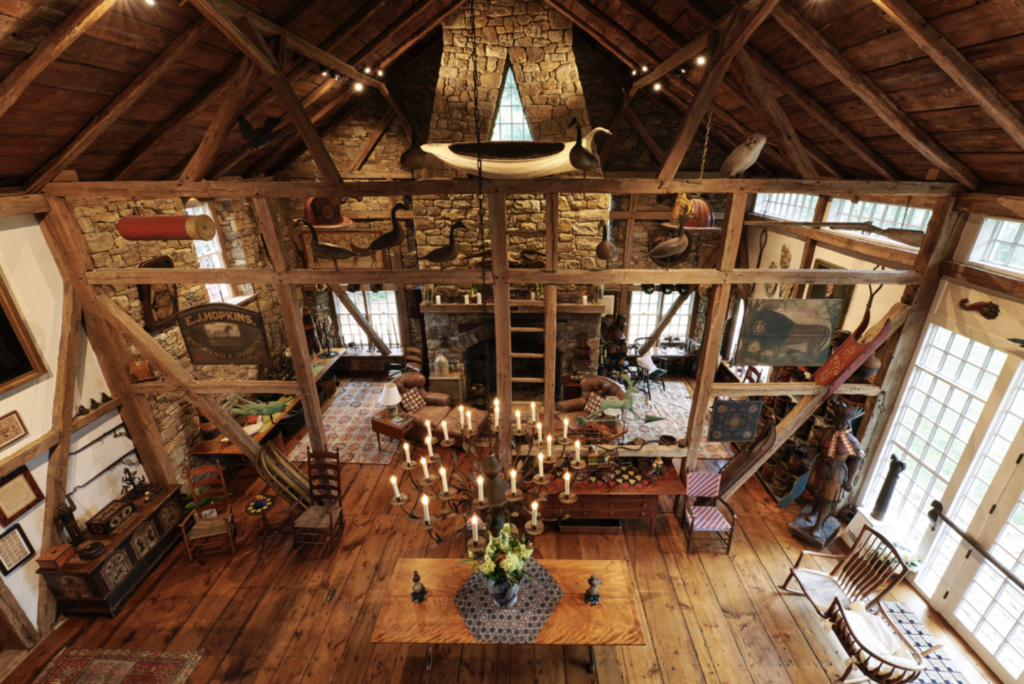
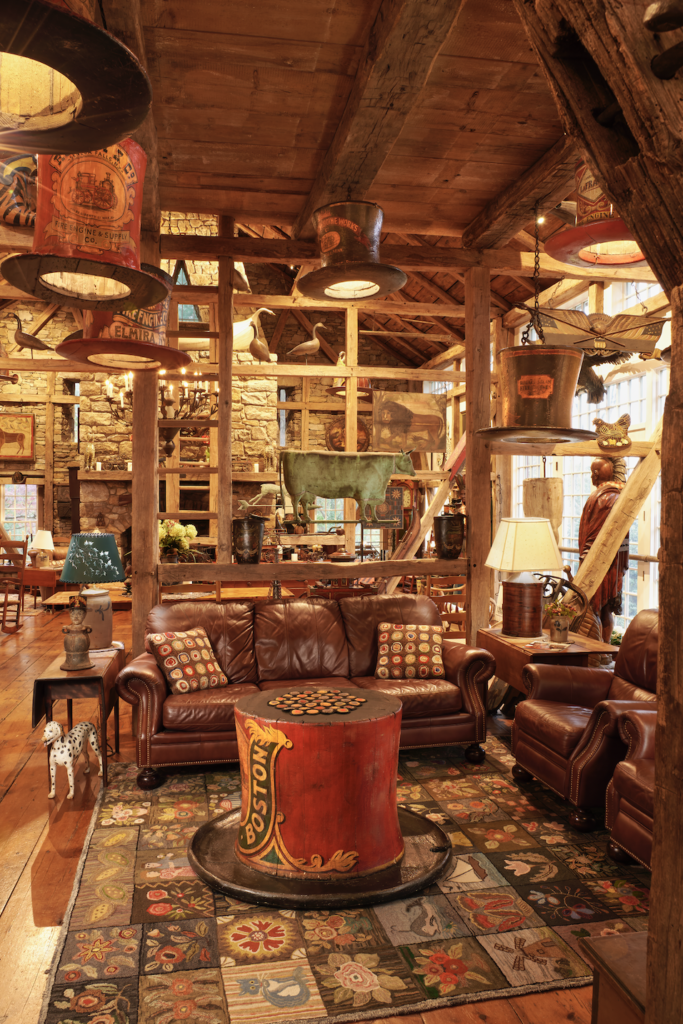
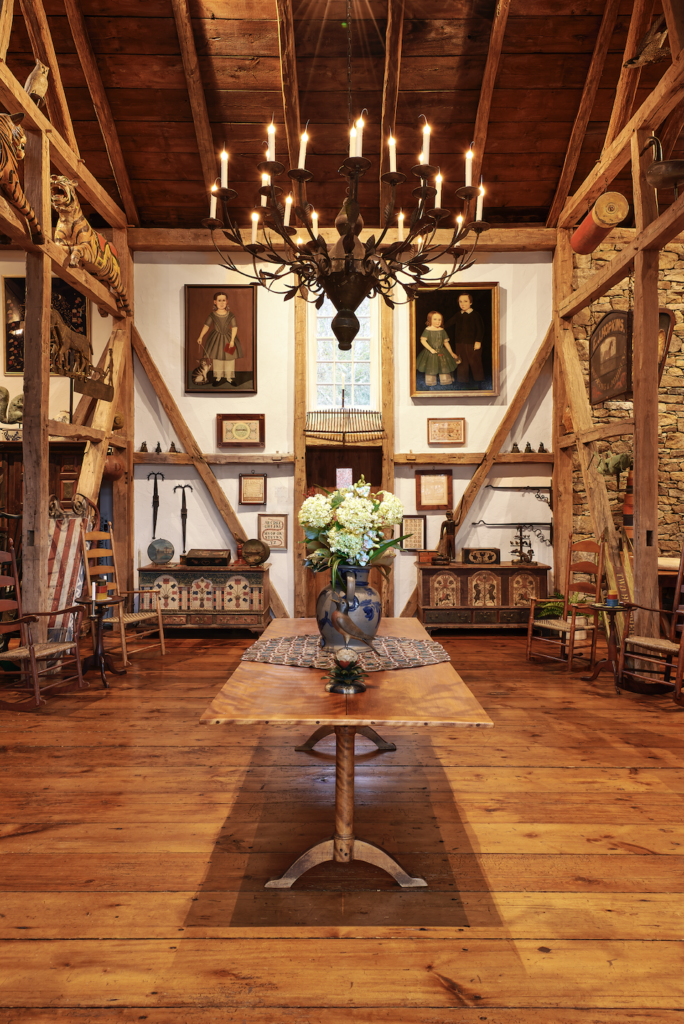
From the greenhouse, visitors enter the heart of the Booth collection: the barn. Light streams through floor-to-ceiling windows, illuminating a sweeping survey of American folk art. The barn is, in short, a vibrant tableau of American ingenuity and creativity, inviting discovery and delight in the craftsmanship of the past, at once serious in its scholarship and endlessly joyful in spirit.
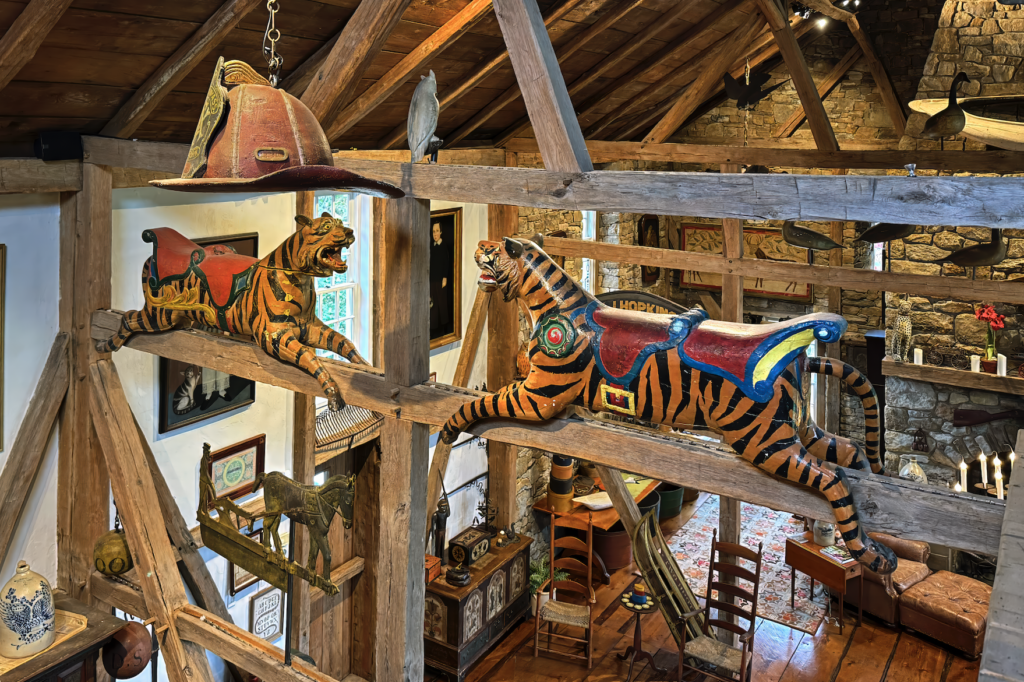
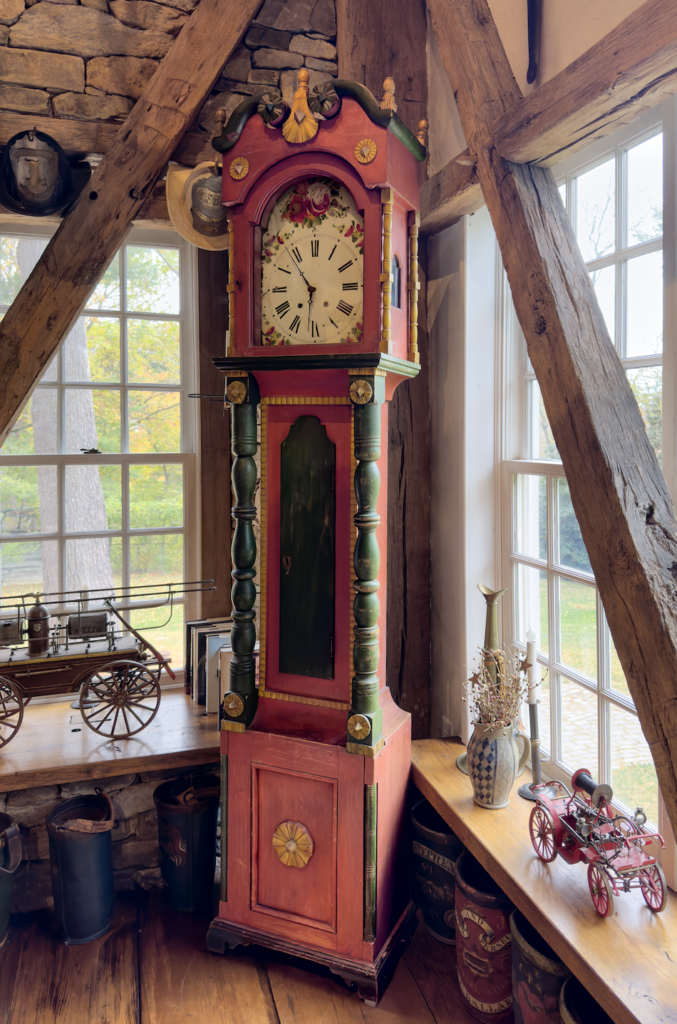
Throughout the space, trade signs in the shape of firemen’s parade hats have been ingeniously converted into light fixtures. They, like the parade trumpets in the greenhouse, belong to the Booths’ extensive collection of more than three hundred Philadelphia fire-related objects—also including fire buckets, hats, and even a rare cape from the Hibernia Fire Engine Company No. 1—many of which were featured in the loan exhibition Folk Art on Fire, organized by the Booths for the Philadelphia Antiques Show in 2004.
One corner of the barn evokes the stormy seas of New England, anchored by a hooked rug of a whaling scene by Harold Lyman (active first-half twentieth century) from the collection of Barbara Johnson, which is surrounded by harpoons, spears, and maritime tools. A ship’s billethead by John Hale Bellamy (1836–1914), whaling models, trade signs, and a portrait of Captain Sewell Blanchard, attributed to John S. Blunt (1798–1835), complete the vignette.
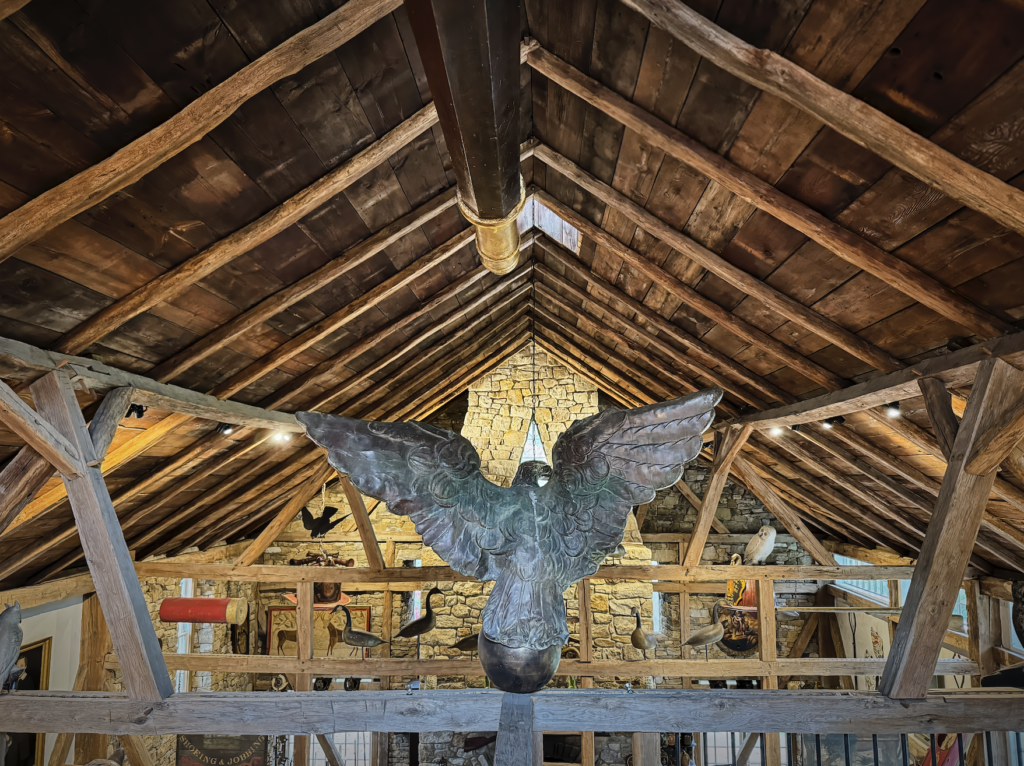
A menagerie of carousel figures and decoys populates the barn’s rafters. Looking up, one spies a pair of English tiger carousel figures, similar to a Philadelphia-made tiger from the Dentzel Carousel Company also in the collection. Perched high above the stone fireplace, built after one at Hancock Shaker Village, is an imposing swan boat, originally made as a confidence decoy with a hunter concealed in its belly. Visitors may well wonder how on earth it was lifted there (it’s quite the story, as Kathy Booth will attest).
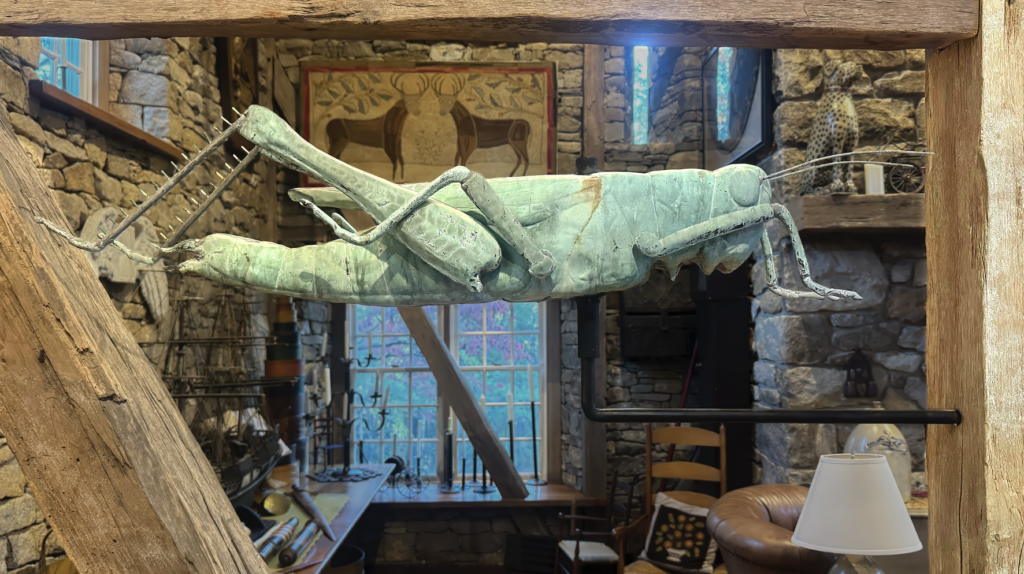
Sheltered from the elements, weathervanes also find new life in the barn. Notable examples include a horse-pumper and fireman weathervane attributed to J. W. Fiske (active 1870–1893), purportedly removed from a firehouse in Jay, Maine, as well as grasshopper and squirrel weathervanes attributed to L. W. Cushing and Sons of Waltham, Massachusetts. Surveying the space from the highest beam is a molded copper spread-wing eagle, reputedly from the First Bank of Philadelphia. Like the firefighting pieces, the eagle directly connects this suburban Philadelphia home to the city’s unique history.
Adding to the barn’s whimsy are assorted game boards, antique sleds, trade signs, and “high balls” to show when a tavern’s bar was open. Gazing serenely over all are monumental portraits of children, one by Samuel Miller, the other by Ammi Phillips, mirroring the youthful spirit that animates the space and the collectors alike.
The Booth collection is far more than an accumulation of exceptional objects; it is a living record of American creativity. Throughout the home, vibrant grain-painted kitchen dressers and schranks stand alongside Shaker furniture, allowing extraordinary forms and painted decoration to shine side by side. Through playful arrangement and deep knowledge, the Booths have transformed folk art into a narrative that bridges regions, centuries, and traditions. Each room reveals how objects once made for daily use—furniture, toys, tools, and carvings—continue to communicate meaning long after their makers are gone. In doing so, the collection affirms that American folk art is not static or nostalgic, but enduring, expressive, and profoundly human.
CHRISTOPHER MALONE is the curator at Historic Trappe, home to the Center for Pennsylvania German Studies.SARAH BOWEN is the curatorial assistant.


