
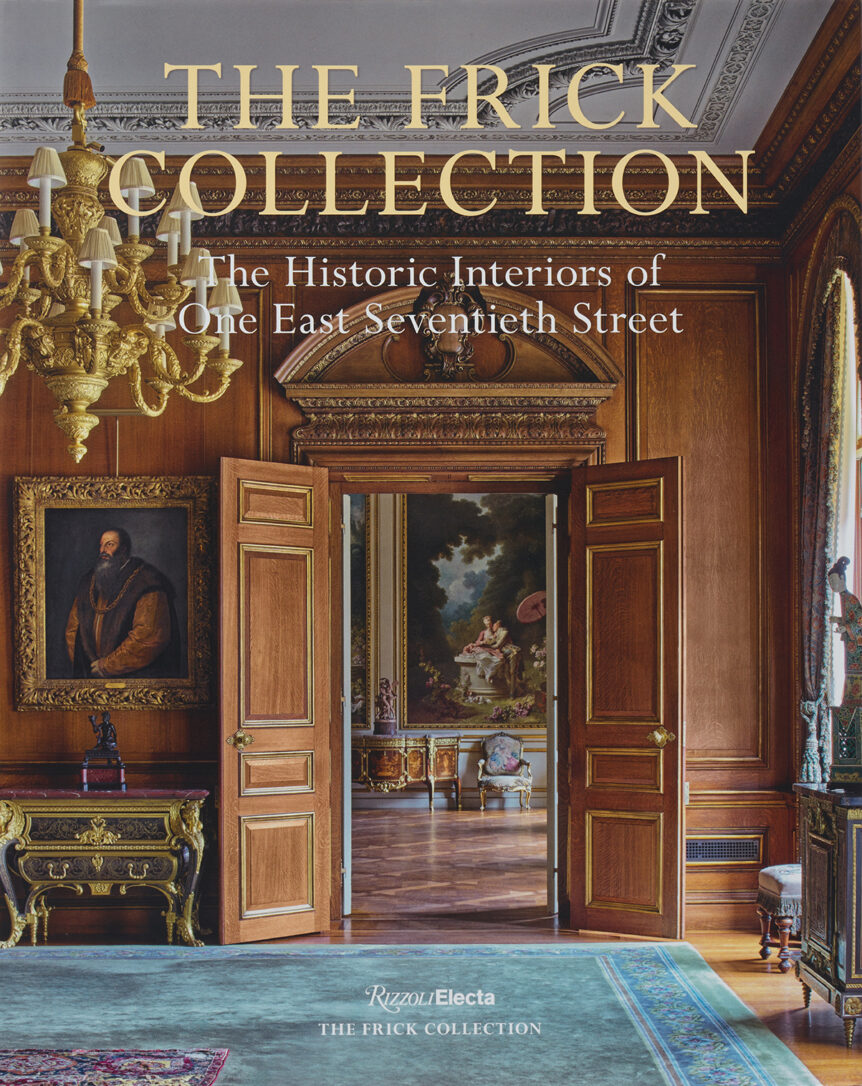
Henry Clay Frick was, publicly, a strict businessman—a steel tycoon, perceived by some as ruthless. Privately, however, he was a purveyor of beauty. He collected houses in much the same way he collected art, passionately and according to his fluctuating interests. By the time he commissioned his home at 1 East 70th Street in New York, he had been drawn to all things European, from French art of the Barbizon school to classical architecture of English country houses. Within the limestone facade by Thomas Hastings lie the interiors Frick plotted with decorators Charles Carrick Allom and Elsie de Wolfe (though de Wolfe’s contributions are no longer extant). Those interiors are the focus of The Frick Collection: The Historic Interiors, a new monograph with text by the Frick’s deputy director, Xavier F. Salomon, published by the Frick Collection with Rizzoli Electa.
Some features of the interior have remained static since their initial installation by the Fricks—François Boucher’s Four Seasons canvases (originally commissioned for Madame de Pompadour), for example, have adorned the West Vestibule since 1916. Other features are new as of the extensive 2020–2025 renovation of the museum—most notably the relocation of Adelaide Frick’s boudoir (and its accompanying Boucher panels) from the first floor back to its original location on the second. This collector-worthy book reminds us that the Frick mansion is a total work of art, a magnificent landscape of Europeana. And, it is tantalizingly captured in the photography of Miguel Flores-Vianna—shots of textured wall coverings pair captivatingly with wide views of entire rooms, with works of art in situ. No longer must one visit New York City to get the full flavor of this impeccable classical mansion (though you really should).
The book uncovers perhaps the greatest gift the Frick remodel gave us art lovers: a glimpse into the private world of Frick the aesthete. While most New Yorkers have spent at least a few hours of their lives in one or more of the city’s limestone-lined lobbies, fewer can say they’ve passed notable hours in the private, tassel-adorned apartments of the Gilded Age elite. The upper floors of the Frick once held the private treasures of Frick and his wife—works they enjoyed alone, while knowing they would one day be revealed to the public through his bequest of the house as a museum.
Alongside photographs of the original Adelaide Frick boudoir decorated by Allom, the book offers luscious new images of the light and fanciful furnishings that complete the oh-so-feminine space. A recently restored divan with gilt scroll feet stands at the base of the Boucher panels, the sheen of the silk Lampas illuminated only by the daylight through the room’s large windows.
The entire room had to be disassembled and reassembled piece by piece, so this chapter of The Frick Collection feels as though it suitably closes the book on one of the most monumental museum reinstallations in recent years. Overall, it is a fitting and much-deserved ode to a magnificent house museum, made all the more exciting by the long overdue rephotographing of the Frick interiors and the recontextualizing of these spaces in a way that allows readers to experience the Fricks’ private world as they never could before. Elegant and thoughtfully designed, this coffee-table book will appeal to collectors and architecture enthusiasts alike, while also serving as a timeless record of the museum’s extraordinary history.


