A conversation with chandelier restorer and designer Régis Mathieu explores his lifelong dedication to preserving and reinventing the art of antique lighting through a family business rooted in tradition.

Urvashi Lele for The Magazine ANTIQUES (TMA): Tell me a bit about what you do.
Régis Mathieu (RM): I started in this business when I was twenty. My father started [Mathieu Lustrerie] in 1948. Unfortunately, he died in 1982. My mother ran the business up to 1992. And in 1992, I started business school with the idea to save the family firm.
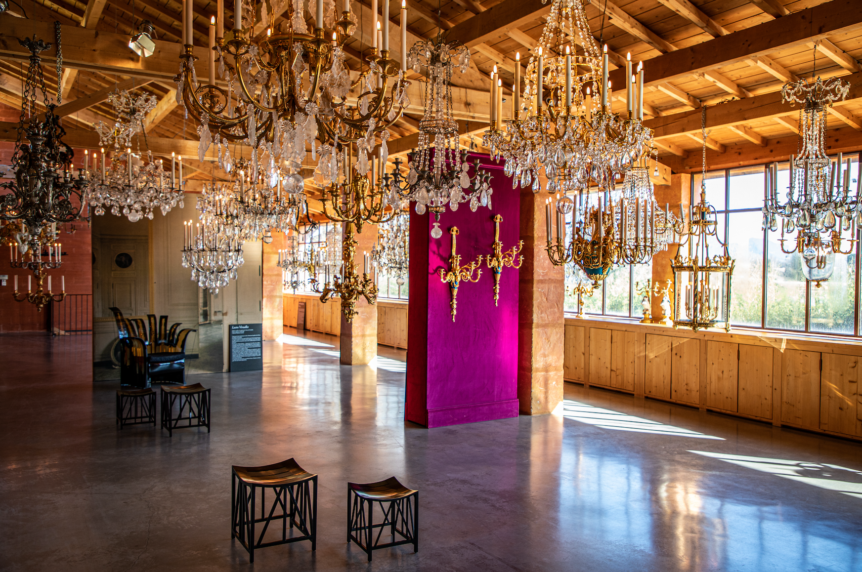
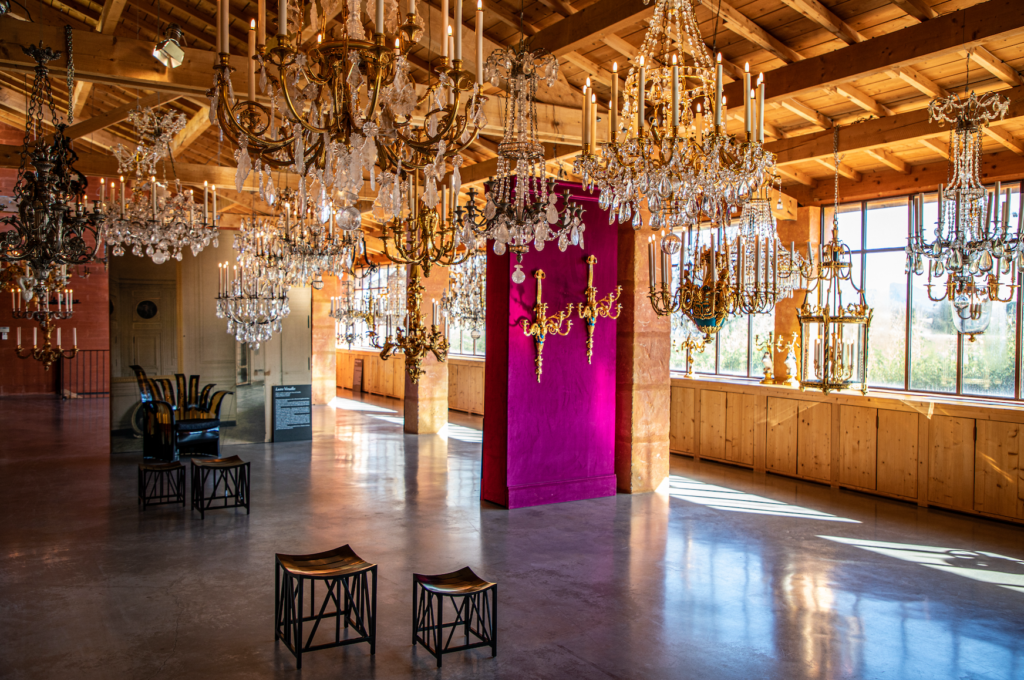
I moved the company, which was originally in Marseille, to Provence. And, today we are very well known for restoring antique chandeliers. We’ve done the Kremlin in Moscow, the Palazzo Farnese in Rome, and we have contracts with museums like the Musée des Arts Décoratifs, the Château de Versailles, the Louvre, and the Centre des monuments nationaux. Everywhere in the world, we restore chandeliers.
TMA: What does the process of restoring a chandelier involve?
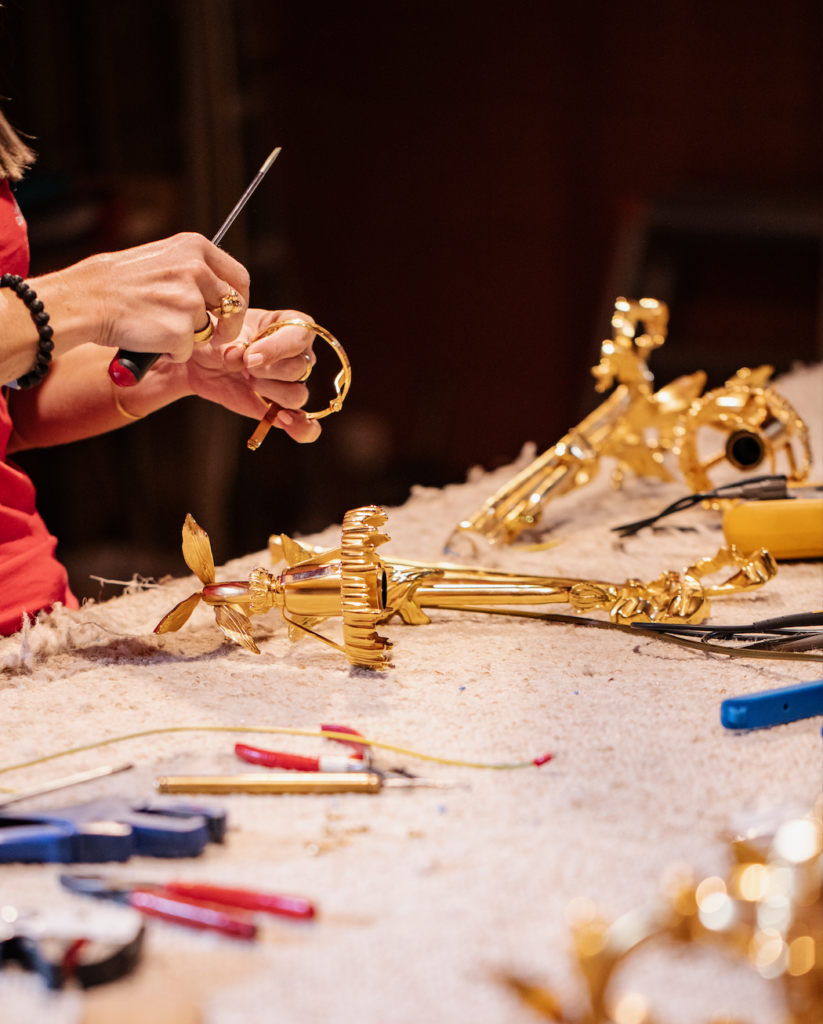
RM: Each one is very unique, as every chandelier has a history. When we add something on an antique piece, it’s very important we can also remove it—we make sure that everything we do is reversible. Every type of chandelier has its own restoration protocol. Restoring a silver chandelier is not the same as restoring a bronze one, or a full crystal chandelier. We work with curators of museums to learn all the information about the chandelier [and inform our process].
TMA: This sounds like it is a museum-grade conservation method.
RM: It’s really about the life of the objects because they have a much longer life than we do. We might research [a piece] and find out that it is five hundred years old. We feel a connection to each piece and keep in mind that it will have a life after us.
TMA: Can you tell me a little bit about the Notre-Dame project?
RM: In my thirty-five years working in this field, I have worked there three times. But, we never thought that we would have a big fire. It was a huge undertaking to rebuild Notre-Dame. The last restoration of the building was done in the nineteenth century, and when it was built, it was a communal effort. It felt the same when we started rebuilding it after the fire in 2019.
TMA: That’s a really beautiful way to look at it.
RM: My whole team was very proud to save the chandeliers in Notre-Dame, and to participate in the saving of the cathedral.
TMA: What is the biggest challenge that you have faced, as a restorer of chandeliers?
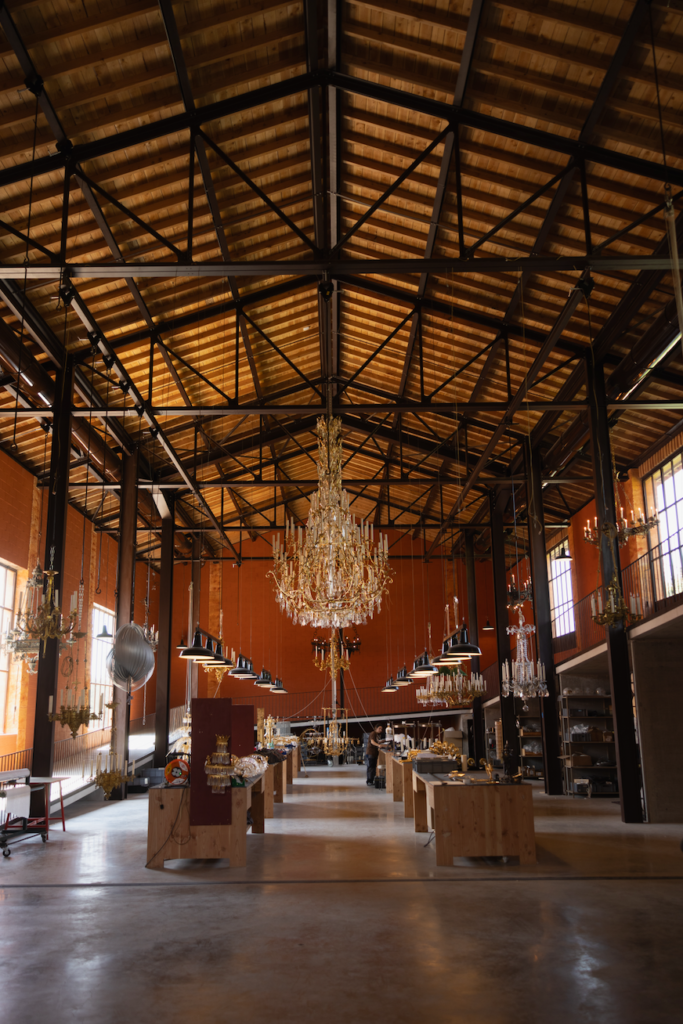
RM: The Opera House in Monte Carlo comes to mind. We re-created the chandelier there. It was five meters tall and weighed five tons, so it was a very big project. We are very lucky, we have huge buildings to work in with very high ceilings, which enable us to manufacture crazy chandeliers. If we were in the Paris Underground, this would not be possible!
TMA: Do you feel like younger generations are interested in taking up the trade?
RM: Restoration definitely is niche. It’s about know-how that you acquire over time. When you begin working alongside a master, it’s like you have a private lesson every day. It makes you richer internally. And today, young people look for a sense of purpose. They don’t want just a stupid job. They want to do something meaningful with their lives and create beautiful work. [A career in restoration] can give your life value that your bank account will never be able to give you. It is much more valuable than money.
TMA: If someone wants to become a chandelier restorer, how does one go about it?
RM: Of course, an apprenticeship is a very good way to get into this, but there is also a restoration and conservation school in France, at the Institut national du patrimoine [National Institute of Cultural Heritage]. It’s a good place to study to be a restoration specialist. Having said that, at the end of the day, there is no better way to learn than a workshop apprenticeship.
TMA: What do you see for the future of a chandelier restoration?
RM: I am hopeful. My daughter is twenty-seven, and she is part of a new generation. She’s doing new things with the company. Today, we use 3-D printing, we do scans that analyze metal composition. The new generation will continue to improve our processes.
I didn’t do the job as my mother or my father did it. I did it my way, and I understand the desire to put your mark on something—to be a part of something bigger than yourself. Today I’m fifty and I cannot imagine the company in fifty years, but I’m very excited about a new generation of restorers.


