Gaze across the Delaware from the portico of Andalusia, the neoclassical estate built in 1794 by John Craig and later expanded by Benjamin Latrobe, and you can almost imagine you’ve been transported back to the candlelit world of the storied Biddle family, who acquired the estate when Nicholas Biddle (1786–1844) married Jane Craig in 1811. There are blessedly few modern buildings visible on the other side of the river, and birdsong is the primary soundtrack. This year, as Philadelphia prepares for its starring role in the country’s 250th anniversary events, two exhibitions at Andalusia invite visitors to think about the Revolutionary War in the contexts of the past and the present through the lens of Andalusia and the Biddles’ material legacy.
The Biddles were extensively involved with government, banking, science, mapmaking, and the military; their roots in the area stretch back to 1681 when Quakers William and Sarah Biddle settled in what was then the Province of West New Jersey, fleeing religious persecution in their native England; Nicholas Biddle was one of their great-great-grandchildren.
On Andalusia’s second floor, in a dedicated exhibition space, Revolutionary Family: The Biddles and American Independence introduces members of the family, who, in addition to being important figures in American history, were also parents, children, siblings, and spouses living through world-changing events. Finely detailed maps, portraits, letters, even a piece of Continental currency from 1778, tell stories of how this consequential family shaped, and were shaped by, revolution. Objects come from Andalusia’s own archive and partner institutions in Philadelphia.
Photograph courtesy of Andalusia Historic House, Gardens & Arboretum.
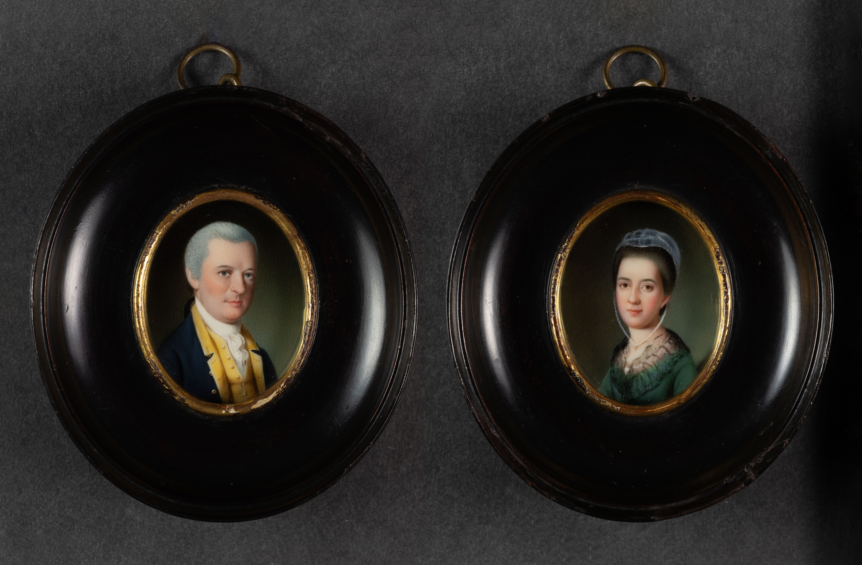
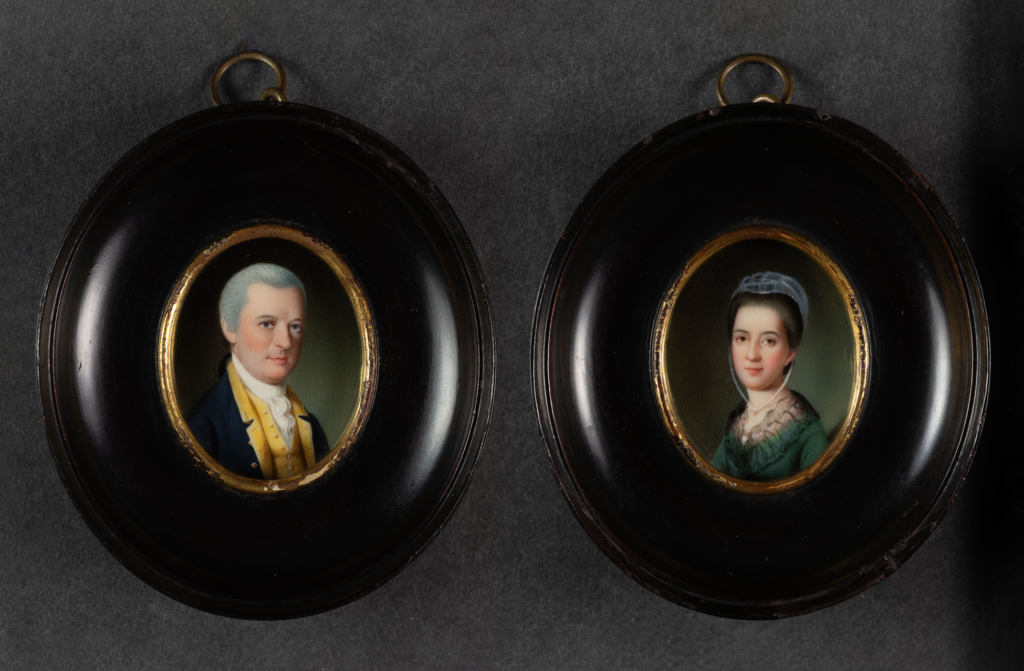
A highlight is an exquisite pair of portrait miniatures depicting Clement and Rebekah Biddle. Small enough to be worn as jewelry or stashed in a pocket, they are copies of originals painted by Charles Willson Peale in 1778. Clement Biddle was deputy quartermaster general for the Continental Army and an advisor to George Washington. Rebekah bravely joined him at Valley Forge, Brandywine, and elsewhere during the Revolutionary War. Peale’s portraits, painted toward the end of the grueling Valley Forge winter, might have been made in anticipation of the couple’s impending separation as a new military campaign began the following spring. That their descendants had copies created suggests that their bond was an inspiration to future generations.
For Radical Americana, contemporary works by Sophie Glenn and Jody Graff are displayed throughout the interiors. Glenn and Graff studied the architecture, interiors, and decorative motifs that give Andalusia its character, with each drawing inspiration from different facets of the house’s aesthetics. Glenn, who works primarily in metal, chose to create furniture with silhouettes that look totally at home in Andalusia’s neoclassical parlor: klismos chairs—only Glenn’s chairs are decorated with the insignia of the Philadelphia Eagles in a wry contemporary twist on traditional patriotic symbolism. “The Greek revivalist style was very popular during and after the founding of the country because it was seen as a symbol for democracy and civic virtue, so I thought it would be appropriate to make my own version of a klismos-style chair for the ‘Radical Americana’ project,” he says.
Graff created a series of site-specific botanical works and narrative quilts in response to Andalusia’s famously lush gardens, and Philadelphia’s role as the site of so many agricultural, horticultural, and cultural organizations in the United States, due in no small part to the region’s Quaker heritage.
“Both exhibitions, with lenders and partners across the Philadelphia area, show how Andalusia’s history and relevance are even greater than Andalusia itself,” says Andalusia’s executive director John Vick. “That’s something I hope visitors appreciate, because these sorts of collaborations are central to so many Semiquincentennial celebrations, and will make organizations like ours stronger and more vibrant in the future.”
Revolutionary Family: The Biddles and American Independence and Radical Americana: Sophie Glenn and Jody Graff • Andalusia Historic House, Gardens & Arboretum, Pennsylvania • to November 13 •
andalusiapa.org


