
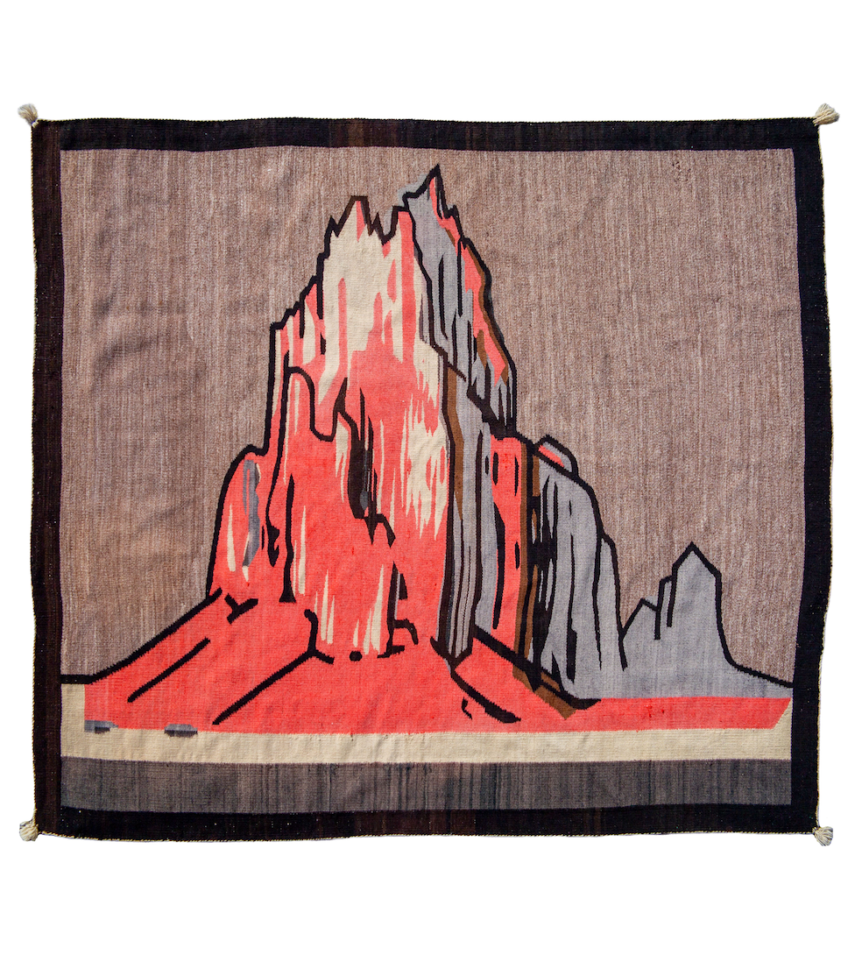
The mid-twentieth-century painter Frank Stella is perhaps best known for his colors: kaleidoscopic blues and yellows, sharp reds, and of course his fascinating Black Paintings, intense and rigid, confronting the eye with faint, thread-like lines running parallel across the canvas. But, he did not invent all of these stylistic motifs; he recognized the same geometric precision and holistic pigments in the centuries-old tradition of Navajo handwoven rugs and blankets.
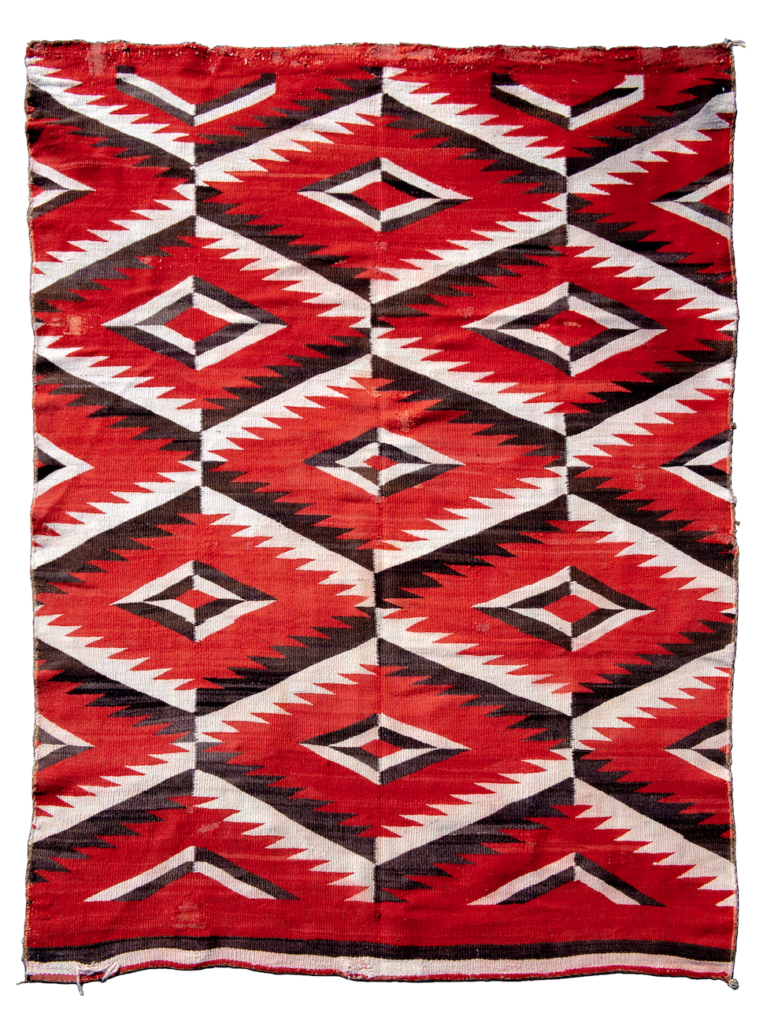
In Navajo (Diné) weaving tradition, women are the artists—their ancestors were taught to weave by a foremother, the Spider Woman, with whose silk the universe itself came into being. The preparation and dyeing of natural fibers, the warping of the loom, and the heritage motifs of the Navajo people have been passed from mother or grandmother to daughter for centuries. “[Stella] respected the strong confident geometries and precision of line . . . in the art made by Diné women a century ago,” remarks Jill Ahlberg Yohe, curator of the Cafesjian Art Trust Museum and noted Navajo weaving scholar.
For the first time, beginning in late May, Stella’s own collection of Navajo textiles will be exhibited and offered for sale on 1stDibs by Peter Pap Rugs, based in Dublin, New Hampshire. I met Peter for the first time at the 2026 Winter Show, where he waited calmly in his booth, surrounded on three walls and the floor by stacks and stacks of the world’s most colorful and intriguing antique woven rugs. Little did I know, when I was growing up in southern New Hampshire, that this textile treasure chest was in my midst. Pap is one of the nation’s foremost experts on antique rugs and notes that he feels “privileged” to bring this collection to the public. “Sharing these textiles—and offering collectors the opportunity to live with objects from the collection of one of America’s most important artists—is both an honor and a responsibility,” he says.
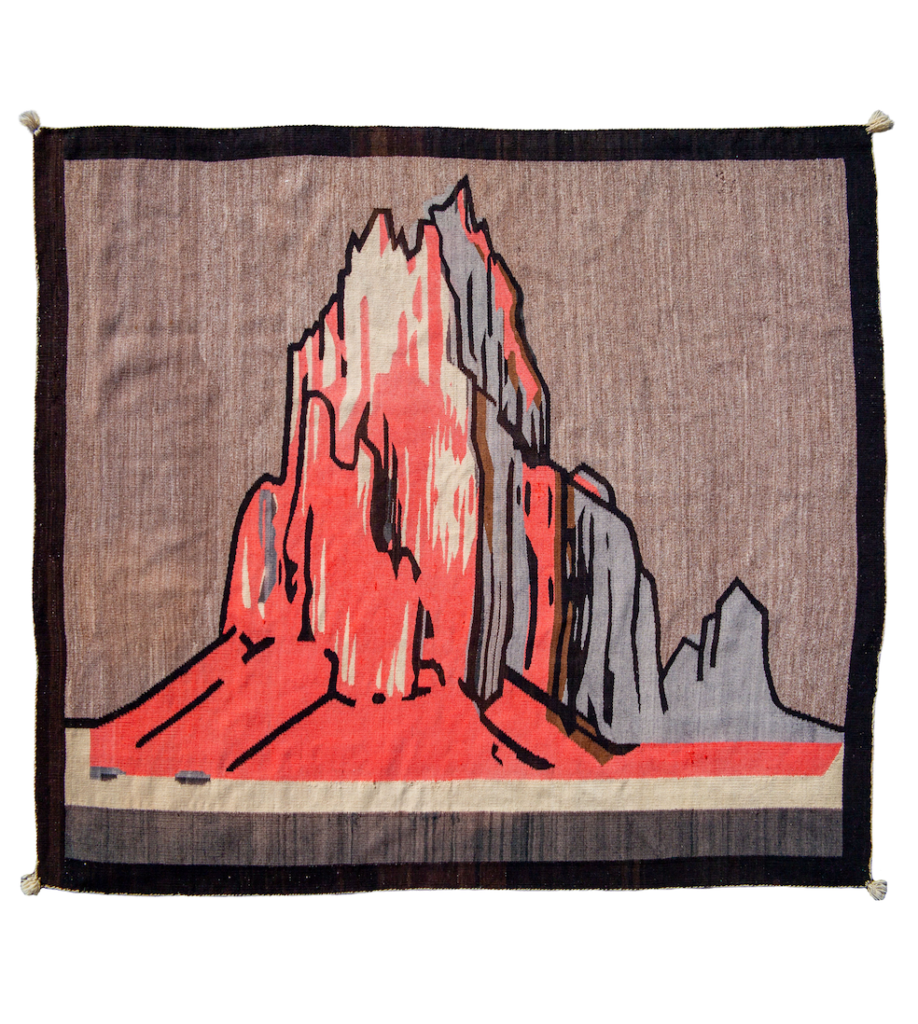
The collection as a whole packs quite the punch. No matter what kind of art or decoration tickles your fancy, these vivid textiles, organic and yet mesmerically balanced, simply draw you in. They appeal to that little aesthetic pleasure center in every human brain that craves beautifully designed and well-made things. Even just looking at the catalogue laid out on a page, in tiny, postage-stamp-sized images, it’s clear that this is the art collection of an artist. Fortunately, curious collectors will have two chances to view the pieces at full scale: once at Pap’s New Hampshire gallery, before they move to a to-be-determined location in New York. This exciting sale and exhibition center the work of Diné craftswomen, bringing together a remarkable range of masterworks presented through the eye of an artist with a virtuosic command of color.
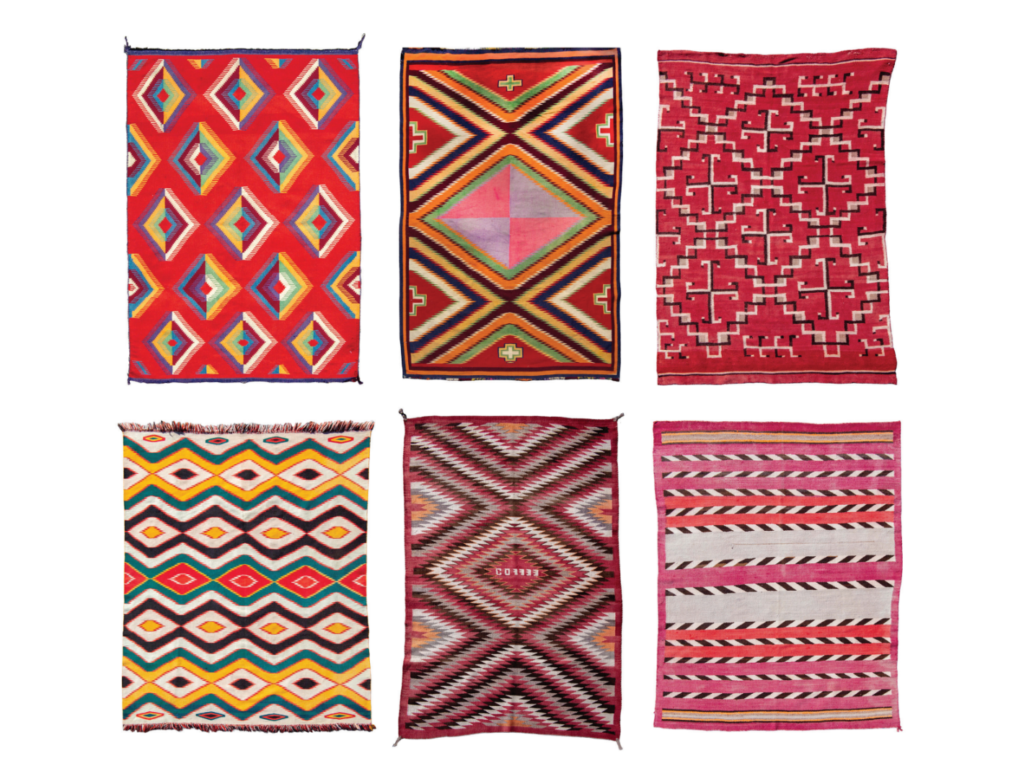
textile, c. 1880; Late graphic textile, c. 1900; Late Elaborated serape/eyedazzler/Germantown variant textile, c. 1885.
Exhibition and sale of Navajo blankets and rugs from the collection of Frank Stella • Peter Pap Rugs, Arader Galleries located at 29 East 72nd Street (corner of Madison Avenue) • May 15 – June 10 and later traveling to his gallery in Dublin, NH, from June 20 to July 7 • peterpap.com


