From Eiffel Towers to model homes, an exhibition at the Wolfsonian-Florida International University explores how world’s fairs shaped modern dreams.
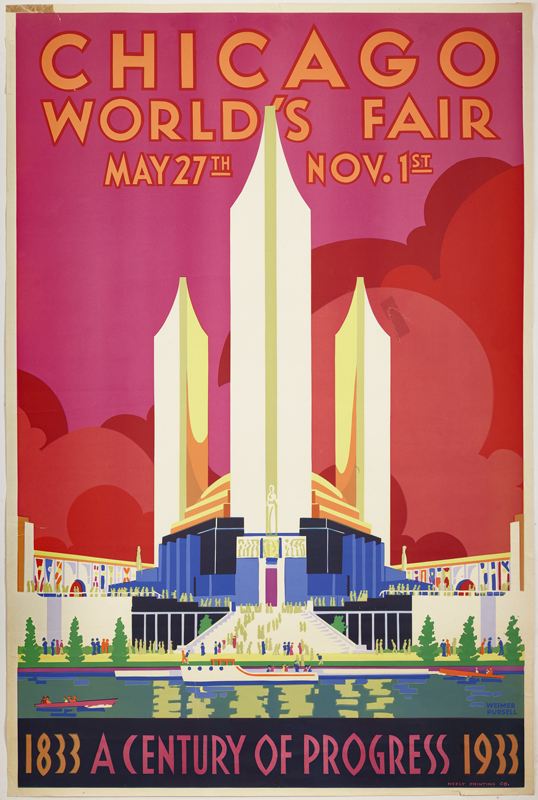
Before the Internet brought us the world through screens, world’s fairs were one of the few windows into our future. World’s Fairs: Visions of Tomorrow at The Wolfsonian-FIU presents nearly 80 posters, design drawings, photographs, ephemera, sculpture, souvenirs, and pieces of furniture from its permanent collection to highlight the bright and modern future promised to millions of fairgoers throughout history, from Paris to Spokane. The optimistic outlook of such fairs often belied worldwide crisis and change, aiming to offer hope in the projected technological and artistic innovations that were “just around the corner.” Opened during the run of the 2025 World Expo in Osaka, Japan, the Wolfsonian’s exhibition offers visitors a visual experience of where we have been and ostensibly where we are going.
World’s Fairs focuses on seven cities that hosted eight events starting in 1889 in Paris, where the Eiffel Tower was unveiled as the main attraction. In the wake of rapid industrial innovation and defeat in the Franco-Prussian War, France was eager to present a positive outlook on future technologies and economic potential. The commemorative artifacts on view include sculptures, prints, souvenir medals, and even a nineteenth-century children’s book about the Paris exposition.
Forty years later in Barcelona (1929), the theme was “Industry, Art, and Sport.” The fair itself was part of an urban development strategy to promote growth and modern industry in the Catalonia region, and gave the city an opportunity to build its Olympic stadium and National Palace, now the Museu Nacional d’Art de Catalunya. Its best known exhibit was the Weimar Republic’s German Pavilion, now called the Barcelona Pavilion. that was designed by Mies van der Rohe and Lilly Reich. A groundbreaking exhibition of modernism and the International Style, the Wolfsonian displays an original catalog spread of its sleek, interconnected interiors.
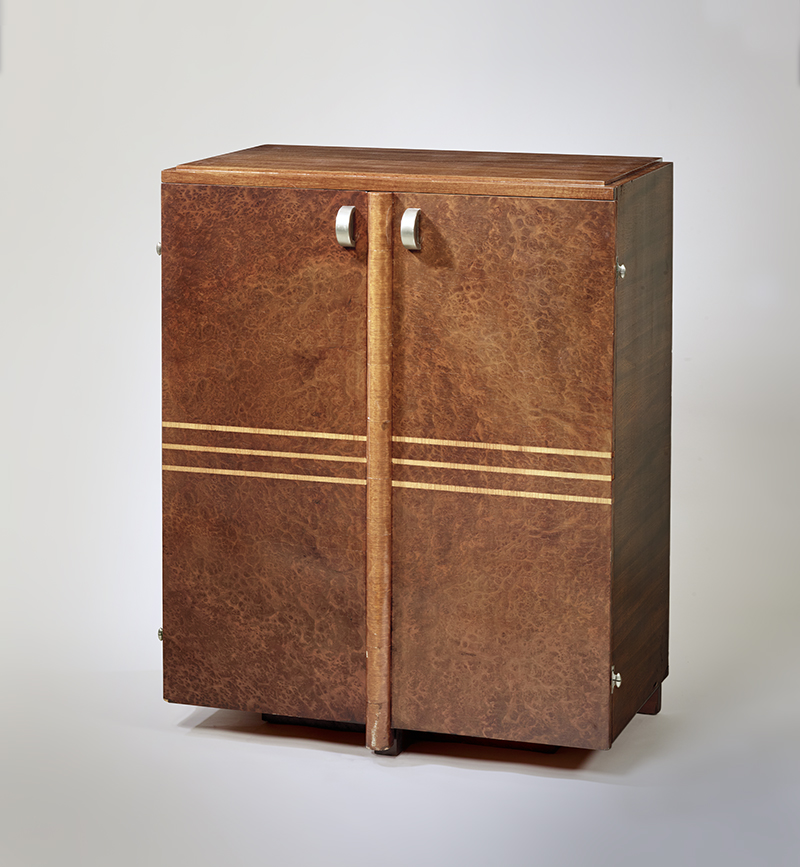
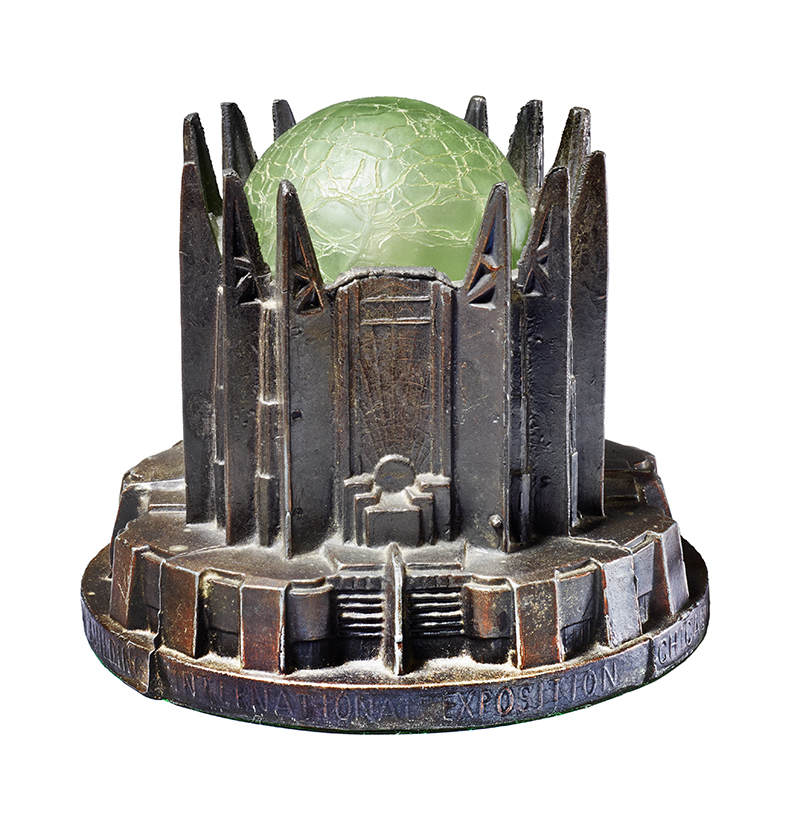
Other highlights include ephemera from the Chicago World’s Fair which took place in the Great Depression’s wake. Fair organizers were eager to take people out of reality during their visit. The fair’s temporary “Rainbow City” was constructed at an almost otherworldly level of art deco and modernist design, as demonstrated at the Wolfsonian in two electric lamps from the Federal Building and the Travel and Transportation building. Also included in this section is a chest by American designer Gilbert Rohde for Herman Miller, made exclusively for the World’s Fair. As part of the master bedroom suite of the Design for Living model house, the line was created to woo middle-class visitors who might still be hesitant to adopt modern design.
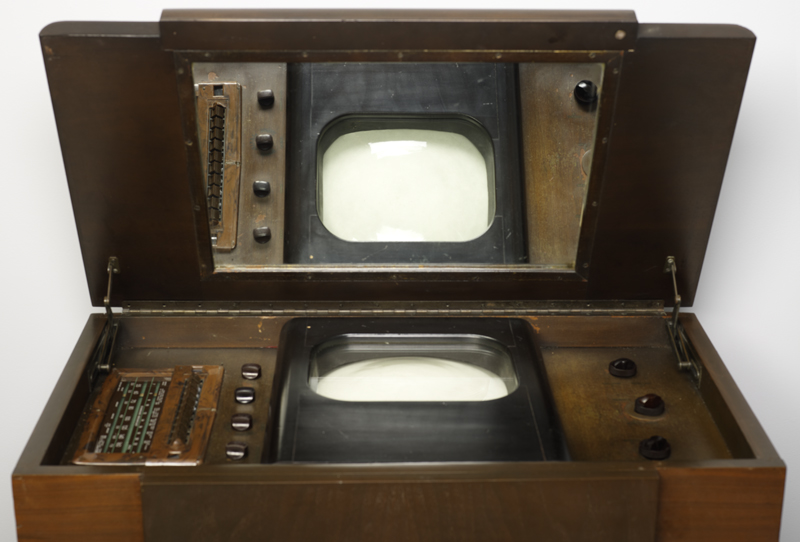
New York hosted the World’s Fair twice in the twentieth century, first in 1939-40 and then again in 1964-65, which must have felt like another world since the former. With World War II looming, the first installment was “Building the World of Tomorrow.” One of the most enduring objects on display from this fair is the RCA Victor TRK 12, the company’s first consumer television receiver. It was designed by John Vassos, who established RCA’s entire design department as well as its pavilion’s theme and concept. President Franklin Delano Roosevelt’s speech opening the fair was broadcast live, making him the first president to appear on television.
Objects from Brussels (1958), Montréal (1967), and Spokane (1974) are all on view. This is only half of the cities represented by maquettes, souvenirs, posters, and other objects displayed at the Wolfsonian’s World’s Fairs: Visions of Tomorrow. While technological change can feel jarring, World’s Fairs remind us that innovation has long been an exciting marker of progress. Like those World’s Fair organizers and visitors, we have nowhere to go but forward.


