
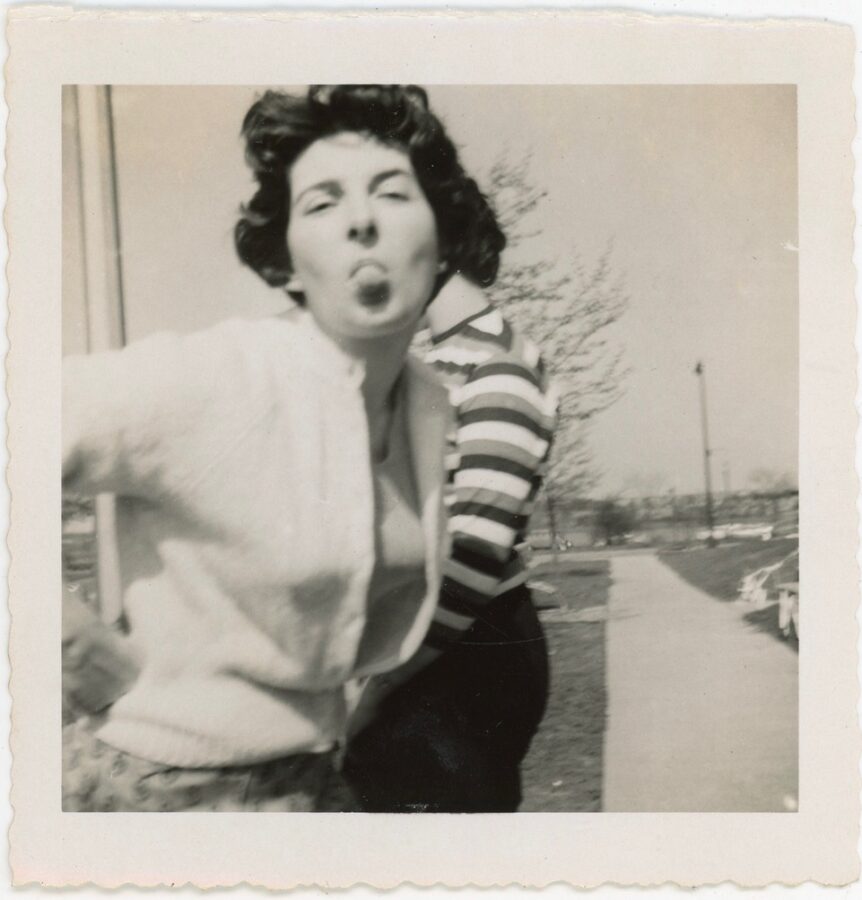
An unexpected flea market discovery uncovers a hidden world of friendship, self-expression, and the enduring emotional power of vernacular photography.
Earlier this year my brother Brian and I both found ourselves in New York for work, and one afternoon we snuck off to the Metropolitan Museum of Art. We didn’t have much time, which can be a disadvantage at the Met. Nevertheless, our plan was simple: wander until our time ran out. Lucky for us, we landed at the photography exhibitions.
Neither Brian nor I studied photography formally, but we’ve long shared an interest in the medium. Together, we explored several of the exhibitions before making our way into the one titled Casa Susanna. I was immediately struck by the playful pink walls and cursive script welcoming us inside.
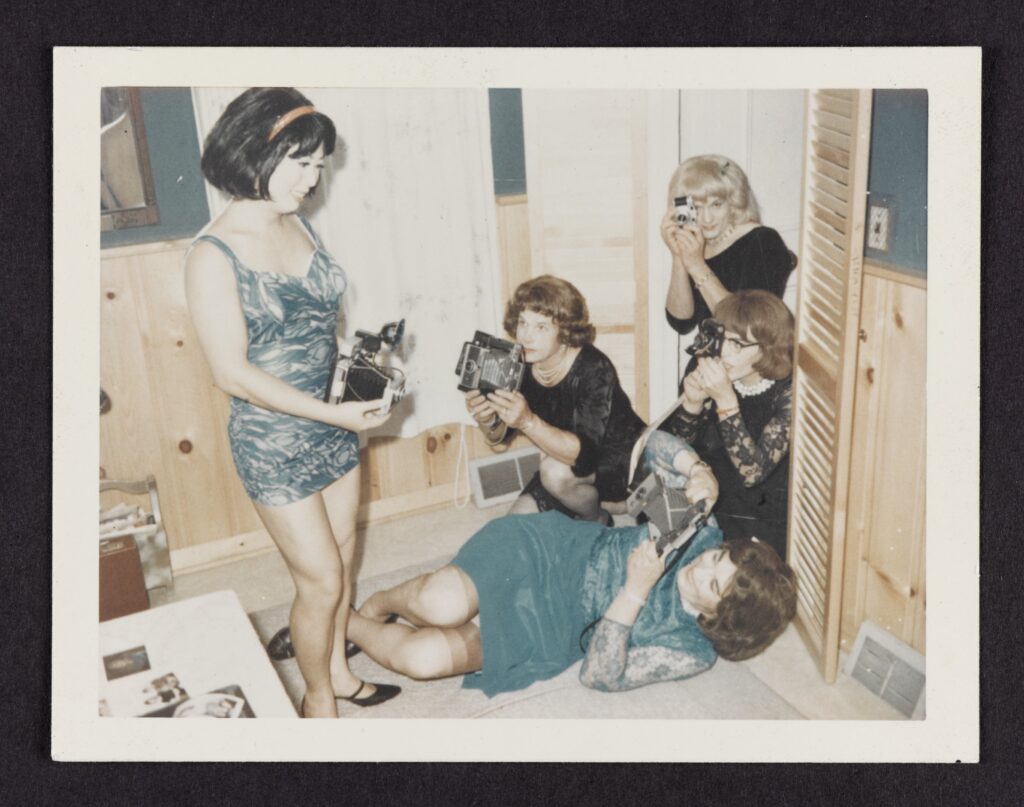
The photographs themselves were snapshots with a distinct 1950s to ‘60s glow. Frames containing multiple photos like those you’d see in someone’s home captured people performing such everyday tasks as watering the garden, posing beside a freshly waxed car or plastic covered couch with a cigarette in hand, laughing amongst friends, or looking oh-so fabulous wrapped in fur, wearing little heels, and carrying a dainty handbag. But in this case, the subjects were all cross-dressers.
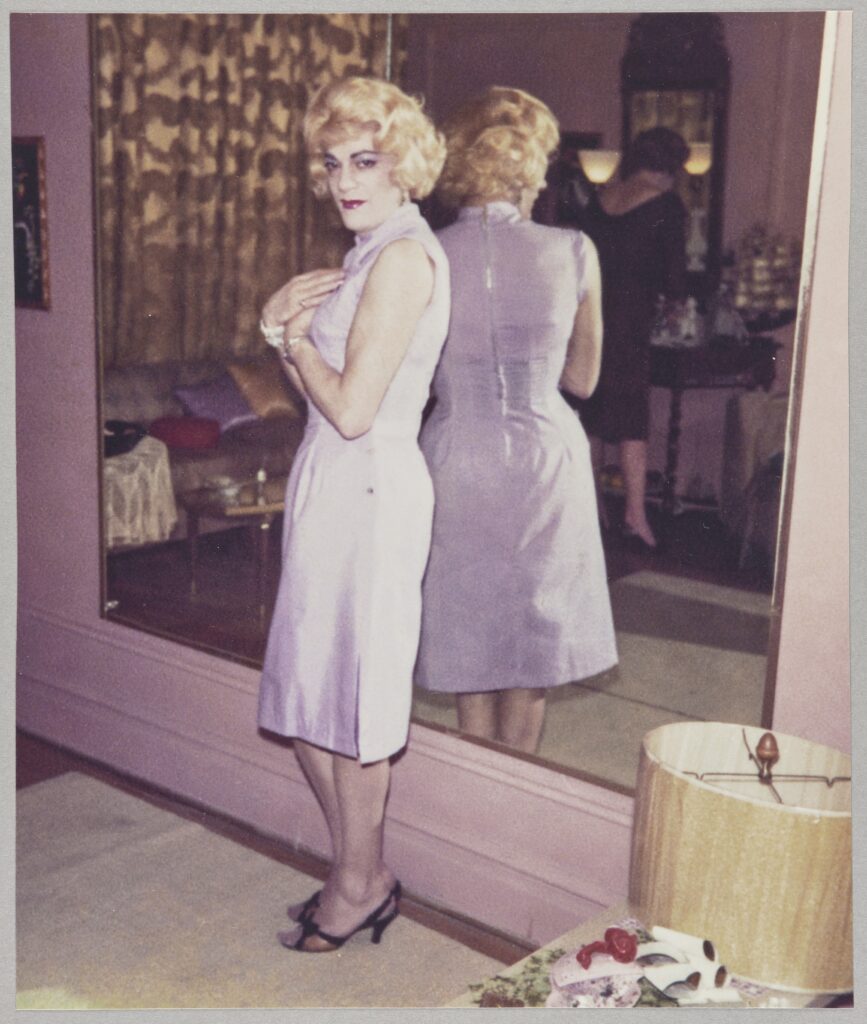
photographs discovered by Robert Swope and Michel Hurst at a flea market. Collection of Cindy Sherman, courtesy of the Metropolitan Museum of Art.
A framed business card offered an explanation: “Cabarets, Hotels, Night Clubs — Susanna Valenti, Female Impersonator.” Valenti and Marie Tornell, who met in the mid-1950s at Marie’s wig shop on Fifth Avenue, hosted gatherings for a circle of cross-dressers who met regularly in New York and the Catskills throughout the 1960s. The exhibition brought together photographs from those gatherings alongside archival material documenting an important moment in the history of trans identity in the United States. The two modest resorts Valenti and Tornell ran became safe spaces where guests could freely cross-dress en femme during an era of rigid gender roles. Participants used photography to create and affirm their femininity, exchanging snapshots with friends and through the mail.
Like girlfriends taking pictures of one another before a night out today, the photographs captured men wanting to feel beautiful and seen. Moved by their emotional power, I circled back to the introductory wall text, and a particular line made my eyes pop: “In 2004 two antique dealers discovered an intriguing trove of snapshots at a Manhattan flea market.”
“I need to connect with those dealers,” I thought. After all, my column is titled Flea Bite! One of the exhibition’s curators, Mia Fineman, directed me to Robert Swope, one of the dealers. He vividly recalls the discovery. It was around 4 a.m. one winter morning at the historic, yet exuberantly eclectic, West 25th Street Chelsea Flea. At the time, he and his late husband, business partner, and fellow antiques collector and dealer, Michel Hurst, had a Pennsylvania farmhouse getaway, but they would drive into Manhattan every weekend to source inventory for their then Easton, Pennsylvania–based design showroom, Full House. In 1985 they opened Full House in Manhattan—a mid-twentieth-century design gallery (with locations in the East Village and Soho)—before moving fulltime to Pennsylvania and eventually retiring in Mexico City.
While digging through a massive box of photographs big enough to hold a washing machine, Swope uncovered a snapshot of a man in drag. Then another. And another. “What was very rare was to find photographs of cross-dressers that weren’t presented as camp or sexualized,” he told me. He knew immediately he had discovered something extraordinary. And, indeed, Swope and Hurt’s find eventually became two books, a PBS documentary, a Broadway play spin-off, and now a major museum exhibition.
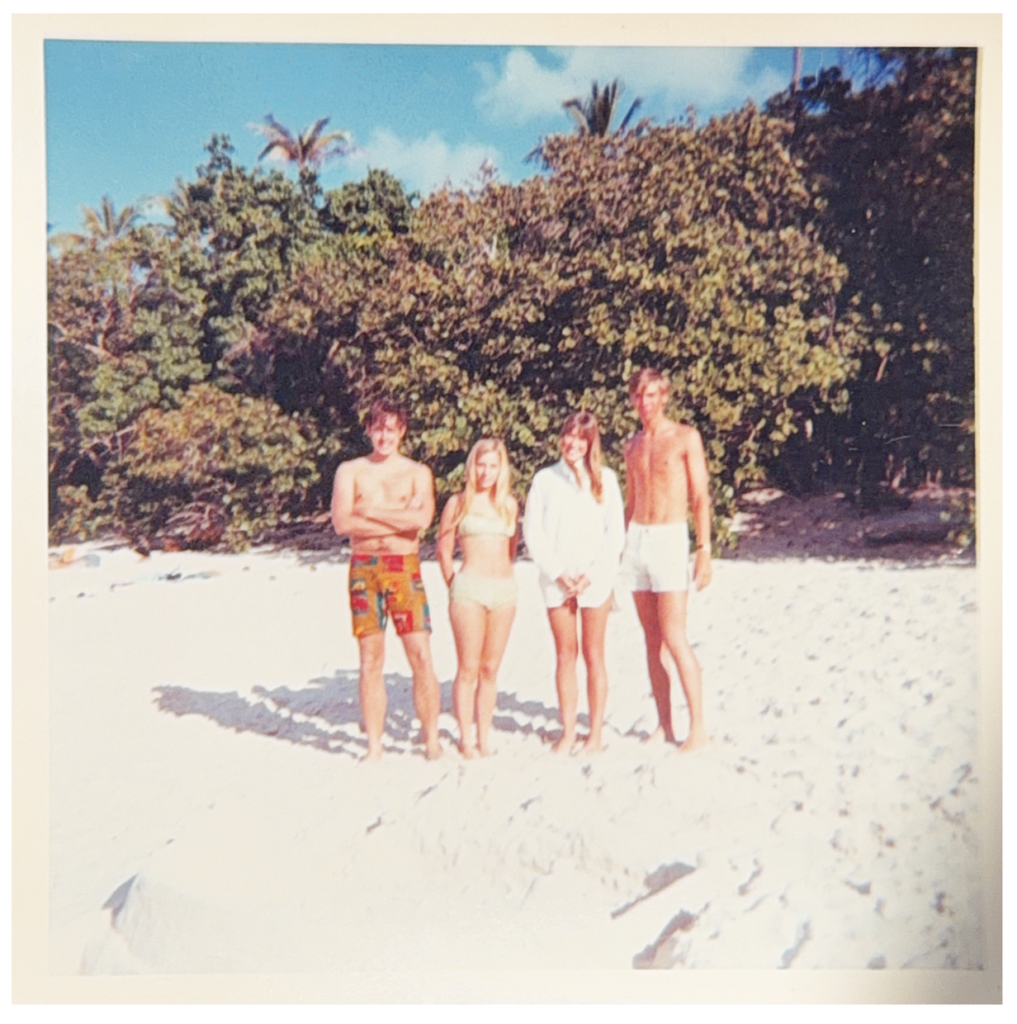
Company. Collection of the author.
Wanting to better understand the appeal of found photography, I spoke with Stacy Waldman, owner of House of Mirth in Easthampton, Massachusetts, who specializes in vernacular photography. Waldman began collecting after winning an auction lot containing an entire banana box full of photographs and diaries. “I was hooked,” she says.
What she loves most is how found photography allows us to study the art history of ordinary life. Clothing, hairstyles, furniture, interiors, expressions—all tiny clues revealing who people were and how they lived. “Snapshots are little pieces of art,” she says, adding, “every photo tells a story, even if it’s a little one.”
Recently, I experienced this feeling firsthand while going through belongings stored in the basement of my late father’s condo building. I spotted an old rusty cashbox I’d seen many times before but never opened. Inside were snapshots from his bachelor days: a trip to the Virgin Islands photographed with friends alongside what I suspect was a girlfriend before he met my mom, photographs taken when he lived in Steamboat Springs, Colorado, where he worked as a realtor, skied, and rode a beloved motorcycle. I even found a Steamboat ‘71–’72 season ski pass where he is sporting long hair and a mustache, looking uncannily like my brother Brian today. From those images, I learned much about my dad, even if he wasn’t around to share the details himself.
I think it’s human nature to search for ourselves in portraits of people past and present. Perhaps that’s what makes photography so compelling: as viewers, we tend to want to know more. We can play the role of detective, or we can create narratives of our own to fill in the blanks.
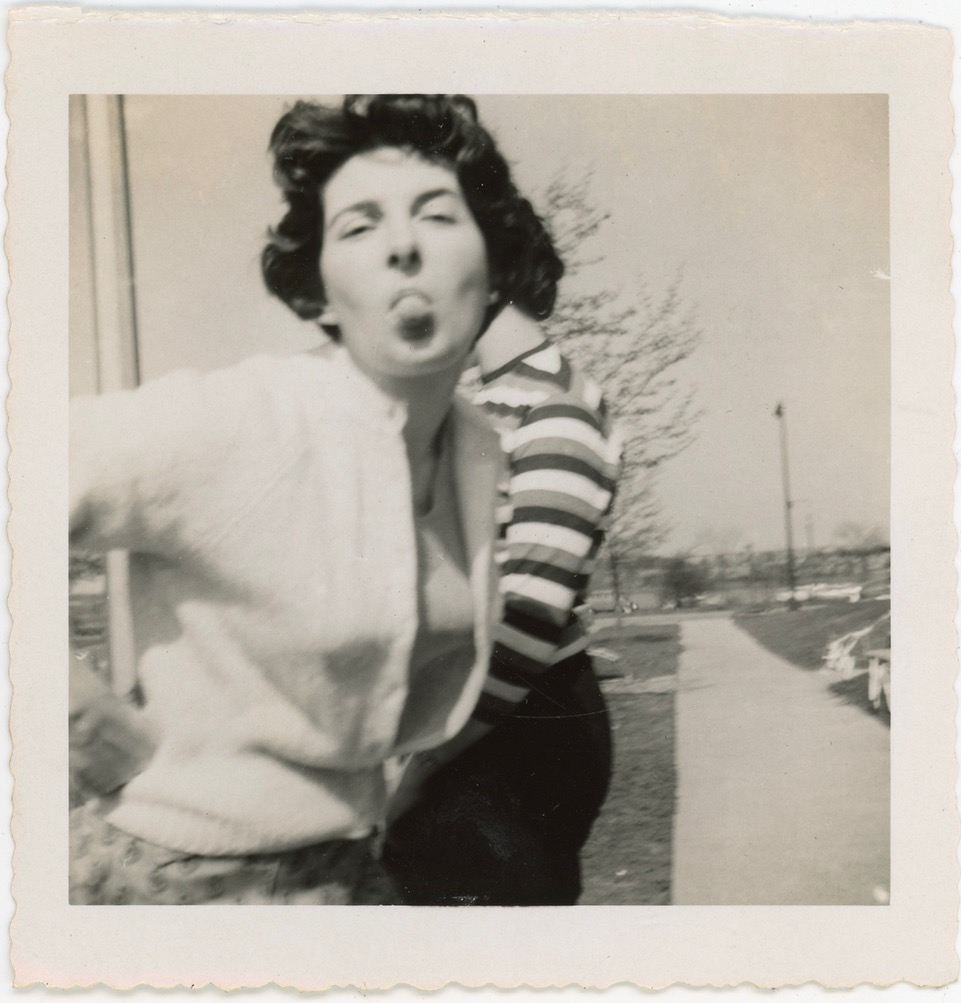
Photography can connect people who otherwise would never have met across place and time. It can be artistic, accidental, sentimental, proof of existence, and deeply human all at once. I’m not promising you’ll uncover a museum-worthy archive during your next flea market dig, but stories like this remind us that anything is possible. Go start your found photography collection or sift through your family’s old albums. I’m sure they’d love to see you, and I’m curious to see what you find. Or perhaps, what finds you.
Show us your found photography finds. Email christine@themagazineantiques.com for a chance to be featured on @antiquesmag Instagram Stories.


