How French conversation seating—from settees to tête-à-têtes—balanced fashion, etiquette, and the spectacle of wealth.
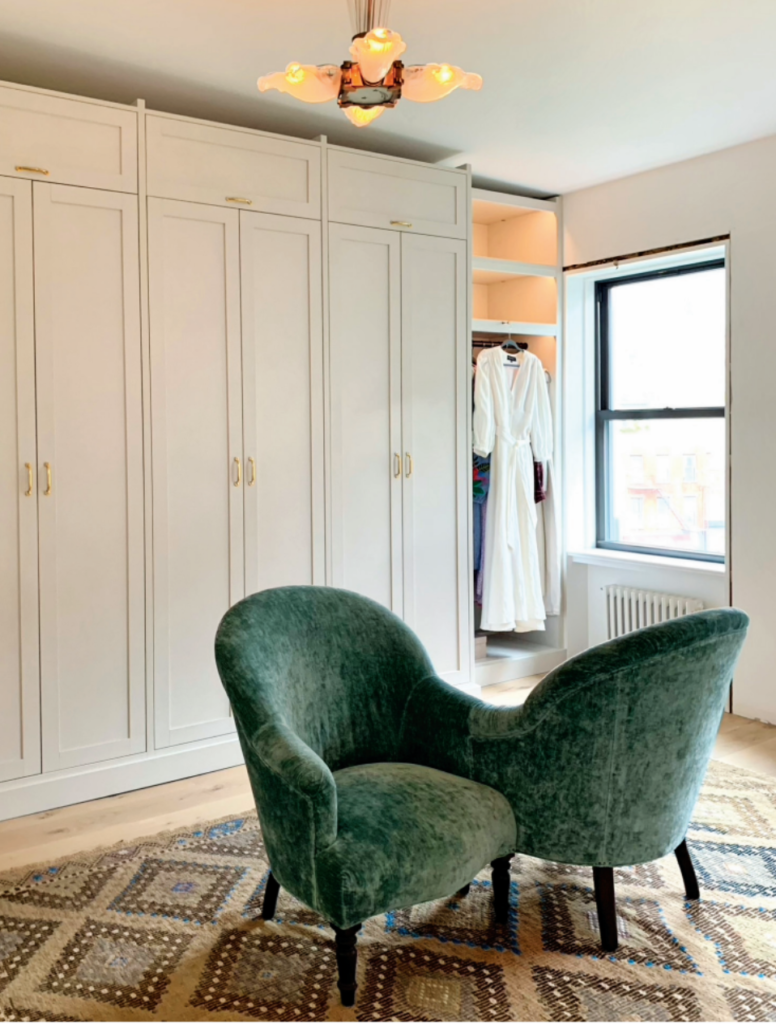
Photograph courtesy of Hallie Goodman Design.
The whole affair began as a maneuver to reduce the tyranny of the bustle—at least, that’s what we were told. The two-seat settee (later called a love seat), the chaise longue, the causeuse (also called atête-à-tête)—indeed, it has become common knowledge that a whole host of nineteenth-century seating styles were created because skirts were so wide. That’s the only way you could sit close to someone. But, is this true? Were these styles created simply to shrug off the yoke of the bustle? Is it possible that mere social mores and the restrictive customs around women’s bodies could have acted as such a controlling force over the furniture makers of Europe’s chief cultural capitals?
As so often is the case when plumbing the depths of these sorts of murky, historical origins, the answer is a fine blend of “yes, and no.” The two-seat settee/love seat first rose to prominence as early as the sixteenth century, and even then its popularity did not stem merely from the exuberance of clothing at the time. While the new style’s generous proportions would later allow for greater ease while navigating in the panniers or side hoops of the seventeenth and eighteenth centuries and the full-blown crinolines of the nineteenth, the increased size and decorative complexity of this form—in contrast to the medieval furniture that preceded it—further derived its staying power from the opportunities presented by such generously proportioned furnishings for wealthy patrons to show off their use of exotic and expensive materials, both in regard to the wood used—imported exotics were all the rage—and to the upholstery and trim. These same forces were at play with the introduction of the chaise longue, as well. For wealthy patrons, a larger canvas was a welcomed addition, as it meant more space to showcase one’s wealth and worldliness. So far, so good, at least where the love seat and the chaise longue are concerned. But what of the third style we mentioned, the tête-à-tête?
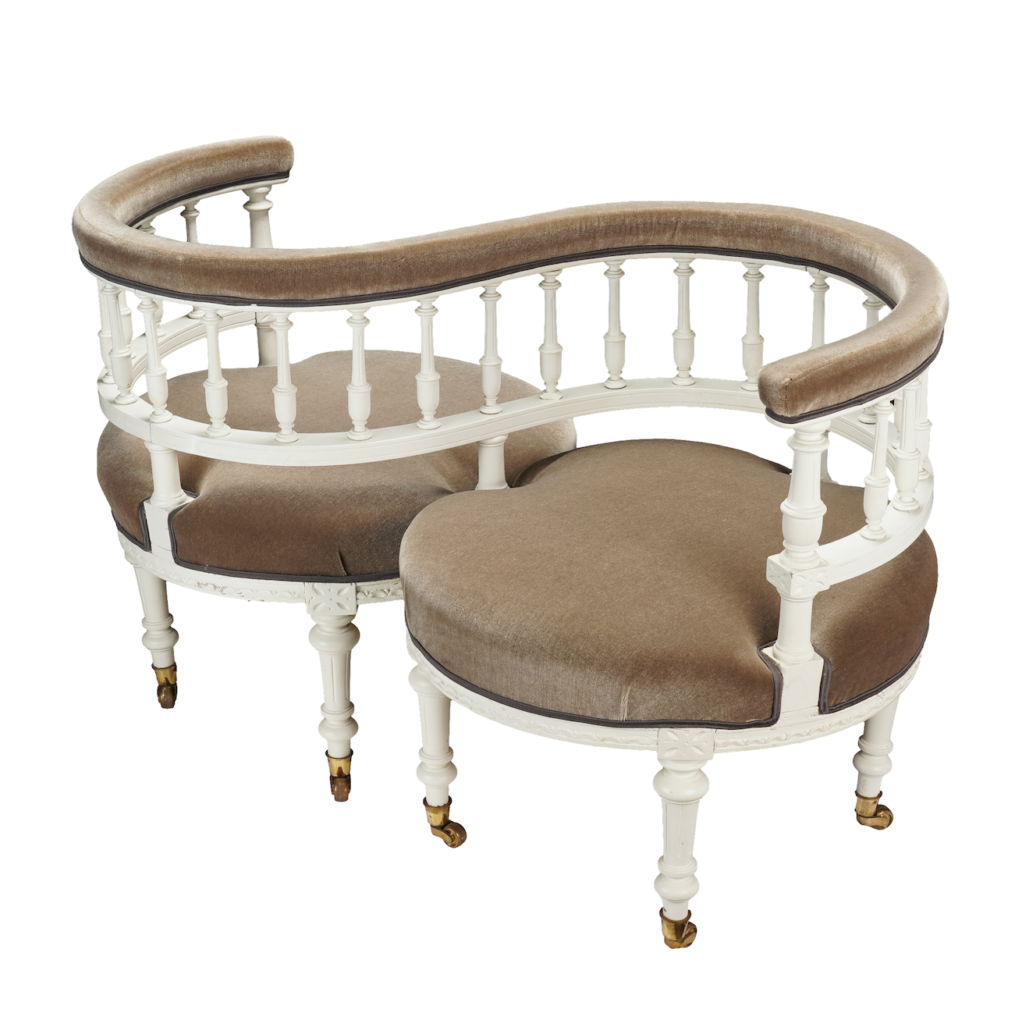
Photograph courtesy of The Federalist Antiques, Kenilworth, Illinois.
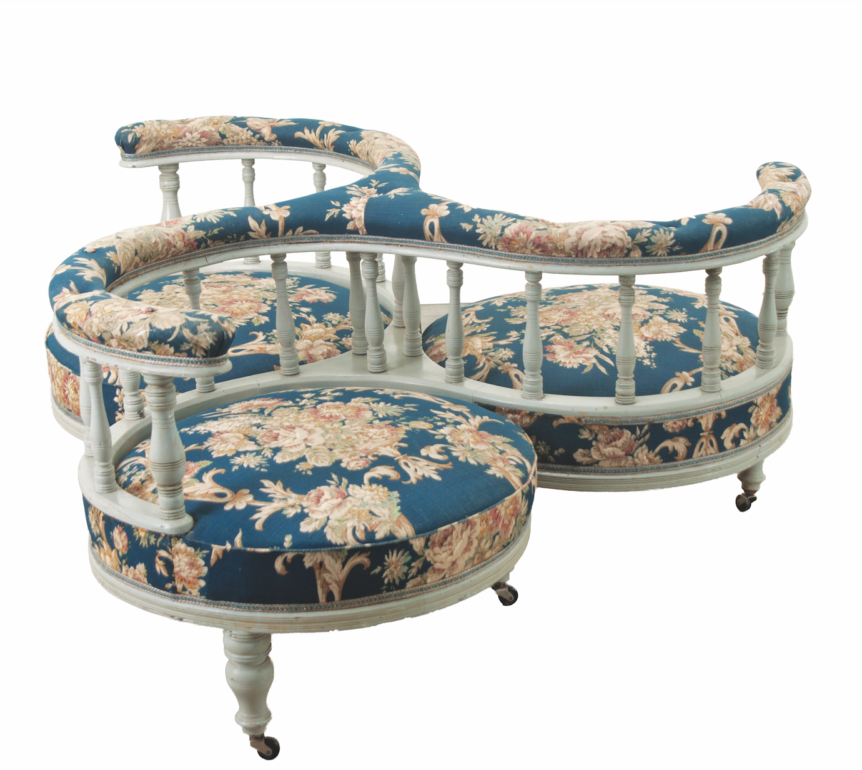
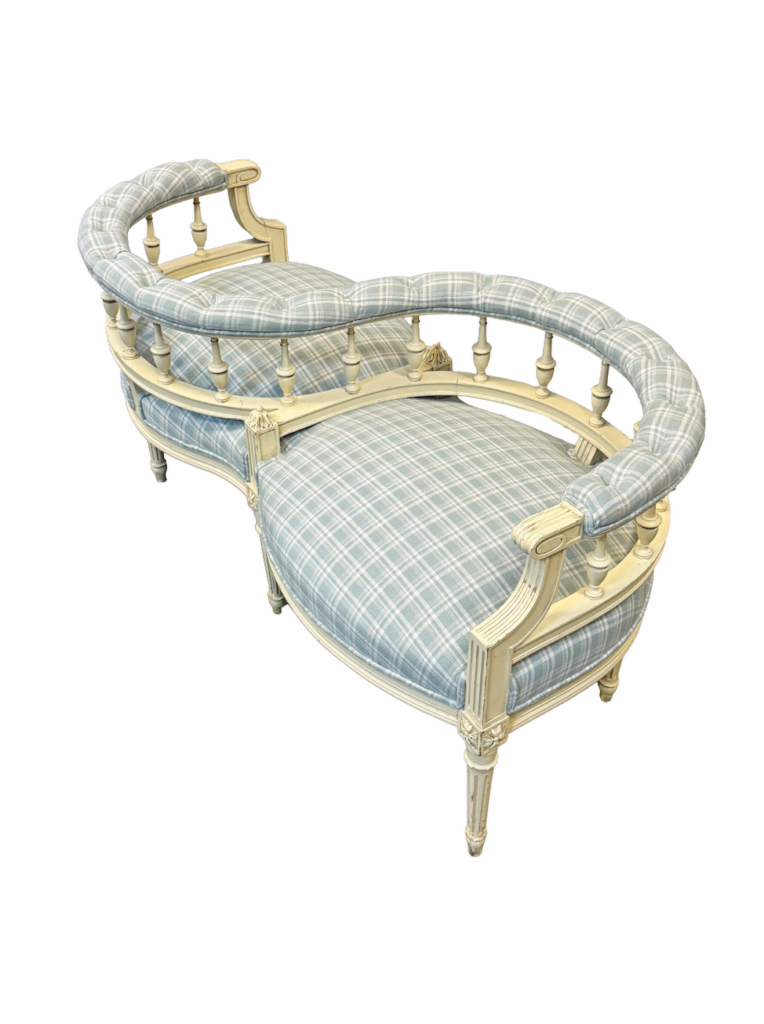
The tête-à-tête is a twining of two seats in a serpentine curve, with each seat facing in the opposite direction from the other. The style rose to popularity in nineteenth-century France, where the arrangement allowed the two sitters to hold a discreet conversation while maintaining propriety. This suited the people of the mid-nineteenth century very well, with the furnishings keeping the physical aspect of romance to a comfortably PG-13 level. It is often said that these same social forces led to a third seat being added, allowing a governess an increased scrutiny over the deportment of the prospective couple.
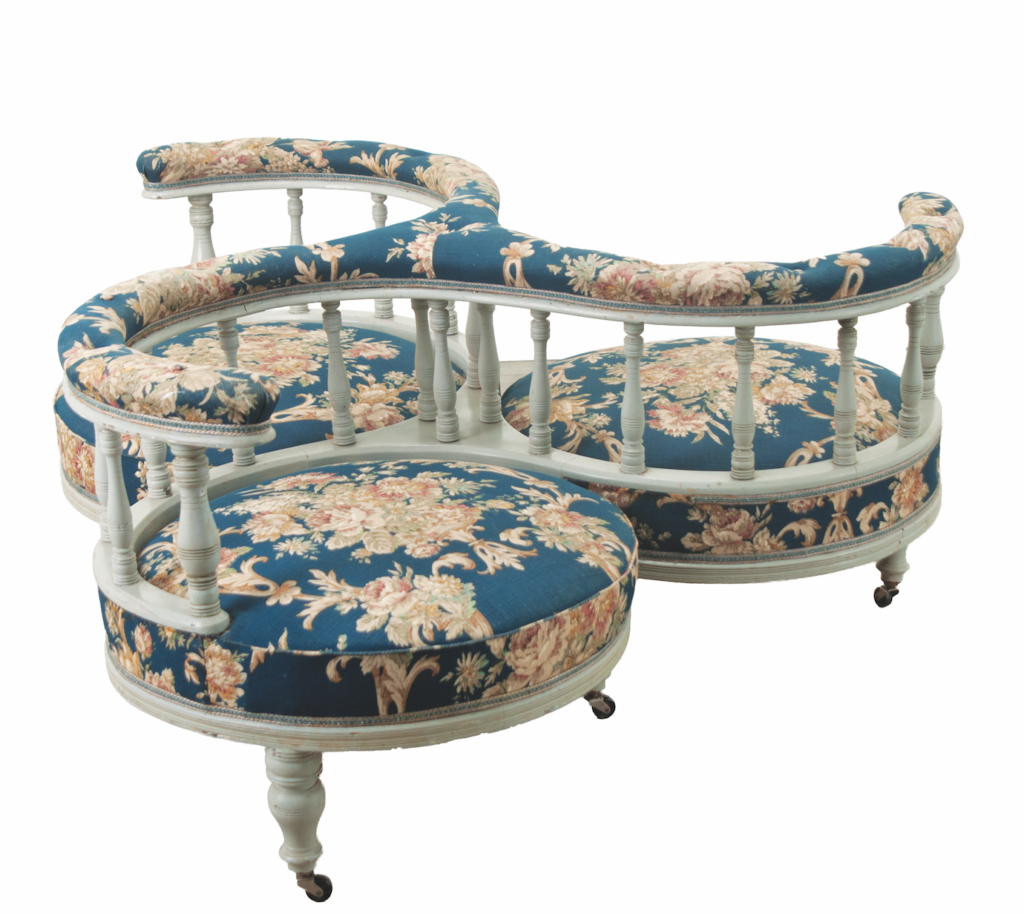
It is unlikely, however, that this is the true origin of this three-seat style. The team at Fireside Antiques in Louisiana points to the third seat innovation as a product of the era of Napoleon III. Unlike a sagging couch pushed against the wall for a small group to slump in, such pieces make the trio of conversationalists a fixture of the room. The three-seat style, which came to be called “le indiscret” (in contrast with the two-seat “le confidant”), allowed court gossip to be better overheard, and for Napoleon III’s spies to gather more secrets. He is said to have presented many of his ministers with such chairs, thereby guaranteeing that the style would be picked up by other members of the elite.
The rise and fall of particular styles has always been intimately connected with the concerns and desires of society and its people. These pieces, which we like calling “conversation seating,” were at the core of a cultural moment when the exchange of thoughts—as monumental as political machinations and as granular as a rival’s wig choice—was the most valuable currency.
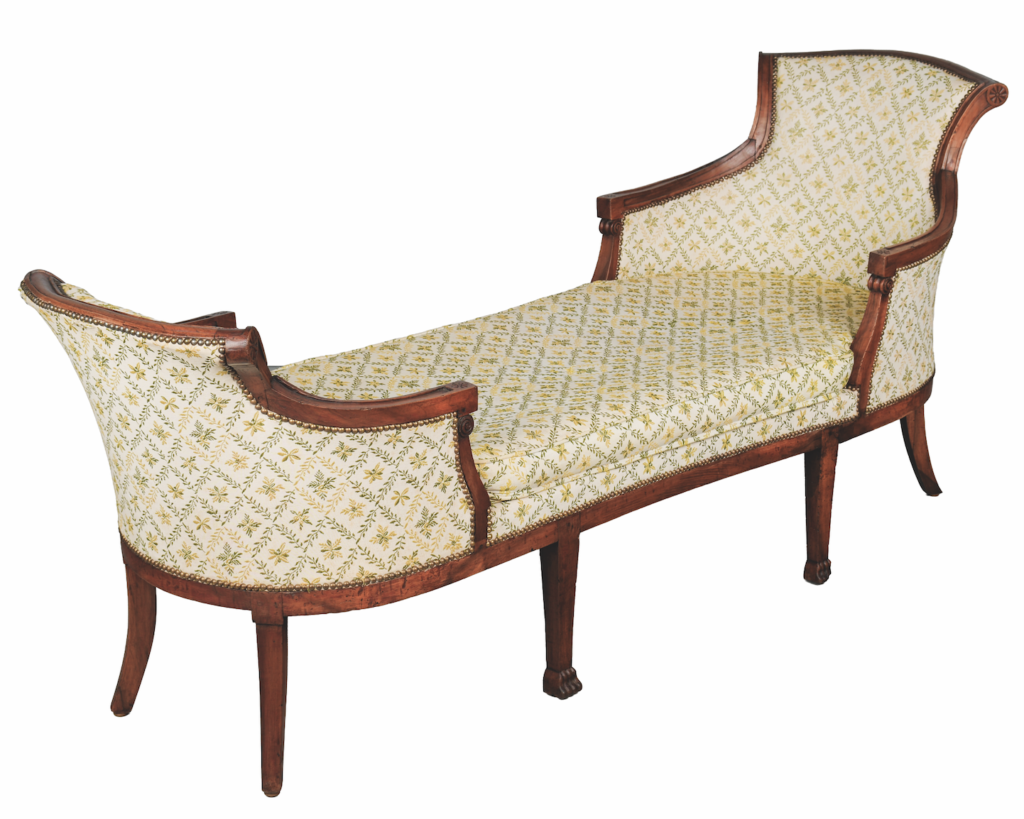
The duchesse brisée was more multi-functional, providing a place to put one’s feet up while also a space for a friend stopping by to exchange gossip. A classy nineteenth-century Louis XVI duchesse en bateau, or “duchess on a boat” chaise because it resembles a watercraft, epitomizes the intersection of ostentatious formality and the nearly absurd casual comfort that rose to prominence in the sunset years of the French monarchy. Today we may have athleisure, but they could put their delicate feet up on the finely upholstered couch without taking their shoes off—and call it fashion. The piece was made by Pierre Pillot (1748–1822), a master furniture maker of the period, but the style traveled to the American home many decades later, shares Olivier Fleury, a dealer specializing in French and Continental forms since 1986, “because it combines high-fashion, historical charm with practical functionality for modern relaxation”—a perfect pairing for Victorians with both deep pockets and a love of naps.
Michael Corbett, owner and president of The Federalist Antiques in Illinois, points to an 1880 American Eastlake version of the form as a strong example of how French fashions from a century earlier fared well over time. The tête-à-tête, he says, “was introduced here in the late nineteenth century into a market that already viewed French design as the height of ‘tasteful’ material.” In recent years, the tête-à-tête and its cousins have experienced a resurgence, finding homes particularly in luxury interior design projects with ample square footage. Televisions, the wealthiest now seem to agree, are bad. Orienting a home toward a screen is, by extension, poor design. Cue from the wings, then, these quirks of French culture that are like oil on water to a sixty-inch for watching Sunday football unless half your guests aren’t bothered by having to crane their necks to see the action. As owners of a home with no television, we’re going to take the side of the Francophiles on this one. High-end furniture designers have even taken a stab at fresh versions of the form, like Yves Marthelot (1949–), whose riffs on the Louis XVI forms stretch expectations through material and flirt with the otherworldly and the obscene.
Photograph courtesy of Olivier Fleury French Antiques, Winter Park, Florida.
For antique forms, a strong example will typically run between $2,000 and $10,000, especially if the upholstery is in decent shape and not in an off-putting pattern. Particularly funky takes on conversation seating, including twentieth-century reinterpretations, can go substantially higher, their value driven as much by the art market as the decorative furnishings one.
As we work out the place for French conversation seating in our own era of rising court politics and Second Empire-style political infighting, we return to the words of Michael Corbett: “Objects,” he says, are useful as “transitional bridges that facilitate a dialogue between the present and the past.” So, we may never get to put our silk slippered feet up on a finely tasseled duchesse of a chaise, but perhaps someone doing the interior design work for the new White House ballroom will find a way to tuck some Napoleonica in amidst the rest of the parvenu imperial splendor.


