
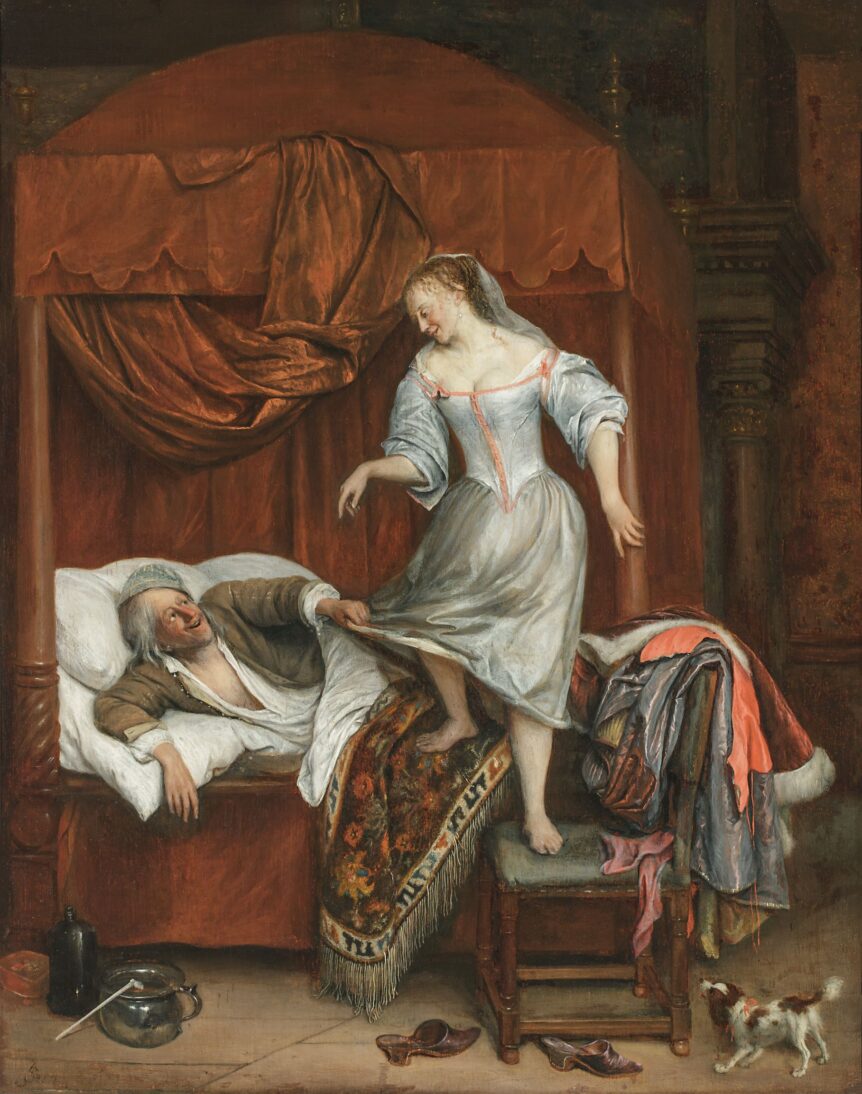
From bawdy brothels to bridal blessings, chamber pots reveal Europe’s tangled views on women, sexuality, marriage, and power.
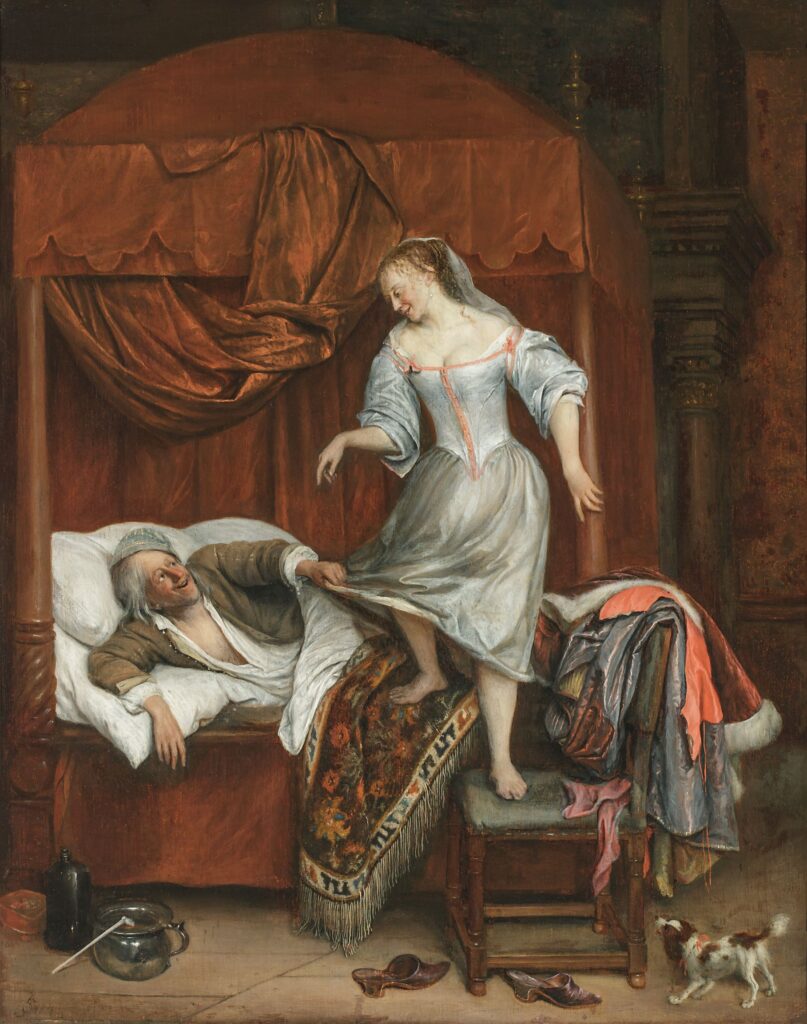
Museum Bredius, The Hague, Netherlands.
These days, bathrooms and bodily functions aren’t much discussed in polite company (unless you’re that person who has to talk about your new bidet). So it’s not surprising that chamber pots tend to be ignored by art historians. Yet these humble objects occupied a significant place in the European consciousness from the sixteenth century well into the nineteenth.
Back then, chamber pots were almost everywhere in visual culture—paintings, prints, and sculpture. They can be found hidden beneath beds, overflowing in taverns, offered as wedding gifts, displayed on mantelpieces, sold by street peddlers, foregrounded in brothel scenes, poured out of windows onto streets (or people) below, and dumped over the heads of politicians. Then, as now, these objects have comedic value. But is that all?
The chamber pot, in fact, held as much meaning as many other common elements of iconography—a dog, skull, hourglass, or book in the hands of a portrait sitter. Specifically, these vessels signaled historic attitudes toward women. Artists used them to communicate ideas of immorality, eroticism, and misogynist humor, but also marriage, fertility, and love.
The objectification of women as “pots” to use and discard was commonplace in rhetoric and lewd poetry. English, Dutch, and Gaelic slang are also filled with terms that associate, or equate, the chamber pot with both male and female genitalia (member mug), sex work or workers (fualan [Gaelic], pieskous [Dutch]), and the sexual pursuit of women specifically (jockum-gage). Visual art followed suit, with chamber pots placed prominently in brothel scenes, voyeuristic images of women in various stages of undress, and scenes of sexual violence against women.
This misogynist symbolism could be considered a perversion of another symbolic role of the chamber pot: a ritual object within marriage rites. Perhaps surprisingly to modern eyes, we find the vessels strategically placed in allegorical images of domestic duty, motherhood, and amorous love. The symbolism in these works reflect the intentions of the rituals themselves: to bring protection, prosperity, luck, and fertility to the newlywed couple, or specifically to the bride. Folk rituals involving the vessels are still practiced today. “Jumping the chanty” in Scotland involves a bride-to-be jumping over a chamber pot full of salt and other symbolic items, three times. In rural France “la rôtie” is a post-wedding ritual in which the newlyweds are forced to drink, among other things, chocolate and champagne out of a chamber pot. The significance of chamber pots in various iterations of marriage rituals has existed since at least the fifteenth century, as seen in Dutch and German depictions of the benedictio thalami—the blessing of the marriage bed.
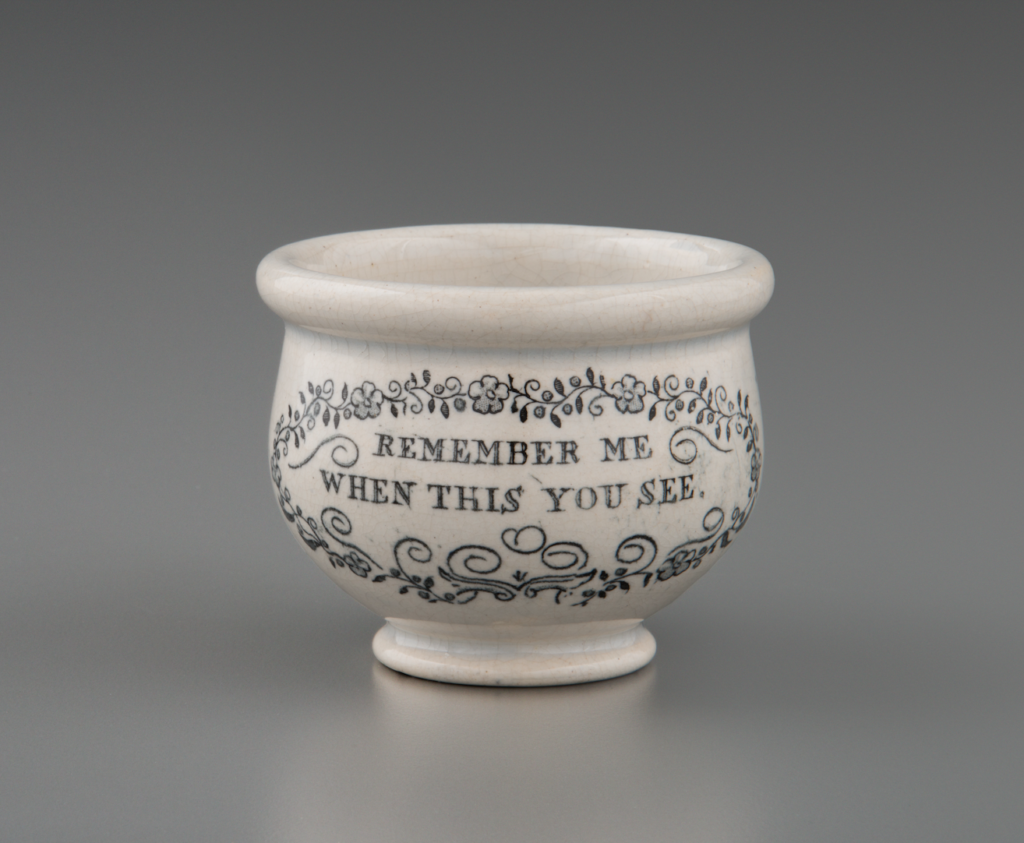
Cultural shifts in sanitation technology and law had occurred in Europe by the late nineteenth century. Depictions of chamber pots, outside of being cheeky comedic relics, began to fade—out of sight, out of mind. Yet, the rituals survived. The complex visual record of chamber pots, is clear: they are meaningful. Perhaps the phrase “Remember Me When This You See” can be interpreted a little differently.


