
Famous French paneling firm Féau Boiseries unveils its first American showroom.
Guillaume Féau, the charming co-owner, with his sister Angélique Féau Lebourgne, of Féau Boiseries, a 150-year-old Paris company that sells antique French paneling, may not yet be a household name in America, but his clients’ names sure are—decorators like Anne Getty, Robert Couturier, Brian McCarthy, Michael S. Smith, and Daniel Romaldez.
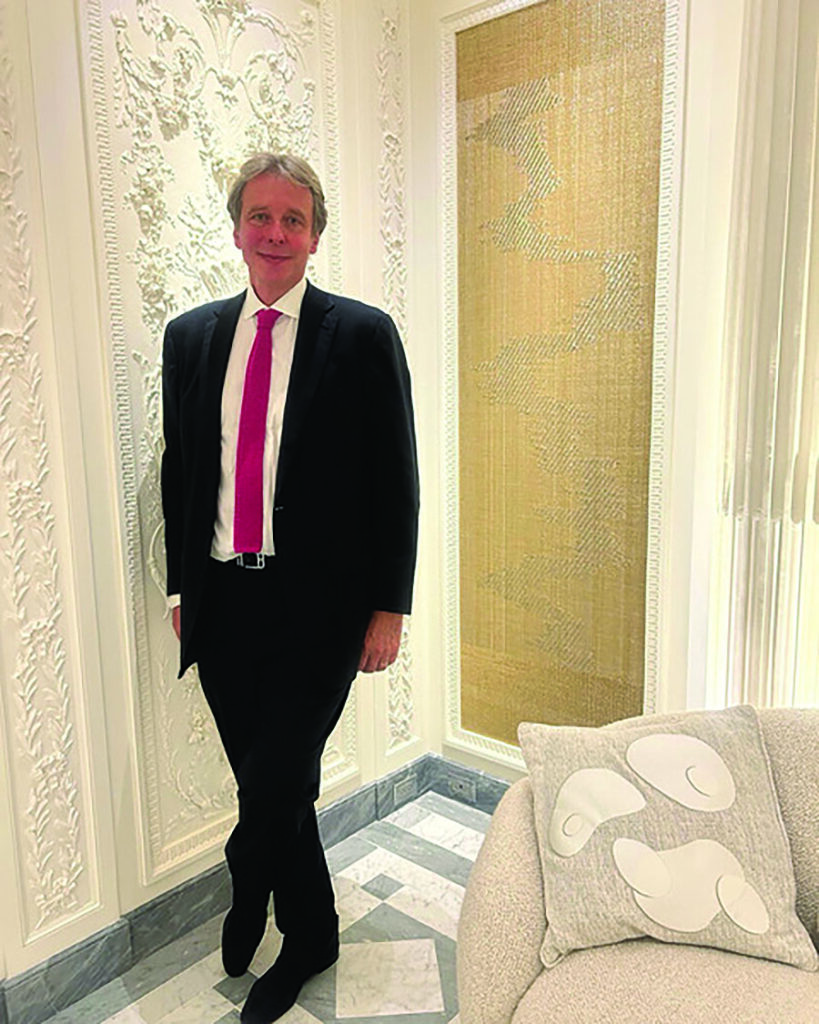
This may soon change, as last fall Féau Boiseries opened a showroom in Manhattan in the Decoration & Design Building, with help from Guillaume’s son Leo, the fourth-generation Féau at the firm. Here are showstopping rooms to illustrate what Féau can provide: custom-made spaces inspired by original French decorative paneling dating from Louis XIV to today.
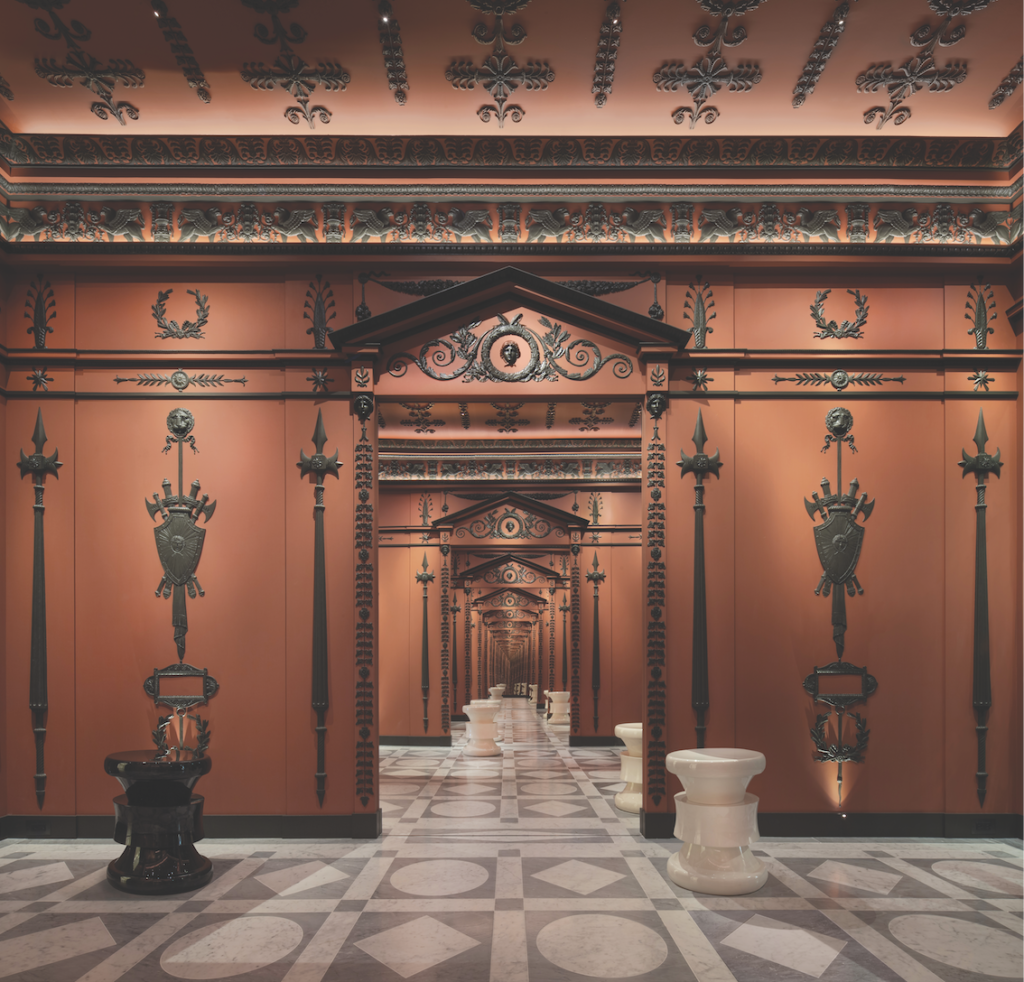
The original antique panels and archives are housed in the labyrinthine rooms of the firm’s two twenty-thousand-square-foot Paris ateliers. The New York showroom is smaller, but it opens with a drop-dead dazzler, an Etruscan red salon with paneled walls, barrel ceiling, and elaborate faux bronze Empire detailing. It is a facsimile of a room created in Paris in 1806 for a Napoleonic general by the emperor’s favorite decorators, Percier and Fontaine.
Then there is a wall of intricate straw marquetry in the style perfected by the French decorator Jean-Michel Frank for the princess de Polignac’s 1929 music room in her home in Jouy-en-Josas, outside Paris. The craftsmanship is stunning. The original marquetry room, whose dismantled panels Féau painstakingly restored, was commissioned by Winnaretta Singer, the American heiress to the Singer sewing machine fortune, who married Prince Edmond de Polignac, a composer. In this magnificent room she held salons, entertaining Claude Monet, Marcel Proust, Jean Cocteau, and Igor Stravinsky.
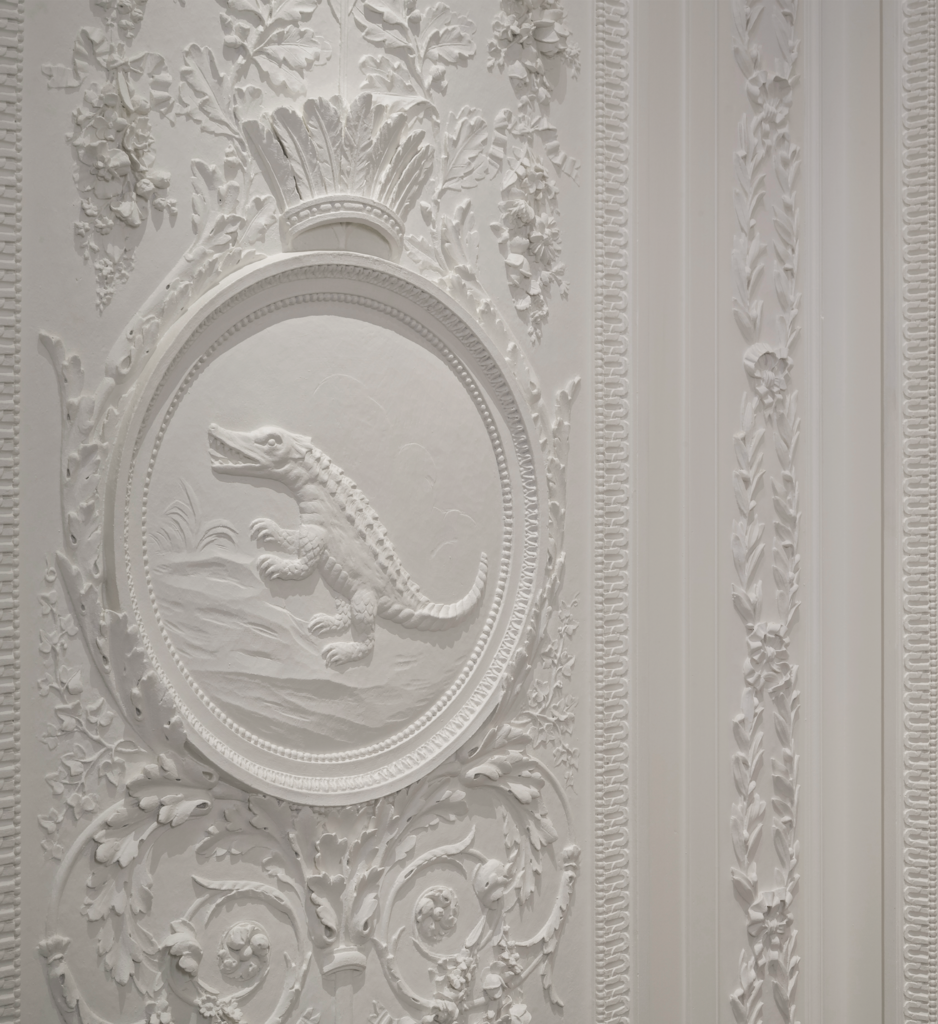
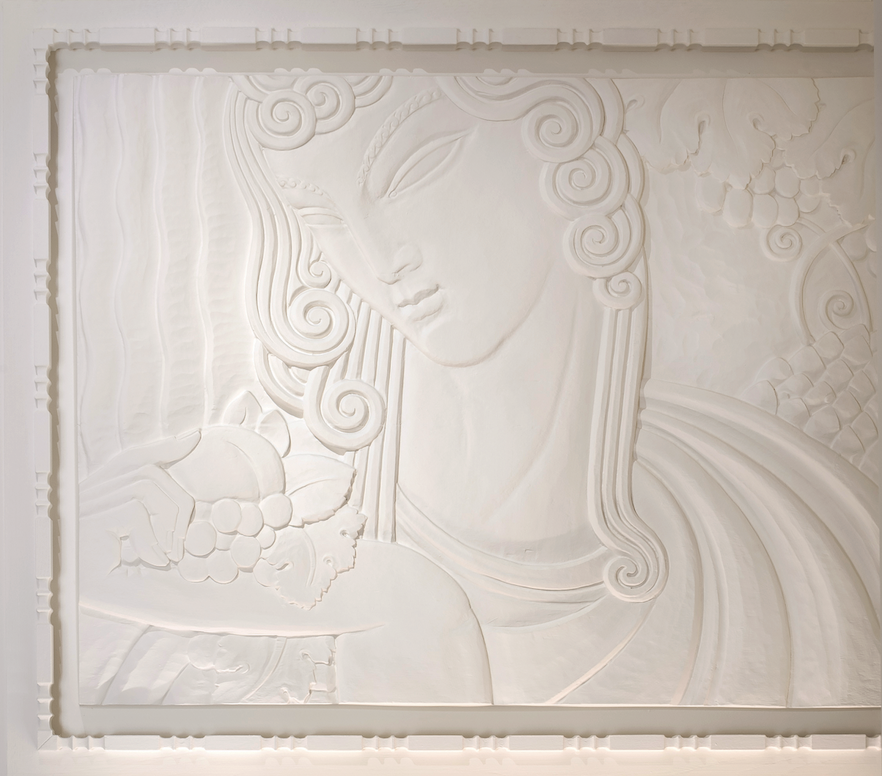
Yet another space in the showroom re-creates the Parisian salon of Lord Rothermere, the English press lord, created in 1925 by the French decorator Émile-Jacques Ruhlmann. The chalk-white art deco-paneled walls are decorated with stylized bas reliefs depicting the faces of fashionable 1920s beauties in profile.
When the Féau firm was founded in Paris in 1875 (then called Charles Fournier) it sold antique paneling rescued from dismantled chateaux and Paris town houses. Today, it is the last remaining French firm founded in the late nineteenth century that supplied antique boiseries to the Vanderbilts, Fricks, Goelets, Goulds, and other wealthy Gilded Age American families in New York and Newport. These included Jules Allard et Fils, Joseph Duveen, Carlhian & Beaumetz, Lucien Alavoine and Co., and Maison Jansen, whose rooms still survive in a few Newport mansions, New York apartments, and in the Frick Collection in Manhattan.
The firms that supplied such paneling to Newport in the Gilded Age were much discussed at the Preservation Society of Newport County’s two-day symposium last November on the French influence in Newport. It took place in Marble House, where architect Richard Morris Hunt installed an Allard-supplied antique gold-paneled ballroom that re-created the decorative splendor of the French baroque. It was so overwhelming it was hard to concentrate on the speakers.
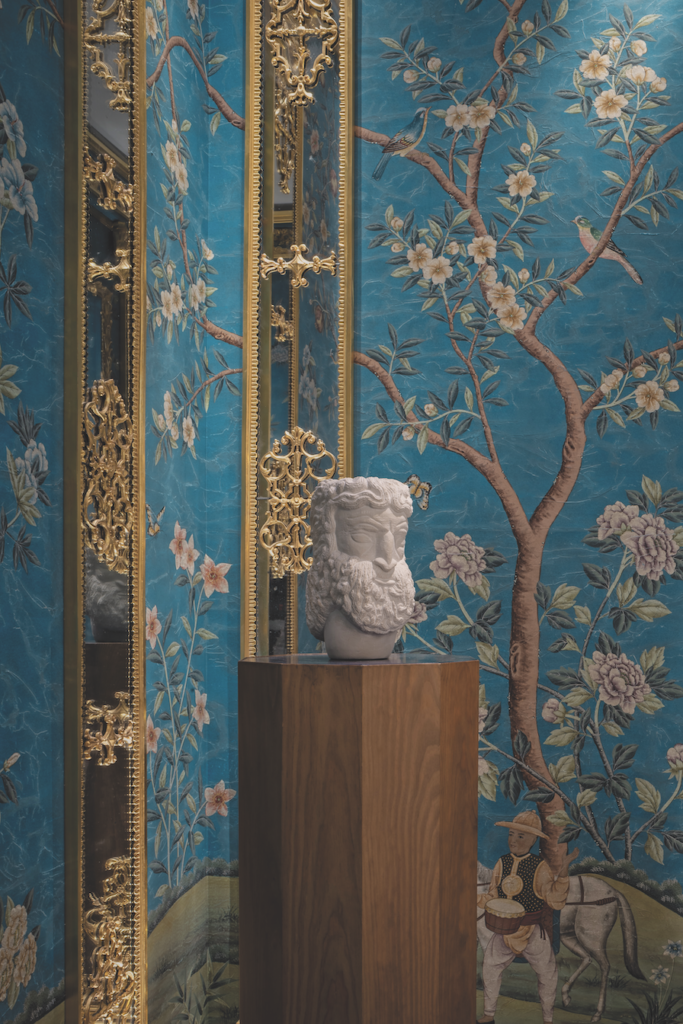
Féau today makes facsimiles of such rooms, but in such a way they can be perfectly fitted to any space. Some are done in white oak, laboriously hand-sculpted and built by a team of skilled French joiners who follow the techniques of the seventeenth century, such as mortises and tenons, which facilitate both assembly and dismantling.
They also employ plaster to reproduce complex carved elements by casting those elements in molds. And, since the 1990s, Féau has created resin panels, which, like oak and plaster, can be covered in paint, gilding, or given an aged patina.
Projects often take at least fourteen months to design, fabricate, and install. But past clients like Jacques Garcia, Tory Burch, the Guerlains, and Nicky Haslam return again and again to Féau, whether they inhabit Chelsea lofts, Mediterranean palaces, Miami penthouses, or London row houses. It won’t be inexpensive, but they know Féau’s candy shop for creatives can produce rococo carving, lustrous lacquer, straw marquetry, plaster bas reliefs, painted chinoiserie, or just about anything else you can dream of.


