

From her studio in Philadelphia, Melanie Bilenker creates beautiful portraits capturing the quiet moments of life. Delicate lines depict a woman cleaning a bathtub, cracking an egg over a pan on the stove, or pouring a glass of milk. Ann’s Begonia, in the collection of the RISD Museum, shows a woman in a kitchen potting a plant. These works sit comfortably in a lineage of placid artworks depicting intimate domestic moments—think Johannes Vermeer’s Milkmaid—though Bilenker’s works are small and wearable like a portrait miniature. Typically set in necklaces or brooches under glass, they are all—unexpectedly—made with the artist’s own hair.
Bilenker says: “People usually think they are drawings or scrimshaw. I personally see hair more as intimate than off-putting, but I enjoy the attraction/repulsion that people have with it.” The material connects Bilenker’s work to the long history of hairwork that is most often identified with the Victorian era. After a beloved’s death, locks of hair were intricately woven and incorporated in brooches, rings, and lockets to memorialize the deceased. She says, “The lock of hair was a stand in for the person, which was so impactful and lovely.”
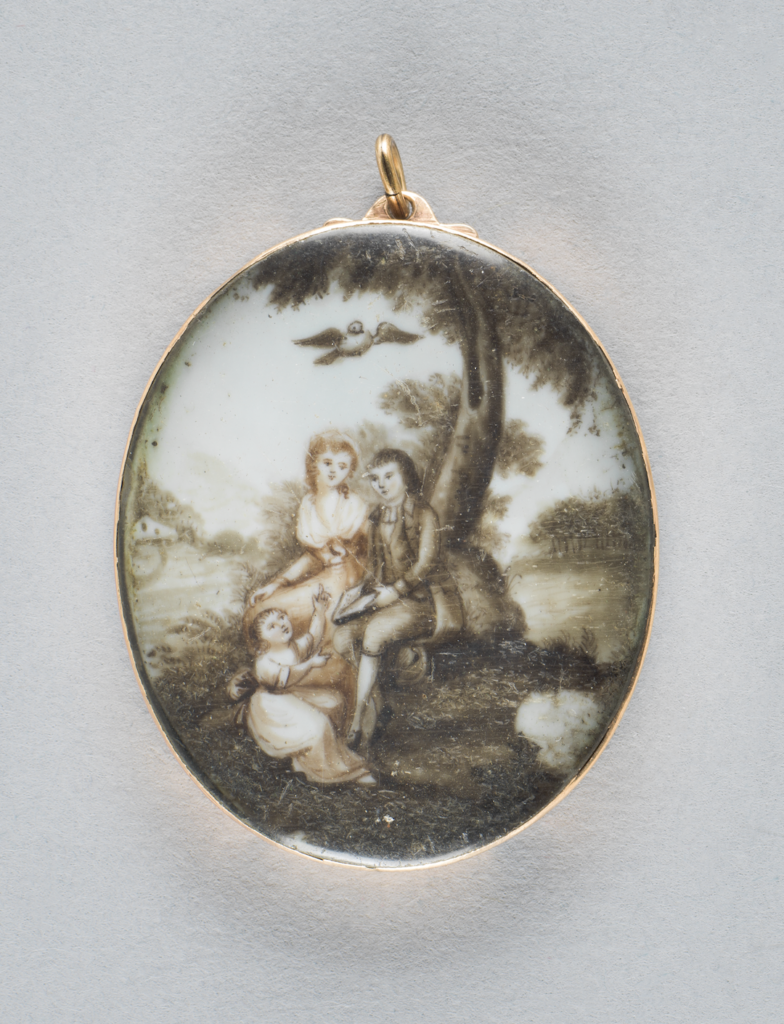
Bilenker came across these works incorporating hair two decades ago when she was studying at the University of the Arts in Philadelphia and exploring local museums looking for inspiration. She stumbled on portrait miniatures, which, she says, often have “woven hair, or a curl tucked in the back. And mourning miniatures depict a scene or a mourner at a grave.
I always thought they were painted in sepia, but I learned they were painted with pulverized hair dissolved in acid and then used as the medium and that blew me away.”
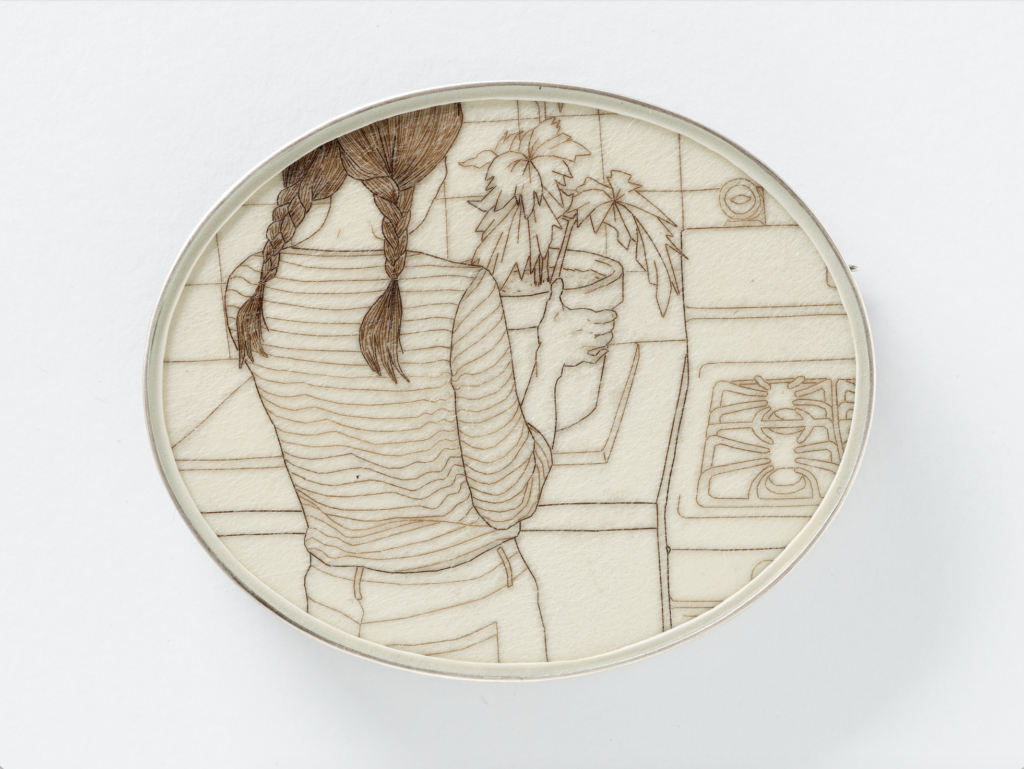
Bilenker started experimenting with using her own hair in her work. Each piece begins with the artist noticing a moment in her life, like repotting a plant. She takes photos of herself, collages them together, and pares them down to a simple line drawing. She then glues tiny snips of hair down to paper. She says: “If you look closely, you’ll see that I can farm from different hair colors. If I want something to pop forward, I will use something with a heavier darker line from my bangs.” The process is time-consuming, and she typically makes only a handful of pieces each year, exclusively available through Sienna Patti Gallery in Lenox, Massachusetts.
Emily Banas, associate curator of decorative arts and design at the RISD Museum says: “Because she’s using her own hair, the piece becomes a snapshot of her at a specific moment. Not just because the works are portraits, but because our hair is aging, too. It changes in color and sometimes texture, so the hair of earlier works will look different from later ones.” A recent piece is composed entirely of white hair.
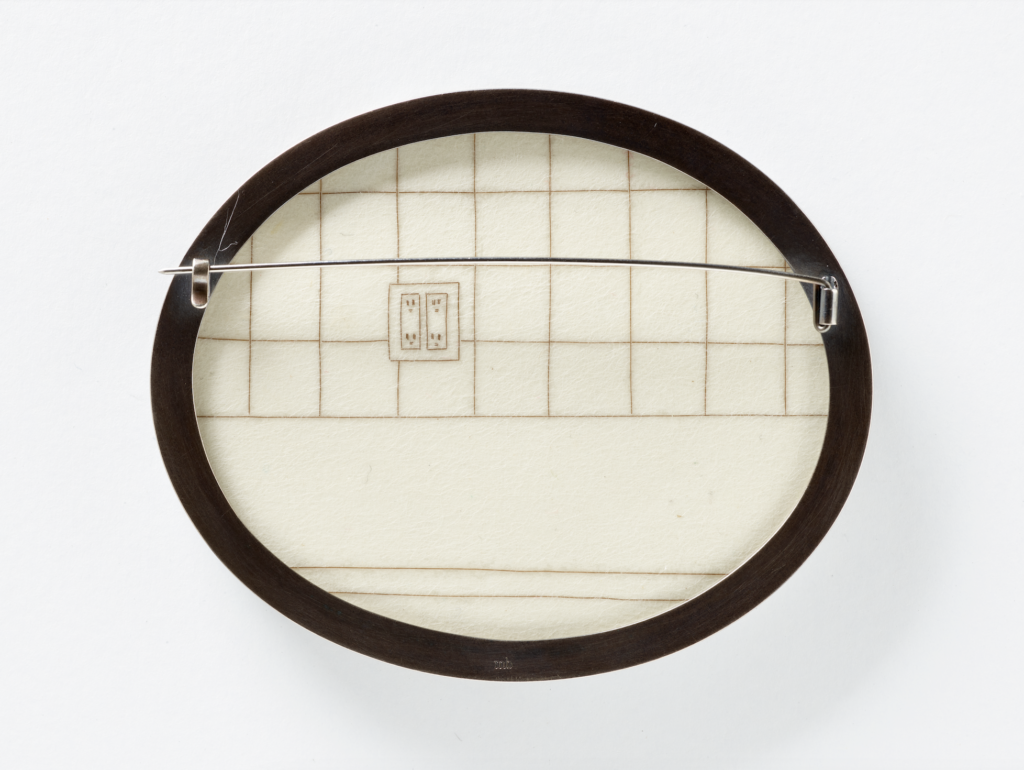
Technically, Bilenker’s works are self-portraits, but the moments are so mundane they could be anyone. Her work conveys a sense of how the moment felt to her. “When you see this quiet minute,” she says, “I want it to resonate with you and relate to the minutes in your day.” Some of Bilenker’s pieces include a finished back with an even more sparse scene, like that of a kitchen outlet on the back of Ann’s Begonia. She says, “The wearer will see it when they take it off, and that moment is just for them.”


