
Inside the inaugural Pennsylvania Antiques Show, featuring sixty-three dealers specializing in folk art, Americana, and regional designs.
A photo story by Christine Hildebrand
When news broke that The Philadelphia Show—long held at the Philadelphia Museum of Art—would pause this year, there was a ripple of surprise and disappointment throughout the antiques community. The Philadelphia Show (formerly The Philadelphia Antiques Show), founded in 1962, has long been considered one of the premier annual American antiques and decorative arts events. So, after sixty-three years firmly marked on the calendar, dealers and patrons alike absorbed the shock.
At this level, the antiques show roster is relatively fixed: The Winter Show in New York each January, The Philadelphia Show in April, and The Delaware Antiques Show in November. These are not simply fairs; they are anchor points, drawing top-tier dealers—true specialists in their fields—and presenting museum-quality works spanning centuries. The cancellation was deeply felt, but it also made room on center stage.
In its wake, the industry welcomed a newcomer: enter the Pennsylvania Antiques Show, held in Valley Forge. The setting was not accidental. Valley Forge was the site of the Continental Army’s brutal 1777–78 winter encampment, where George Washington transformed a struggling militia into a disciplined fighting force. At a moment when America’s 250th anniversary looms on the horizon, the choice felt pointed, poetic, and patriotic. The show, hosted and presented by Historic Trappe, also raised funds to support the museum’s educational programming, giving the event an added sense of purpose.
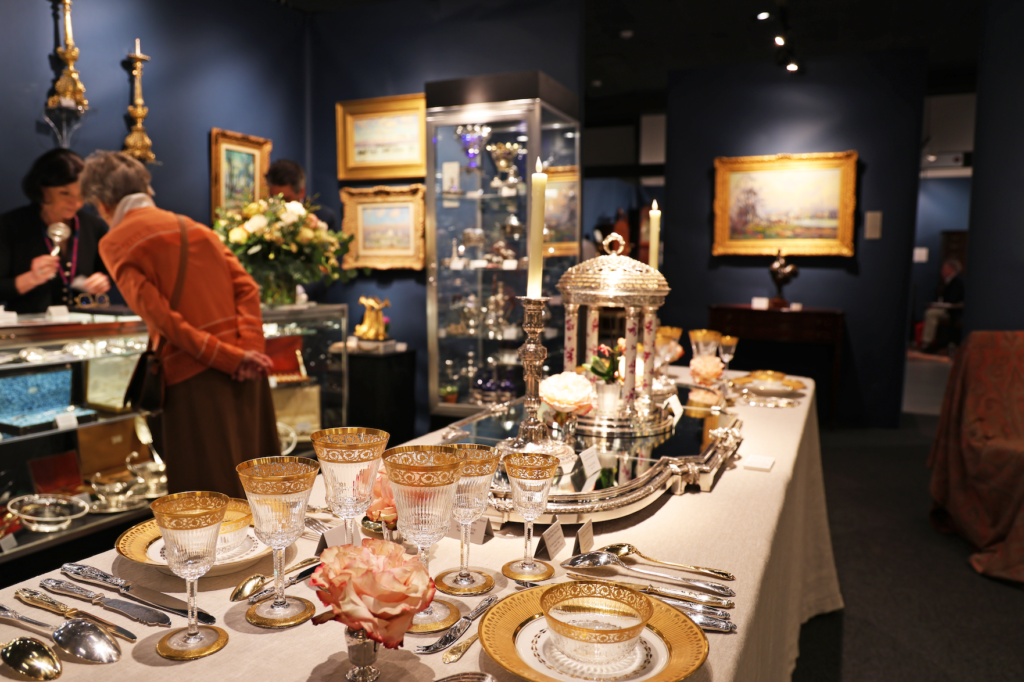
Presented by Historic Trappe, the fair highlighted American history through the lens of decorative and fine arts, with a particular focus on Americana and folk art, bringing together sixty-three dealers and collectors from both near and far beyond the historic Valley Forge site.
I arrived by plane, then Uber, at one point gripping the car door as my driver sped through the rolling hills and tight-turn terrain of southeastern Pennsylvania. The venue itself was a conference center tucked inside the Valley Forge Casino Resort. Once inside the casino—and eventually the show itself, with booths stretching farther than the eye could see, thoughtfully merchandised and carefully curated—the scene felt familiar (and I suppose if you’re good at gambling and fond of antiques, those lucky attendees’ chances of winning big felt especially high).
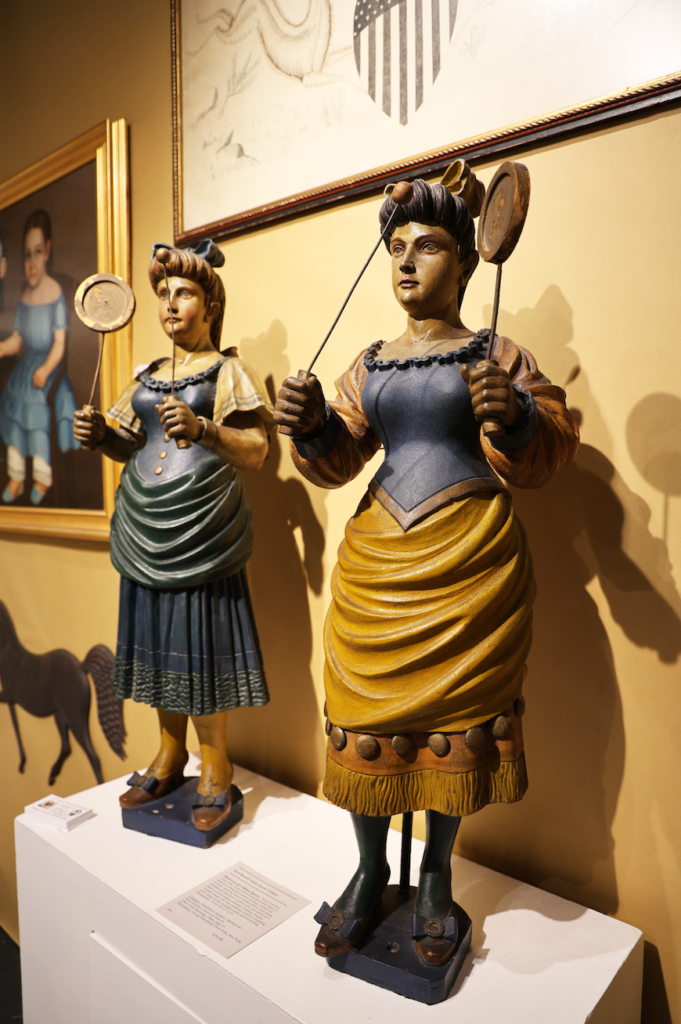
It was not the Park Avenue Armory, with Manhattan at its doorstep—but that, perhaps, is part of the point. In the antiques world, the red carpet is not always rolled out (although, coincidentally, there was a literal red carpet at the entrance of the event, greeting guests alongside an exhibit featuring a rare, intact nineteenth-century Conestoga wagon curated by longtime local collector Michael Baltozer). Nearby was a display of original ironwork and toolboxes highlighting Pennsylvania’s role in early American transportation. Sometimes you have to drive farther, look harder, and step outside the usual circuit. There are discoveries to be made beyond the Armory or the PMA—an entire world of antiques scattered across the country and globe, waiting patiently in tiny towns, unsuspecting locations, and off-the-map places.
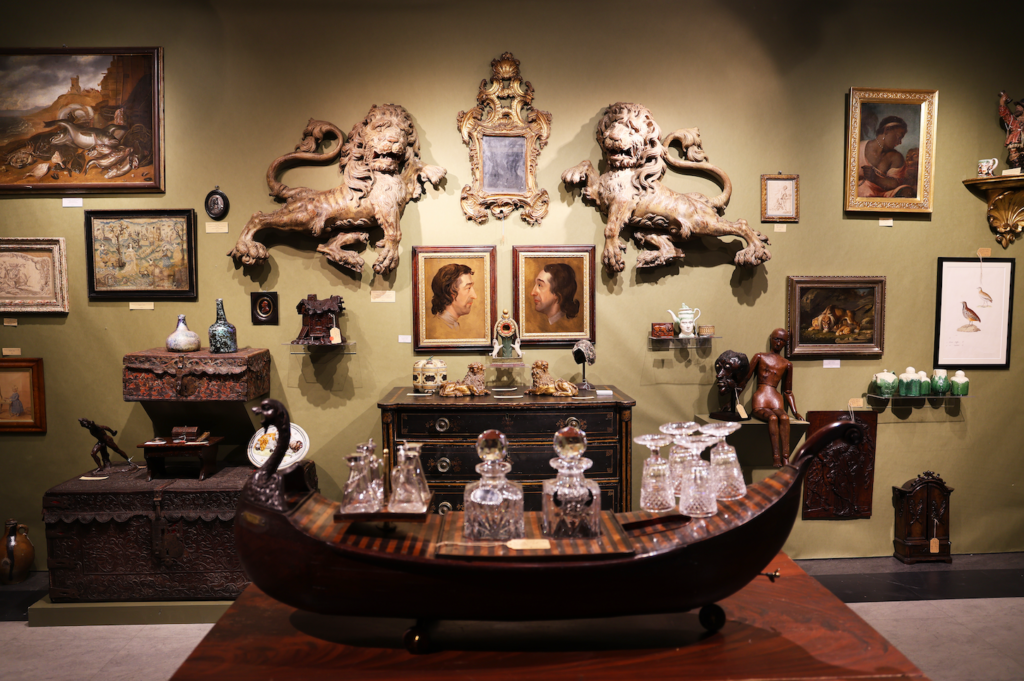
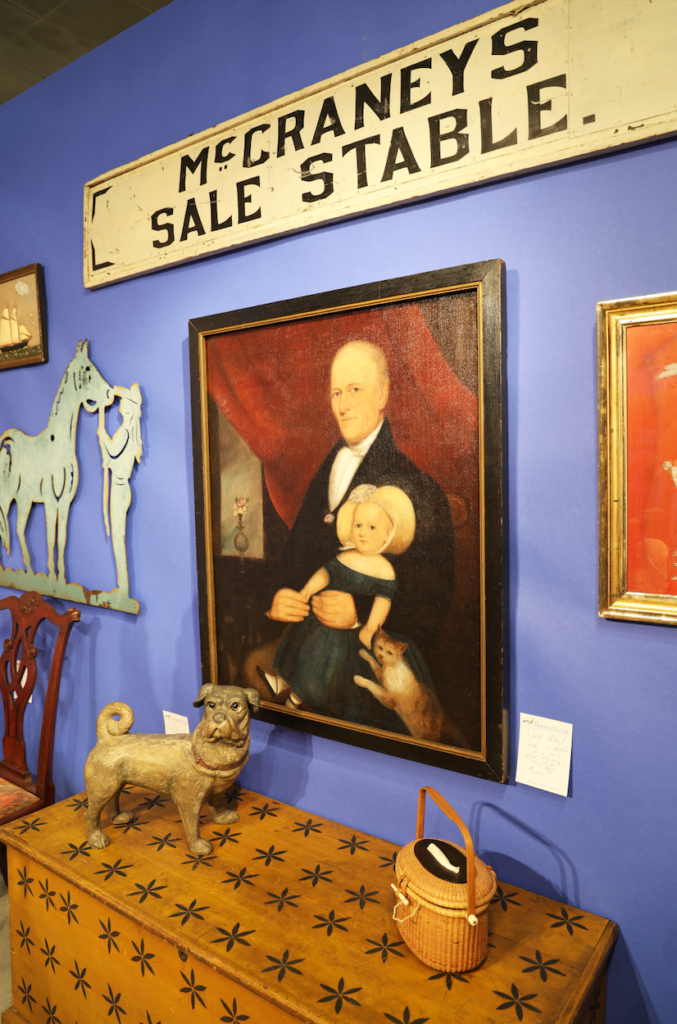
There was a clear emphasis on Pennsylvania-made furniture and designs. Stoic oil-painted portraits featuring men, women, children, and pets abounded—so many, in fact, that one room was devoted entirely to miniatures, complete with magnifying glasses for close inspection, thanks to portraiture dealer extraordinaire Elle Shushan.
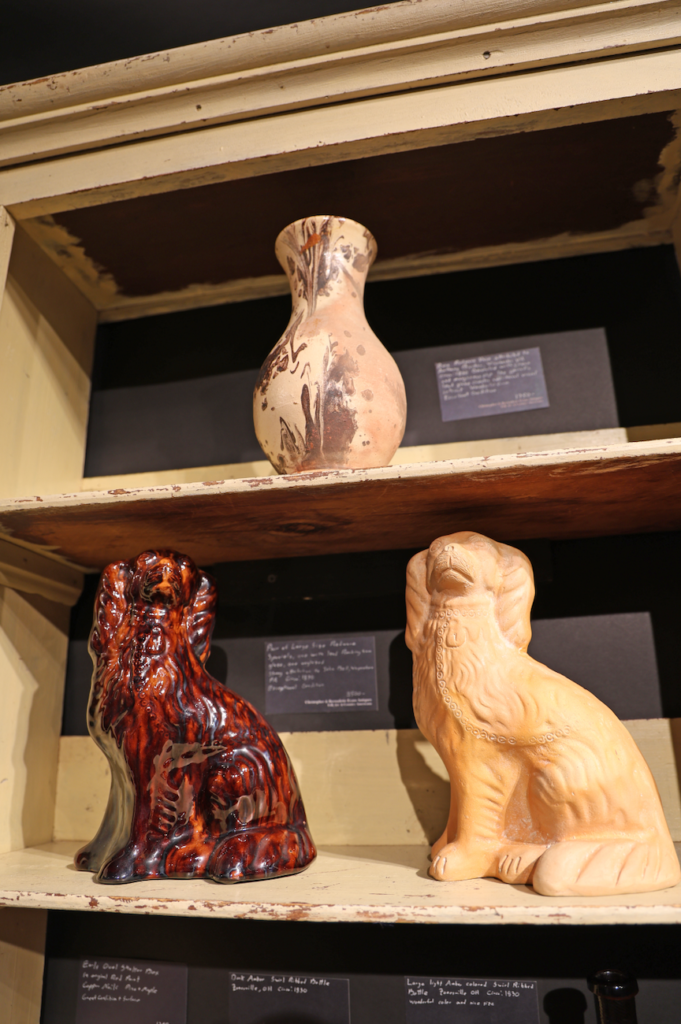
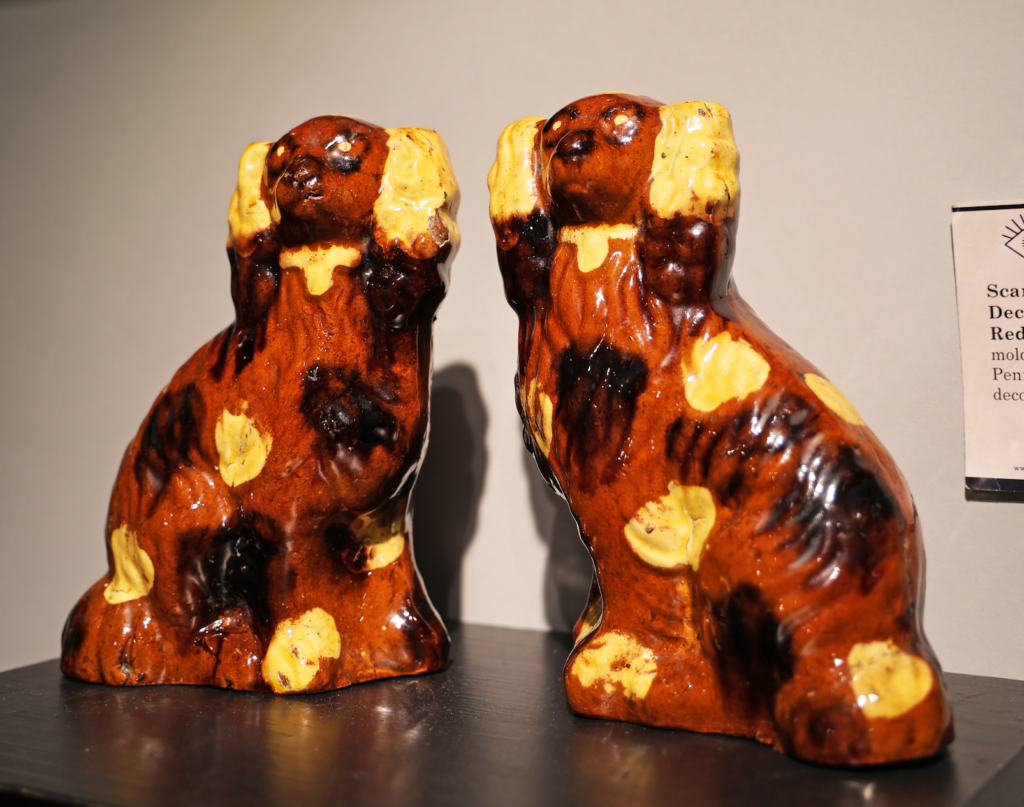
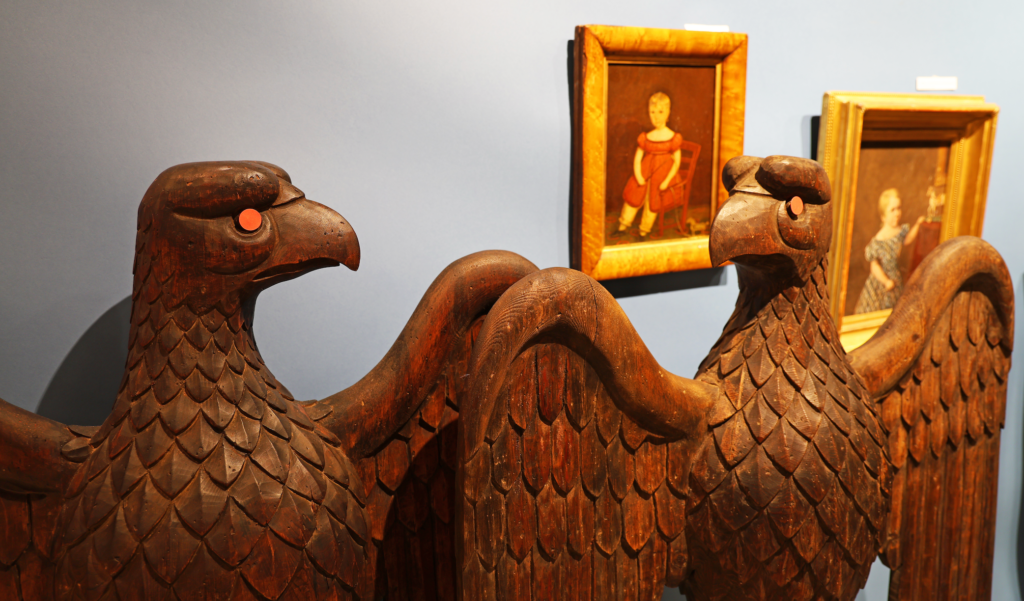
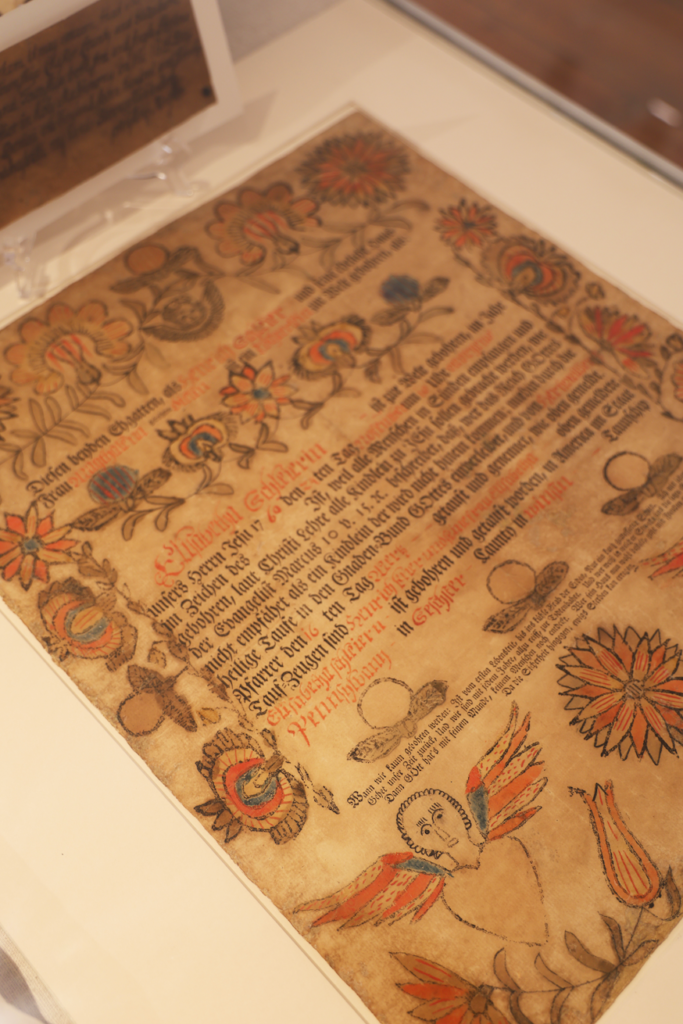
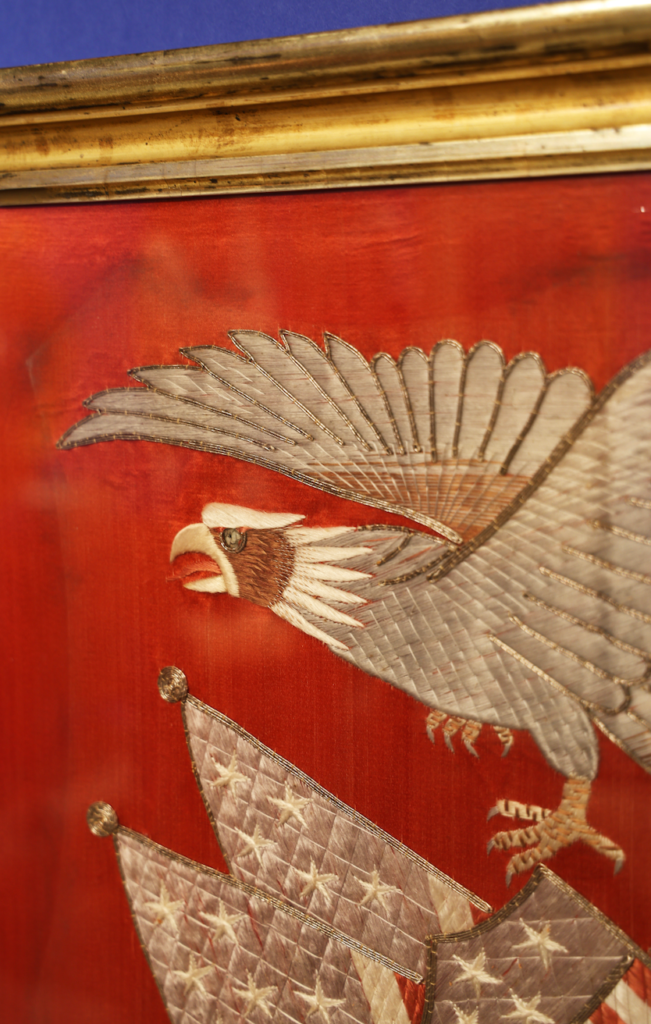
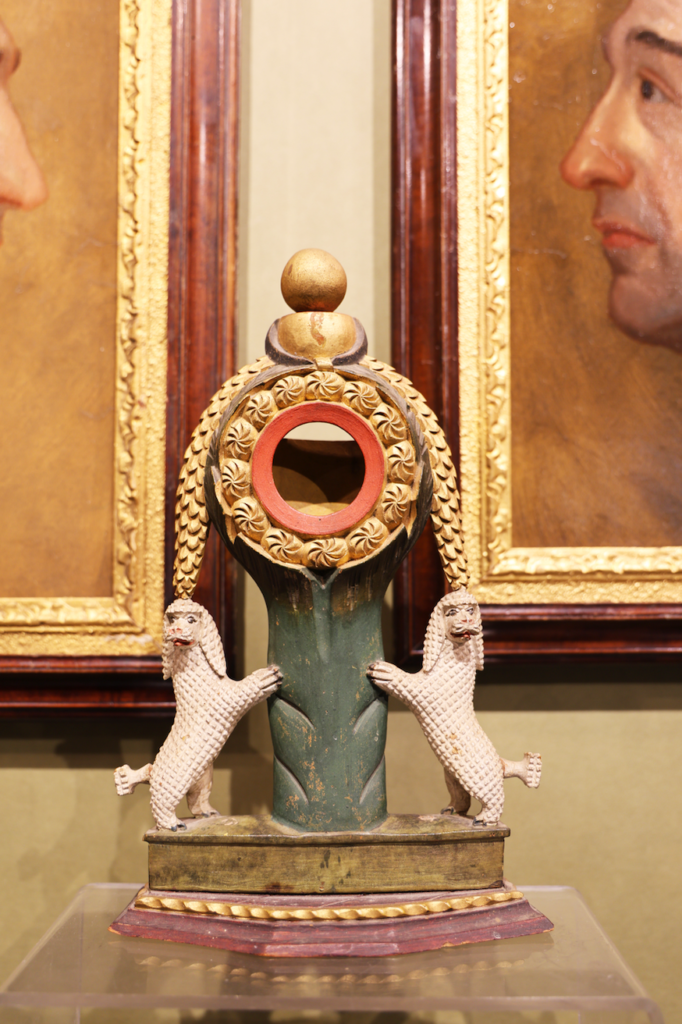
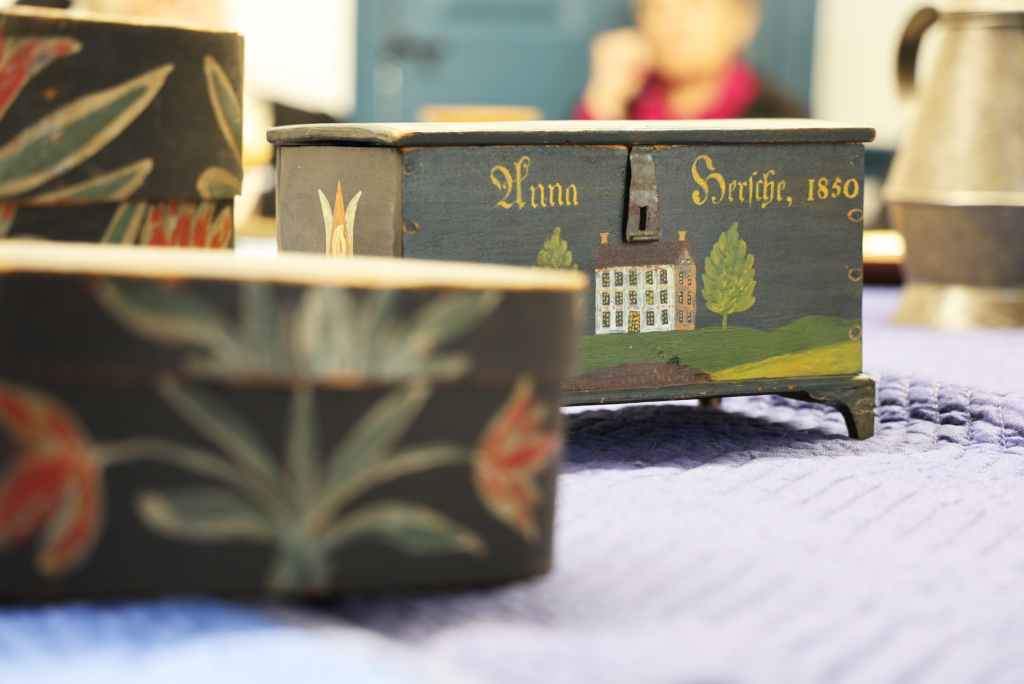
Redware, weathervanes with timeworn patina, fraktur, tulip motifs, hand-hooked rugs, quilts, and slip-decorated pottery filled the aisles. Think American flags and bald eagles, yes—but also shop signs, silver, handwoven baskets, ceramic spaniels, and Pennsylvania German objects rich with regional identity. Some booths were hung salon-style; others unfolded as carefully staged vignettes. Folk art delights through handicraft, color, character, and a touch of quirkiness
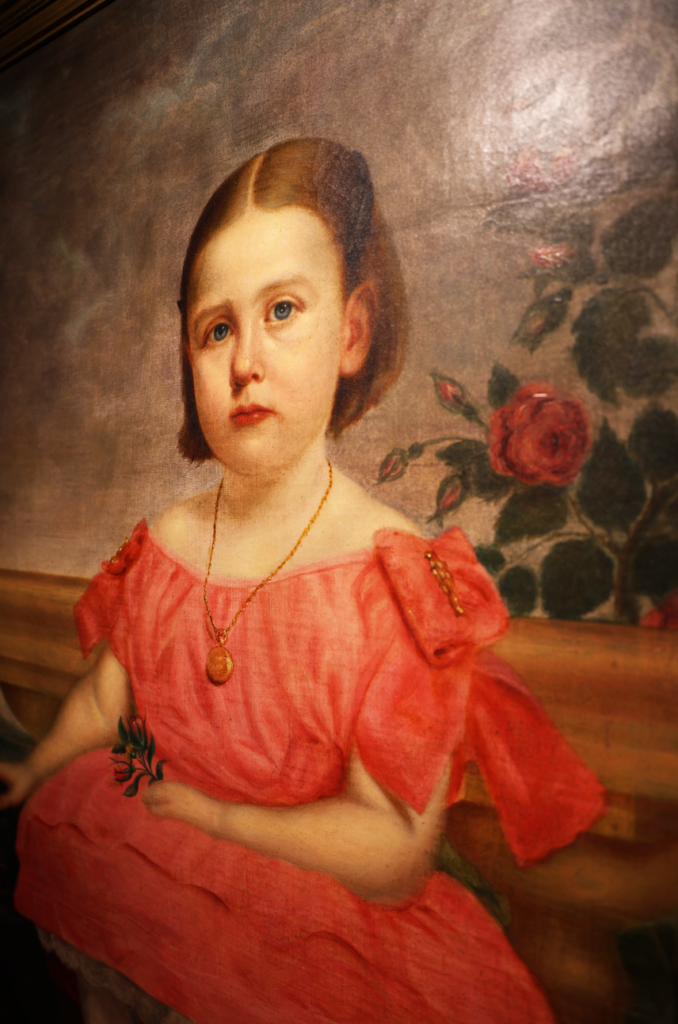
Personally, I could not get enough of the portraits—especially those of newlywed couples and stoic babies dressed in fanciful clothing, wearing gold lockets and clutching posies, staring outward as though they were long-lost relatives. The more serious the gaze, the better. I even spotted a painting that looked uncannily like Zosia Mamet, who plays Shoshanna Shapiro in HBO’s Girls. Perhaps we are reincarnated after all.
Another personal favorite was an art nouveau Tiffany & Co. gold ring with a pink sapphire center stone and tulip-motif setting from James Robinson. Also, I quickly became obsessed with a silver nutmeg grinder shaped like an actual nutmeg, topped with yet another tulip design, sold by dealer Jonathan Trace. With spring in the air, perhaps I was suffering from a touch of tulip mania myself. Then again, the tulip remains one of the defining motifs of Pennsylvania German folk art after all.
As I retraced my steps back to the admission desk, I was told the event was well attended and that many visitors left, after hours of strolling, with purchased objects tucked excitedly beneath their arms or, for larger objects, wheeled out the casino’s loading dock. There is a particular thrill in spotting a freshly acquired treasure mid-exit—and dealers, of course, are equally pleased to see a sold tag and say goodbye to the treasure that was once theirs.
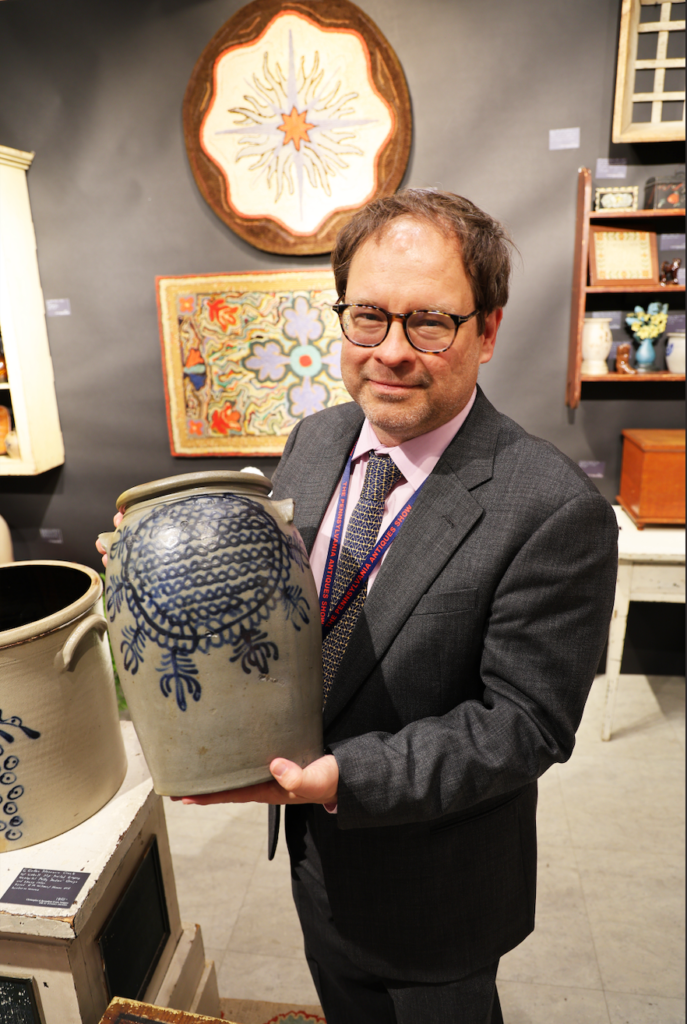
Christopher Evans of Christopher & Bernadette Antiques, specializing in folk art and Americana, showed me the stoneware jar with profuse incised decoration that first drew him into stoneware collecting—a piece he later acquired after years of building his business and now counts among his most prized possessions, though still technically for sale.
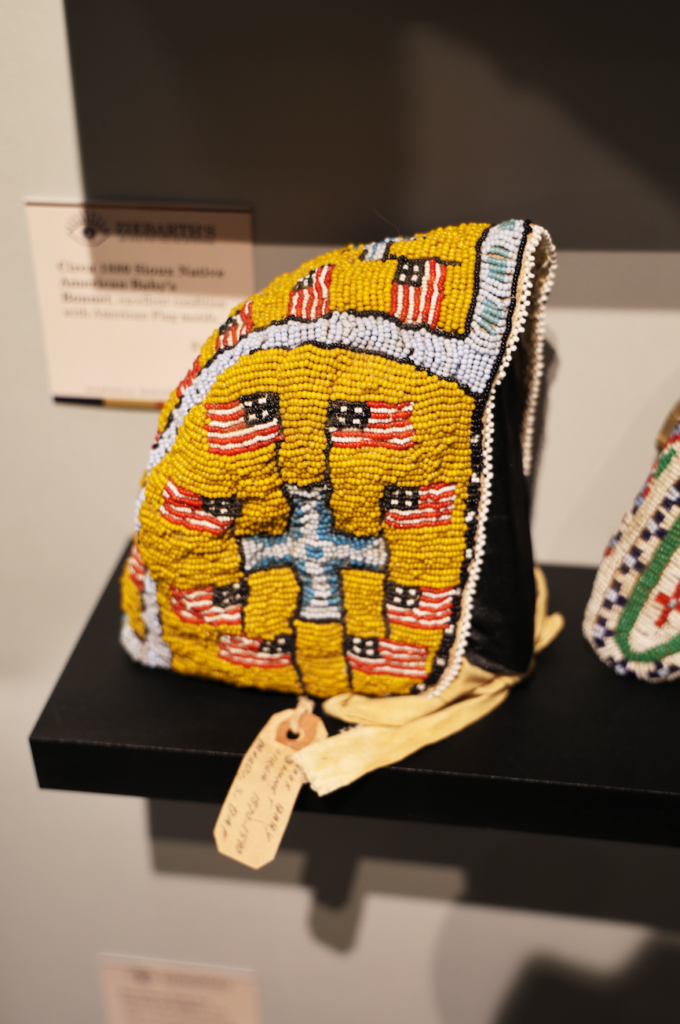
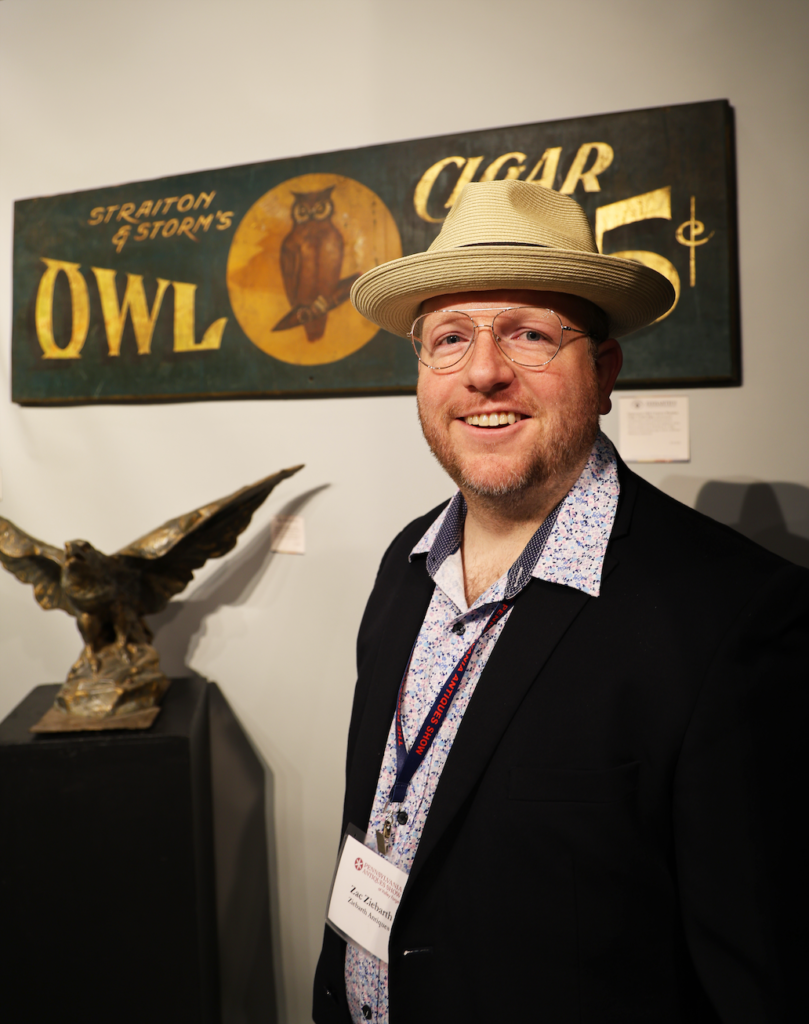
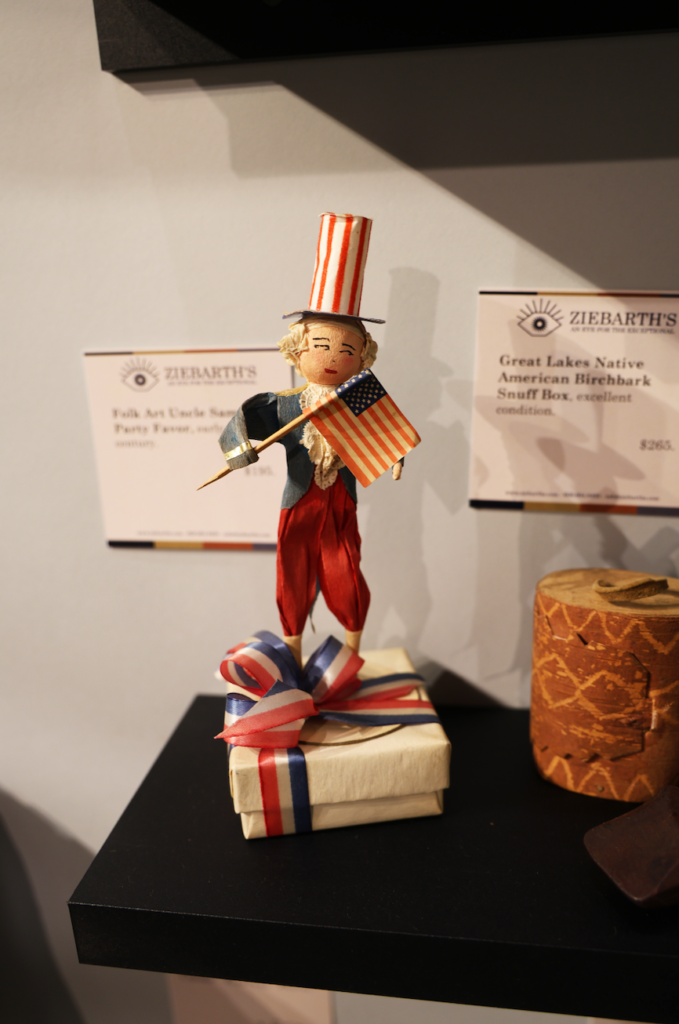
Another dealer, Zac Ziebarth, of Ziebarth’s Gallery based in Wisconsin, whose booth demanded a slower pace, presented objects layered with intricate detail: a beaded Sioux baby bonnet from around 1880 adorned with American flags, a vividly graphic nineteenth-century wooden shop sign advertising Straiton & Storms Owl Cigars for five cents, complete with gilded lettering in remarkable condition, and a small handmade Uncle Sam party favor figure full of flair.
Beyond the booths, the weekend expanded through programming and extracurricular events, some hosted by the Fine Objects Society, an association of forward-thinking professionals and enthusiasts devoted to handcrafted historic objects. The group also organizes immersive itineraries and experiences for members.
Jane Seibert—an appraiser and director of consignments and marketing at Cordier Auctions in Harrisburg, Pennsylvania, and daughter of Peter Seibert, President and CEO of the Independence Seaport Museum in Philadelphia (a friend of and contributing writer to The Magazine ANTIQUES)—kindly, and serendipitously, drove me to a series of Saturday events beginning with a tour of Historic Trappe. Led by curator Christopher Malone and curatorial assistant Sarah Bowen—also friends of and contributing writers to ANTIQUES—the visit offered a deeper look into Pennsylvania German craftsmanship and collecting traditions. Their March/April issue feature “A Collector’s Eye, A Nation’s Story,” on a private Redware collection, remains a touchstone for Living with Antiques at its most personal.
During our drive, Jane told me about a Navajo silver necklace showcasing a whirling log, or Náhółhis—an ancient Diné symbol—that she purchased from Marcy Burns of Marcy Burns American Indian Arts back at the show. She had first seen the necklace at the Delaware show last November and hoped Burns would still have it—and bring it with her to Valley Forge. Lucky for Jane, it all worked out, illustrating the power of one-of-a-kind pieces, the energy they possess, and the energizing hold they have over us.
From there, we visited the home of Paige Roberts and Chris Arader, whose stone farmhouse sits on a ninety-acre Christmas tree farm named Arader Farm, in nearby Collegeville. Roberts, president of Historic Trappe’s board of trustees, and Arader, together run a landscaping business and a buzzy beekeeping passion project in addition to being devoted collectors. Their home, surrounded by rare conifers and deciduous trees, features mid-century modern furniture (Roberts once worked for Knoll) alongside antique weathervanes representing historic trades. In the library, Arader keeps a collection of antique beekeeping books substantial enough to fill the room, while jars of the couple’s honey stock their pantry shelves.
In a moment of quiet coincidence, I realized I had already “met” Paige on the show floor the day before, watching her purchase a life-size iron bird sculpture from the corner of my eye from Scott Bassoff and Sandy Jacobs Antiques. To encounter her again twenty-four hours later, this time inside her home, offered a full-circle glimpse into the life of a collector—how objects move from fairground to personal narrative and eventually settle into a particular corner of one’s life.
Saturday evening, Lisa Minardi hosted an intimate dinner at her historically renovated home for members of the Fine Objects Society, where her collection of Pennsylvania German furniture, fraktur, Redware, and cottage crafts, in the context of her period correct abode, reflects a deeply lived-in scholarship. The evening felt like an extension of the show itself and of Historic Trappe—another reminder that antiques are not static objects, beyond a museum case or within a booth, but part of an ongoing domestic life that breathes and is recently worn-in beyond its antique status.
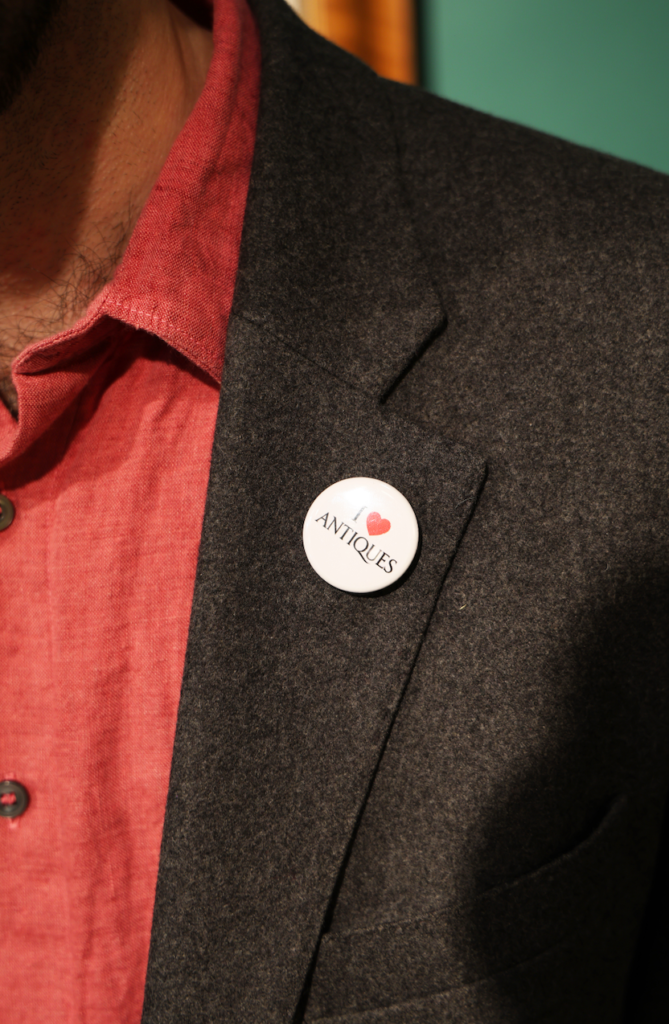
Back at the fair, The Magazine ANTIQUES booth served as a gathering point, with a scrim of past covers and a steady distribution of “I ♥ ANTIQUES” pins, which we loved spotting on dealers and visitors alike, alongside complimentary copies of the March/April issue guest edited by Minardi. We also recruited new subscribers, which is always a thrill—thank you to our new subscribers! We love you back.
A series of talks rounded out the program. Among the most compelling was a live panel moderated by Allie Kochinsky of the Grandma’s Silver podcast, featuring Lisa Minardi; Michael Diaz-Griffith, Executive Director of the Design Leadership Network; and Matthew Monk, Linda Eaton Associate Curator of Textile at the Winterthur Museum. Coincidentally, both Minardi and Diaz-Griffith are former guest editors of The Magazine ANTIQUES. (You’ll definitely want to listen to Kochinsky’s latest podcast episode, Live from the Pennsylvania Antiques Show: A Discussion on Collecting.)
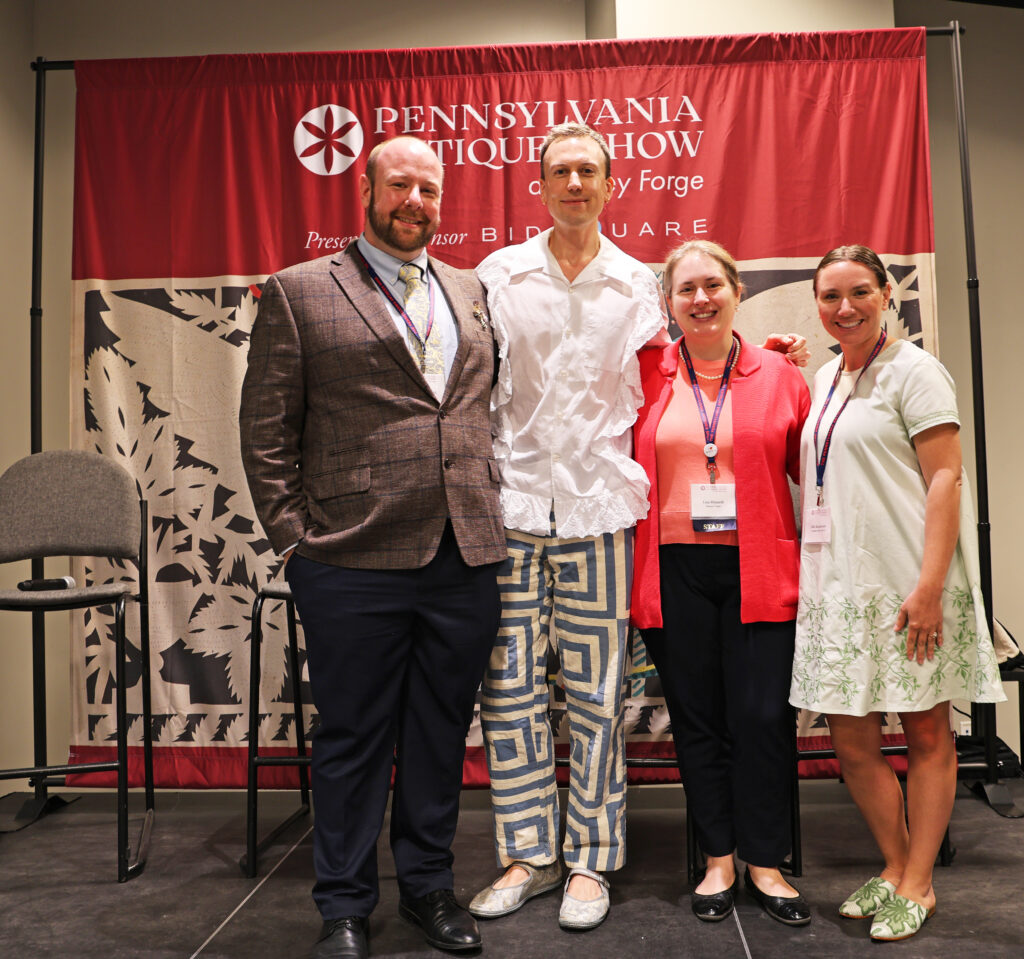
The discussion explored the intersection of design, history, and material culture, focusing initially on how to collect antiques before evolving into something broader: the future of the field itself. The panelists abstracted what the landscape of the antiques world will look like down the road. Diaz-Griffith asked, in twenty years, who will be buying antiques—and who will be dealing them? The answer: millennials and Gen Zers. To reach them, he argued, dealers must adapt—embracing (and contributing to) contemporary platforms defining modern material culture and communication, such as Instagram and TikTok, in order to welcome younger buyers, and to rethink how stories are told and engaged with. The dealers of today need to create content for these generations of new buyers and collectors. They are the future—a sentiment serving less of a warning and more of a call to action.
As someone whose own social feeds are filled with young dealers and digital-native collectors, the point felt less theoretical than immediate. On the floor, those ideas were already in practice.
Zac Ziebarth, a dealer in his thirties, deliberately mixes accessible pieces—many under $200—into his inventory. It seems that approachability and affordability are things younger dealers thoughtfully offer—serving as entry points for both young and beginner collectors. He recalls selling a young woman her first handwoven basket; years later, she has built a substantial collection, thanks to Ziebarth, and now spends significantly more per piece. The lesson was clear: cultivating relationships, regardless of a buyer’s age or budget matters.
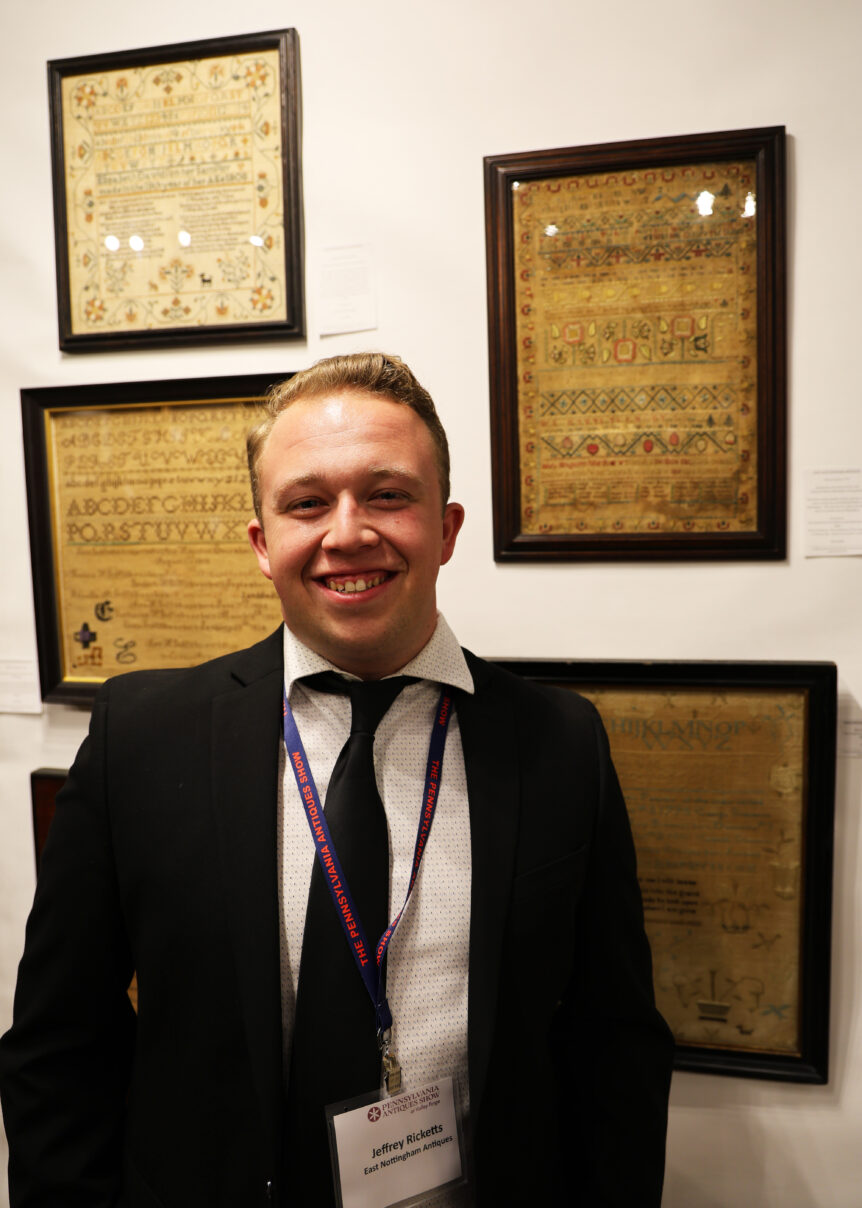
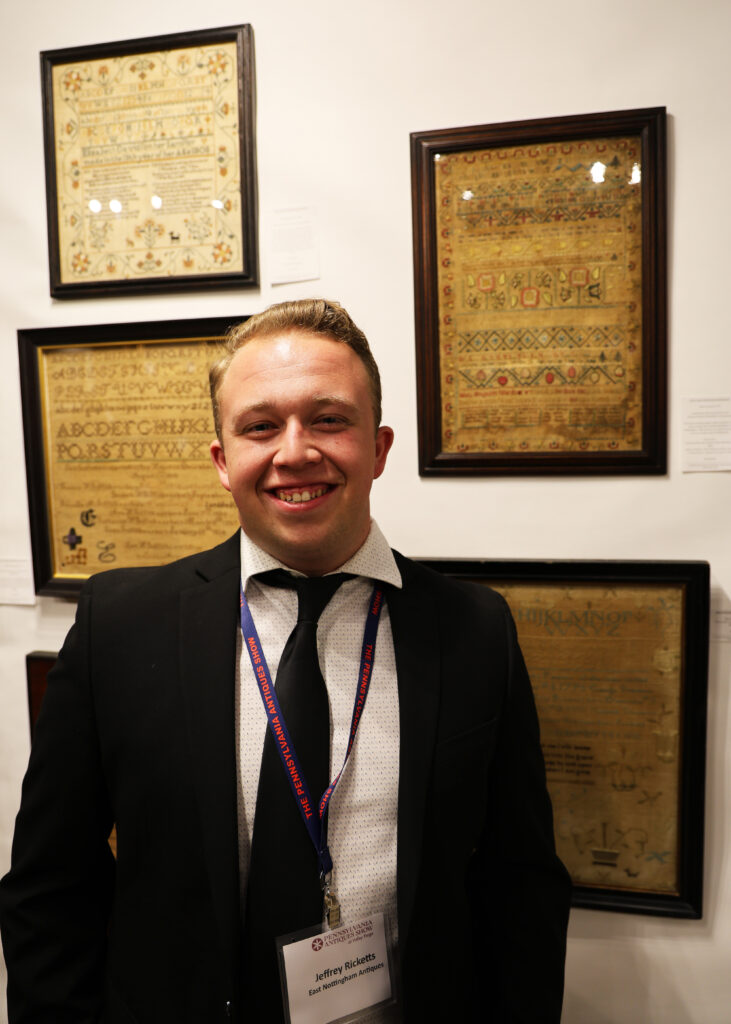
Other highlights included Jeffrey Ricketts of East Nottingham Antiques—a Gen Z dealer and fellow ANTIQUES contributor (read his article, “Collecting a Community”)—whose impressive sampler collection was displayed with museum-level precision.
Other highlights included Jeffrey Ricketts of East Nottingham Antiques—a Gen Z dealer and fellow ANTIQUES contributor (read his article, “Collecting a Community”)—whose impressive sampler collection was displayed with museum-level precision.
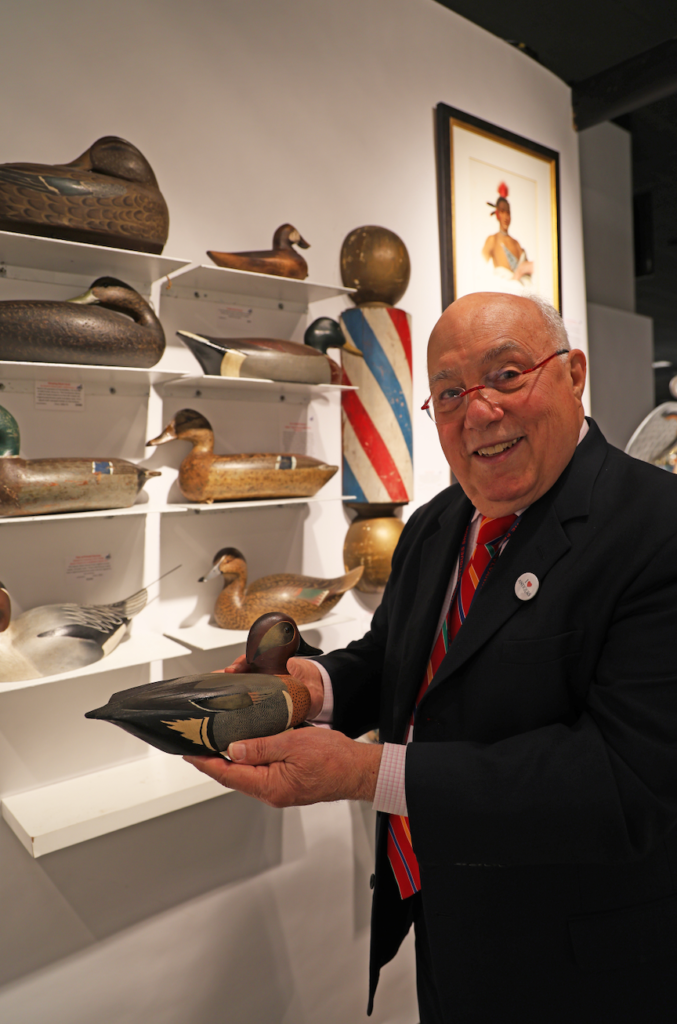
But, what’s especially wonderful is seeing the dynamic of old and new dealers sharing the floor. Joyce and Ron Bassin of A Bird in Hand Antiques, have worked side by side while maintaining distinct collecting styles since 1977. Joyce gravitates toward stoneware while Ron specializes in decoys—a life-sized swan lured me in after all. It is always moving to feel the love behind what dealers do, not only for the objects themselves but also for one another.
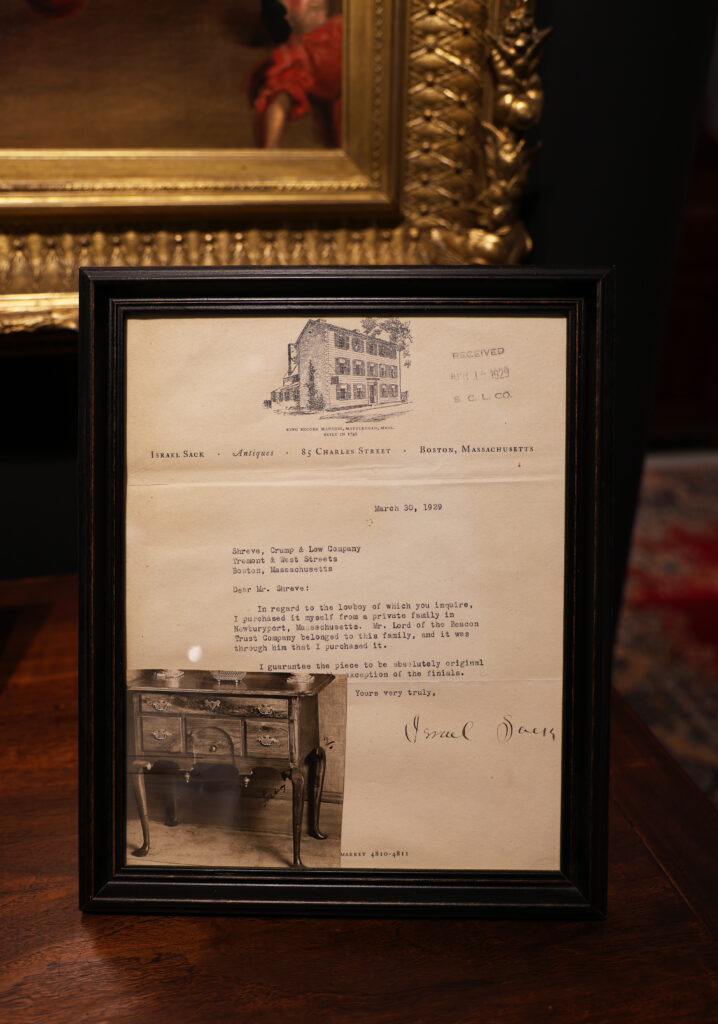
Nearby, veteran dealer Paul Gratz of Gratz Gallery placed a lowboy front and center in his booth, accompanied by a 1929 letter from Israel Sack, on private stationary, complete with a handwritten note detailing the piece’s condition for its new owner. “I’ve had three careers,” Gratz tells me. “Being an antiques dealer is by far the hardest—and the most unpredictable—but it’s also the most fun.” If you’re a dealer, the sentiment “love what you do,” generally applies.
Oliver Garland, another millennial dealer, stood out for his intuitive merchandising striking symmetrical balance while each object oozed individuality and intrigue, arranging his booth like a private interior—deeply personal yet effortlessly cohesive as if stepping into someone’s home. When I mentioned my new rule of only buying something if I already have a place in mind for it, he laughed and replied, “Never do that.” He may have a point. There is a certain logic to collecting by instinct—trusting that meaning and Feng Shui will follow.
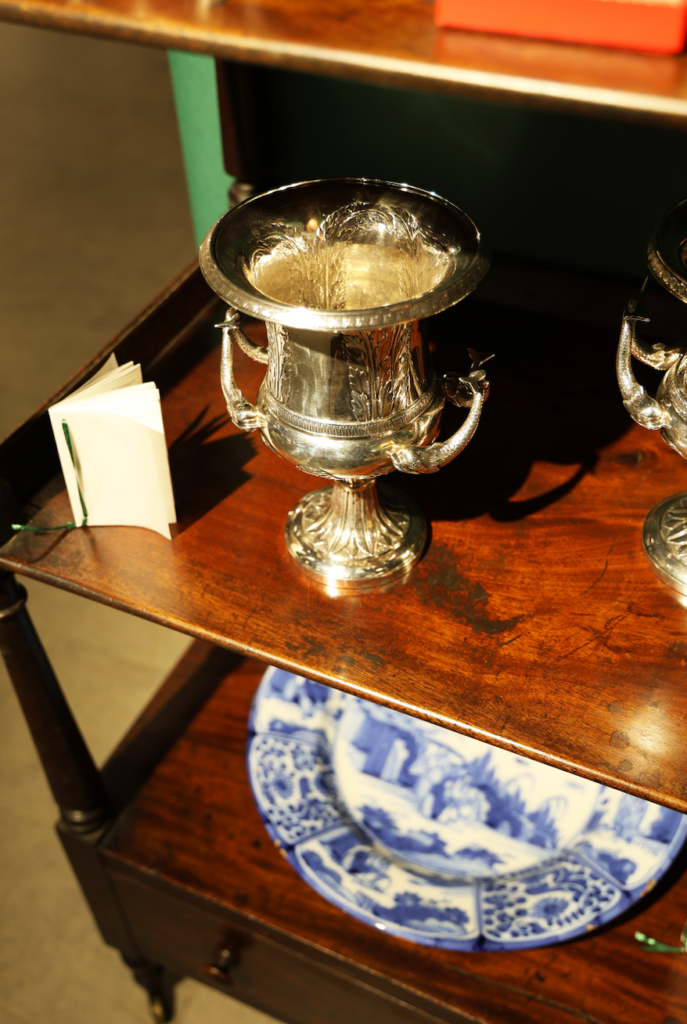
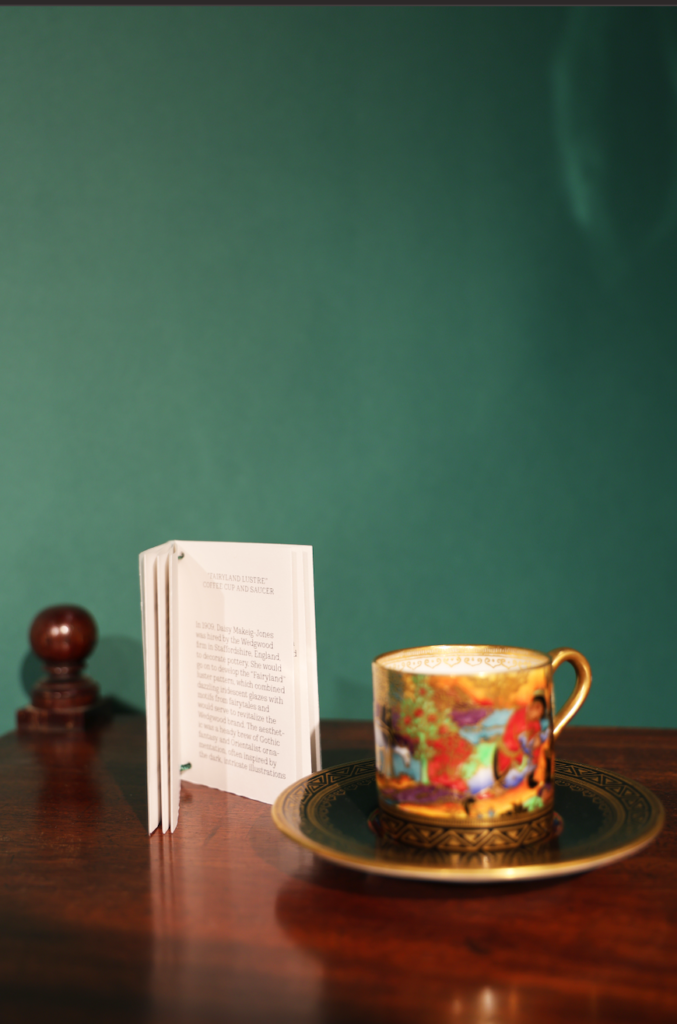
Ben Miller of Curious Objects—dealer, podcast host, and another young voice helping lead the charge—approaches objects through narrative. “The story I research and tell about each piece is the most important value I add to it,” Miller explains. For Miller, research is essential not only to justify value but also to uncover new dimensions of meaning. Miller creates small bound booklets containing the stories he pieces together. These serve as little Easter eggs scattered throughout his booth, allowing visitors to read and enjoy the work of a detective, narrator, and author.
The Pennsylvania Antiques Show may be the new kid on the block—and in some ways, so am I. “You’ll get to know everyone,” dealer Sandy Jacobs told me. “And they’ll get to know you.” Perhaps this is true. That is also the remarkable thing about the antiques world: no matter how long you are in it, it still feels as though you are only scratching the surface. There is always more out there.
With time, word of mouth, and continued momentum, the show has the potential to draw an even wider audience—one willing to travel for quality, discovery, and the kind of engagement that defines this field. Because at its core, it is not always about location, but about the objects themselves: the labor behind them, the histories they carry, and the dealers and collectors who keep them in motion.
I mean, where else in the world would you attend an antiques show, spend the day perusing, then go grab a bite to eat and run into redcoat reenactors sitting in a booth drinking American beer? After a little bit of digging, I learned Valley Forge hosts “Redcoats in the Valley” weekends where interpreters portray British soldiers, demonstrating equipment, uniforms, and weaponry. I imagine if King George III saw anything of the sort, it would have been considered worse than treason.
As America approaches its 250th anniversary, collecting offers a tangible form of connection to the past. These objects may not rival the antiquity of those from Egypt or Europe, but they hold something equally compelling: a distinctly American narrative, shaped not only by makers, but by generations of stewards who ensured their survival.
In that sense, every object is both artifact and inheritance—part of American history, art history included, still unfolding 250 years later. The worlds of antiques and design, though rooted in the past, speak directly to the present and help to shape the far-flung future.
P.S. Do you follow us?
Read up on The Magazine ANTIQUES’ latest and greatest Instagram content, including our Antique of The Day series, and follow Pennsylvania Antiques Show, Historic Trappe, and all of the amazing dealers mentioned above on Insta, too!
CHRISTINE HILDEBRAND is a Metro Detroit-based writer and photographer focused on portraiture and street style photography. She is The Magazine ANTIQUES’ managing editor and Flea Bite columnist—the magazine’s first-ever space dedicated to treasures found in unsuspecting places. When she’s not on assignment or antiquing, she can be found playing ball with her cocker spaniels Woodward and Bisou.
For future antique-related event coverage proposals, please email christine@themagazineantiques.com.


