
How papier-mâché bridged affordability and elegance, carrying centuries of innovation into nineteenth-century domestic life.
There’s that classic question: if you replace the pieces of a boat board by board, at what point is it a new boat? A similar question could be asked of nineteenth-centurypapier-mâché furniture and objects. If you take a wood product—paper, grind it down, mix it with adhesives, and use it to make something that resembles the original unadulterated article (i.e., wood), is it a new thing, or is it possible that it was actually wood the whole time?
Papier-mâché objects and furniture, like pressboard and glue-upsmodern plywood and later pressboard, were created to fulfill a need. Demand for serviceable trays, shelves, and other decorative objects for an up-and-coming household that looked expensive, but weren’t, ballooned in the early nineteenth century—and really haven’t slowed down since. The Industrial Revolution wasn’t a singular moment in time, but the first push of a train building momentum and dragging society along with it. The middle class was born, and the idea of upward mobility became possible. More people than ever had some money to spend on making their homes fancy, but not too fancy. It was gilt, not gold. In 1772 Henry Clay received a patent for durable laminated wood-pulp paper panels that could be lacquered or varnished (often using the technique called japanning) for a long-lasting fine finish. His “invention” wasn’t really new, though. It had been around for about fifteen hundred years.
Using paper pulp to create durable objects is recognized to have been pioneered in ancient China, where papier-mâché was used to create everything from boxes to battle helmets, and even tableware. When you go to a relaxed Chinese restaurant today, the plastic melamine dishware is often modeled after what was oncepapier mâché an early version of papier-mâché, and still is in higher-end establishments.
Like porcelain, papier-mâché made the journey west through the hands of traders who recognized economic potential. Unlike porcelain, the technique was not a tightly kept secret. The process was passed along with crates of bowls and lidded boxes.
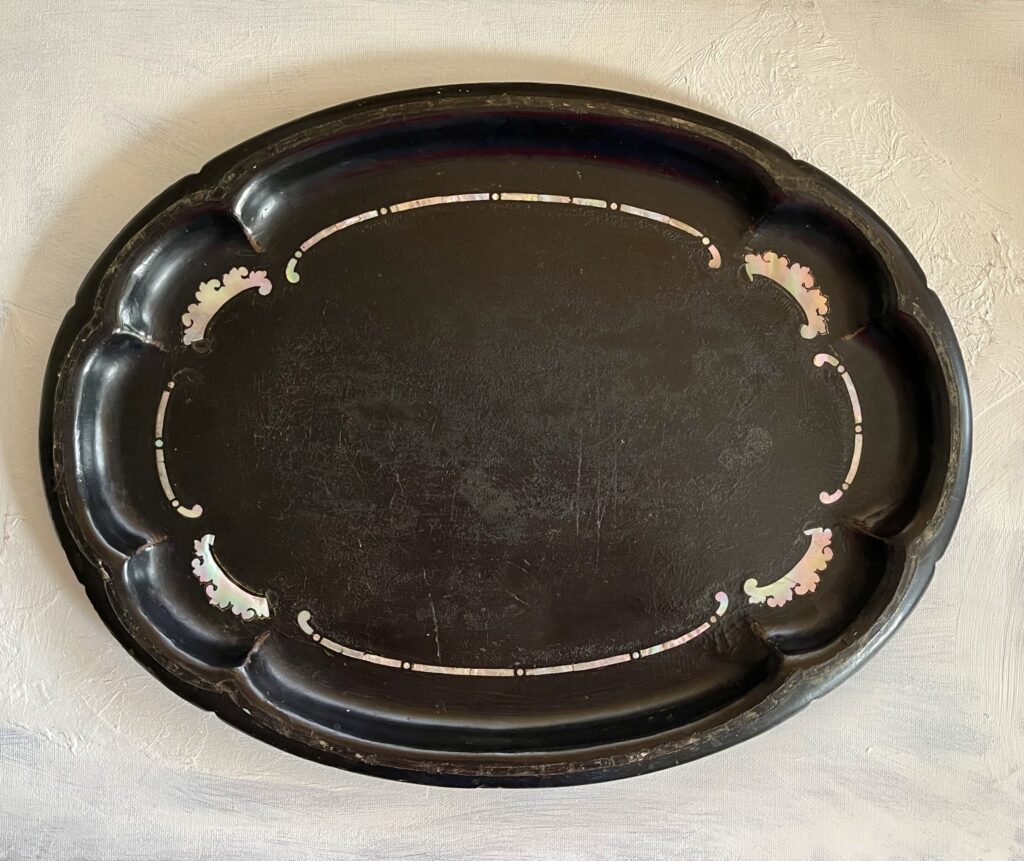
By the Victorian era, manufacturers like Jennens and Bettridge were producing massive quantities of elaborate pieces for aspirational homes. Running between 1816 and 1865 or 1870, Jennens and Bettridge made work for the British eye that ranged from small forms to large pieces of furniture and received royal commissions from George IV, William IV, and Queen Victoria. Jennens and Bettridge pieces were sold by well-respected furniture retailers and found a home in Buckingham Palace. The work of layering paper and glue over forms was mostly done by women in the firm, and mother-of-pearl was a beloved decorative flourish alongside gilt bronze and gold leaf.
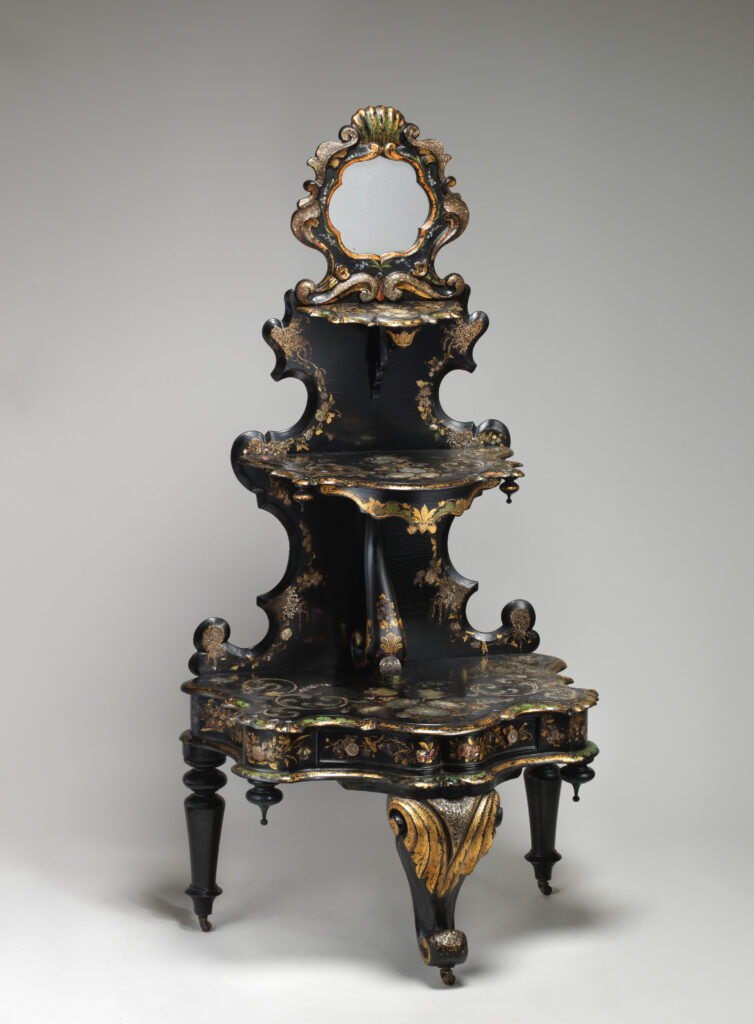
In her 1990 book, At Home: The American Family 1750–1870, Elisabeth Donaghy Garrett illuminates the voluminous approach Victorians took to the idea of living well. She describes “the Victorian propensity for accumulation and love of ornament,” including the collection and display of “knickknacks..” An étagère could help show off such things, and be an ornament on its own, as exemplified by a mid-nineteenth-century example in the collection of the Met with ample small shelves and mother-of-pearl accents.
While the Chinese invented the art and the Brits refined the process, the French get the credit for the name: papier mâché, chewed paper. Alleged tales of people literally chewing paper in France seem apocryphal, as such a practice is clearly impractical at any scale, but the name stands.
Like inexpensive furniture today, papier-mâché had its drawbacks. It wasn’t as durable as the real thing. Don’t stand on an Ikea desk, and don’t slam a papier-mâché tray on the floor—but of course, manners dictate one shouldn’t do either of these things anyway, regardless of material of manufacture.
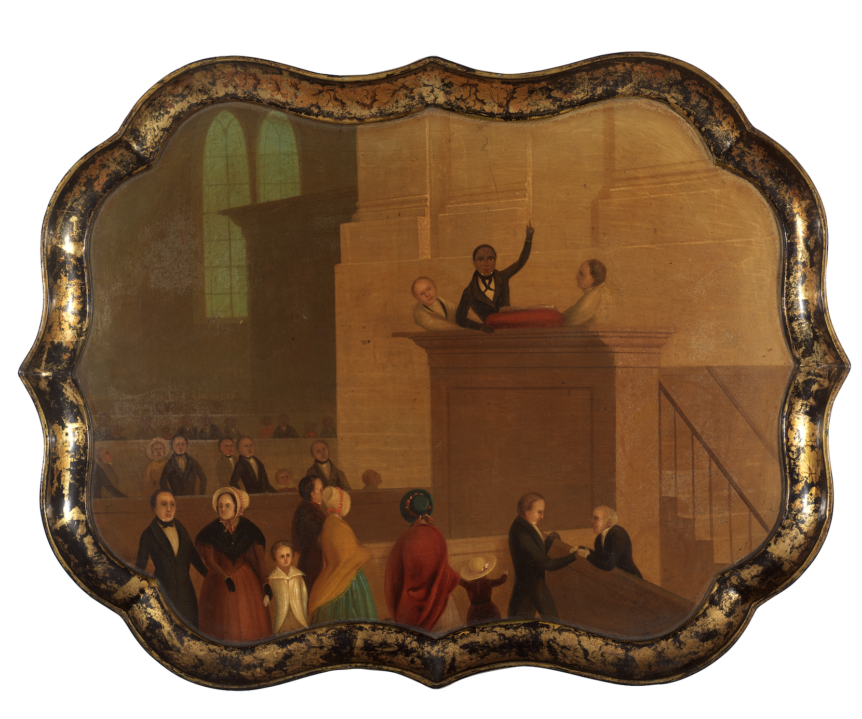
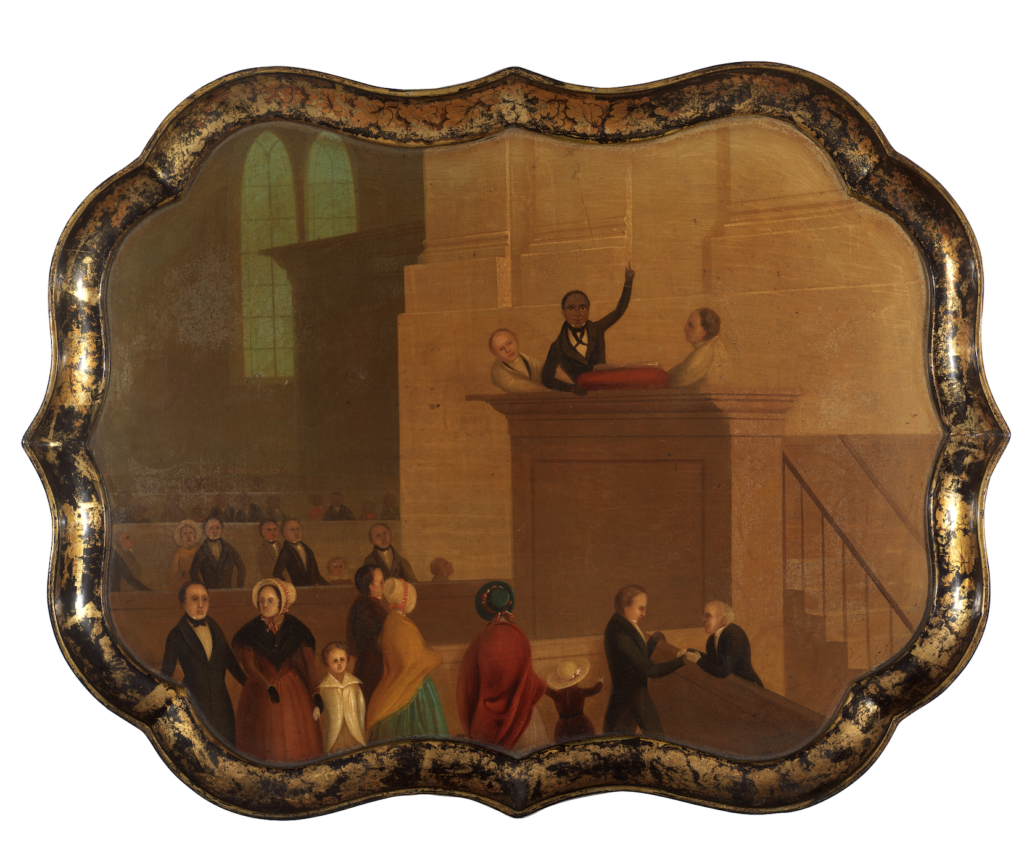
It’s because of the ubiquity of the material that many of the surviving examples aren’t much to salivate over—scholarship on nineteenth-century papier-mâché for the home is thin on the ground. Spectacular examples of surviving nineteenth-century pieces do remain in some collections. At the RISD Museum, a simple 1835–1840 tray decorated with oil paint and a gilt floral motif serves as a strong reminder of the vibrancy of the period—its decoration depicts a preaching Reverend Lemuel Haynes (1753–1833), the first Black man ordained as a minister in the United States. Painted in oil, the otherwise classic tray captures a moment in the abolition movement as he spoke to a mostly white audience in New Haven, Connecticut flanked by the city’s mayor as well as the Yale University president.
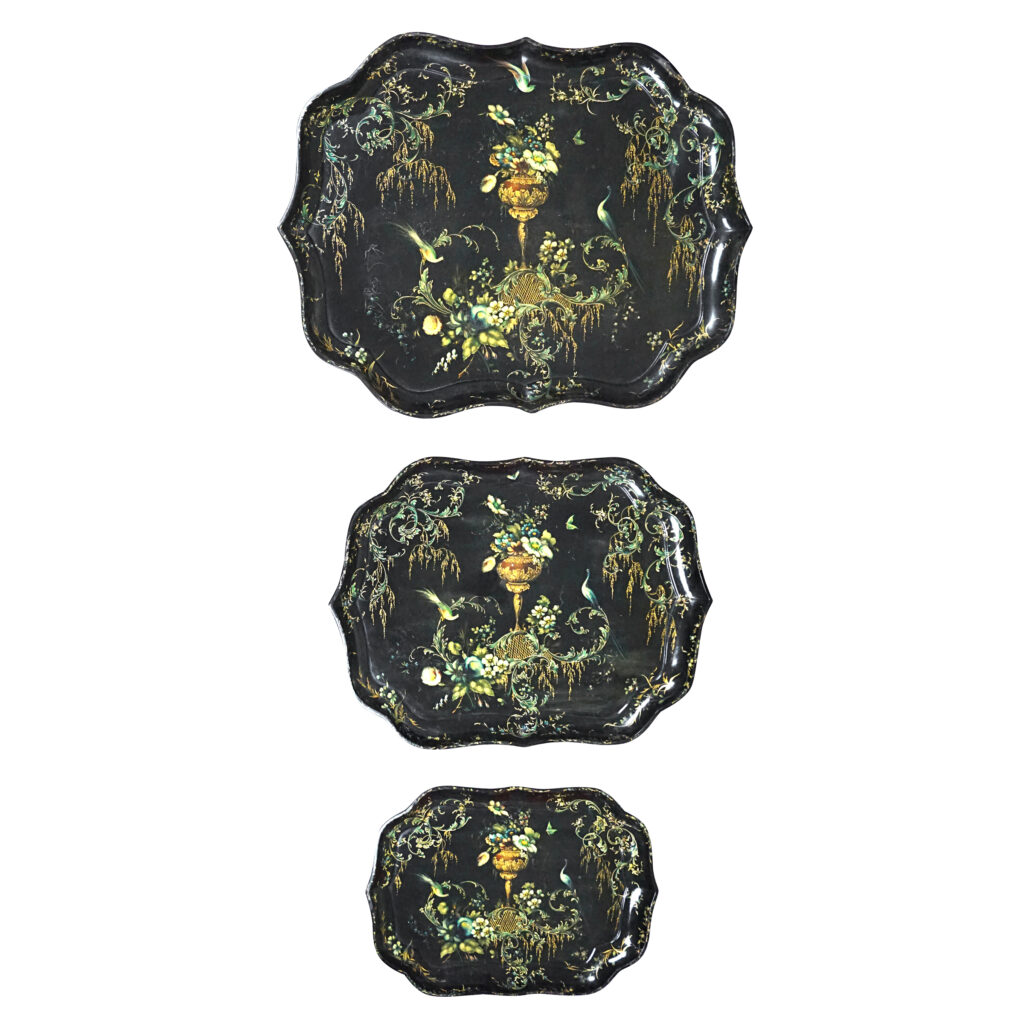
Such singular pieces are rare, but more standard examples, with floral decoration, intricate inlay, or hunting motifs do brisk business as dealers comb through the volume of papier-mâché artifacts to find truly beautiful and special examples, which sell for as much as $2,300+, such as a rare Jennens and Bettridge hunting tray offered by M. Lees and Sons.
When assessing papier-mâché pieces, the condition of the decoration is paramount. While in-painting can hide a scuff, it isn’t ideal. Using papier-mâché pieces, then, should also be done with an awareness of trade-off. Sometimes it’s worth a scratch to serve a perfect tea, but for others that particular piece may shine best from the shelf.


