A new exhibit at the American Folk Art Museum reframes “self-taught” artists as deliberate architects of identity and artistic legacy.
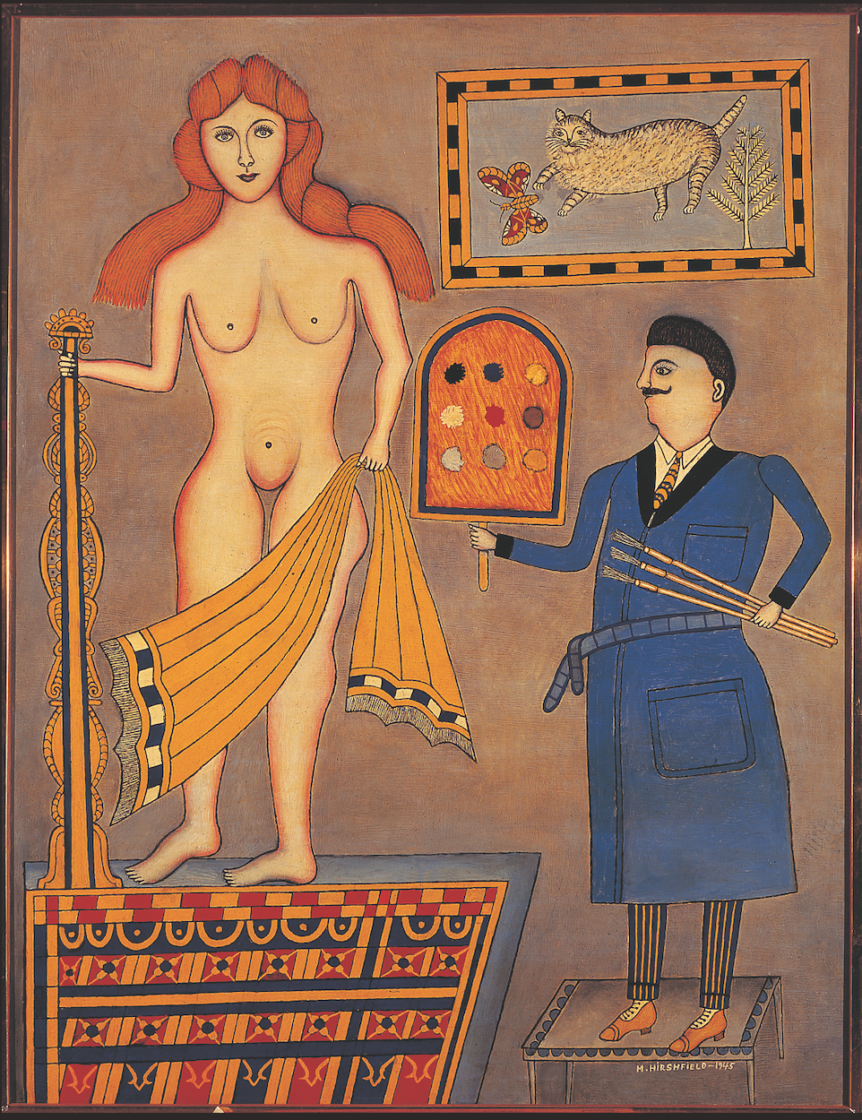
The objects illustrated are in the American Folk Art Museum, New York. Gift of David L. Davies; photograph © 2026 Robert and Gail Rentzer for the Estate of Morris Hirshfield / Artists Rights Society (ARS), NY.
The exhibition Self-Made: A Century of Inventing Artists at the American Folk Art Museum takes a critical look at the historical definition of the “self-taught artist” in the United States, from the early twentieth century to today, as national narratives are simultaneously and collectively revisited on the occasion of the country’s Semiquincentennial. By featuring three methods of artistic self-fashioning—self-portraits, alter egos, and autobiographies—this presentation proposes a paradigm shift that places artists working outside conventional art-school, gallery, museum, and peer-exchange systems at the forefront of their works. In an artistic area historically driven by the accounts of collectors and discoverers, this examination of makers’ perspectives and aesthetic choices moves us away from an approach centered on the viewer’s active role in completing the creative act, as posited by Marcel Duchamp.
While the term “self-taught” typically describes artists without academic training, “self-made” prompts the emphasis from passive reception to active creation. The exhibition surveys artists who, over a century, have drawn from myriads of life experiences and non-academic resources—community-based traditions, the natural world, and professional expertise—to develop unique bodies of work, practices, and creative identity. Self-Made aims to challenge reductive and long-standing narratives that have cast these artmakers as amateurs or isolated geniuses working out of time, without lineage, influence, or networks. It invites viewers to reconsider the works as primary documents and firsthand accounts of the self, akin to diaries, asking them to “look at me, in this way, that I have chosen.”
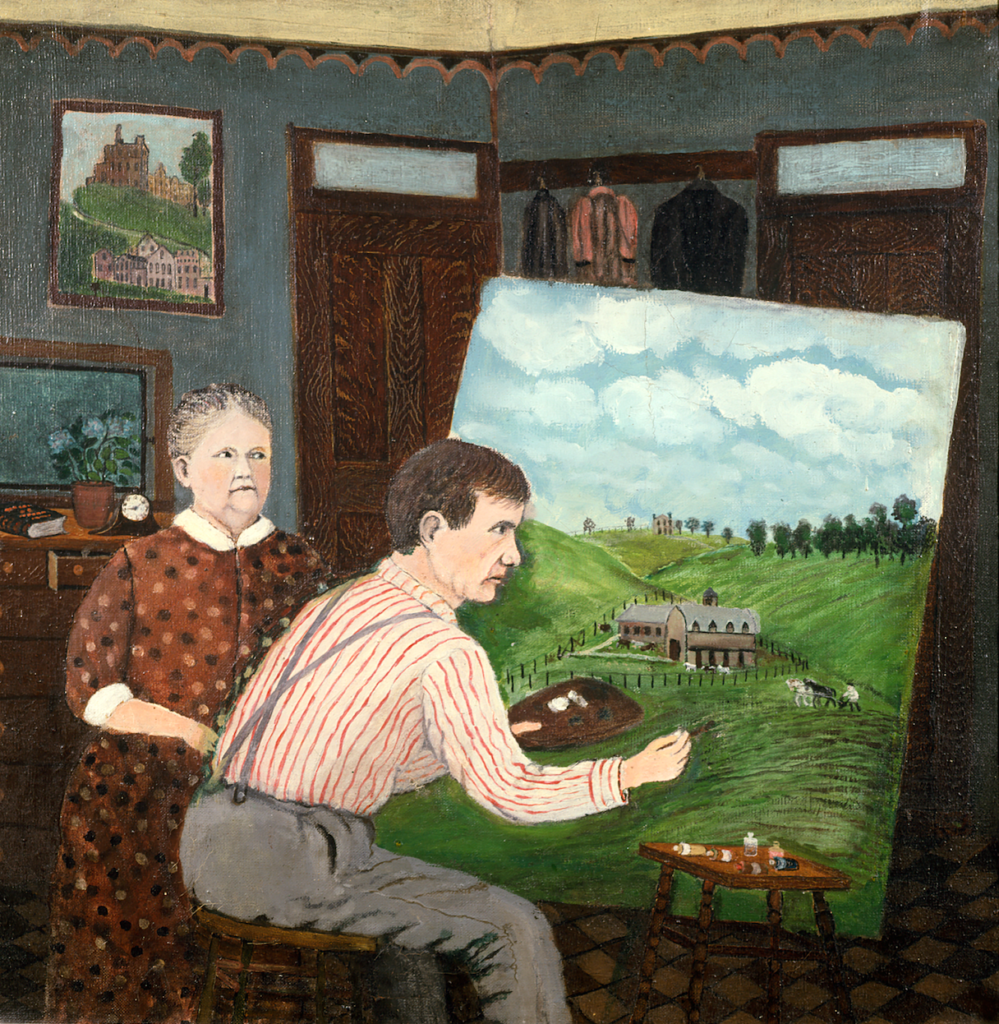
Oil on canvas, 23 by 23 1/2 inches. Collection of Frank S. Tosto; photograph courtesy of Kallir Research Institute, New York.
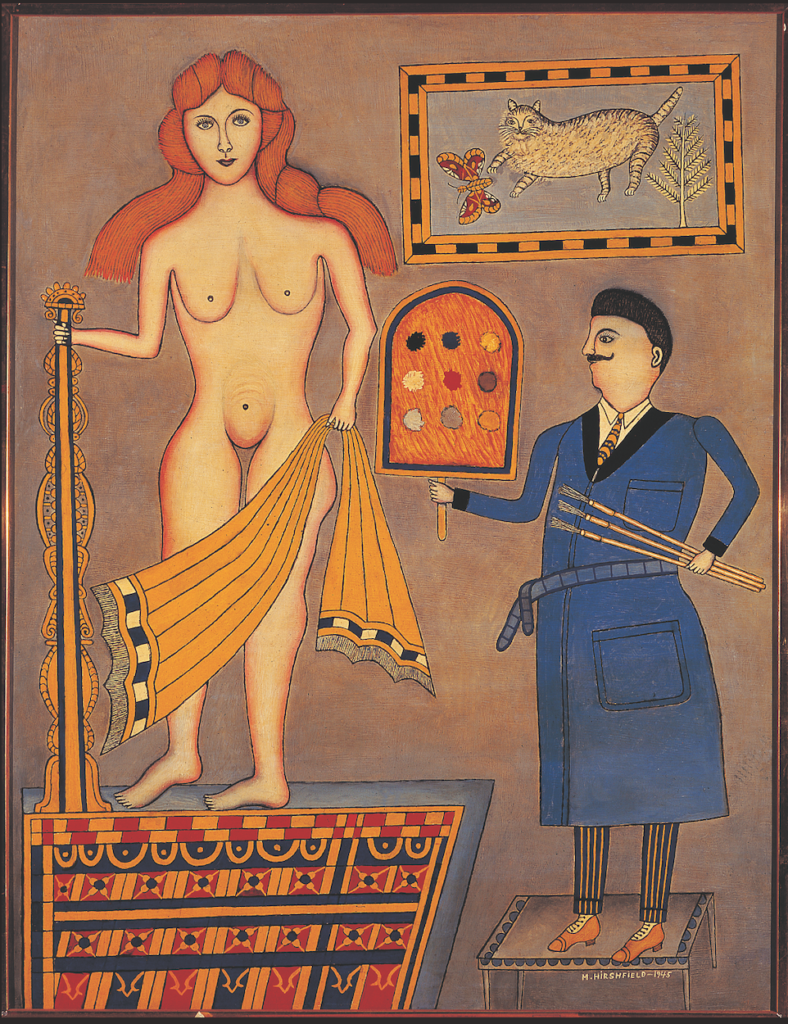
Morris Hirshfield’s 1945 painting The Artist and His Model exemplifies this perspective. Bringing together two academically sanctioned genres—the self-portrait and the female nude—he casts himself as a painter surrounded by professional tools such as brushes and a palette. His own signature painting (slightly crooked) of a cat adorns the wall behind him, with a nod to the visual strategy of a “picture within a picture.” As a Polish Jewish immigrant painting in Brooklyn at the close of World War II, Hirshfield does not shy away from alluding to his professional background: his lifelong expertise as a tailor, familiar with textiles and design, is evoked in the decorative patterns of the carpet, the model’s scarf, and the painter’s striped pants. Hirshfield’s self-portrait declares that he wants to be understood, and remembered, as a versatile artist, perhaps without avant-garde aspirations. This composition—juxtaposing idealized mental images rather than mimicking reality—emulates the tradition of academic realism celebrated through the late nineteenth century but reflects an outdated notion of artistic excellence.
Gift of Charles B. and Janice M. Rosenak.
Hirshfield’s work, like the others included in the gallery devoted to “self-portraits,” presents artists who placed their bodies and artistic identities squarely within their work, using self-depiction to become actors in the stories they tell. In John Kane and His Wife, created about 1928, Kane features himself in the act of creation, brush poised; yet his surroundings define him as much as his likeness. Set within the intimacy of his Pittsburgh home, he is shown with his wife Maggie (Halloran) Kane, their gazes resolutely fixed on a painting of a sunny pasture—perhaps a depiction of their shared Scottish homeland. Kane had labored in industrial jobs at the turn of the twentieth century—mining coal, servicing railroads, and fabricating steel—but here he turns his attention to family, fields, and artmaking. Contemporaneous news articles had fetishized his labor, and this painting may be a response to a photograph circulating in newspapers about his new-found fame, following the Carnegie Museum’s 1927 annual exhibition.
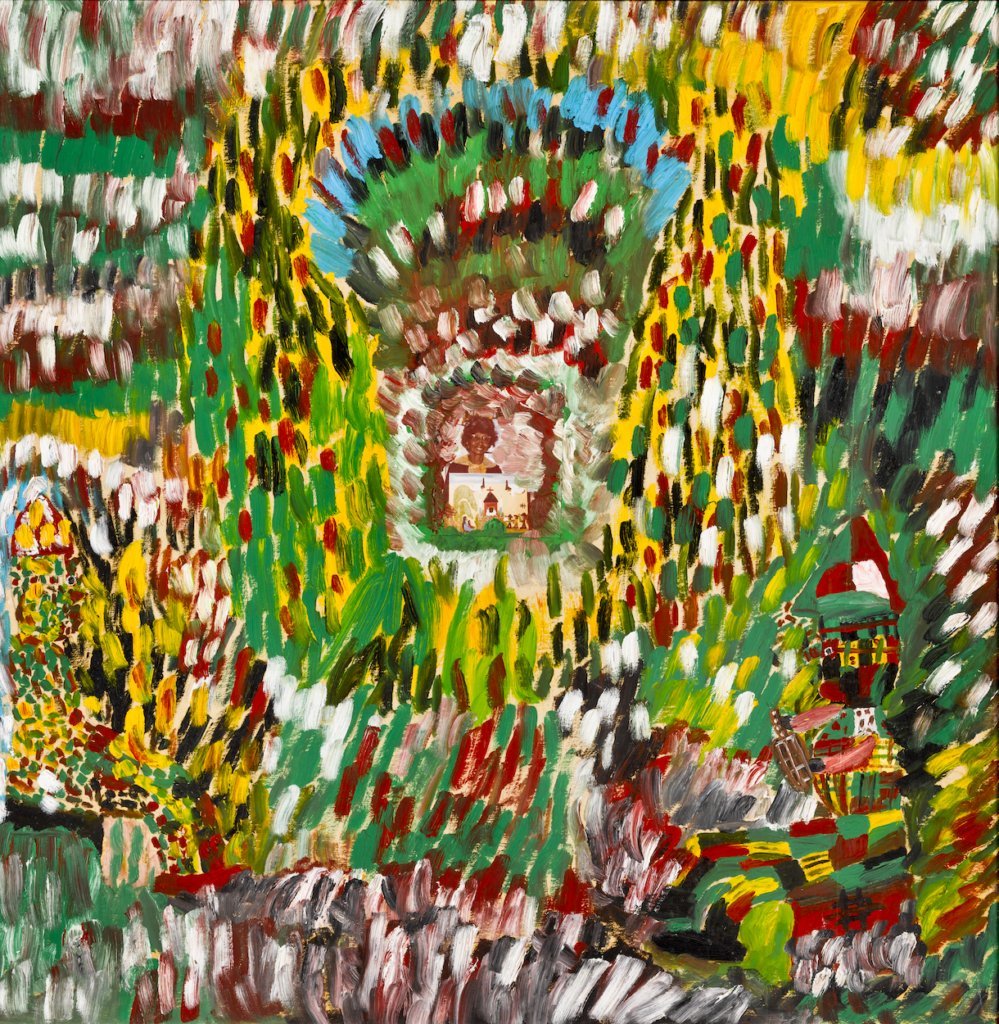
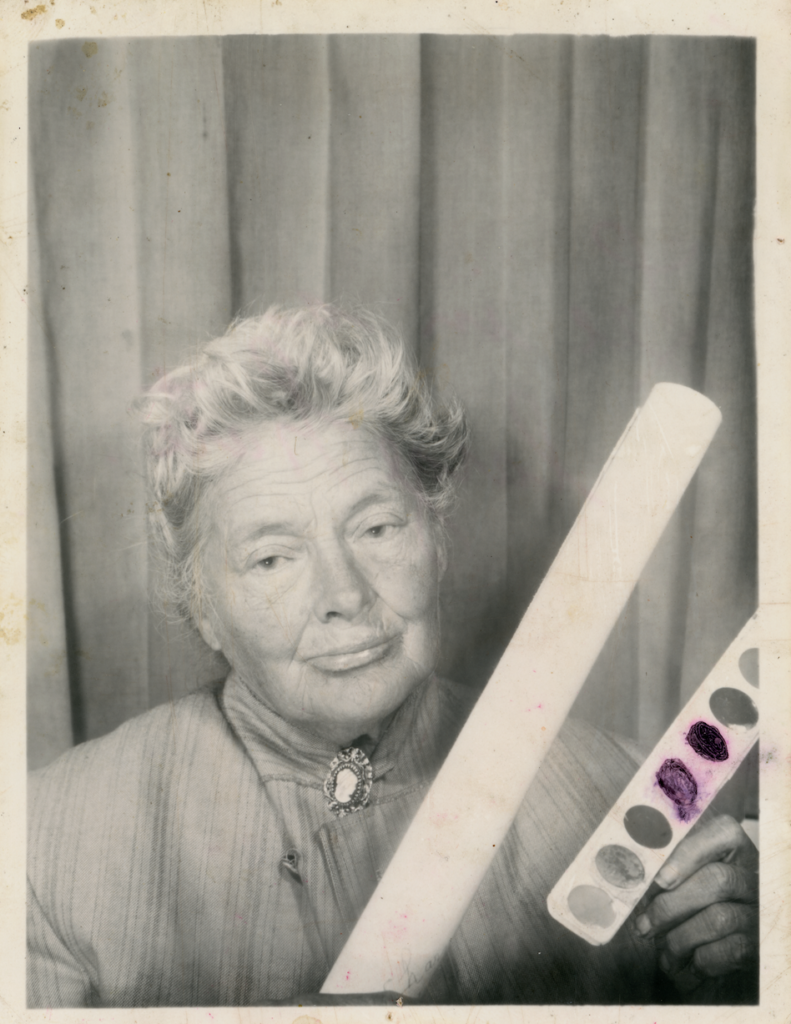
Clementine Hunter’s self-portraiture also expands on this genre that has deep roots in art history. Her best-known work, The Apple Paring (c. 1945), was created early in her career at Melrose Plantation in Louisiana, where she had worked with her family since she was a teenager, picking cotton, cleaning, and cooking. Hunter recalled, “I paint the history of my people. My paintings tell how we worked, played, and prayed.” Although her exact reasons are unclear, Hunter later stopped working in this style, stating that such images “hurt me too much. I get dizzy.” In an abstract composition completed in 1975, when Hunter was in her eighties, she centers a collaged photograph of herself as an artist. There, she is smiling and holding one of her earlier paintings, while exuberant, expressive dashes of paint radiate outward, crowning her in blue. Chicago-based Lee Godie similarly used photographs of herself to affirm her status as an artist. She would pin these photographic self-portraits onto her paintings, sometimes featuring herself holding tools of the profession, such as gouache sets. For thirty years, Godie was a mainstay of the city’s cultural scene, making and selling her works on the steps of the Art Institute of Chicago and engaging in conversations with her formally trained counterparts.
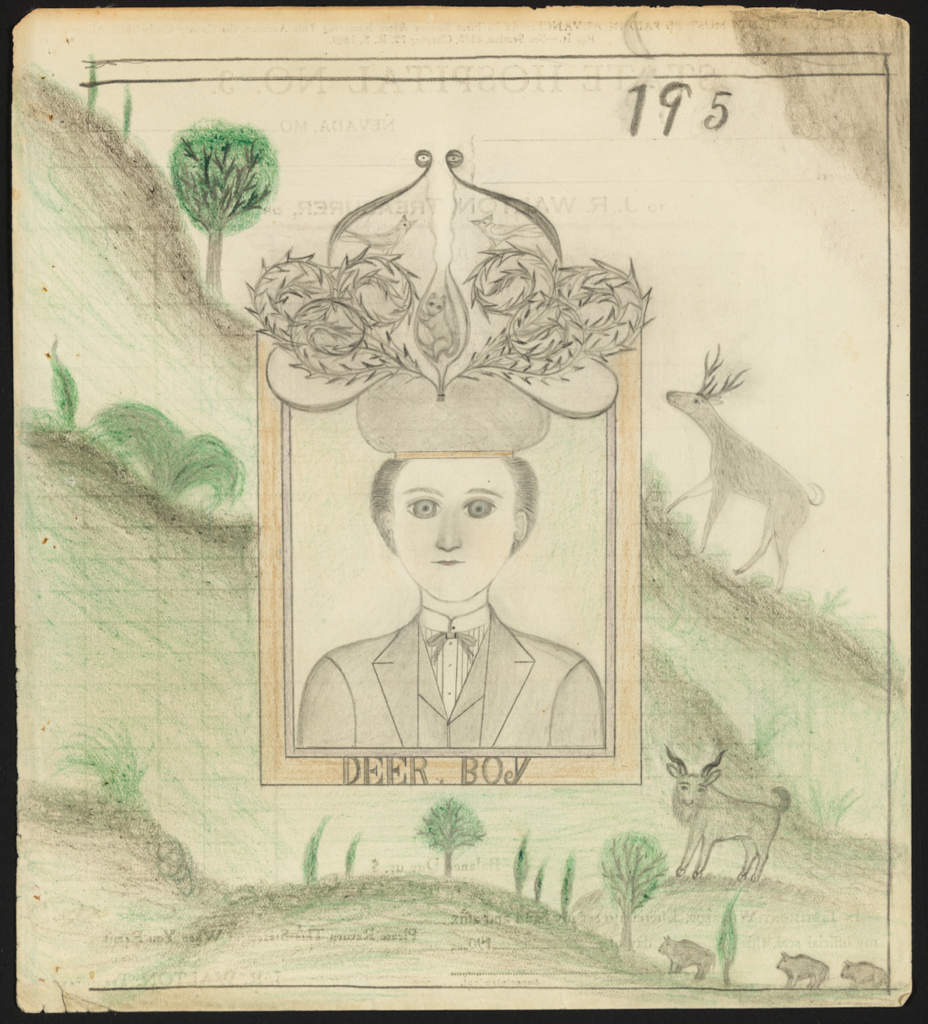
Missouri, 1936–1969. Graphite and crayon on ledger paper (double-sided), 9 1/4 by 8 3/8 inches. Promised gift of Frank S. Tosto.
The second gallery brings together “alter egos,” a mode of self-making that mediates artists’ voices, allowing them to express ideas that may be private or difficult to convey from a first-person perspective. During his hospitalization at State Hospital No. 3 in Nevada, Missouri, between 1936 and 1969, James Edward Deeds, Jr. collated 283 pages into an album. He did not provide explanations for his creative endeavor, and his relatives were unaware of the hand-bound sketchbook’s existence until it was found in a local trash heap in Springfield, Missouri, in 1970. Included in it is a stoic portrait captioned as “DEER BOY,” perhaps the most meticulously rendered drawing in the ensemble. The figure wears a magisterial headpiece—a surreal element that reads as either a crown of thorns or deer antlers. According to the art historian Thomas B. Parker, who spent years studying Deeds’s work, it could represent an alternate version of the artist. Deeds considered himself an outdoorsman, and the lush, steep landscape, replete with flora and fauna, evokes a freedom that contrasts with the confined space of hospitalization.
Gift of Patricia L. and Maurice C. Thompson Jr.
Bill Traylor, too, occasionally depicted himself in his oeuvre—comprising approximately twelve hundred artworks—alongside certain characters who, like him, recur throughout his “moving pictures” rooted in domestic or family settings. As noted by art historian Debra Purden, the attributes he used—including the pointed nose, beard, and hat—so strongly resemble a 1939 photograph of him that it is hard to miss his doppelgänger. In one work, he stands outside a speakeasy, peering in through an open door; in another, he reaches for a bottle of moonshine from the shelf and calmly sits behind a mysterious structure, seemingly unaware of the commotion around him.
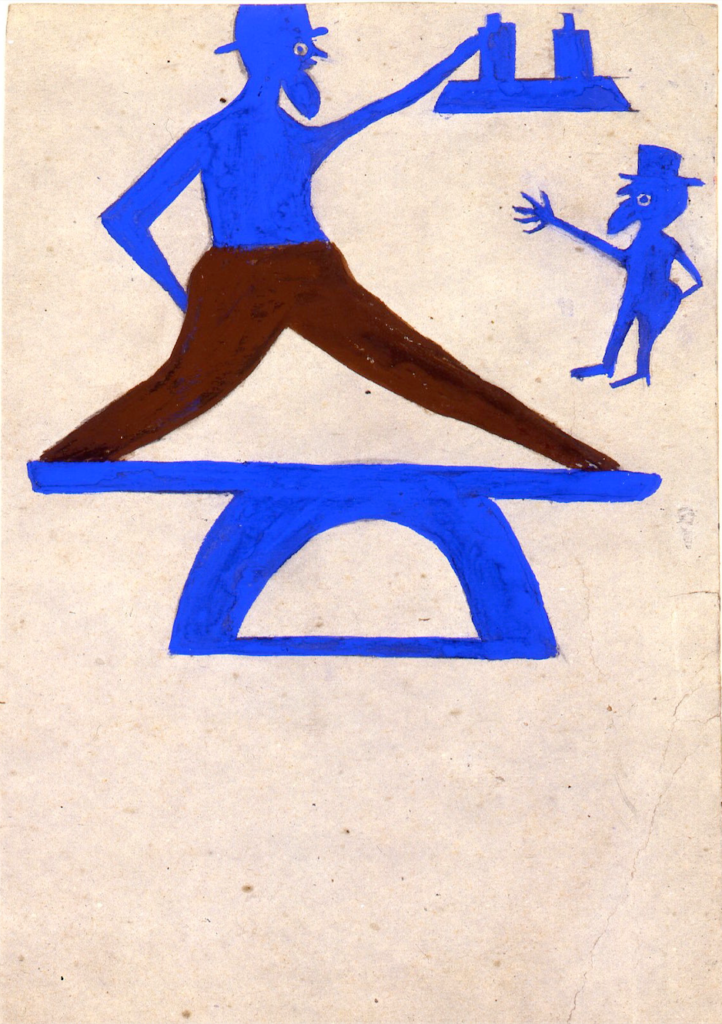
Gift from the Estate of Lanford Wilson; photograph courtesy Ricco/ Maresca Gallery, New York.
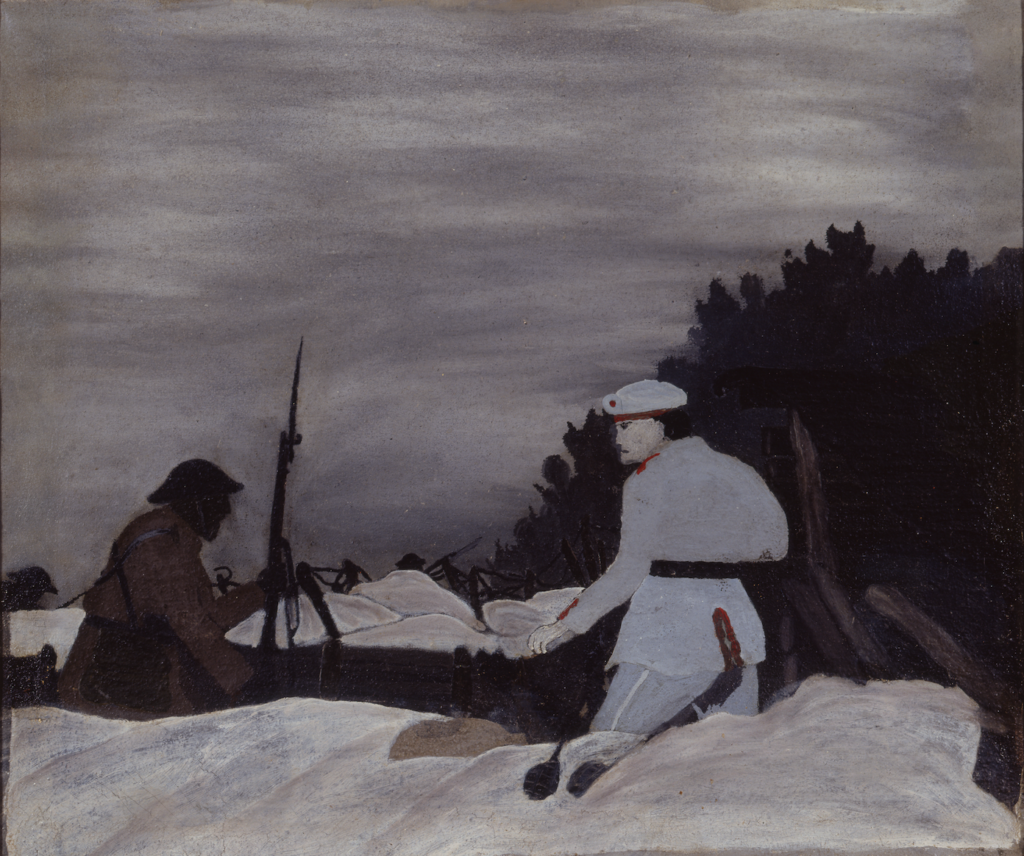
The final gallery features “autobiographical works” and signature pieces. Lived experience is the physical record of an individual’s reality and can counteract distortions created by media, political, and social narratives. Artists positioned outside the narrow parameters of the art-historical canon because of their race, gender, place of origin, class, mental health, or other deviations from normative power structures—have long been burdened with reductive interpretations. In his early oil paintings, Horace Pippin depicted World War I in ways that strategically challenge official histories, in which Black contributions to military history have frequently been ignored and negated. In Outpost Raid: Champagne Sector, Pippin portrays an infantryman—possibly himself—confronting a snarling, disarmed soldier in a trench. Pippin served in the all-Black 369th Infantry Unit, nicknamed the “Harlem Hellfighters,” and similar scenes were recorded in his wartime journal. At the time of its creation, images of World War I often excised the actions of Black soldiers, but in Pippin’s work, their victories and struggles are centered.
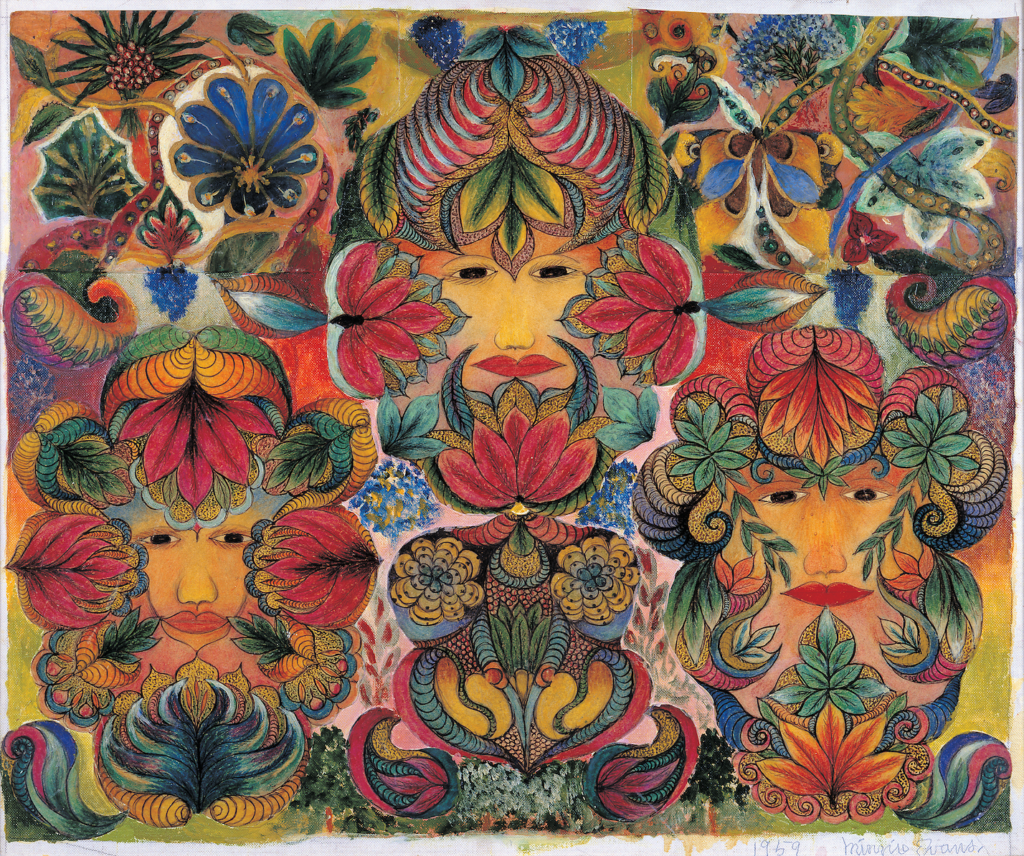
Oil and crayon on canvas with collage, 20 by 24 inches.
Gift of Jacqueline Loewe Fowler, © The Estate of Minnie Evans; Ashworth photograph.
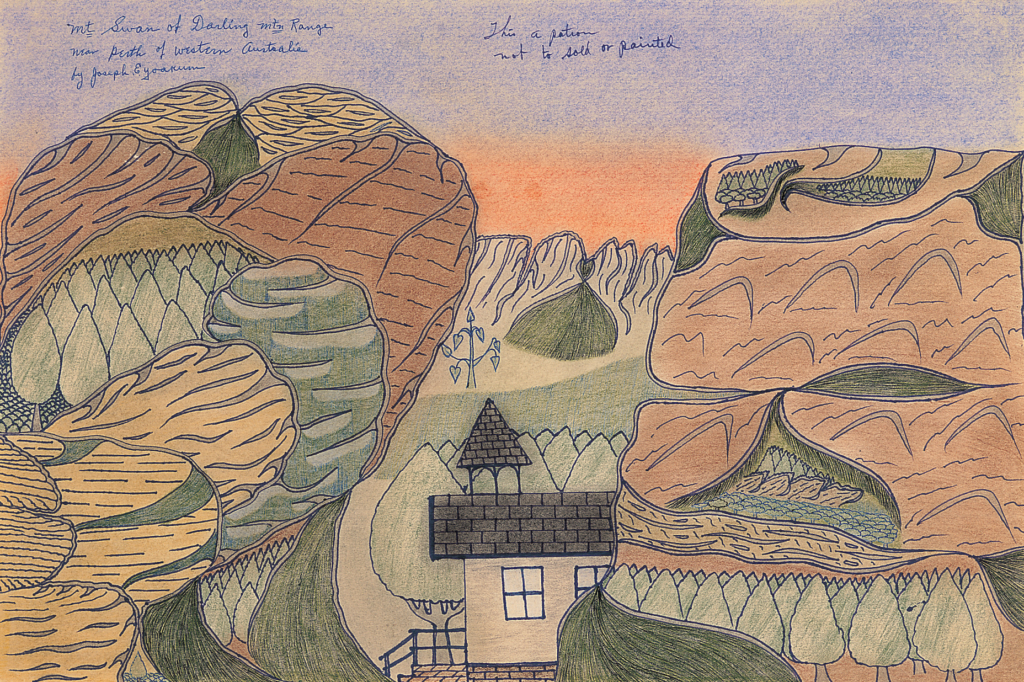
Minnie Evans and Joseph E. Yoakum unfolded their own stories into representations of the natural environment. Evans was managing the admissions gate at Airlie Gardens in Wilmington, North Carolina, when she painted “Untitled (Three Faces in a Lush Landscape)” in 1959, in which three faces emerge from colorful azaleas and lush foliage. She completed the drawings of flowers and faces separately, then merged them into a kaleidoscopic landscape. Though she was portraying her surroundings, Evans saw her work as channeling ancestors, the Bible, and the spiritual realm. The composition is anchored by eyes that peer out at the viewer, haloed by symmetrical blooms. Evans stated that she sought to remove eyes from her drawings, only to have them make their way back in. Similarly, Yoakum’s landscapes blend reality, imagination, and memory. He is said to have based his undulating, almost aqueous mountains, serpentine rivers, and raindrop-shaped trees on sites he encountered during his nomadic life. The art historian Mark Pascale suggests that they are symbolic representations of the artist himself—an “ongoing, epic self-portrait.” Mt. Swan of Darling Mtn Range Near Perth of Western Australia, which the artist precisely dated as January 8, 1968, depicts a wild terrain of forests and rocky formations from which an uncanny, topographical face in profile emerges on its right.
The works of contemporary artists Nicole Appel and Otis Houston Jr. carry the history of self-making into the present. Houston is well-known for his installations and performances along Manhattan’s FDR Drive at 122nd Street, where he has maintained an improvised outdoor studio since 1997. His work, emphasizing a healthy lifestyle, often incorporates assemblages made from discarded materials. Before expanding the scope of his practice, Houston created collages while incarcerated between 1984 and 1990. He mined available print media to build complex, intimate works that confront issues such as systemic racism and institutional exclusion. In a collage from about 1990, Houston dissects “modernism’s neglected side” to resurrect images of Blackness excised from traditional art history. An Akan carving, a photographic portrait of a muscular man, and a Fernand Léger painting are surrounded by words of uplift. Taking a different approach to self-representation, Nicole Appel reimagines the genre by developing an individualized iconographic blueprint from symbolic vocabularies and affiliations with people, places, and communities. Her works are “patchwork portraits” in which she depicts objects, motifs, and references that pay homage to friends, neighbors, and people in her life. Hamburgers, Heels, and High Couture is an homage to Deborah Hillburn—a lifelong friend with a penchant for fashion—whom Appel had recently visited in Southern California. Although the In-N-Out Burger logos may reflect Hillburn’s fondness for the restaurant chain, they also point to Appel’s own encounter with this regional staple. As such, the work serves as a personal travelogue and pictorial register that embed the artist’s own presence, blurring the line between tribute and self-expression.
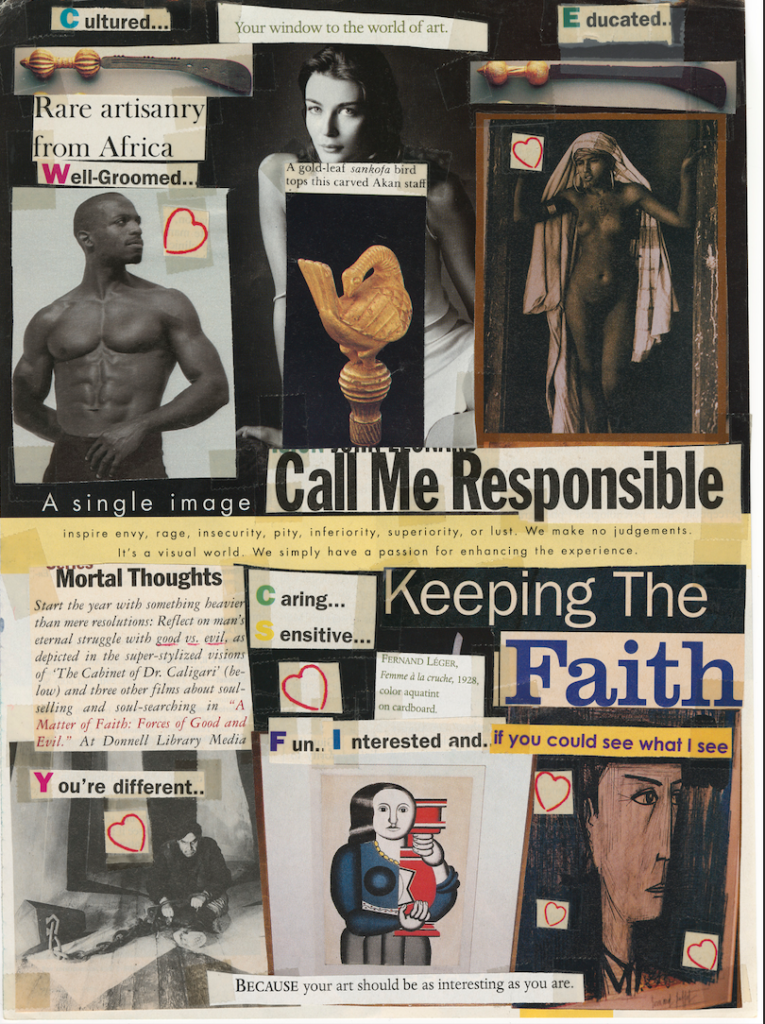
Gift of Otis Houston Jr.
At the milestone of the United States’ Semiquincentennial, it is critical that museums challenge and revisit the national narratives we inhabit and inherit. Self-Made: A Century of Inventing Artists suggests that every act of artistic self-making can be the seed of revolution, proposing new ways to imagine the self and shape worldviews through one’s unique positionality, regardless of privilege, access, or academic training. Self-Made prompts a broader art-historical reframing, foregrounding the artists’ agency and placing their works at the heart of interpretation.
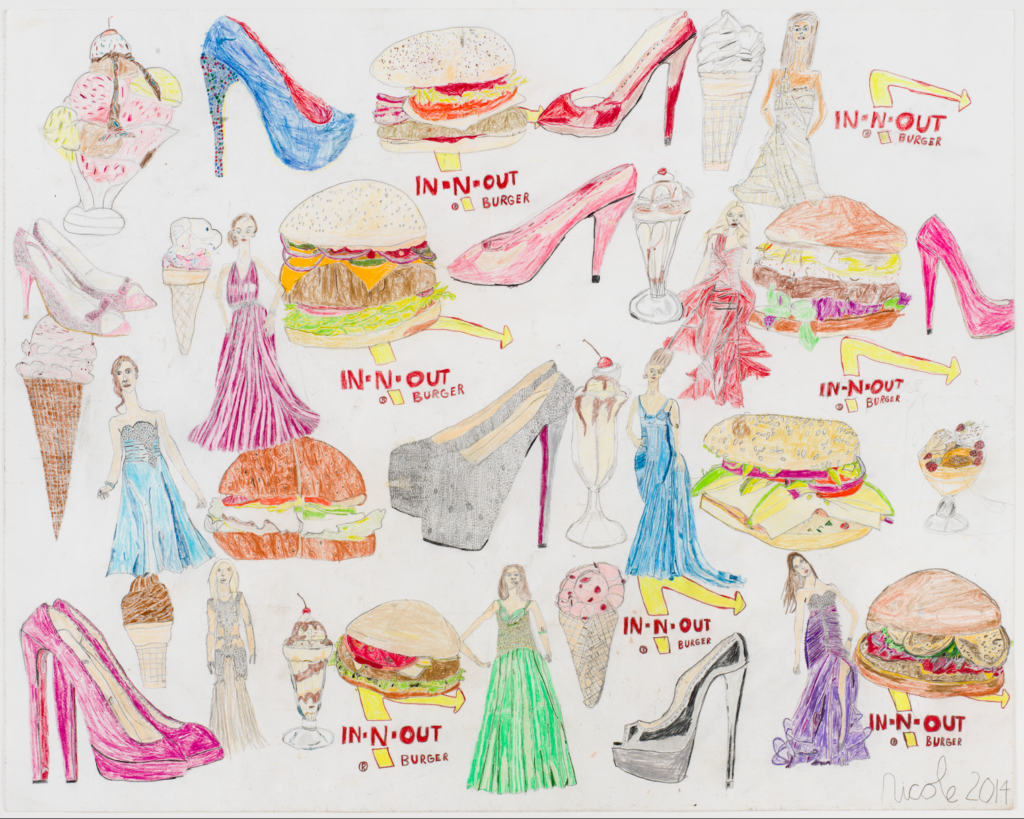
Gift of the artist in honor of Deborah Hillburn; photograph by Adam Reich.
Self-Made: A Century of Inventing Artists is on view at the American Folk Art Museum through September 13.
VALÉRIE ROUSSEAU is curatorial chair and senior curator of twentieth-century and contemporary art at the American Folk Art Museum, New York
SUZIE OPPENHEIMER is the Ponsold-Motherwell Curatorial Fellow at the City University of New York, Graduate Center, and research associate at the American Folk Art Museum.


