
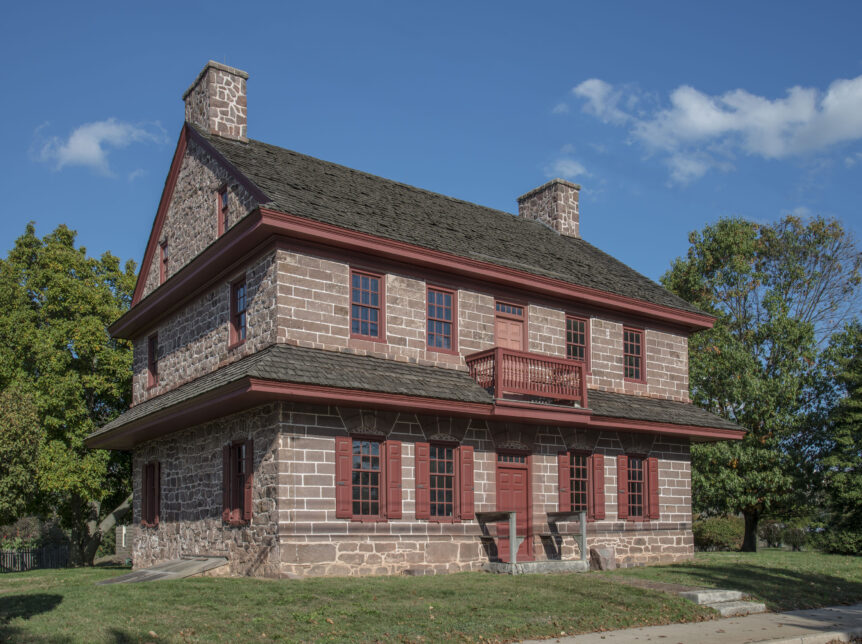
How one household in the Philadelphia countryside reveals the domestic upheaval, resilience, and material culture of war-torn Revolutionary America.
As museums across the country look for ways to commemorate the US Semiquincentennial in 2026, historic sites in the Philadelphia area are also focused on the following two years, when the Revolutionary War stormed through the region. From the Battles of Brandywine and Germantown to the British occupation of Philadelphia and the long, harsh winter encampment at Valley Forge, these were times that tried everyone’s souls, to paraphrase Thomas Paine.
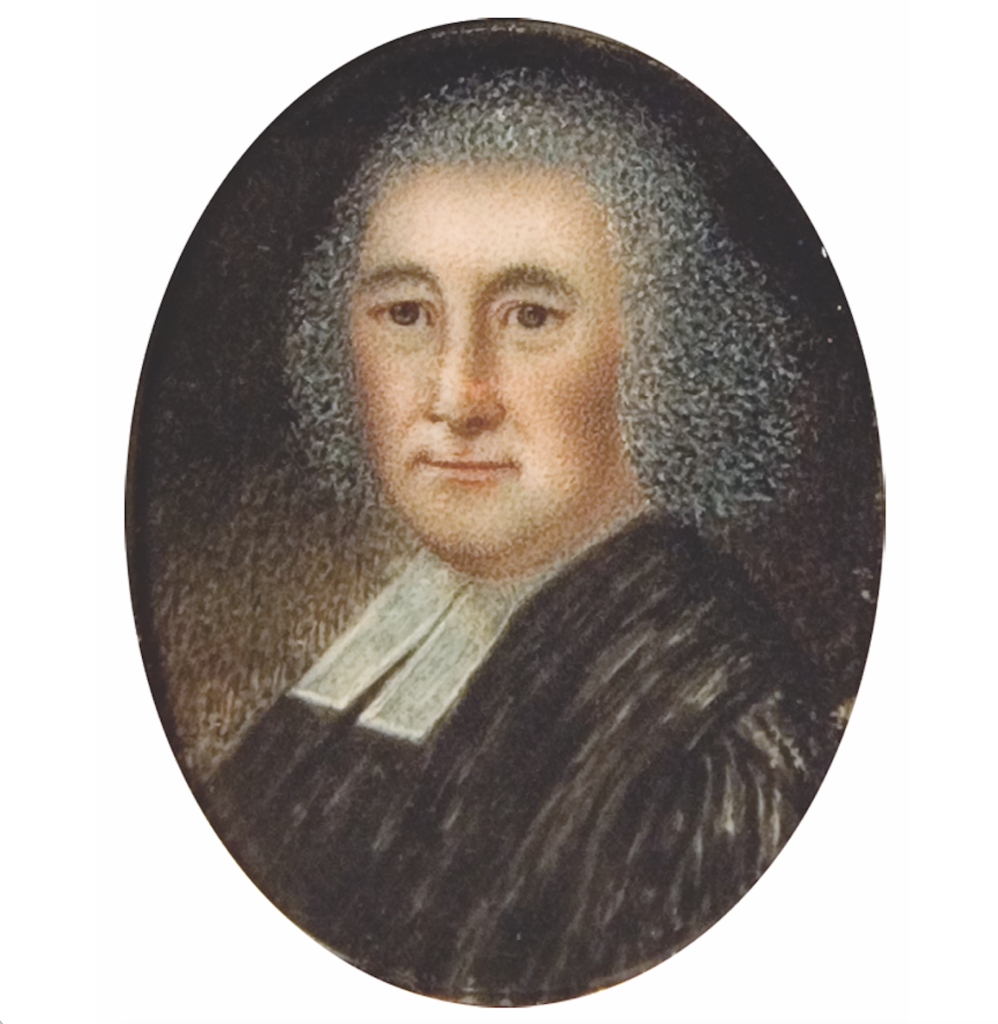
Collection of a descendant.
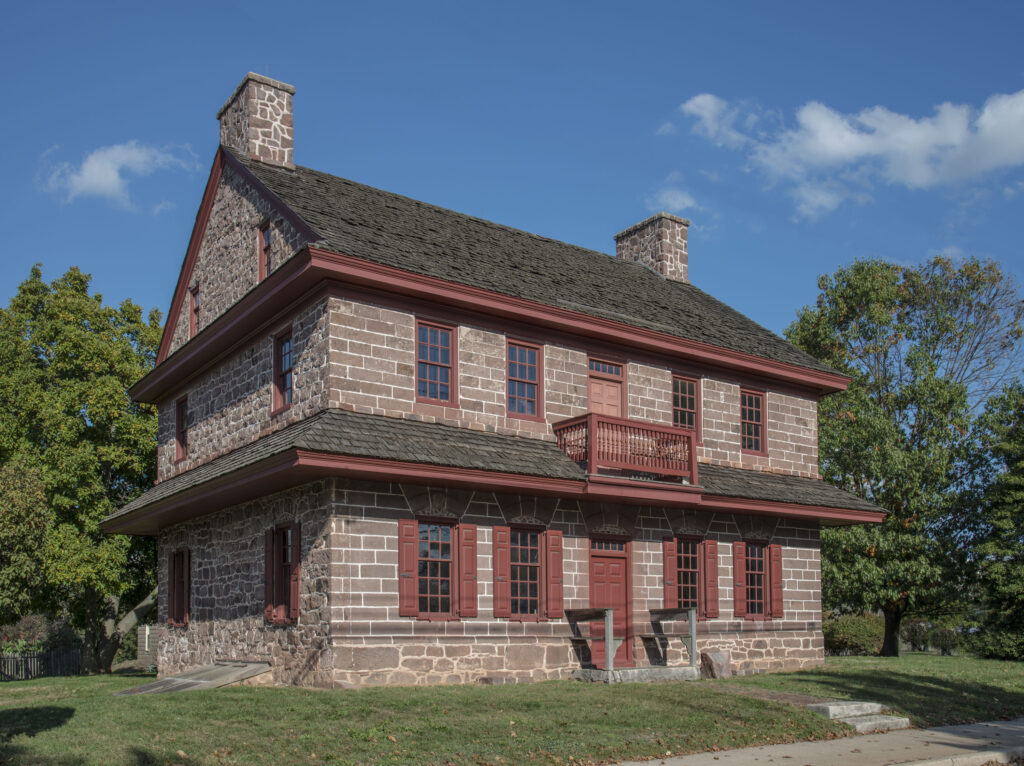
Trappe, Pennsylvania—a rural village just over twenty-five miles northwest of Philadelphia—was frequently in the crosshairs of both armies during this period. The situation came to a head in the fall of 1777, as the British army occupied Philadelphia and over thirteen thousand 0 city residents fled to the surrounding countryside. Located on the main highway from Philadelphia to Reading, Trappe’s residents witnessed the mass evacuation and sheltered many of the refugees. Historic Trappe, which owns five properties throughout the town, is launching a new initiative to reflect this fraught period. Its centerpiece, known as “Refugees in the Parlor,” is an immersive re-installation of the Muhlenberg House to reconstruct the Muhlenberg family’s wartime household. Each room has been reimagined to reflect how domestic spaces were transformed by wartime upheaval. Familiar objects are displayed in new and unexpected ways, challenging the static conventions of historic house interpretation and inviting visitors to consider decorative arts in a new light.
We are fortunate to have not only the Muhlenberg House—one of the most authentic house museums in the area with many original artifacts including furniture, portraits, silver, and textiles—but also the daily journals of Henry Muhlenberg, which provide a detailed account of what was happening in real time. Muhlenberg’s writings provide rare insight into the lives of individuals whose stories are often excluded from traditional Revolutionary narratives—including women, children, indentured servants, and enslaved people who all passed through or stayed at the house during the war. This combination enables a powerful opportunity to peel back the curtain of history and step into a world of uncertainty and fear—a time when independence was declared but far from guaranteed.
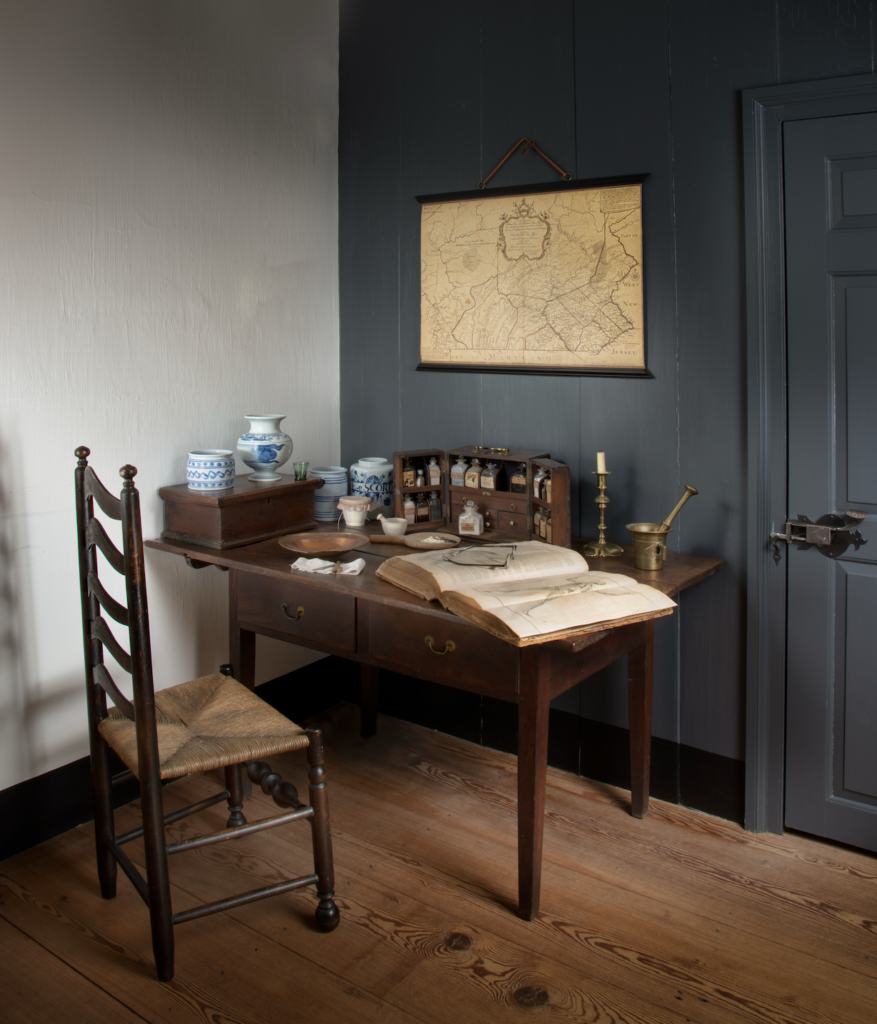
Purchased by the elderly Lutheran pastor Henry Muhlenberg and his ailing wife Mary in early 1776, the Muhlenberg House was the family’s country house and personal refuge away from the city. On July 8, the family was still in Philadelphia when Henry heard the Declaration of Independence read aloud at the first public reading. Just three days later, on July 11, Henry, Mary, and their youngest daughter Sally fled the city and moved permanently to Trappe—hoping to find a safe haven during the war.
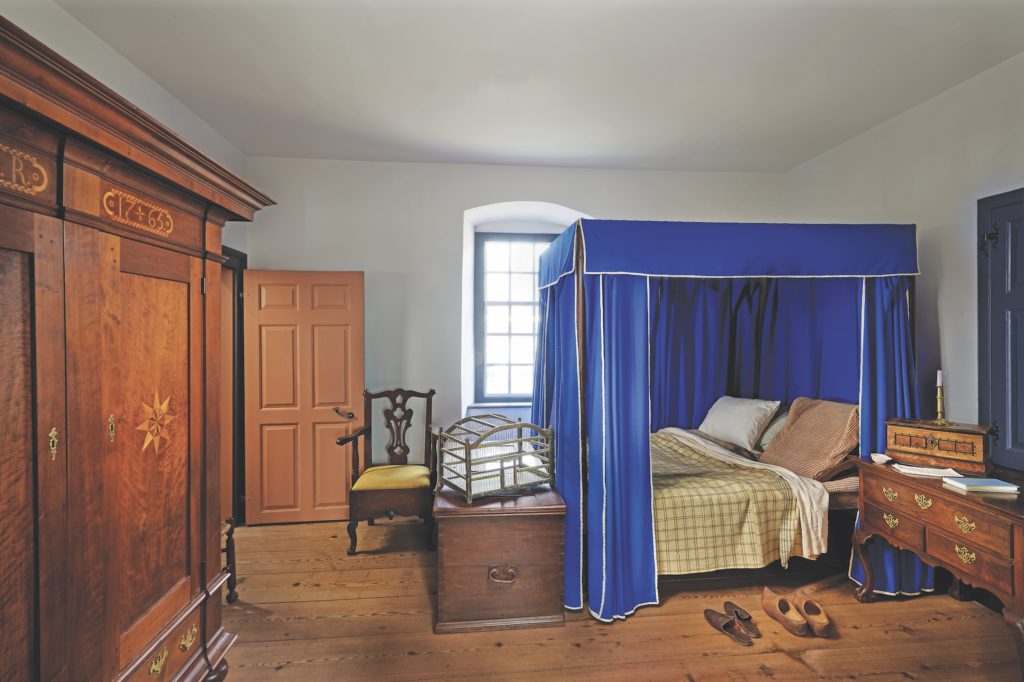
After a long delay in receiving the shoes, he paid thirty dollars for a pair of leather slippers for Mary. The commode beside the door is a rural Pennsylvania example, known in German as a Nachtstuhl, on night chair. The Muhlenbergs owned a commode chair, which they shared on several occasions with their daughters or daughters-in-law after childbirth. The inlaid Kleiderschrank or wardrobe was made in 1765 for Georg Rahn, who lived about a mile from Trappe. Myers photograph.
From the summer of 1776 through the summer of 1778, Muhlenberg House was a place of refuge and safekeeping for more than thirty individuals, including several of Henry and Mary Muhlenberg’s adult children, multiple grandchildren, in-laws, close friends, and enslaved and indentured servants. As the British army advanced on Philadelphia in September 1777, wagonloads of personal belongings were sent to Trappe—beds, linens, clothing, furniture, books, private papers, and other household goods. In 1778 Muhlenberg’s son-in-law Francis Swaine “sent a freight wagon, loaded with household furniture,” Henry observed, continuing: “There is no end to this wearisome moving in and out in wartime.” With Philadelphia occupied by the British for nine months, only the occasional letter between Henry Muhlenberg and his daughter Margaretta Kuntze was able to get through—a fragile lifeline that communicated news of illness and economic hardship as food, firewood, and other supplies dwindled in the city.
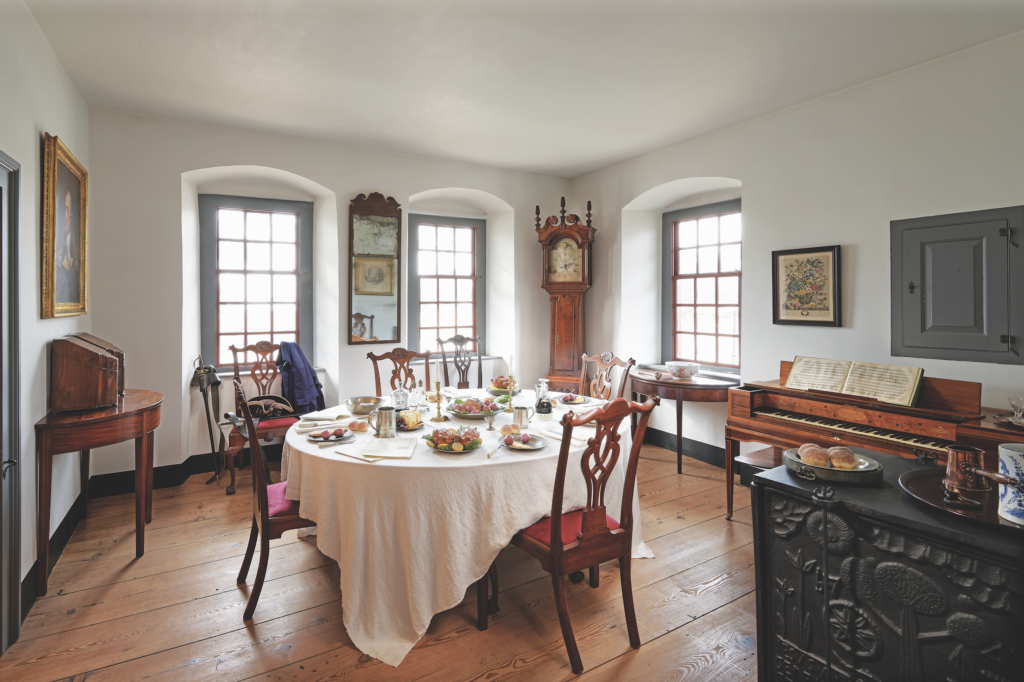
was made by Charles Albrecht (c. 1760–1848), a German émigré craftsman working in Philadelphia. In October 1776 Henry noted in his journal that his son Frederick (1750–1801), whose family was also sheltering in the Trappe household, “had just received his clavichord and put it in order last evening, and so we were able to cheer ourselves this evening with spiritual songs,” which they needed after hearing news of bloody fighting at Crown Point and Ticonderoga. Myers photograph.
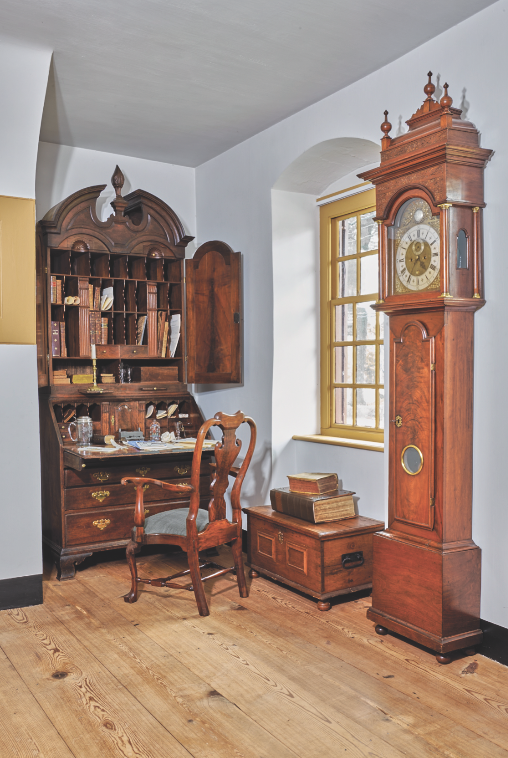
From his study, Henry Muhlenberg had only to look out the window to witness the daily effects of the war. Sitting at his desk, quill pen in hand, he poured his greatest fears and prayers for mercy into his journals. He wrote about hearing the cannons from the Battle of Brandywine, soldiers banging on the door to demand food, and wagons coming and going. He complained: “Here I thought I should have a solitary, quiet, private life, but I have still continued to live in commotion since all sorts of invasion and marchings through are occurring constantly.”

When trans-Atlantic trade was cut off during the war, the medicine supply dwindled and ran out. This became especially difficult in 1782 when Mary Muhlenberg was severely scalded when she had a seizure and fell into a kettle of beets boiling over the kitchen fire. Henry lamented having medical books but no ingredients to make anything that might help her. It took months for Mary to recuperate, nursed back to health by their daughter Mary Swaine.
One of the rear rooms is now interpreted as a first-floor bedchamber, to reflect the likelihood that the elder Muhlenbergs consolidated their belongings into several rooms on the main floor during the war. The room is furnished to reflect Mary’s long recuperation after the scalding incident, using items such as a bed rest and pap boat. The bird cage is based on a reference in Henry’s journals, noting that he paid six dollars “for a dove cage because someone advised my wife to keep a pair of turtledoves in her bedroom in draw her sickness to them.”
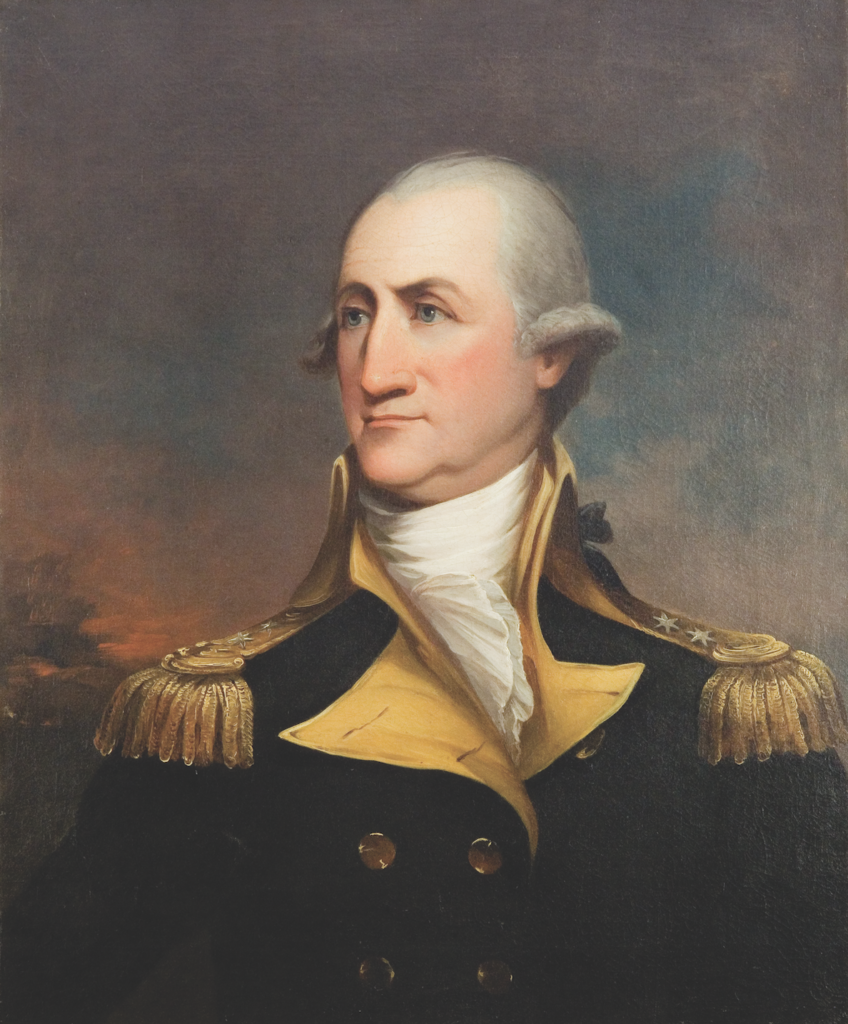
Just several weeks after the American defeat at Brandywine, the Muhlenbergs hosted General Anthony Wayne and Major General William Alexander, also known as Lord Stirling, for breakfast on September 25, 1777. Henry does not mention whether his son General Peter Muhlenberg was among the officers who dined with them that day. He was less than thrilled that Peter had quit the ministry to take up arms but sheltered Peter’s family for much of the war and later sold the house to Peter and his wife, Hanna.
Present in the dining room for this breakfast and usually there today is a set of chairs made for the Muhlenbergs in 1763 by Leonard Kessler (1737–1804) of Philadelphia. One of the city’s leading German cabinetmakers, Kessler is mentioned frequently in Henry’s journals and is the only furniture maker the Muhlenbergs are known to have patronized while they lived in Philadelphia from 1761 to 1776. Made of mahogany, the chairs have typical Philadelphia construction details and carving, but with larger volutes and other subtle differences that help distinguish Kessler’s work.

Only a few months after the Muhlenbergs entertained Wayne and Stirling, their dining room was used to host soldiers under very different circumstances. On December 6, 1777, a group of militiamen demanded lodging for the night, as all the neighboring houses were full. Henry recorded that “we accommodated them in the large room, where they slept on the bare floor after they had eaten.” He stayed up late into the night to keep watch over his household. With the Continental Army encamped for the winter at Valley Forge, only about seven miles from Trappe, Henry’s journals are full of entries about soldiers taking food, hay, oats, firewood, chickens, and other provisions as well as sleeping in their barn or parking wagons in their yard.
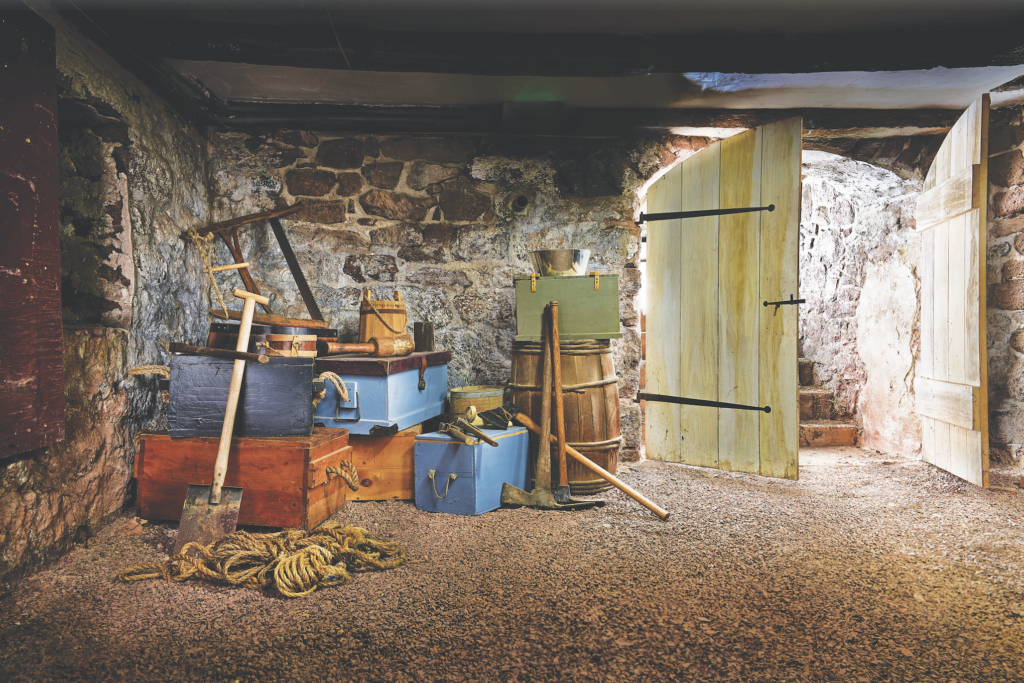
The Muhlenberg House’s cellar was also commandeered by the army to use for storage. Henry reported on December 1, 1777, that a commissary from the American camp “heard that we had, under our house, the largest and best cellar in this neighborhood” and asked to use it. Henry dared not refuse, noting “it is a duty to serve friends and foes as one can.” The next day, twelve freight wagons arrived loaded with barrels, crates, and other items to store in the cellar. A particularly frightful period of days followed, with several hundred “war wagons and their crews” descending on Trappe and ravaging the neighborhood like “rapacious beasts.” The wagons then departed, only to return when reports that British troops were only two miles away and intended to seize the wagons. Terrified, the Muhlenbergs contemplated fleeing further inland but ultimately stayed for fear of even greater losses if they abandoned Trappe.

With so many family members in the Trappe household, Henry worried constantly about how to look after them and provide adequate food. On one occasion, he took inventory of all the people living under his roof, fretting, “Twenty-six stomachs and mouths. . . the little household is crawling and teeming.” The kitchen was a constant beehive of activity to cook for so many. Luxuries such as sugar and wine became scarce, especially during the British occupation of Philadelphia. City residents also suffered, unable to access country produce such as fresh meat, butter, and cheese. Henry noted buying fifty bushels of turnips and some cornmeal, which they ate “as a porridge in place of the tea or coffee which we used to drink when prices were not so high.” Turnip tops and cabbage, which they made into sauerkraut when salt was available, were other household staples during the war.
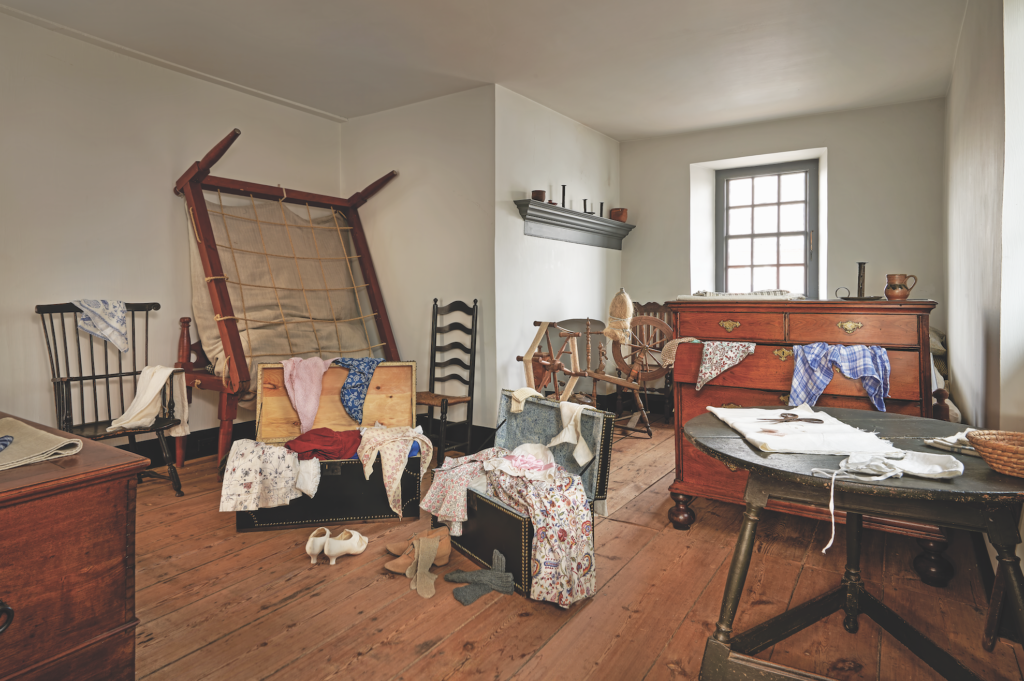
Although the Muhlenbergs ultimately never fled Trappe during the war, they frequently packed up valuables and sent them to relatives farther inland for safekeeping. On one such occasion, Henry recorded sending an “old trunk” to the Berks County household of his eldest daughter, Eve Elisabeth Schultze. The trunk’s contents included several folios of Henry’s journals, “the new bed curtain” and “curtains for two windows,” a “homespun cotton bed curtain,” plus extensive clothing. On other occasions, the Muhlenbergs also took in valuables sent to Trappe by various family members, including their daughter Margarette Kuntze in Philadelphia, who sent them a dressing table, bedstead, and bedding. Henry also records in his journals hiring a worker to saw the top off a clock that was sent to the house for safekeeping by another daughter; presumably the clock case was made for a house with taller ceilings and needed to be reduced in height.
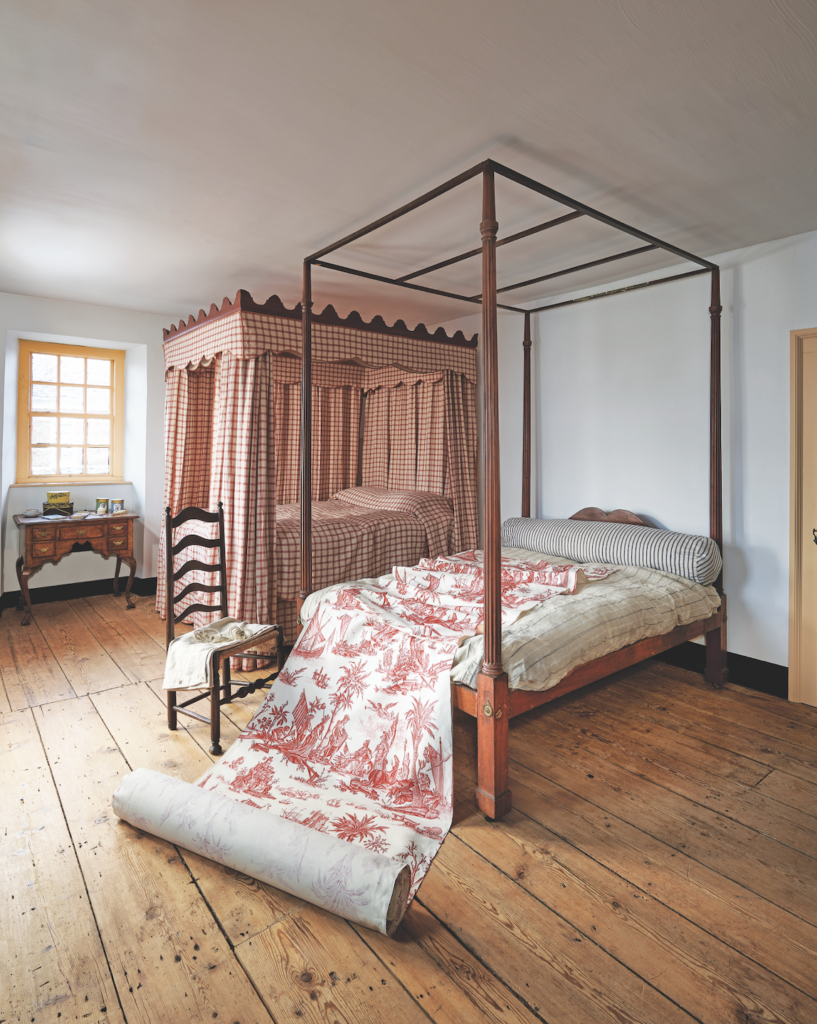
To represent the many displaced family members who sheltered in the house during the war, the largest room on the second floor is being used to stage a multi-family bedchamber. The red-and-white check linen bed represents a bed that Margarette Kuntze sent to the Trappe household for safekeeping during the British occupation of Philadelphia. Though modest in style, it was a prized possession—one that was carefully protected and repeatedly moved during wartime. Thanks to a grant from the Coby Foundation, the room is currently being used for an upholstery project titled “The Naked Bed 2.0: Dressing a Revolution.” The bedstead shown undergoing reupholstery will receive a complete set of curtains made with the reproduction of a mid-1780s French toile depicting allegorical scenes of America—an aspirational and politically resonant choice for a prominent public figure in the post-Revolutionary era. The bedstead itself, made in Philadelphia around 1785, was originally owned by Joshua Humphreys, a Quaker shipwright widely considered to be the father of the US Navy. Following completion, it will be moved next door to the Speaker’s House (home of Frederick Muhlenberg) and the room will be furnished with multiple cradles, high chairs, and trundle beds in addition to the two large bedsteads.
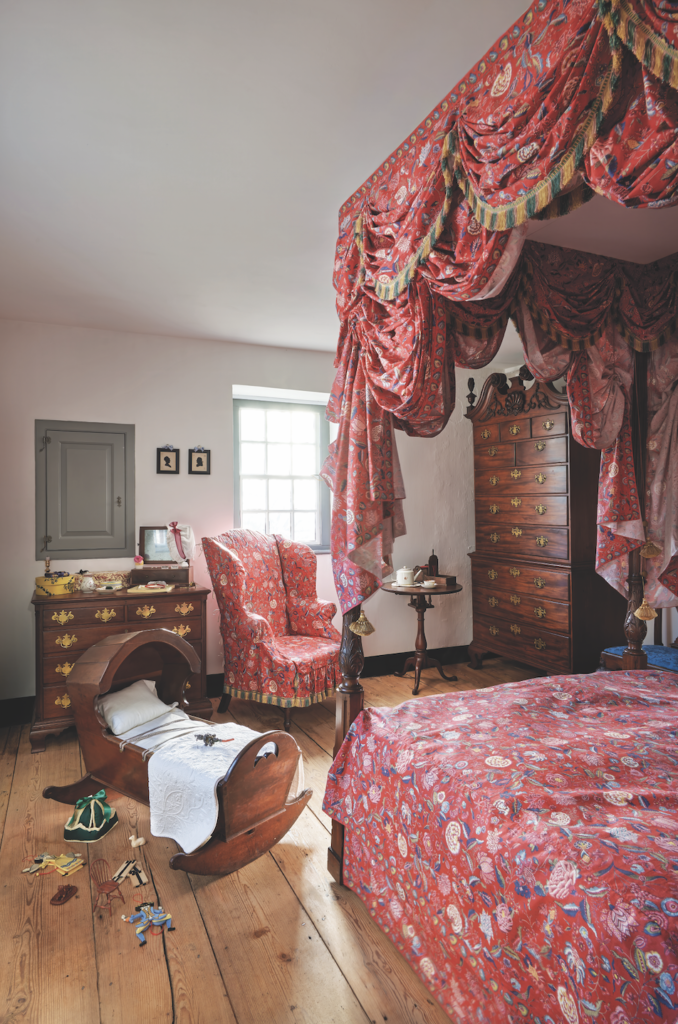
Visitors can get a glimpse of finished upholstery in Peter and Hanna Muhlenberg’s bedchamber, which is interpreted to the year 1787 when they purchased the house from Peter’s parents and moved in, together with four young children. The bed pictured, on loan from the Dietrich American Foundation, features a set of hangings made of an imported Dutch chintz in a dark ground that was all the rage in Philadelphia in the late 1780s.
A final reimaging of how the house was used during the war is the transformation of an upstairs room into a parlor. This was a practical measure, given the many people sheltering in the house during the war. After Henry and Mary sold the house to Peter and Hanna Muhlenberg, he complained when Hanna began to host tea parties due to the women’s “vain conversation.” The portrait on the wall is of Frederick Muhlenberg, who served as the first speaker of the United States House of Representatives; it is a copy of the original by Joseph Wright (1756–1793) now at the National Portrait Gallery. It will soon be relocated to the Speaker’s House, Frederick Muhlenberg’s home in Trappe, which will open to the public this spring after twenty-five years of restoration.
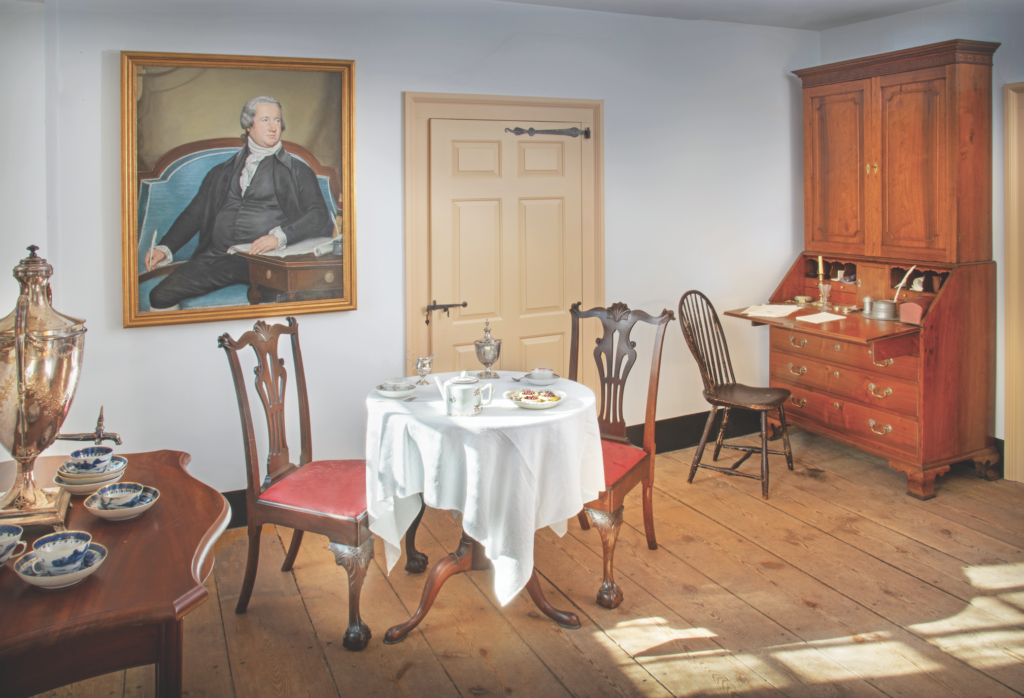
Together, the Muhlenberg House and the nearby Speaker’s House reveal how one family’s domestic spaces evolved from wartime refuge to centers of postwar political and social life. Visiting both sites allows audiences to trace the arc from survival amid Revolution to the shaping of the new nation—an arc embodied by the Muhlenbergs themselves.
Visit HistoricTrappe.org for more information on when the Speaker’s House will be open for tours as well as for details on all Historic Trappe’s museums, exhibitions, and special events.
LISA MINARDI is the executive director of Historic Trappe.
Opening to the public this spring after a twenty-five-year restoration effort that began with rescuing the house from demolition, the Speaker’s House is the home of Frederick Muhlenberg. It is also one of the only Founder’s houses in the nation that will be opening for the first time in 2026, a remarkable feat that is a testament to the Trappe community’s unwavering dedication to seeing this house restored in time for America’s 250th birthday.
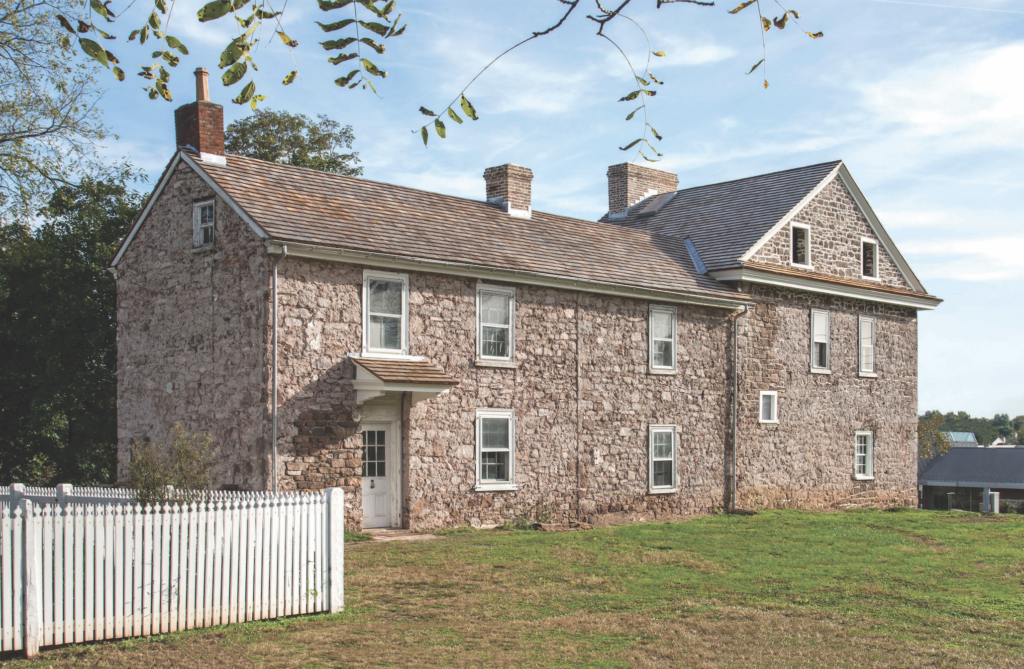
Born in Trappe, Frederick Muhlenberg was initially a Lutheran minister like his father but gave up the pulpit to enter politics. He served in the Continental Congress and then as Speaker of the Pennsylvania Assembly. After moving back to Trappe in 1782, he played a leading role in the formation of Montgomery County two years later, using his home as a de facto courthouse. He then chaired Pennsylvania’s Constitutional Convention, was elected to the First Federal Congress, and made the very first Speaker of the US House of Representatives.
The house is built like a Philadelphia town house and includes a large, second-floor room spanning the entire width of the house—suited for both fashionable entertaining and a public meeting room. The rear kitchen wing, built in two phases, is fully restored and used for hands-on living history programs including hearth cooking and gardening workshops.


