
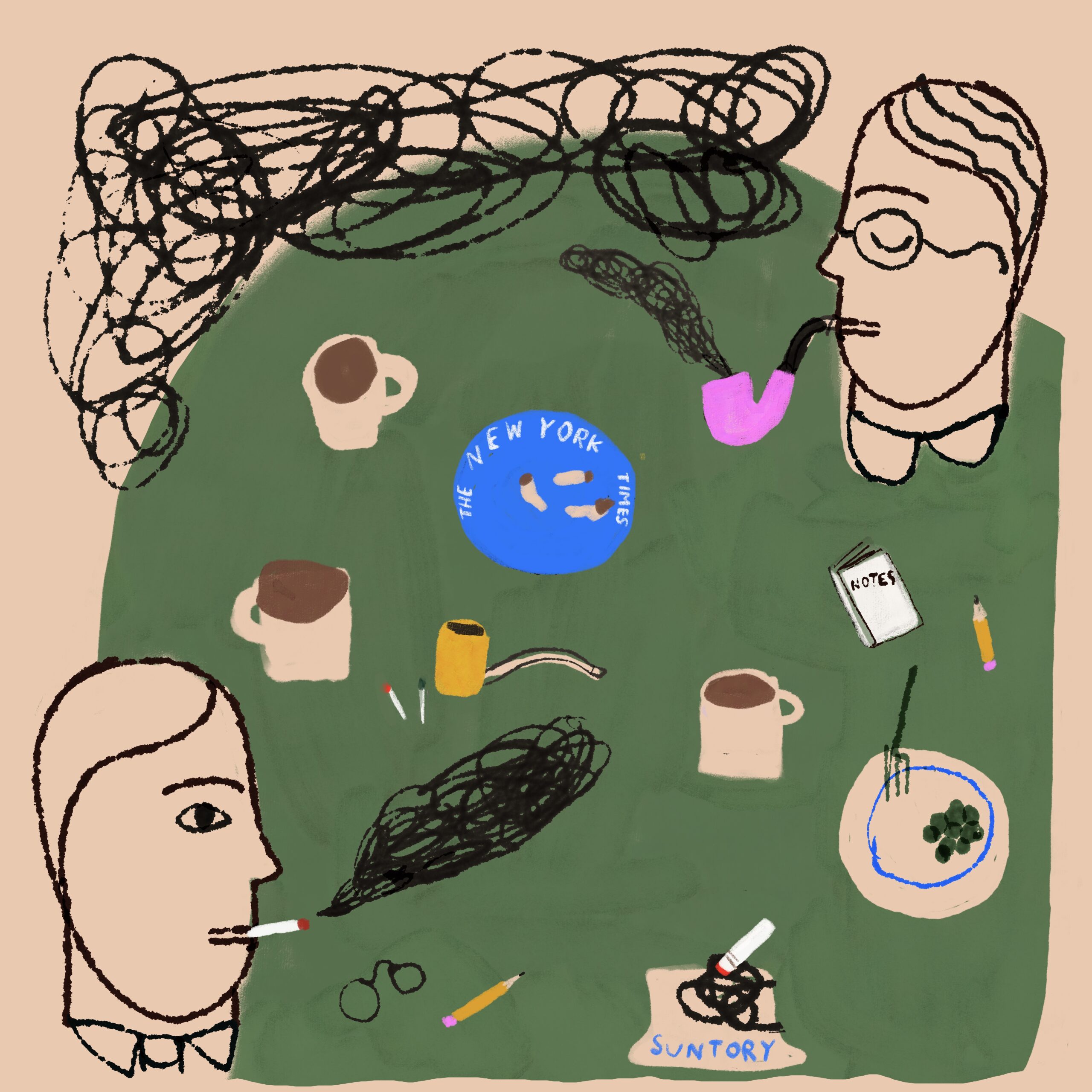
In which the author takes a field trip to the ashtray show at the International Museum of Dinnerware Design.
A museum exhibition devoted to ashtrays doesn’t automatically make one say, “By gosh! I better book a flight.” But lately I’ve come around to believing in the talismanic value of ashtrays, and I’m not even a smoker. I’ve come to appreciate the way these humble objects can summon memories and associations from the past.. Perhaps my change of heart has to do with inheriting a home office from my father that came with excellent examples of the form.
He was both a pipe and cigar smoker. Hence, a revolving pipe stand that contains a dozen of his favorite curve-stemmed Peterson pipes and a humidor that’s still filled with good cigars. Out of respect, I hydrate it every few weeks using both my dad’s terracotta humidifying stone—and a green sponge he stuffed into a glass jar.
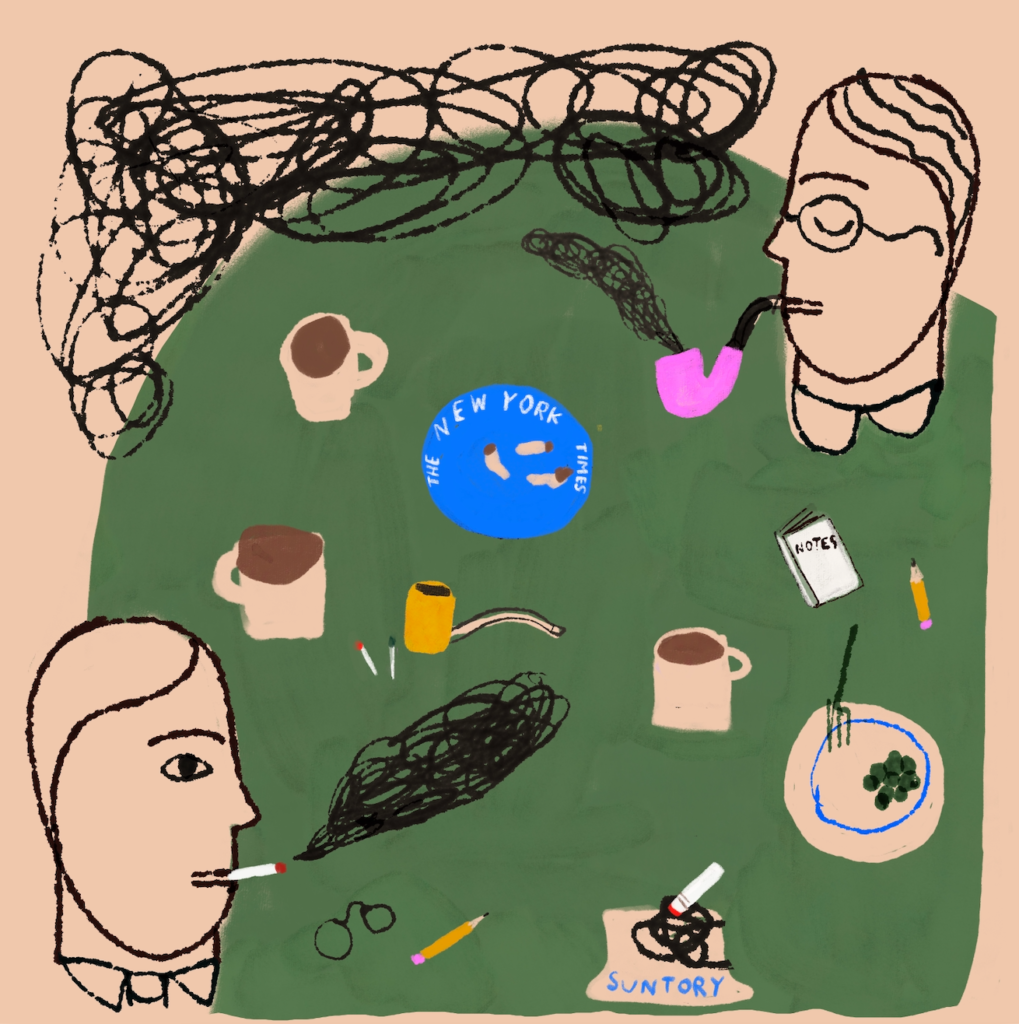
But my prize smoking-related paraphernalia are his ashtrays. I keep two on display, one a vintage smoking stand with a ceramic Suntory whisky ashtray and the other a majestic red and black Dunhill cigar ashtray that I see selling online for as much as $850. Another favorite is a vintage dark brown Bakelite model embossed with the New York Times logo. My father was a Times editor in the late 1940s and appears to have purloined it from the paper’s employee restaurant. I can almost see him sitting there over lunch talking deadlines and the news of the day with colleagues, their table shrouded in a cumulus cloud of cigarette smoke.
There’s something transporting about ashtrays, whether you smoke or not. They’re evocative of an era when smoking was cool and its health consequences a mere detail. “It’s kind of like dishes but on steroids,” explains Margaret Carney, the founding director and curator of the International Museum of Dinnerware Design in Kingston, New York. “They can spark a memory.”
When the museum devoted a recent show to ashtrays in all their dubious glory, I decided to visit, not just because it’s within striking distance of my home in the Hudson Valley, but also because I was curious what an institution devoted to dinnerware would look like.
Would there be Villeroy & Boch butter plates hanging on the walls like Rembrandts at the Rijksmuseum? Would Ginori teacups be mounted on marble pedestals like Bernini’s Apollo and Daphne at the Villa Borghese?
My fears that the museum might treat plates and cups with undue solemnity were quickly dispatched when Carney invited me to try my hand at the tablecloth trick in a dedicated room just off the lobby. That’s where one attempts to pull the cloth off the table without disturbing the place setting. There was an instructional video, and the table wasn’t set with dinnerware designed by Russel Wright or Eva Zeisel, but I nonetheless politely declined.
That sense of fun also infected the ashtray show. The hundred or so specimens included spirited Fiesta ware ashtrays, restaurant ashtrays, beanbag ashtrays, even an earthenware 1952 Pablo Picasso one decorated with a crested hoopoe bird. Appreciating that ashtrays can be a relatively static art form, if an art form at all, Carney, a ceramic historian, created a couple of tableaux vivants. One, playing on an authentic 1951 Philco TV set, featured an early episode from I Love Lucy where the comedienne stubs out a cigarette. As an explanatory panel dutifully notes, the receptacle she uses is not actually an ashtray, but a Glidden Pottery ceramic shirred-egg server. “She and Desi Arnaz had Glidden Pottery dinnerware in the Feather pattern in their home in Beverly Hills, California.”
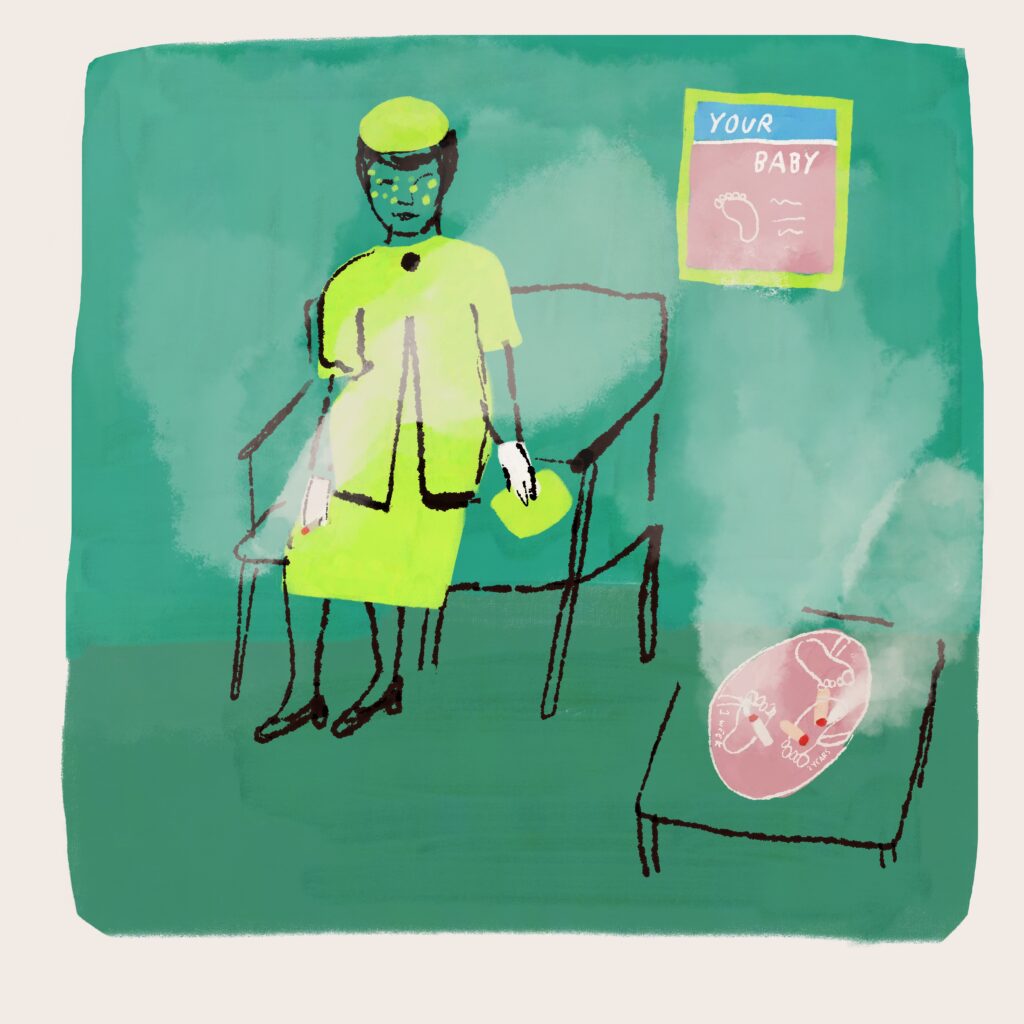
More arresting and certainly more disturbing is a set piece across the room. This one re-creates a 1959 pediatrician’s office to illustrate how ubiquitous and interwoven smoking was in everyday life. An expectant mother, played by a pregnant mannequin, is seated beside a table stacked with Parents magazines, children’s building blocks, and an ashtray imprinted with three sized baby feet marked “one week,” “one year,” and “two years.” Ironically, the ghoulish gray glazed ashtray was sponsored by Similac, the baby formula company.
Carney, who brings the show-and-tell passion to every object in the exhibition that civilians do to their private collections, explains how ashtrays fit into a dinner service museum by pointing to reproductions of dinner place setting wall diagrams. One is from the Pennsylvania Railroad’s “Manual for Waiters” and a YWCA cookbook, and they show precisely where cigarettes and ashtrays went — just above the salt and pepper shakers and to the left of the water glass. Turns out that both of Carney’s parents smoked at dinner, with ashtrays at either end of the table. “They both died of lung cancer,” she tells me matter-of-factly. “I was surprised to learn people didn’t smoke.”
If there’s an unavoidable cautionary note linking the show’s elements, it, fortunately, never tries to disguise the fact that smoking was, and still is, considered fashionable good fun by many. I suppose that’s why the right ashtray appeals even to non-smokers like me. They’re atmospheric, connecting you to a time when guilt and health consequences took a back seat to self-indulgence with a dash of movie star glamour. My modest collection includes a vintage light green Pernod ashtray that conjures visions of Parisian cafes and the perfumed scent of Gauloises cigarettes.
Not only cigarettes but also some ashtrays should probably come with health warnings. If the show’s late 1930s red Homer Laughlin Fiesta ashtray glows, it perhaps wasn’t by accident. Uranium was used to achieve the bold glaze but was discontinued because the element was needed to make the atom bomb. If you don’t believe it, Carney has a Geiger counter that goes haywire when it gets near the ashtray.
One more thing: apparently, ashtrays and ashtray design are experiencing something of a revival. “There’s a resurgence because of people smoking dope,” Carney told me. She didn’t sound displeased.


