
The Newark Museum of Art’s quilt collection shows how everyday textiles embody design, cultural memory, and evolving definitions of American art.
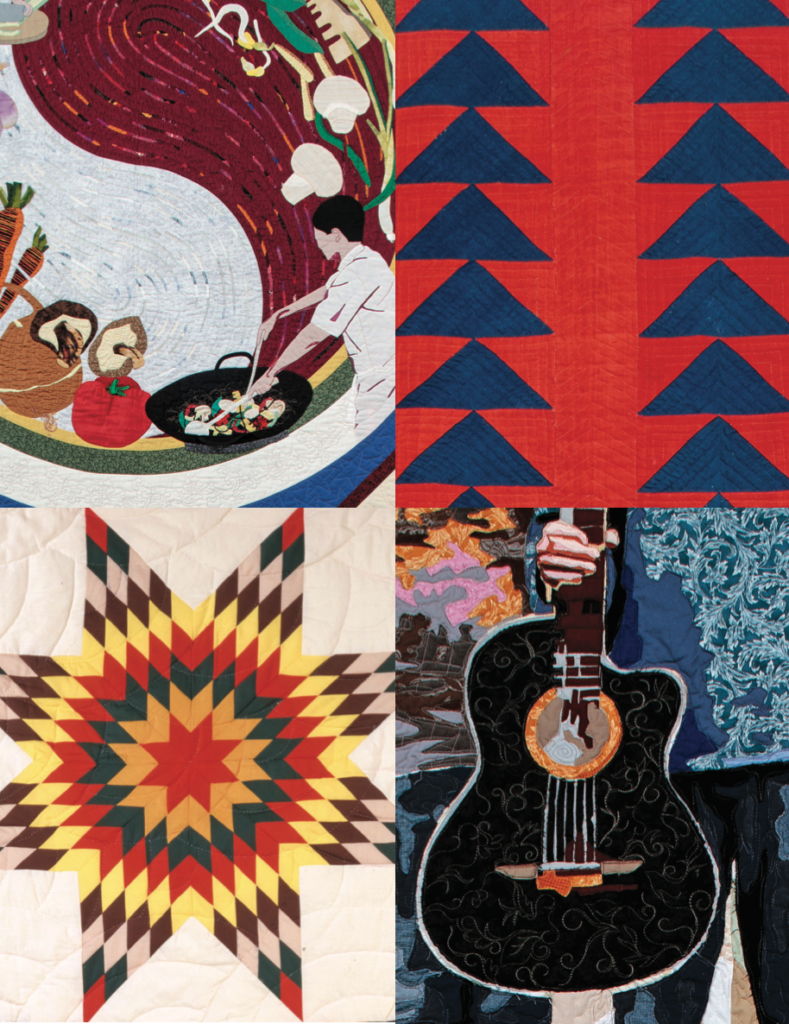
Following the progressive ethos of founder John Cotton Dana, the Newark Museum of Art has often been ahead of peer institutions in putting art and craft on equal footings. In that vein, it has long valued textiles both as everyday functional objects and as folk art and artwork on a par with paintings, sculpture, and works on paper. In particular, the museum’s diverse holdings of American quilts have been central to its efforts to expand definitions of what is art and what it means to be an American.
In the early twentieth century, Dana and his team forged a new type of museum, one that centered American and global art instead of the European masterworks featured at such institutions as the Metropolitan Museum of Art or the Museum of Fine Arts, Boston. Believing that art is everywhere, the museum intentionally blurred distinctions between craft, fine arts, folk art, and decorative arts. A chair, teacup, or quilt with an eye-pleasing design, made with knowledge of process and attention to form or imagery, could be used to teach and inspire museum visitors. This egalitarianism has become quite mainstream in the twenty-first century, but it was radical at the time.
Quilts have been included in Newark’s exhibitions since 1916 and collected since 1918. Today, the museum holds more than 185 quilts, the majority in the decorative arts department. Most are American (with a few European examples) dating from the late eighteenth century into the twenty-first and including album, appliqué, art, crazy, pieced, stuffed, toy, and whole-cloth examples. The majority were made by Anglo-European women though some were made by African Americans and Asian Americans. Quilts by Native American, Asian, and African quilters, and contemporary artists working in the quilt medium are catalogued with those respective collections.
One reason Dana acquired and exhibited American folk art and historical objects was to teach and help assimilate immigrants to American culture and to educate native-born Americans about the art and objects in their homes. This was a progressive strategy at the time, which saw rising anti-immigrant sentiments and patriotic fervor during World War I. In 1916 the museum mounted several exhibitions that highlighted textiles within this context, including Homelands, which celebrated Newark’s immigrant communities through traditional household textiles and clothing, and Textile Industries of New Jersey, which showcased contemporary products.
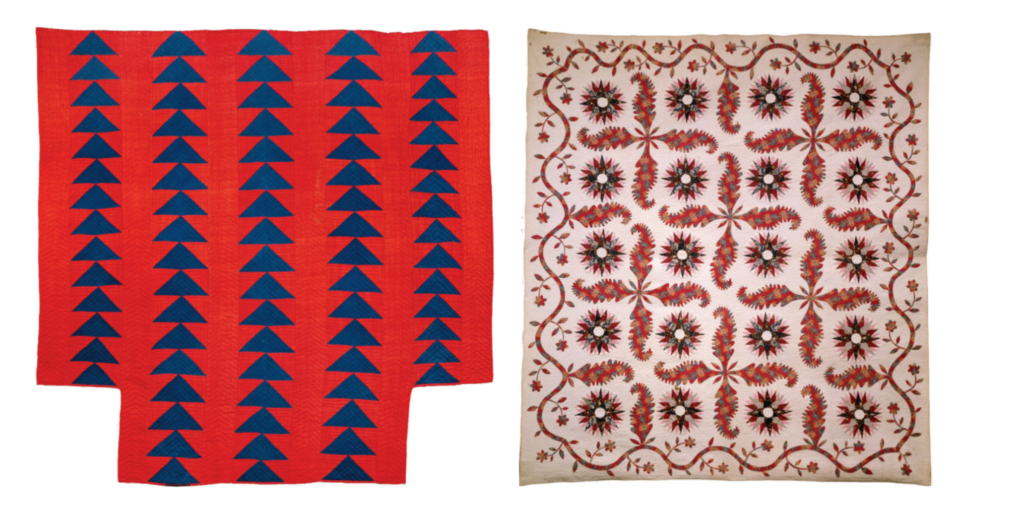
The museum purchased its first quilt, an early nineteenth-century Wild Goose Chase example, in 1918. To the contemporary eye, it is strikingly modern and radically minimalist for the time. For Dana, who wanted visitors to learn about craft processes and to understand the visual imagery of objects in their world, it may have been the abstract representation of flying geese and the stitching that echoes the geometric pattern that drew him in.
Following in the spirit of Dana’s early textile exhibitions, the 1965 Optical Quilts show reframed quilts as modern abstract art rather than household objects. Here, curator J. Stewart Johnson installed quilts as two-dimensional artworks in dialogue with abstract art of the 1960s. Among those on show was the Princess Feathers and Rising Sun
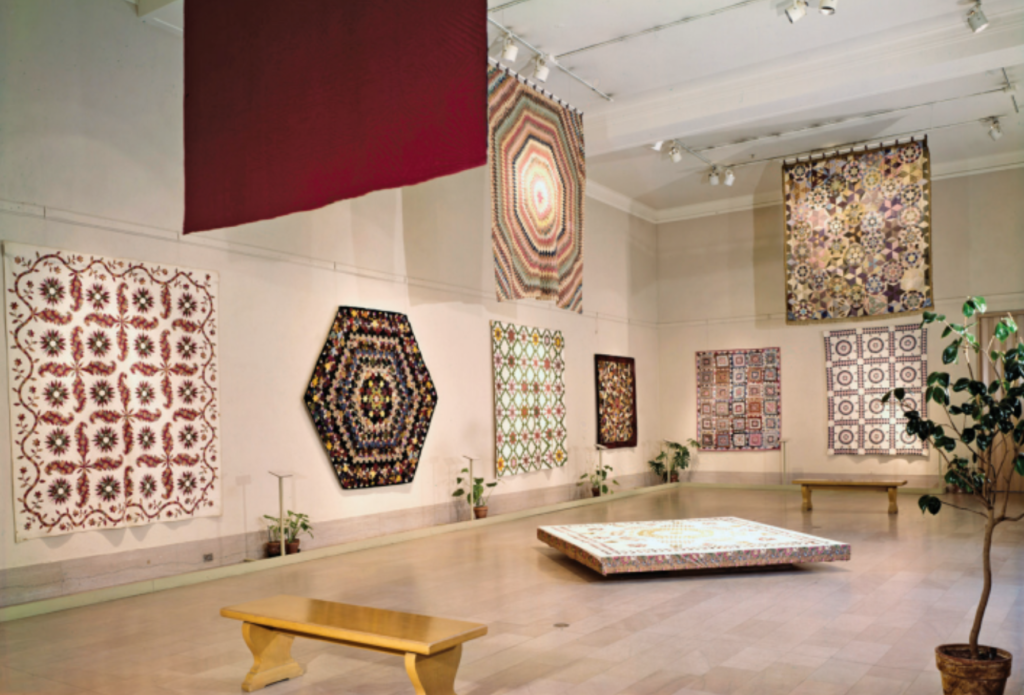
quilt worked by Catherine Ann Boylan, of Newark, and her sisters about 1835. The sun blocks, appliquéd feathers, scrolling vine, and stitching reveal the skills of the needleworkers working together to design and construct it.
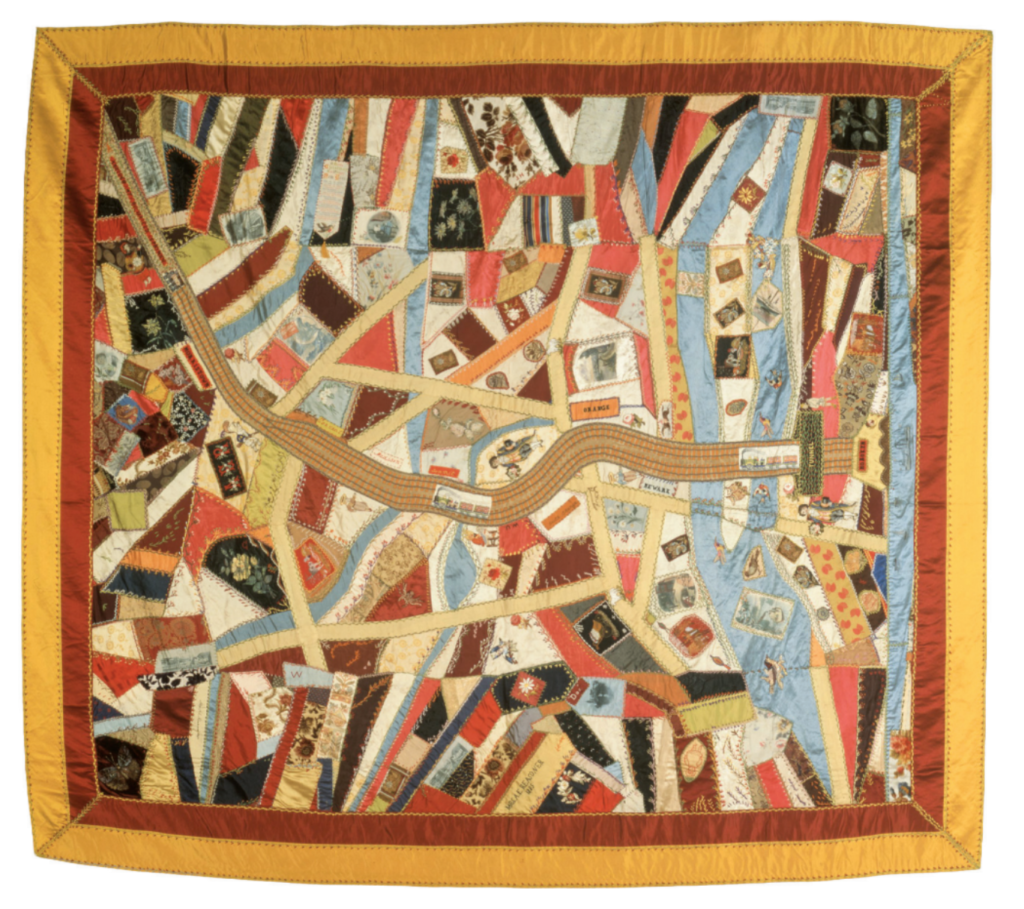
Crazy quilts, which became popular during the late nineteenth century, were also included in Optical Quilts. More decorative than functional, they existed as visual scrapbooks, incorporating personal stories through printed fabric souvenirs, pieces of treasured clothing, and embroidered mementos capturing the maker’s experiences and interests. The Railroad Crazy quilt by Mrs. Andrew E. Reasoner of Morristown, New Jersey, which was acquired later, memorializes her travel experiences as well as her husband’s role as superintendent of the Delaware, Lackawanna, and Western Railroad. An 1885 newspaper article describes her making the quilt while taking a water cure at the New American Hotel in Richfield Springs, New York. She depicted the railroad route from Newark to Richland Springs, using cord for the railroad track and ribbons for the ties and embroidering the station names.
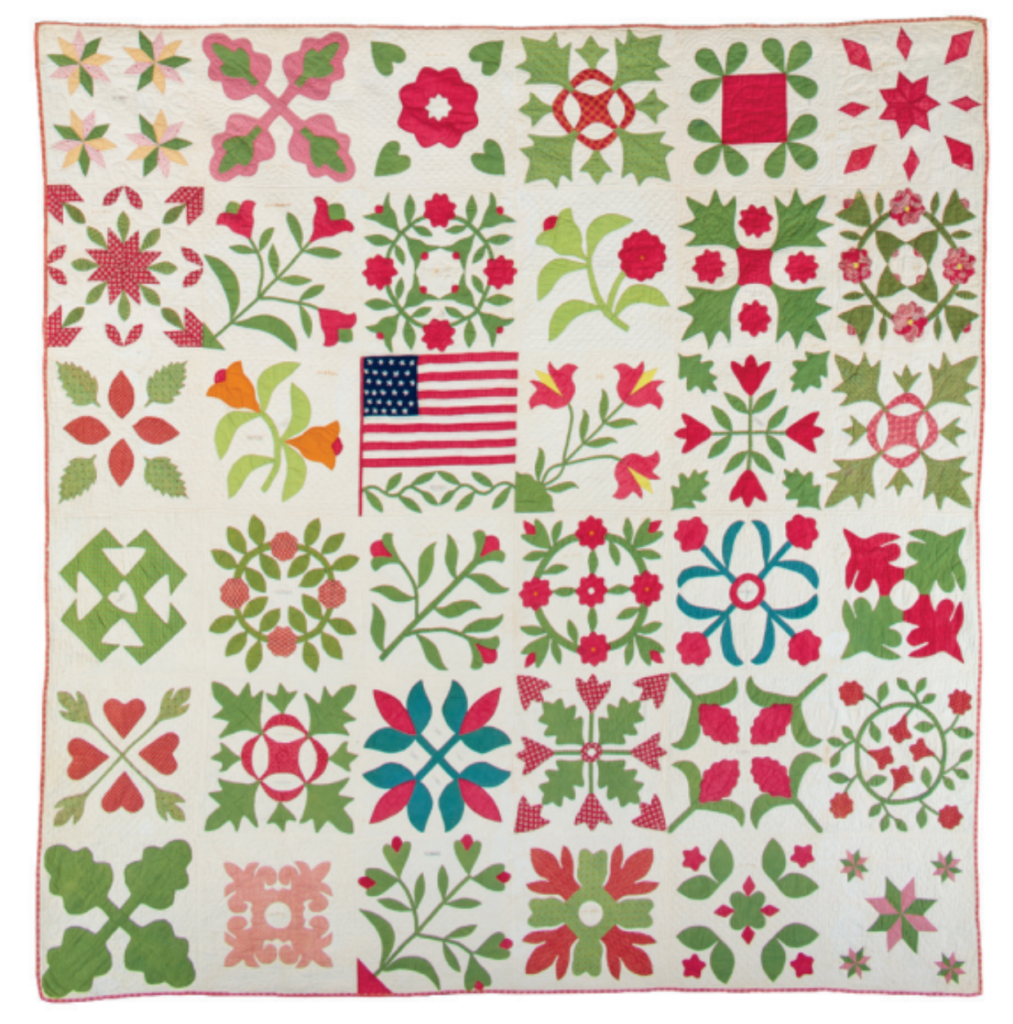
Nineteenth-century album quilts offer glimpses into community relationships and cultural attitudes. For example, Mary Nevius Potter, her family, and friends in Pottersville, New Jersey each created and signed a square for a quilt with an American flag block that is dated August 14,1864. In a highly contested presidential election year during the Civil War, tensions were high between anti-slavery abolitionists and those with personal and business ties to Southern enslavers. While we don’t know how the quilters felt about enslavement or abolition, the quilt signaled their allegiance to the Union.
This quilt is also a reminder that histories of enslaved labor in America are embedded in nineteenth-century American quilts made from cotton. That fiber was grown, picked, and processed by enslaved people before 1865 and by sharecroppers afterwards. Industrialization and factory labor are also entwined in these quilts as women, children, and men spun, wove, and printed the cotton in American, British, and European textile mills.
Purchase, Members’ Fund.
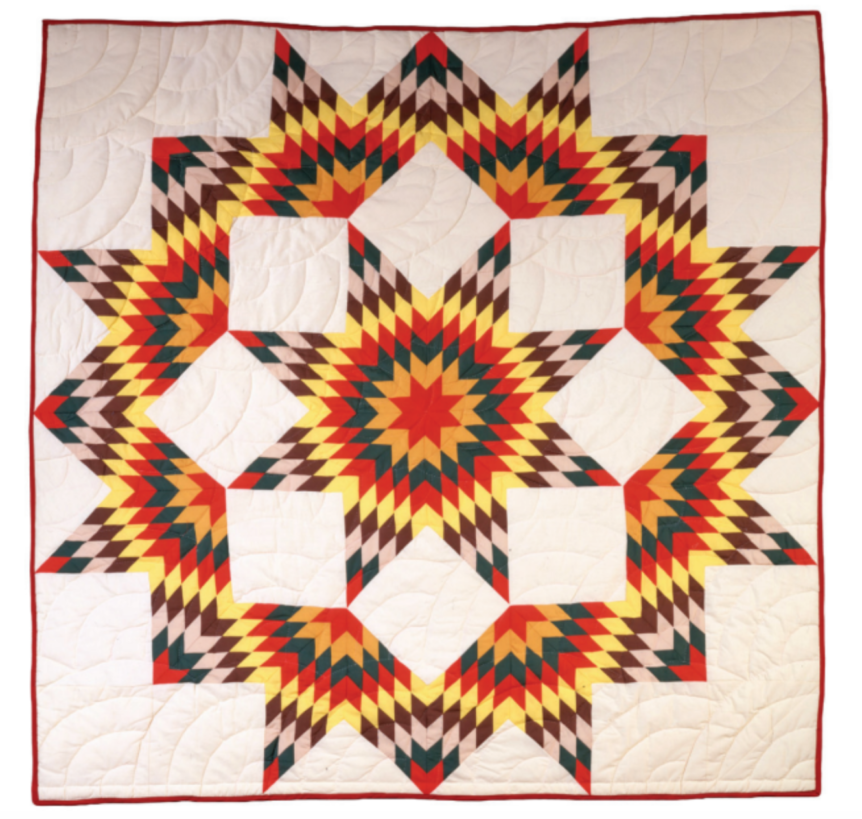
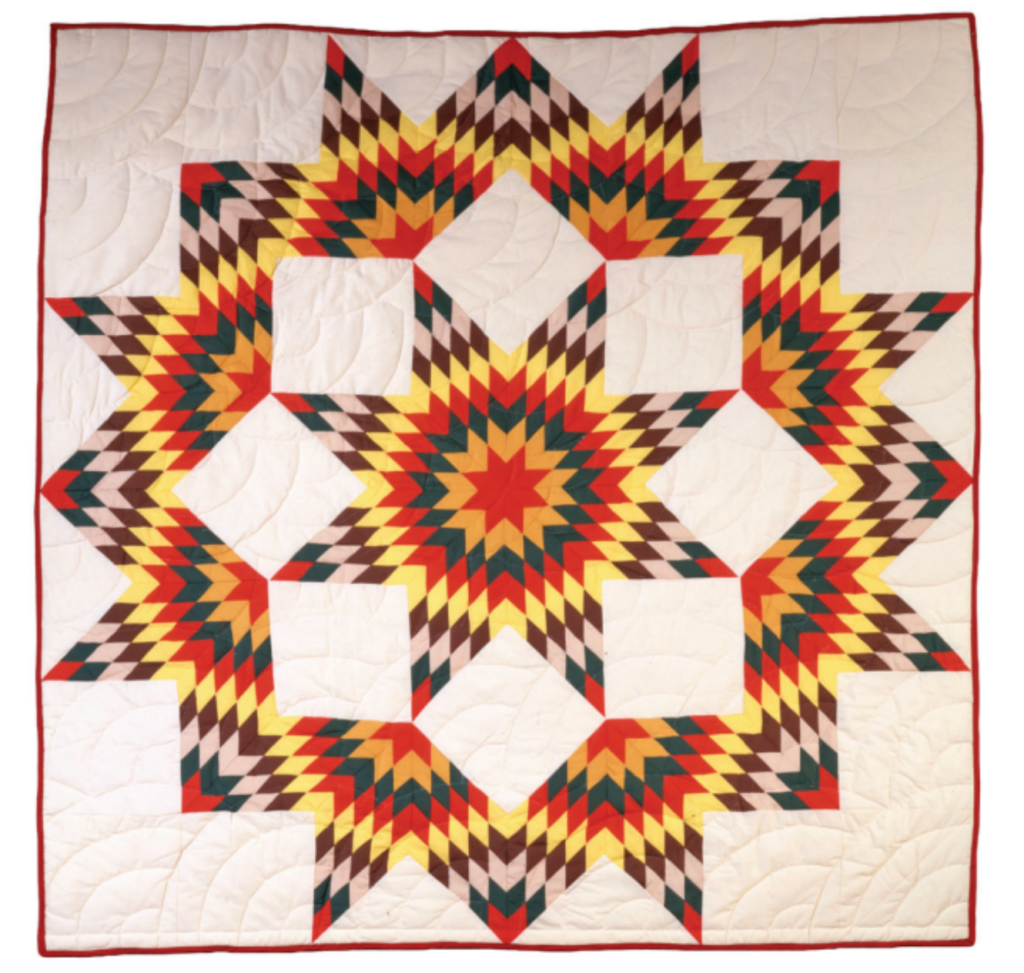
While the museum has acquired global household textiles since 1913, it was not until the 1980s that it began collecting quilts by Indigenous, Black, and other underrepresented artists. One Star quilt in the collection reflects the fact that while generations of Lakota and other Indigenous women resisted the forced assimilation of missionaries and Indian School teachers, they adapted Anglo star quilt patterns, especially the Star of Bethlehem, as the eight-pointed star has a powerful place in Lakota beliefs and culture and often appears in hide paintings, quillwork, and beadwork.
These quilters transformed Star quilts into a symbol of Lakota identity and used them as wearable ceremonial garments. Nellie Two Bulls of the Pine Ridge Indian Reservation in South Dakota, whom the museum commissioned to make the quilt in 1983, considered the visual impact of wearing a Star quilt in her design, in whiich the semicircular stitching on the white background stands out against the colorful diamond piecework of the star. Such quilts are present in Lakota daily life today, used as blankets, robes, or ceremonial objects.
Wool, 80 3/4 by 72 inches. Purchase, Members’ Fund.
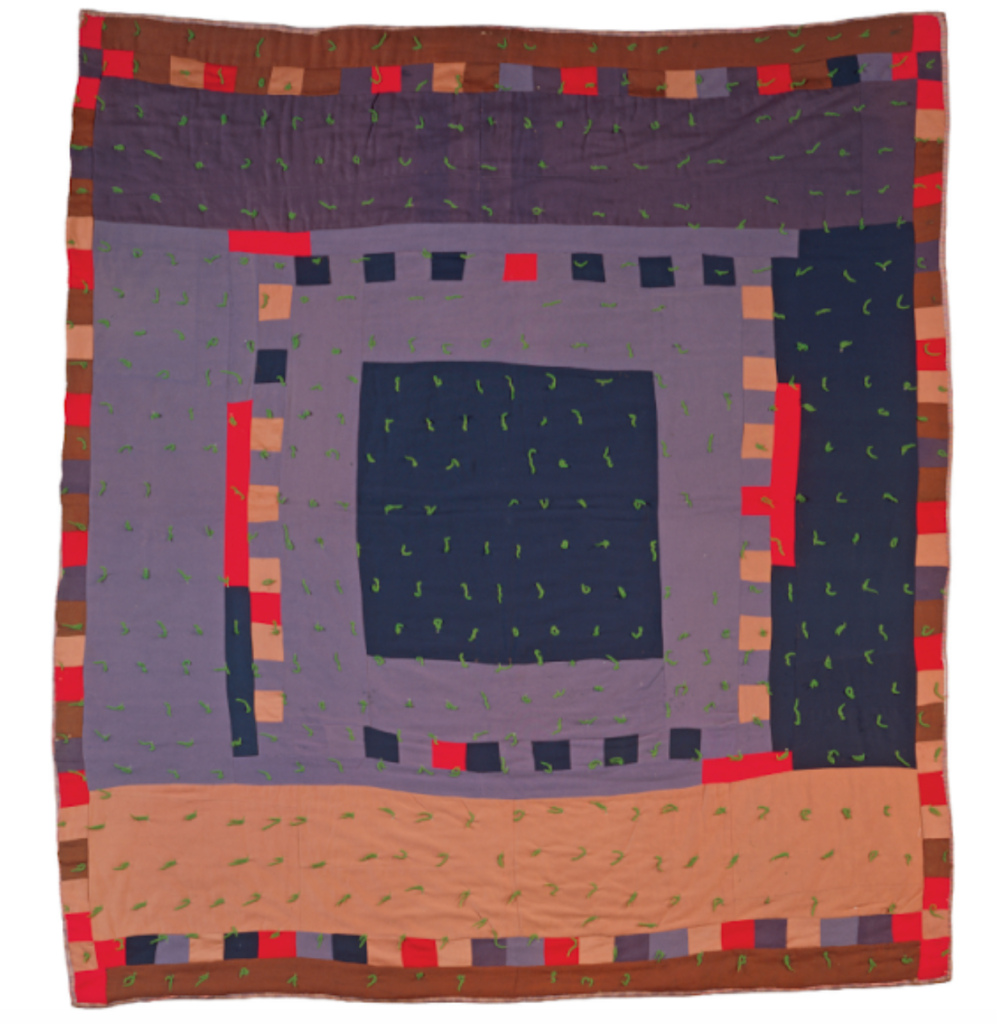
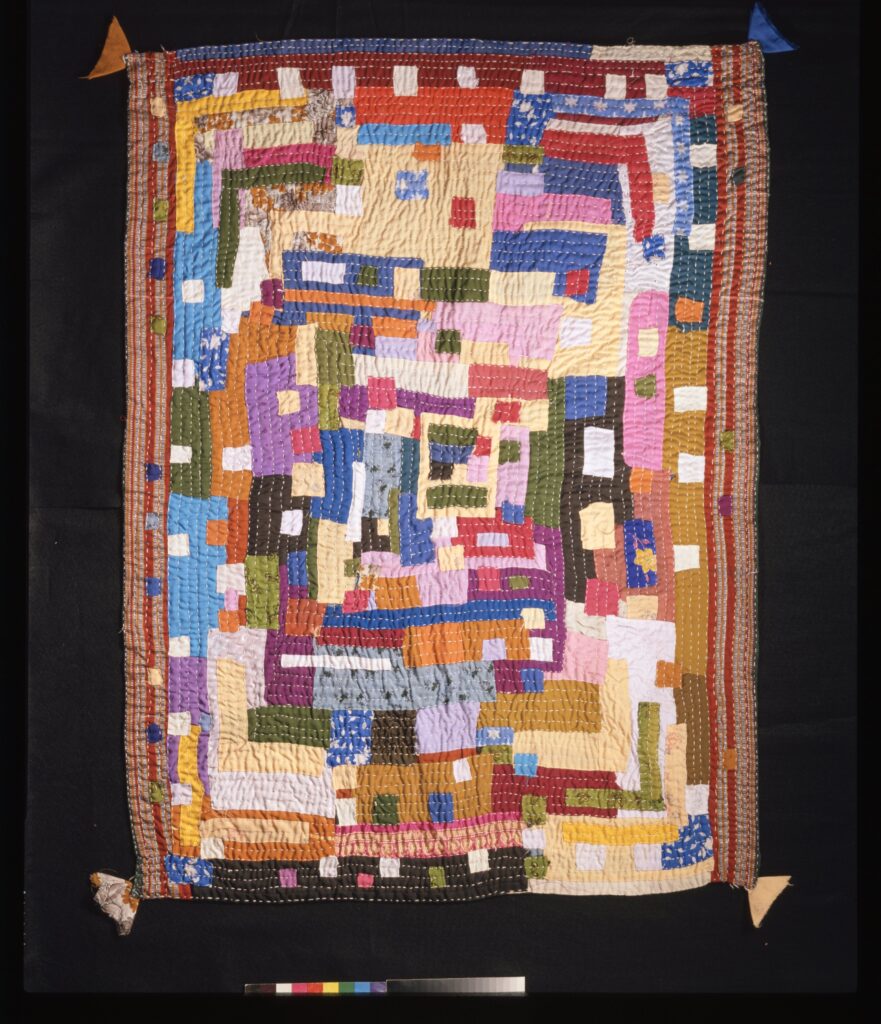
The first quilts by African Americans entered the collection in the 1990s. In 1998 the museum acquired four examples created with the improvisational approach to patterning made popular by twentieth-century quilters in Gee’s Bend, Alabama. The Gee’s Bend quilters and the unrecorded maker of Tied Center Medallion quilt used available fabric and added asymmetry and personal touches to established patterns.
The size and shape of the pieces in the Tied Center Medallion may have been a personal choice or simply the result of avoiding areas of wear in the clothing. Either way, the quilter laid out a geometric pattern with size and color variations, creating a staccato visual effect. The yarn ties hold the quilt layers together and offer a faster process than stitching, while adding visual energy to the quilt.
Purchase, Members’ Fund.
The similarities between the Tied Center Medallion quilt and a quilt for a baby or child by Bibijan Ibrahimsahib, a Siddi quilter from Kendalageri, India, are striking. The visual connections may reveal the preservation of African textile traditions over centuries, for the Siddi community is an African diasporic group that settled in South Asia beginning primarily in the fifteenth century. Today, Siddis remain distinct from Indian and Pakistani communities, which may have preserved their quilting heritage. Siddi women make quilts intuitively, starting at the edges and moving to the center. They determine the layout as they go, using repurposed clothing fabric and personal preference. For instance, Ibrahimsahib adjusted the scale of the fabric pieces to match the smaller quilt size.
Memory is important to current Siddi quilters who reuse their family’s clothing to preserve stories and celebrate their collective memory. Ibrahimsahib’s quilt is currently on view in the museum’s Arts of Global Asia interactive community lab. There, visitors can record their memories on fabric. Siddi quilters have been commissioned to create a quilt from those textile histories from the museum’s community, which is expected to be on view in the spring of 2027.
Purchase, W. Clark Symington Bequest Fund, Felix Fuld Bequest Fund, John J. O’Neill Bequest Fund, and Emma Fantone Endowment Fund.
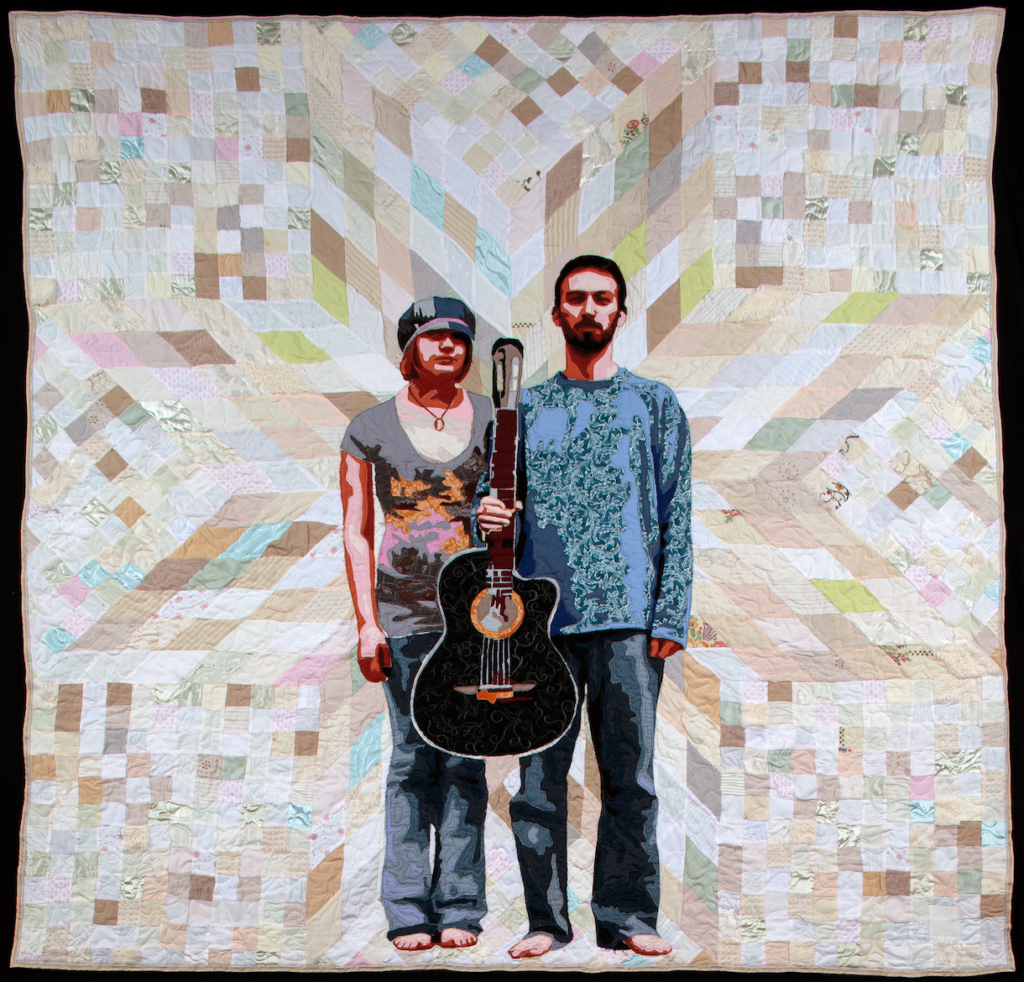
In addition to such collaborative projects, the museum collects one-of-kind quilts that reflect an artist’s individual vision, textile practices, and personal history. Luke Haynes, with his interest in quilting traditions and blurring boundaries between quilts as functional bedcoverings and artwork, is an example. His American Gothic quilt merges traditional and contemporary quilting processes and reaffirms quilting’s long-standing tradition of reusing materials, with a contemporary twist. Haynes often buys thrift store clothing and textiles by the bag. He selected pale and faded fabrics for the pieced star pattern that forms the background to the image of his friends, their formal frontal pose a tongue-in-cheek homage to Grant Wood’s iconic American Gothic (1930).
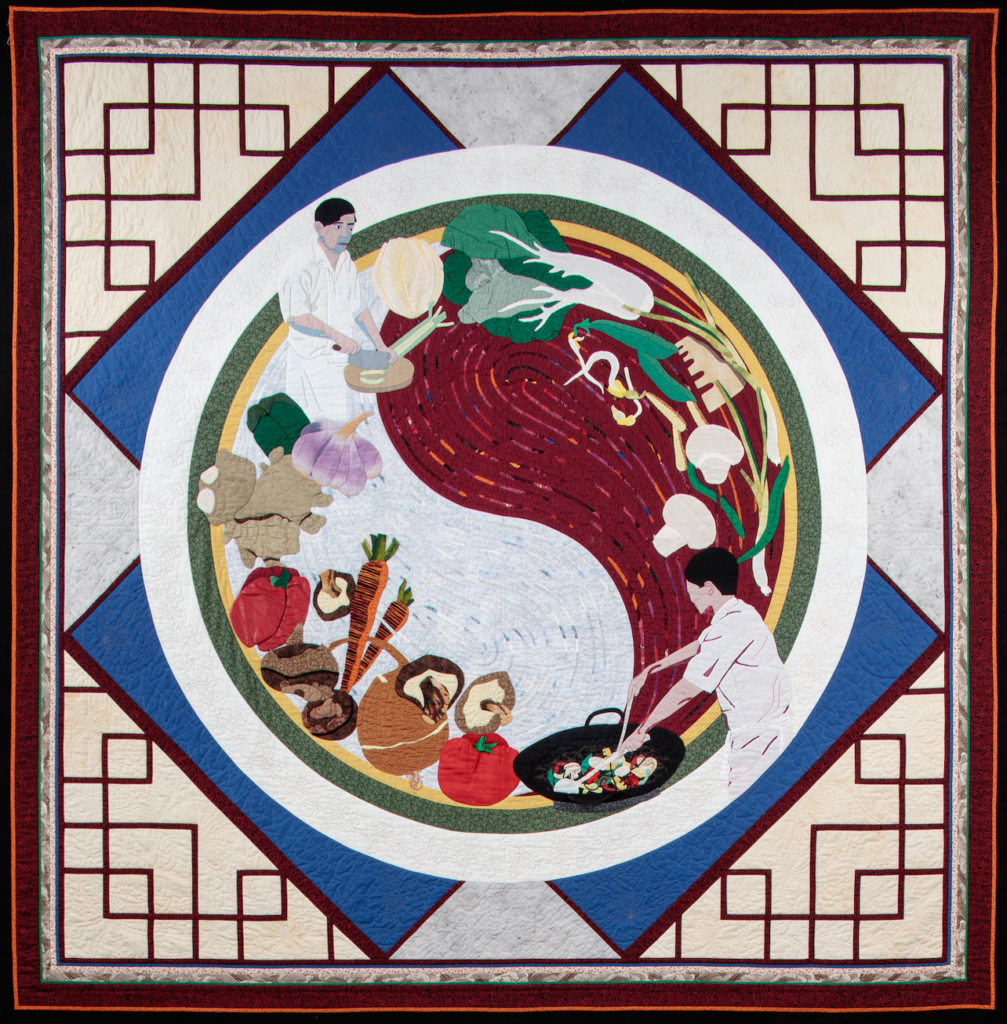
While many of these one-of-a-kind quilts are intended as both functional bedcoverings and wall-hung artwork, some are exclusively created as art. One, Phantoms in a Chinese Restaurant, showcases Debbie Lee of Springfield, New Jersey’s use of reverse appliqué and three-dimensional details as well as a subtle use of matte and reflective fabrics. In it she reclaims the story of stereotyping and racism she and her family endured as immigrants and celebrates their life in the United States.
Purchase, Robert Riggs Kerr Memorial Fund and Members’ Fund, ©1991 Debbie S. L. Lee.
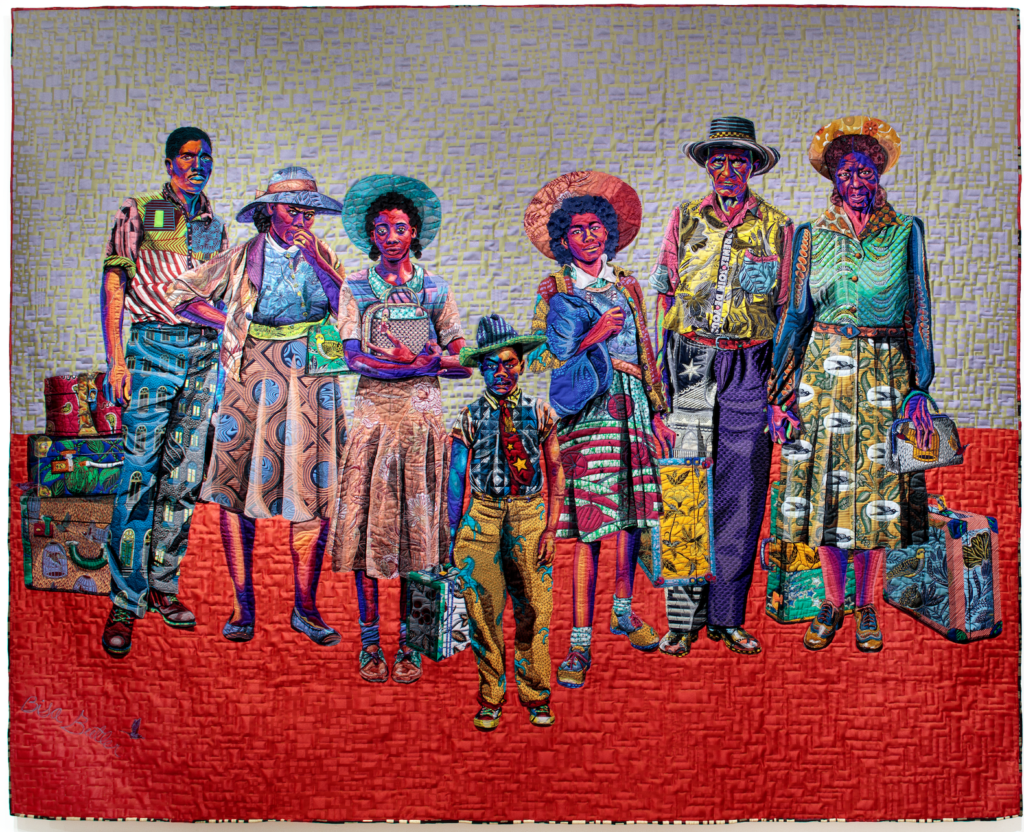
Bisa Butler’s The Warmth of Other Sons is one of the museum’s most recent quilt acquisitions. With nearly life-sized figures spanning multiple generations, it honors the Black Americans who uprooted their families and fled the American South as part of the Great Migration. It’s a work that resonates with local significance: Newark’s Black population grew exponentially during the Great Migration and Butler taught art in Newark’s public schools. She joins a revered group of Black and African diasporic artists and quiltmakers in the collection, including Faith Ringgold and Kimathi Mafafo.
Whether made to warm or to inspire, the Newark Museum of Art celebrates quilts for their multiple uses; the vivid stories embedded in their materials, design, and construction; the diverse people who made them; and their power to reflect artworks of their place and time. Attitudes to collecting and exhibiting quilts have changed over the past 117 years, but many of the founding approaches established by John Cotton Dana and his team still shine here and at museums around the world.
AMY SIMON HOPWOOD is associate curator of decorative arts at the Newark Museum of Art.


