Historic Bethlehem provides a rare peek inside a vault of antique dollhouses.
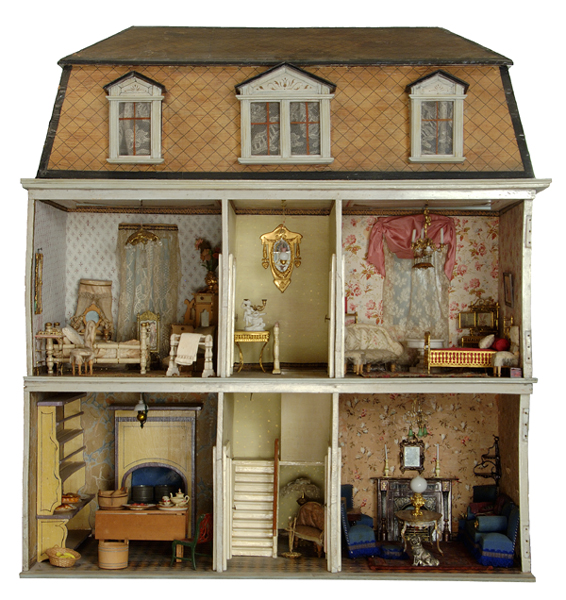
The objects illustrated are in the Kemerer Museum of Decorative Arts, Historic Bethlehem
Museums & Sites, Pennsylvania.
Historic Bethlehem Museums & Sites (HBMS) in charming Bethlehem, Pennsylvania, offers rare opportunities for antiques lovers to view the dollhouse collection in its Kemerer Museum of Decorative Arts, one of the largest antique dollhouse collections in the country. Antique dollhouses occupy an important space between decorative art, social history, and architectural record. Beyond their charm, they preserve intimate details of domestic life—capturing period interiors, furnishings, and cultural ideals in miniature form. The extensive col-lection stored at HBMS includes examples from each decade between 1830 and 1930. The oldest piece is an American Empire dollhouse from 1830.
Visitors can get an idea of what it was like to live in a nineteenth-century house when they see dollhouses by renowned German makers like Moritz Gottschalk and Christian Hacker. A remarkable example is the Hacker French Villa from the 1880s, a large-scale, three-story wood house with a working doorbell and six carefully appointed rooms. Each room features the original glass windows, delicatedraperies, and incredibly detailed late Victorian furniture. You could spend an hour marveling at the intricacies of this single house and its miniatures.
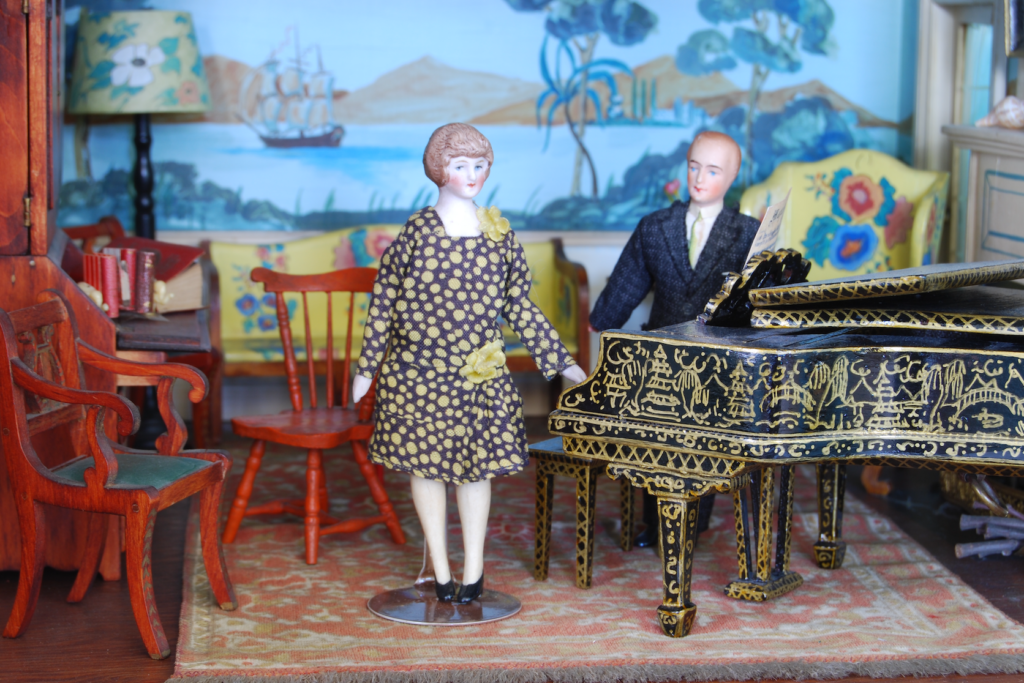
The Hacker house is one of forty-four dollhouses and miniature shops, stores, verandas, and stables that collector Elizabeth Johnston Prime donated to the Kemerer Museum. She filled each building with pieces from her collection of more than six thousand meticulously crafted, period-appropriate miniatures, including furniture, paintings, animals, rugs, dishes, and chandeliers.
The collector, whose grandfather Archibald Johnston was vice president of Bethlehem Steel Corp., was born in 1927 but didn’t start collecting until her early forties. Her friends, who knew her as “Betts,” say she enjoyed inviting them over to arrange the miniatures in the houses. Betts died in 2006, just a week before the opening of an exhibition featuring a selection of her dollhouses. In the notes she had prepared for her opening speech, she wrote, “The dollhouses, furniture, and dolls I have acquired have survived for generations because they are loved. I feel this tug from the generations: From the talented hands of the artisans who have created the pieces, to the excited hands of the children opening the packages containing the pieces. I am the next set of hands to touch, care for, and love these pieces.” To be entrusted as the next set of hands to touch, care for, and love the pieces that reflect a century of American decorative arts is a huge responsibility.
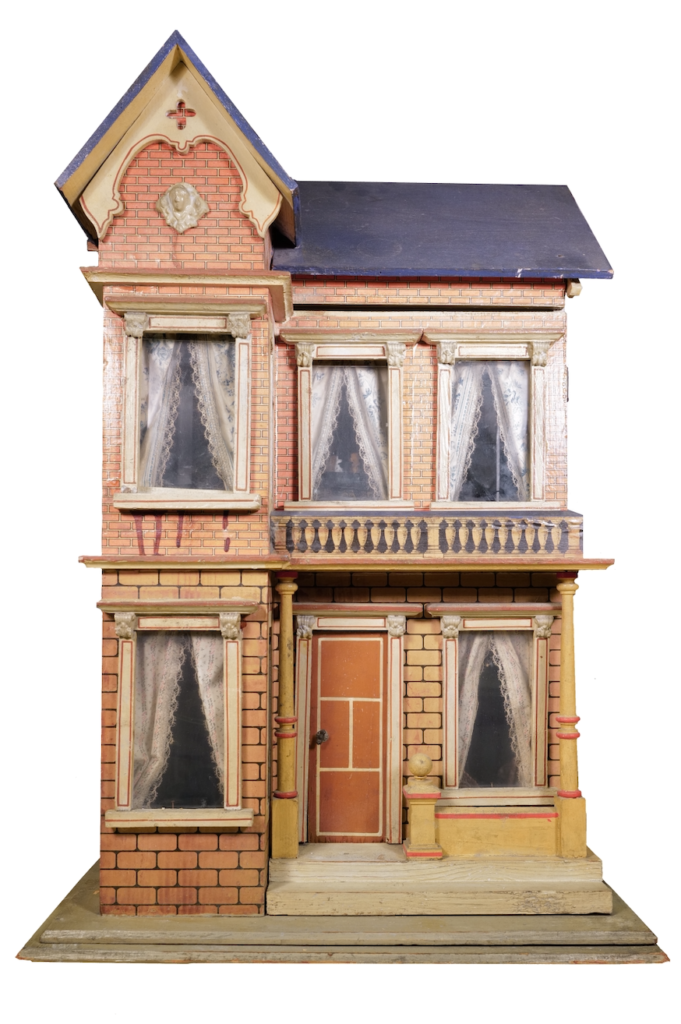
To honor that responsibility, HBMS built a climate-controlled vault, financed in part by a legacy gift from Johnston Prime. The $2.6 million HBMS Collections Resource Center opened in 2013 to store the dollhouses and other light-, temperature-, and
humidity-sensitive archival items. Most museums do not allow visitors inside collection storage facilities, but to share this priceless collection, HBMS offers a few limited-capacity tours inside the vault each year.
When you walk through the door, it’s like stepping through a portal to the past. Visitors say they get a sense of childlike wonderment as they examine the fine details of each piece.


