
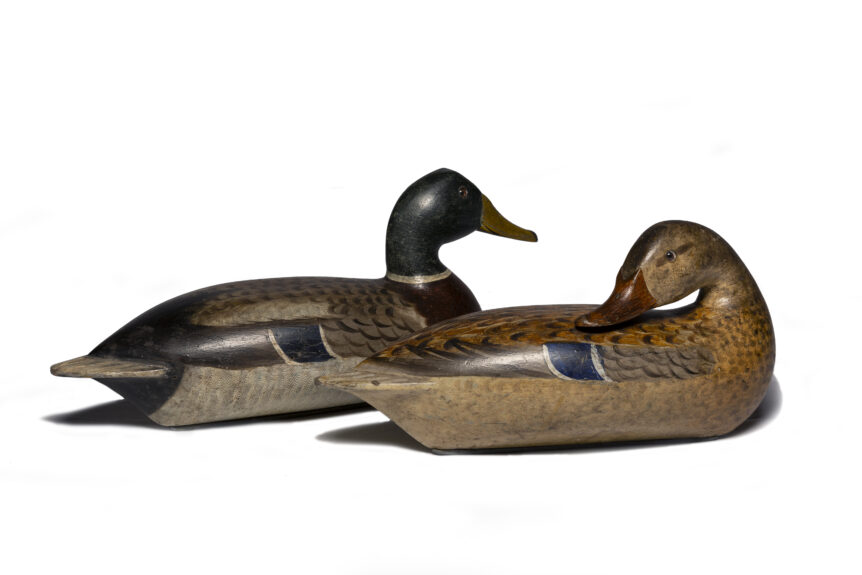
Through remarkable collections and exhibitions, the Center for American Decoys reveals the artistry, innovation, and cultural significance behind one of Illinois’s most distinctive and storied art forms.
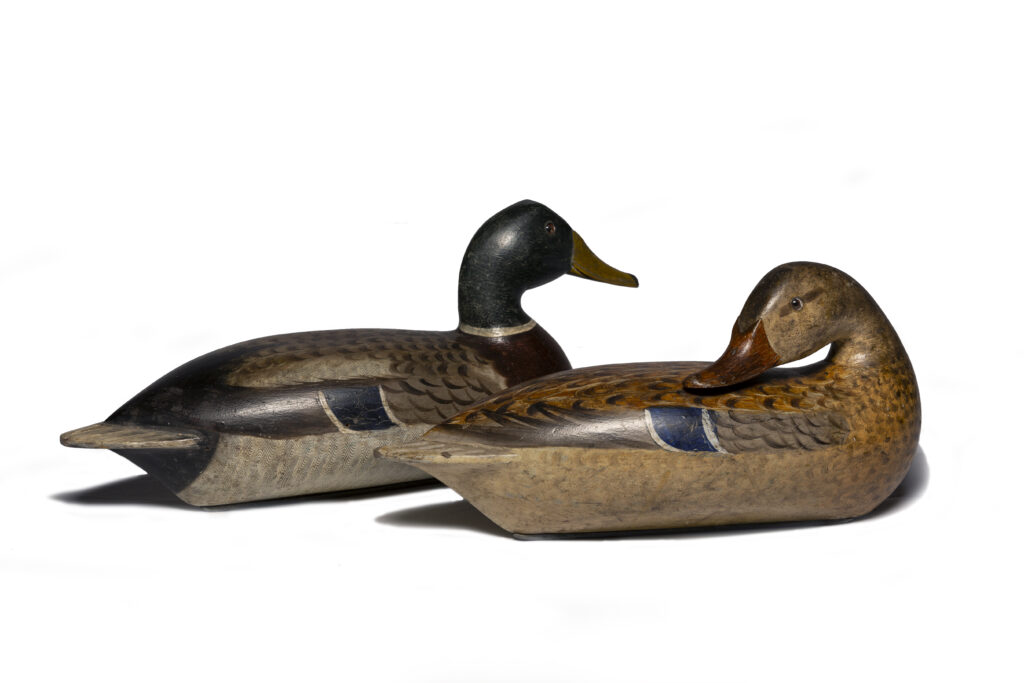
Collection of Thomas K. Figge.
Waterfowl decoys carry rich stories about the people who crafted them and the landscapes from which they emerged. Over time, decoys have taken on remarkable carved forms and painted surfaces that command attention and invite curiosity. Today, decoys hold a significant place in the study of American folk art, and the Center for American Decoys, located at the Peoria Riverfront Museum, is the leading institution dedicated to their study. Decoys are not merely hunting tools; they offer insight into the intersection of functional design, regional identity, and broader shifts in visual and material culture.
The idea for the Center for American Decoys emerged in 2018 following the Peoria Riverfront Museum’s landmark exhibition American Decoy: The Invention. Widely regarded as the largest and most comprehensive exhibition of its kind, it featured more than two hundred decoys from leading collections, including those of the Shelburne Museum, Thomas K. Figge, Ted and Judy Harmon, Joe and Donna Tonelli, Randy Root, and Mike Cole. The exhibition’s overwhelmingly positive reception led the museum to dedicate gallery space and establish a permanent center focused on preserving the traditions of American waterfowl heritage through the art of the decoy.
First conceived by Native Americans more than two thousand years ago, decoys evolved from practical hunting tools into a uniquely American art form, now highly valued by collectors and museums across the country. Since the end of the last Ice Age, roughly ten-to-twelve thousand years ago, the Illinois River Valley has served as one of North America’s most important inland corridors for waterfowl migration. Stretching between the Great Lakes and the Gulf Coast, the valley’s network of wetlands, backwaters, and floodplains provides critical resting and feeding grounds for millions of ducks and geese each year.
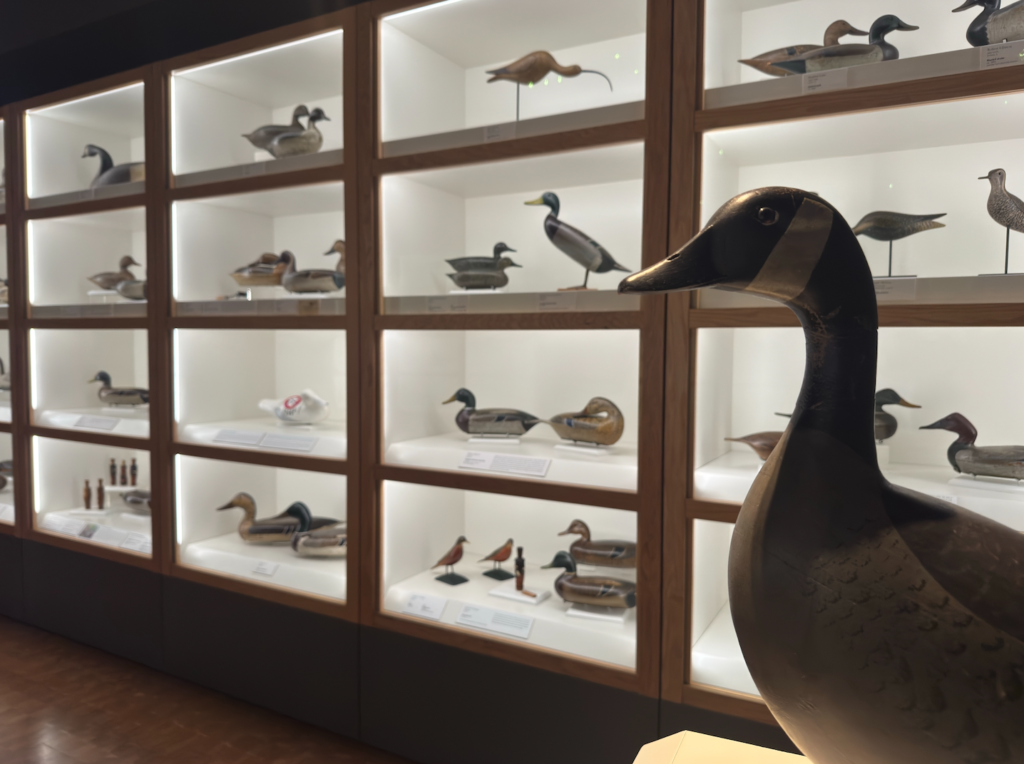
Illinois River Valley featured in the current Masterworks exhibition at the Center for American Decoys.
Although the valley was home to hundreds of carvers, the five most celebrated Illinois carvers are Robert and Catherine Elliston of Bureau County, Charles Walker of Princeton, Charles Schoenheider Sr. of Peoria, Bert Graves of Peoria, and Charles and Edna Perdew of Henry. The Ellistons established a uniquely Illinois tradition of husband-and-wife collaboration: Robert carved and Catherine painted. Beginning in the 1880s, their work helped define the form and style of decoys throughout the region. Catherine Elliston’s influence extended even further—she later painted for Bert Graves and taught Edna Perdew, making Catherine one of the most significant figures in Illinois decoy history.
Today, the center proudly showcases more than one hundred exceptional decoys, including selections from Tom Figge’s Masterworks of the Illinois River Valley collection, along with fifty outstanding Atlantic Flyway examples on loan from the American Folk Art Museum. Through a historic partnership supported by the Art Bridges Foundation and spearheaded by Jason Busch, the Becky and Bob Alexander Director & CEO of the American Folk Art Museum, visitors can experience works by renowned East Coast carvers such as A. Elmer Crowell, Gus Wilson, Charles Osgood, and the Ward Brothers. These objects highlight the rich regional diversity of decoy design and expand the narrative beyond the Mississippi Flyway.
In 2024 the Peoria Riverfront Museum further enhanced the center with the installation of fourteen new display cases handcrafted by the Peoria Tribe of Indians of Oklahoma. This addition not only honors the Indigenous origins of decoy making but also represents a meaningful step in strengthening the modern relationship between the City of Peoria and the tribe whose name it bears.
As the Center for American Decoys continues to grow into a premier national destination celebrating the art of the decoy, we are committed to showcasing exceptional collections and expanding a dynamic slate of programs that educate and engage the tens of thousands of students and visitors who connect with the museum each year—both in person and through digital platforms.
In 2027 the Peoria Riverfront Museum will present The Canada Goose: Etched in Time, Carved in Wood, exploring the history, hunting traditions, and conservation of Canada geese through the art of decoy carving. Drawn from the renowned Peterson Collection, the exhibition will feature more than 125 goose decoys, offering an unparalleled look at the enduring cultural and ecological story of the Canada goose.
For more information on the Peoria Riverfront Museum and the Center for American Decoys, visit peoriariverfrontmuseum.org


