
A new exhibition places Long Island at the center of a global web of furniture-making, trade, and cultural exchange.
The objects illustrated are in the collection of Preservation Long Island, Cold Spring Harbor, New York.
On the eve of the Bicentennial in 1976, the Society for the Preservation of Long Island Antiquities (now Preservation Long Island) posed a daunting question to its then curator, Dean Failey: what forces shaped early Long Island furniture? Much of the surviving pieces he recovered—ranging from makeshift worktables to masterfully crafted high chests—clearly bore diverse cultural and social influences. Yet, many of these objects assembled for the 1976 exhibition Long Island Is My Nation: The Decorative Arts and Craftsmen, 1640–1830, remained shrouded in mystery.
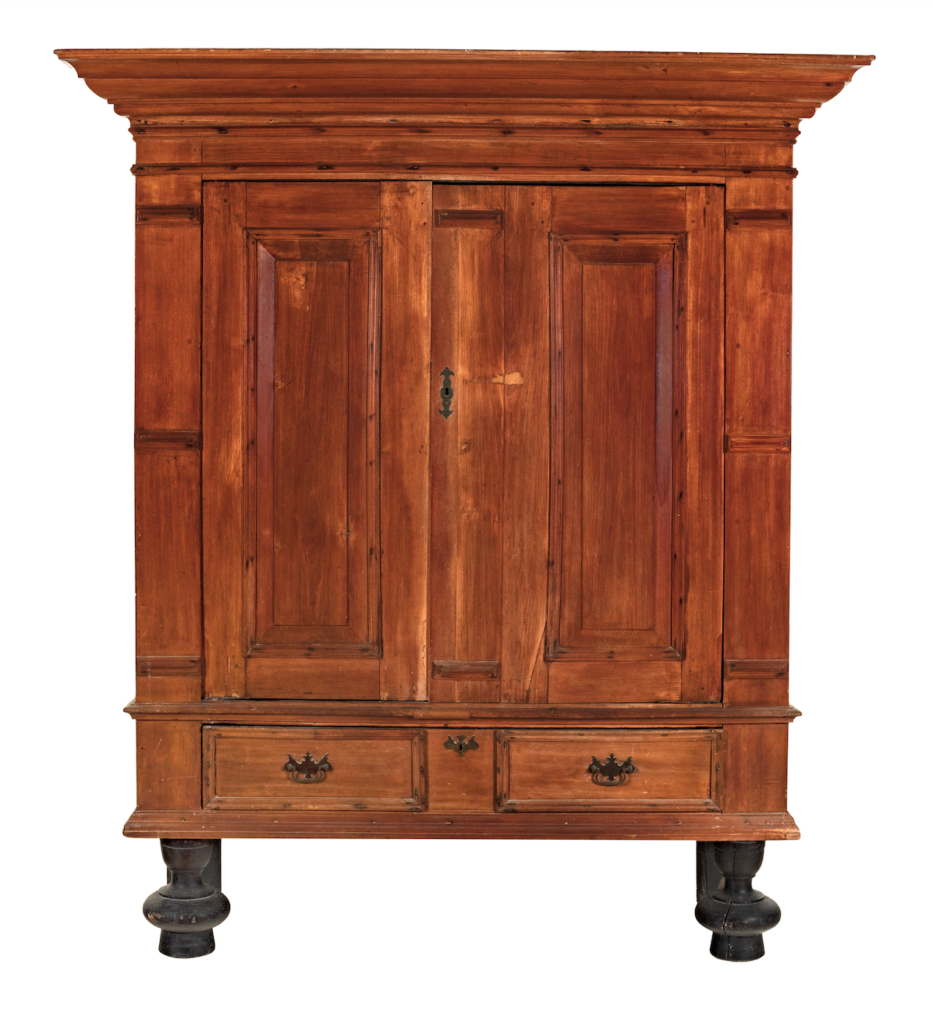
Wood and Water: Furniture on Long Island, 1660–1860, on view at Preservation Long Island’s exhibition gallery in Cold Spring Harbor through November 22, reconciles new frameworks with the investigative work Failey continued until his death in 2015. What emerges is a clear picture: all aspects of Long Island life were shaped by access to water, whether the ocean or the Sound, its furniture reflecting networks of exchange both regional and global in scale. The show spans two centuries—from the English conquest of New Netherland to the eve of the American Civil War. Forty objects, more than half of which have never been exhibited, interpret a cross-section of Long Island society during these formative centuries in American history, allowing for a furniture-led reflection on our nation’s past.
Storytelling drives the exhibition. Coupled with fortuitous discoveries, intensive research into Preservation Long Island’s own holdings unlocks previously unknown makers and users. A bench upholstered with shreds of nineteenth-century cotton textiles and oilcloth is now associated with Black laborers at a prominent nursery business. Fieldwork brought to light a traveling trunk belonging to Louisiana sugar planters who summered on Long Island’s South Shore in the 1850s. A massive desk-and-bookcase—narrowly rescued from a dumpster—contains a label identifying it as the work of ex-Quaker Asa Baker (1773–1860).
Long Island accommodated some of the nation’s earliest Quaker meetings, yet compared with the rest of the Mid-Atlantic, Quaker furniture from Long Island is virtually unknown. Admirers of Newport’s Townsend furniture-making dynasty will be surprised at the family’s Long Island roots explored in the show. New research also clarifies a robust Dutch-English Quaker cabinetmaking school in the Townsends’ native Oyster Bay.
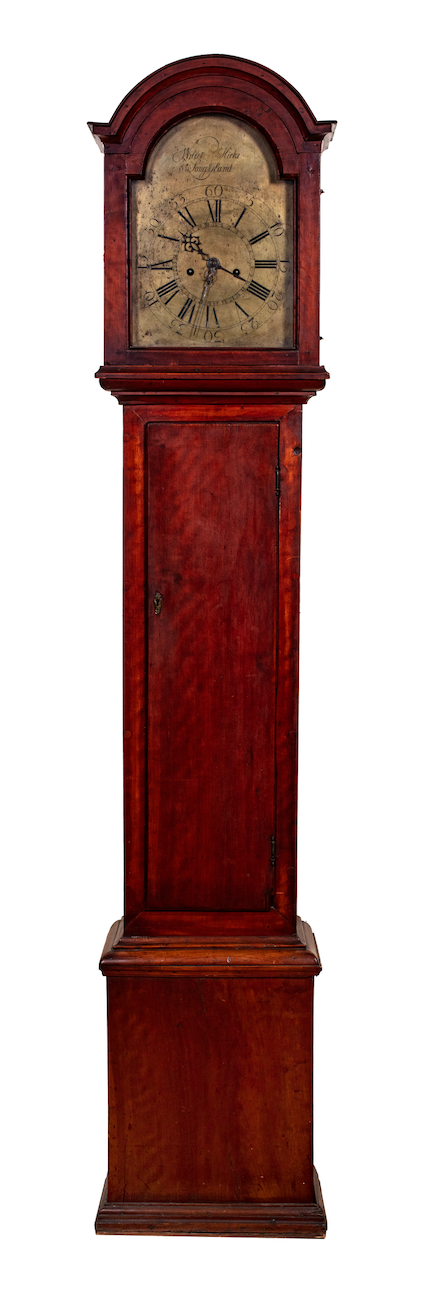
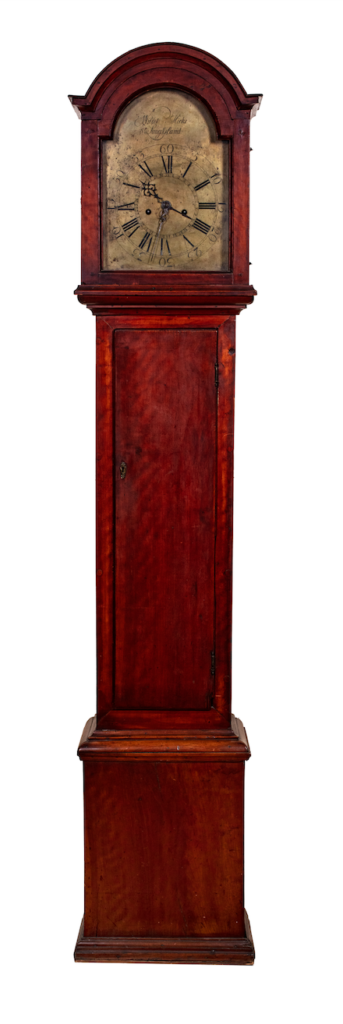
A highlight of the exhibition is a recent addition to Preservation Long Island’s collection: a tall clock signed by prominent Quaker Willet Hicks. A clockmaker as well as preacher, merchant, and abolitionist, Hicks emerged from a significant school of eighteenth-century, Long Island-born clockmakers working in Manhattan whose lives intersected through kinship, religion, and business ties—a craft network only now beginning to come into focus.
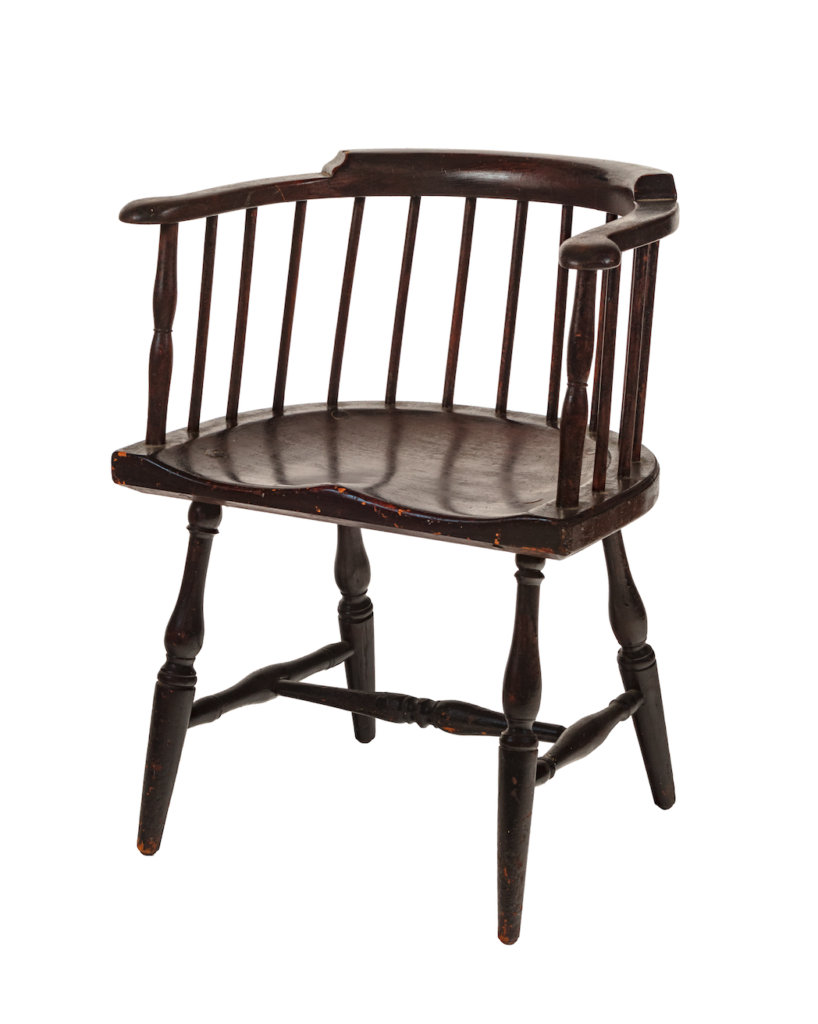
On the Hamptons end of the Island, an array of forms speak to ongoing relationships between the descendants of enslaved Africans, Indigenous nations, and European colonists. Furniture used on the Island’s plantations—some of it fashioned from Honduran mahogany—join together experiences of the African diaspora. The designs of a Shinnecock or Montaukett weaver are preserved on a rush-bottomed side chair, probably from the Dominy family’s East Hampton workshop.
Wood and Water responds to these two constants in Long Island life. In celebration of Long Island Is My Nation’s fiftieth anniversary, rediscover the furniture of an ambitious and cosmopolitan people, ever eager to inscribe their furniture “LI,” before “NY” or even “USA.”
A catalogue featuring new in-depth scholarship accompanies the show.


