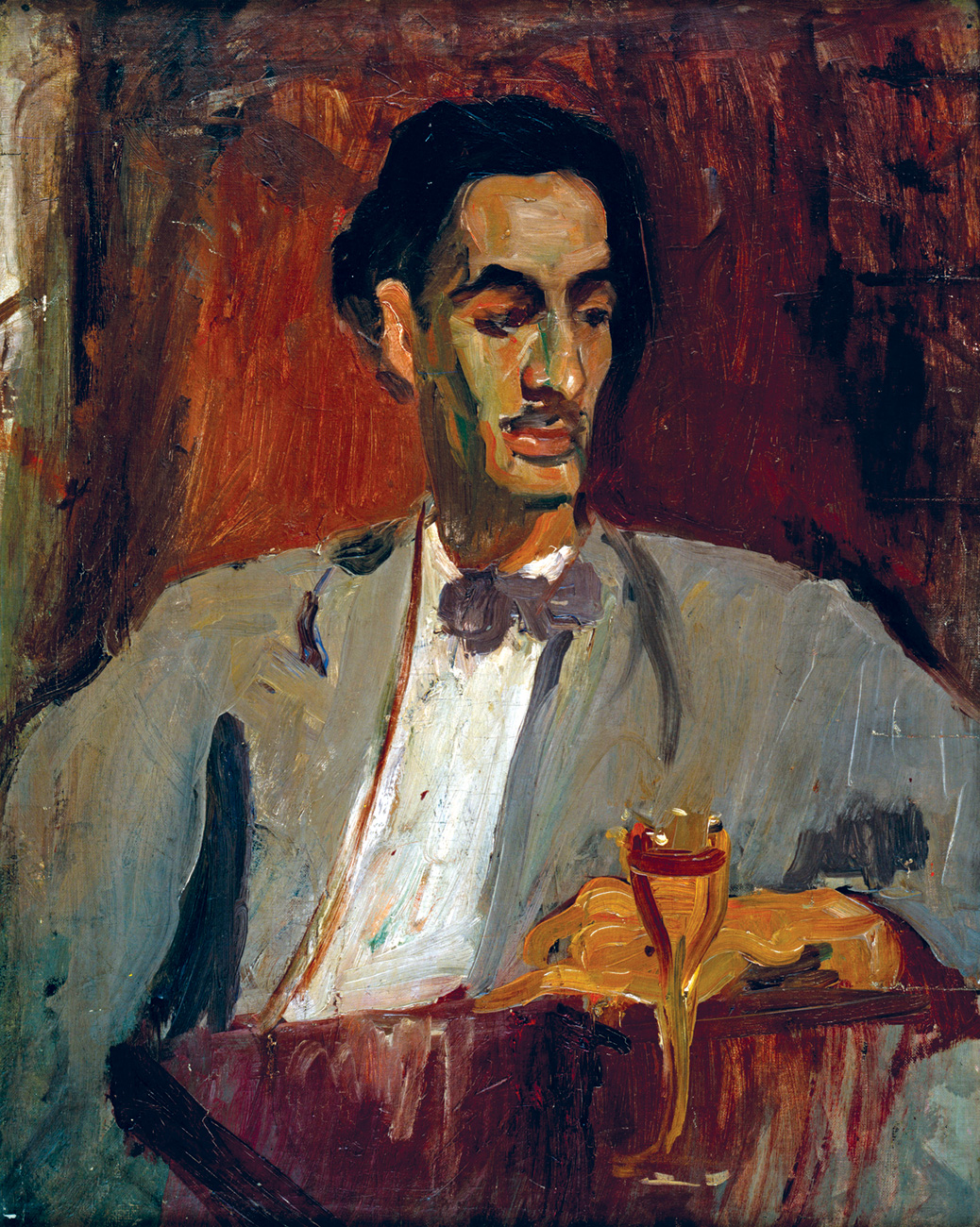
from The Magazine ANTIQUES, Summer 2010 | Fig. 2. Carlos Enríquez by Alice Neel (1900–1984), 1926. Oil on canvas, 30 ¼ by 24 inches. Estate ofAlice Neel; photograph by Malcolm Varon © Estate of Alice Neel. Fig. 3. Alice Neel by Carlos Enríquez (1900–1957), 1927. Inscribed “La Habana/1927” at lower right. Oil on canvas, 23 ⅝ by 19 ⅝ inches. …
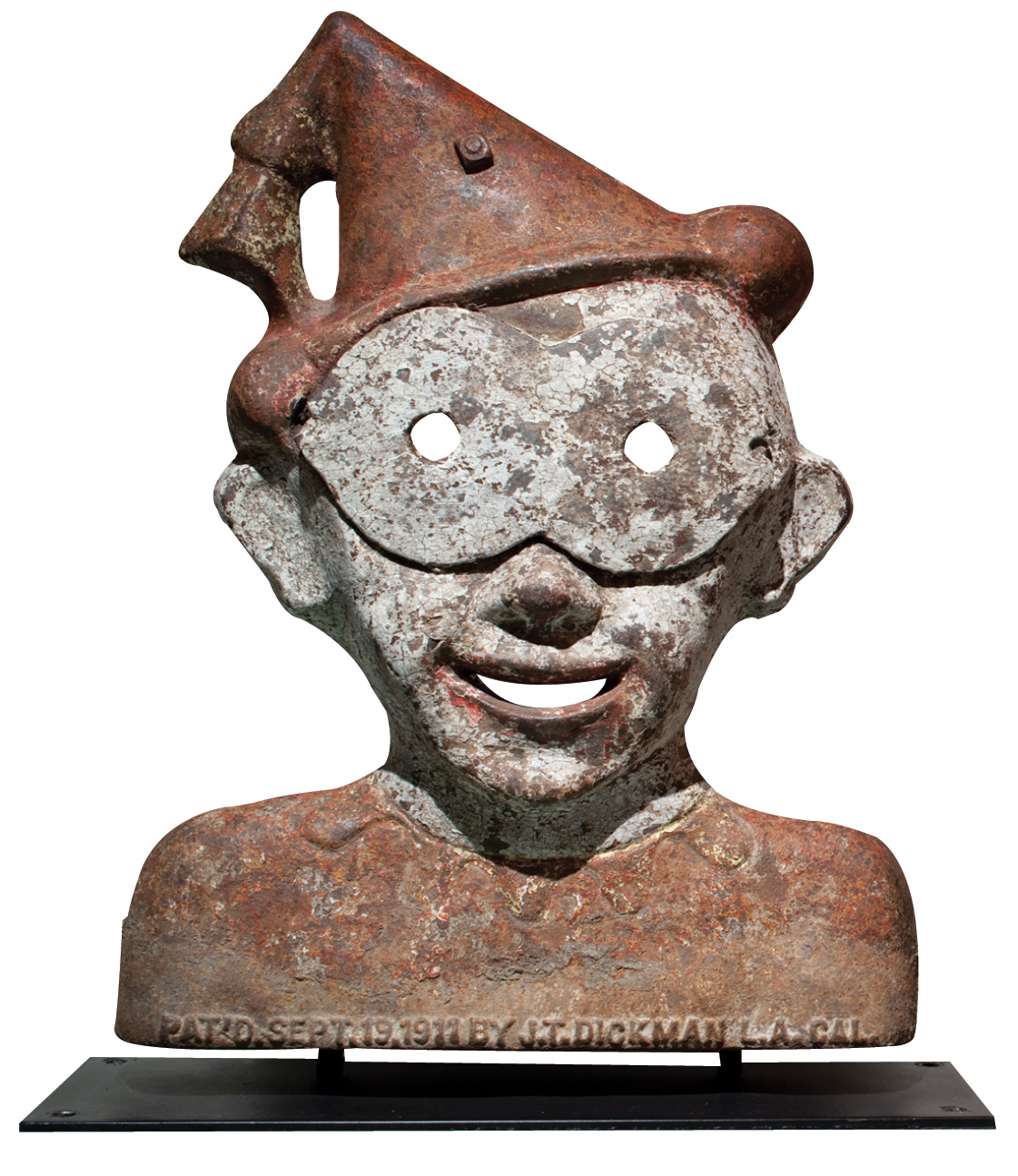
Los Angeles Folk
from The Magazine ANTIQUES, Summer 2010 | Fig. 1. Frame decorated with the ceremonial symbols of the International Order of Odd Fellows (IOOF), American, c. 1870. Wood, paint, and gilding; height 27 ¾, width 22 ½ inches. Fig. 2. Hand-carved and painted heart-in-hand IOOF staffs, American, 1880–1930. Fig. 3. Mounted above a grain-painted Pennsylvania stand of c. 1830 is a …
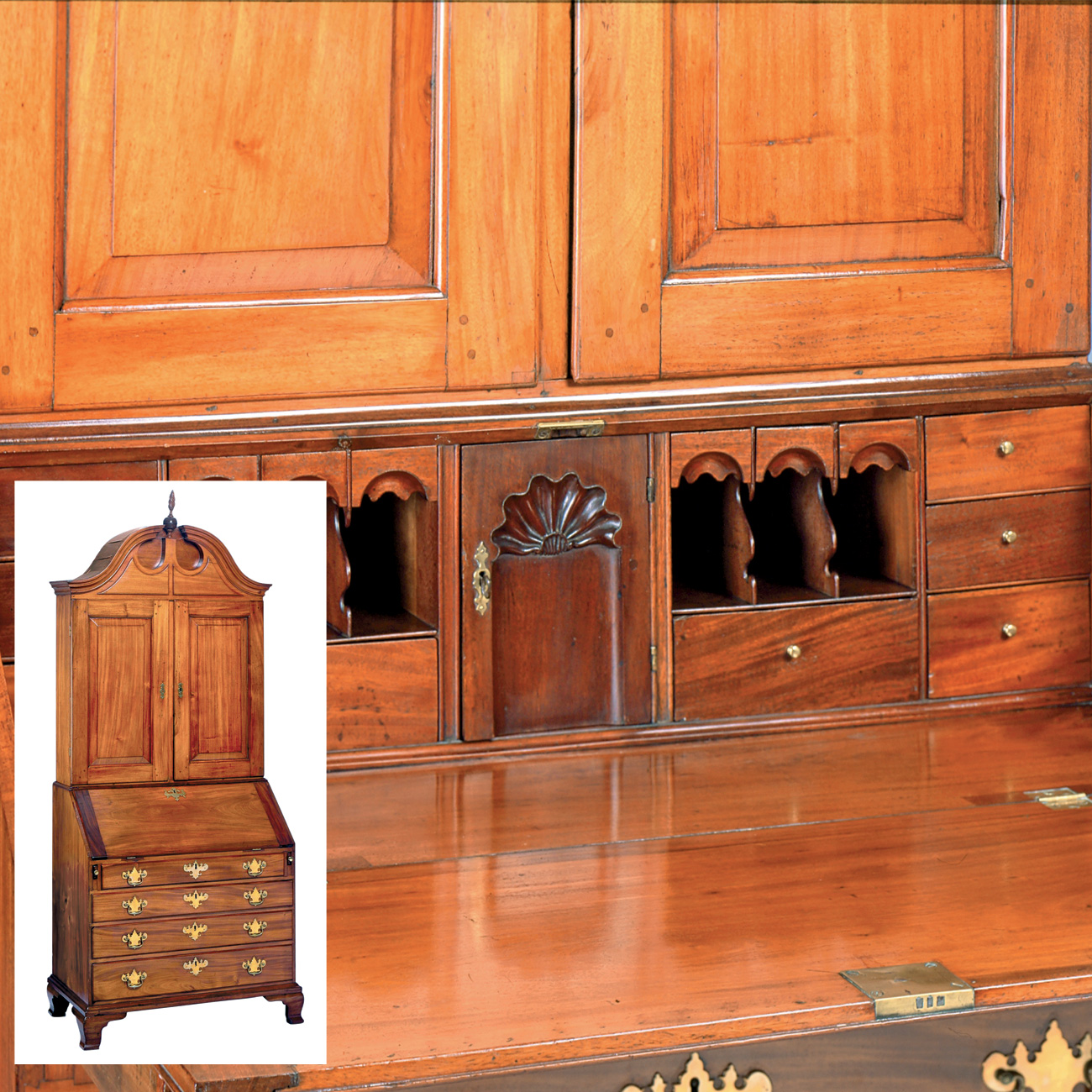
Thomas Spencer
Figs. 1,1a. Desk-and-bookcase probably by Thomas Spencer (1752–1840), East Greenwich, Rhode Island, 1775. Mahogany, chestnut, yellow poplar, and white pine; height 91 ½, width 41 ¾, depth 19 ¾ inches. High Museum of Art, Atlanta, gift in loving memory of Nancy Fraser Parker by her husband William A. Parker Jr., and her children William A. Parker III, Isobel P. Mills, …
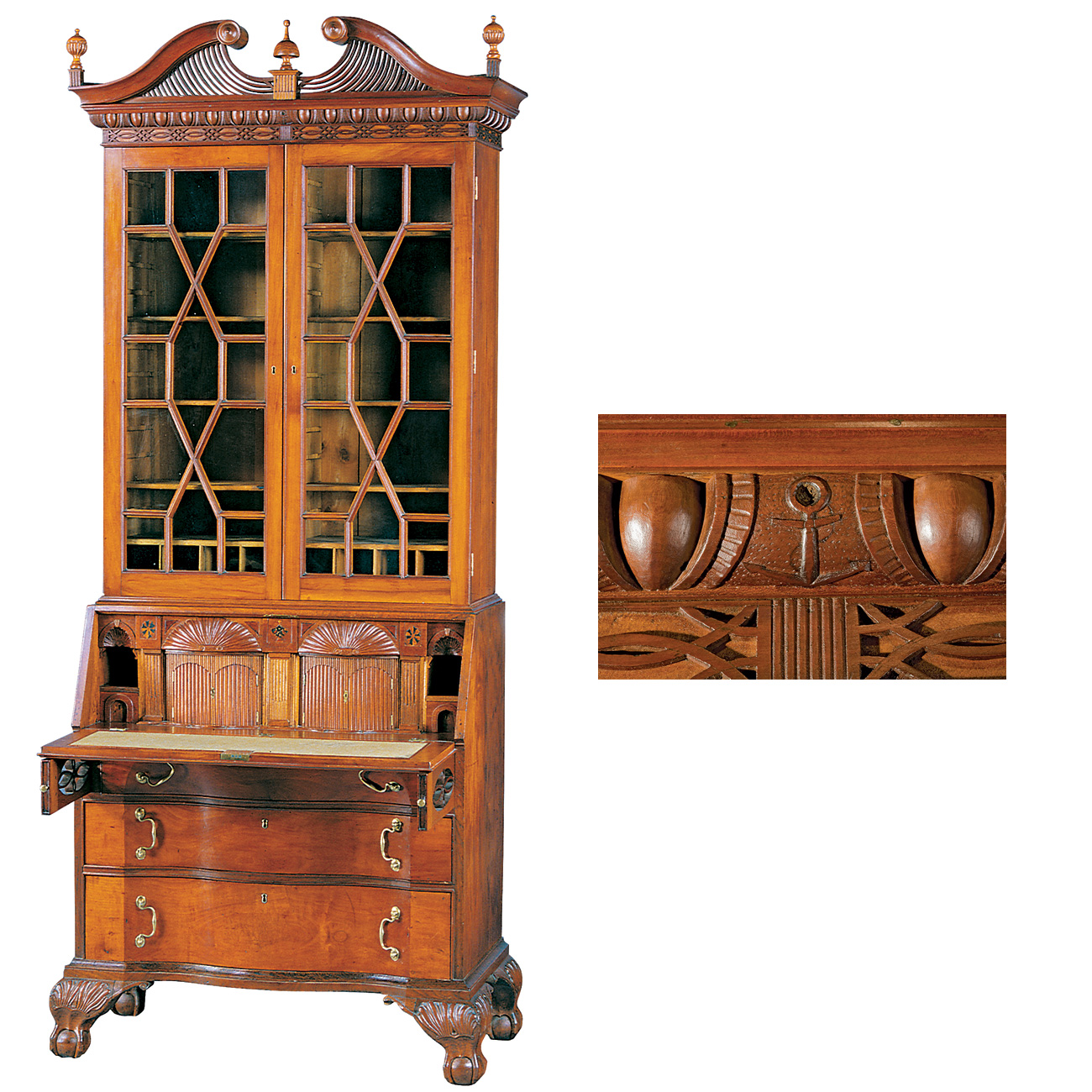
Shearer Loyalism and Heritage
from The Magazine ANTIQUES, April/May 2010 | Figs. 1, 1a. Desk-and-bookcase made by John Shearer (active c. 1798–at least 1818), Martinsburg, Virginia (now West Virginia), 1801–1806. Inscribed “Down with the Cropper of Ireland” and “Cropper is Repenting and his Master is Angry” in the top drawer of the case. Walnut, cherry, mulberry, yellow pine, and oak; height 8 feet 10 …
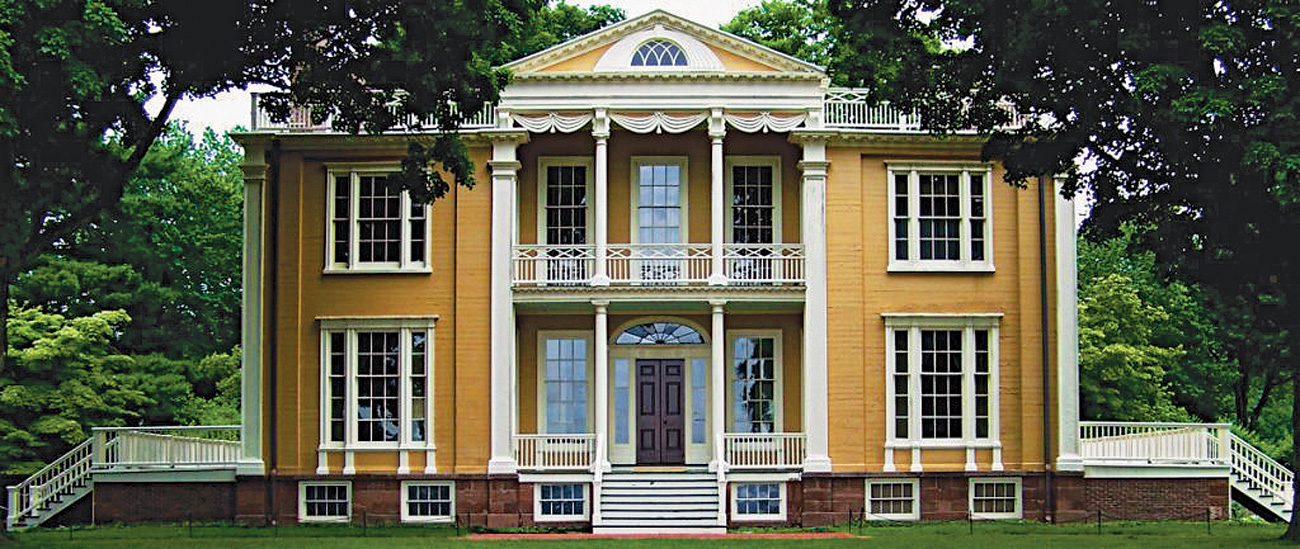
Furniture at Boscobel
Fig. 1. Boscobel, built in Montrose, New York, 1804–1808, and moved and reerected in Garrison, New York, 1957–1961. All photographs are by courtesy of Boscobel, Garrison, New York. Fig. 2. Sofa probably by Duncan Phyfe (1770–1854), New York, c. 1815–1820. Mahogany and cherry; height 32 ½, length 85 ¼, depth 24 ½ inches. The brass feet are replacements; the modern …
The Moores
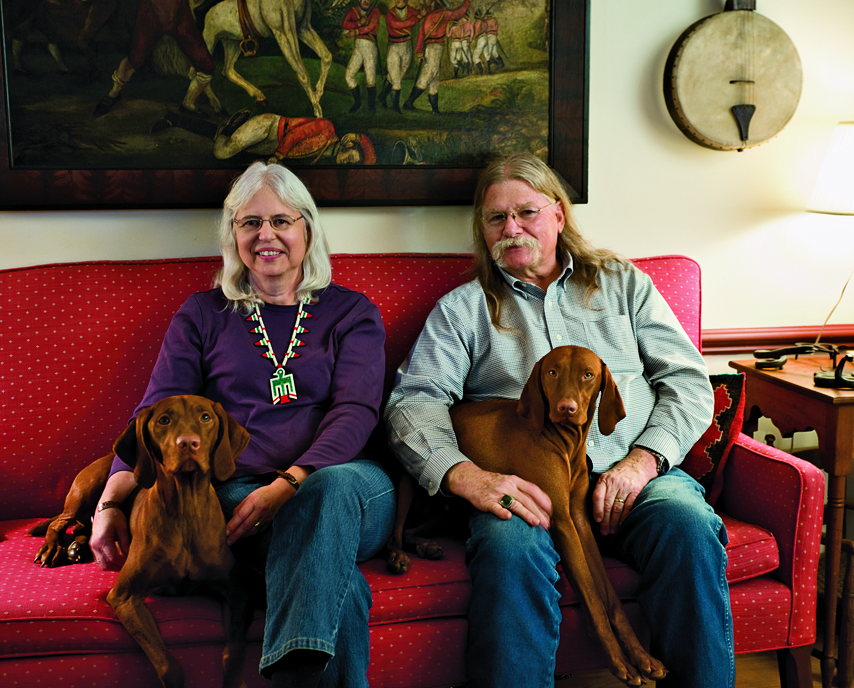
Fig. 1. Slingshots carved and painted by members of the North Carolina Cherokee tribe during the first half of the twentieth century for the tourist trade (see also Fig. 6). Fig. 2. A rare nineteenth-century gourd fiddle and two banjos by African American maker Bill Plummer (1873–1942), of Chilhowie, Virginia, hang in the den (see also Fig. 10). Fig. 3. …
Saarinen Womb Chair
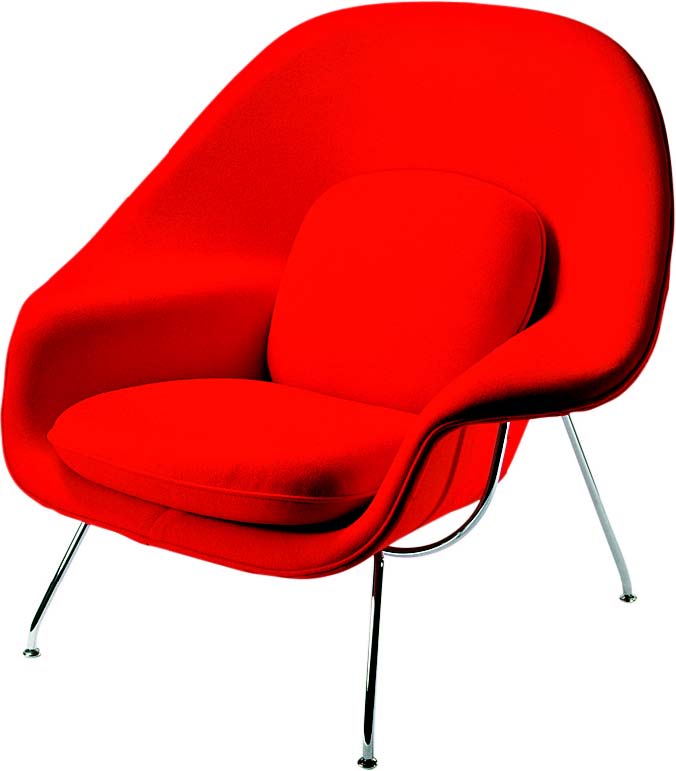
Fig. 1. Womb chair and ottoman designed by Eero Saarinen (1910–1961) and first manufactured by Knoll Associates, New York, 1946, 1948. Tubular steel, fiberglass, with wool upholstery and foam cushion; height (of chair) 35 ½, width 40, depth 34 inches. Photograph by courtesy of Knoll. Fig. 2. Sunday Morning by Norman Rockwell (1894–1978) as the cover of the Saturday Evening …
One House Two Worlds
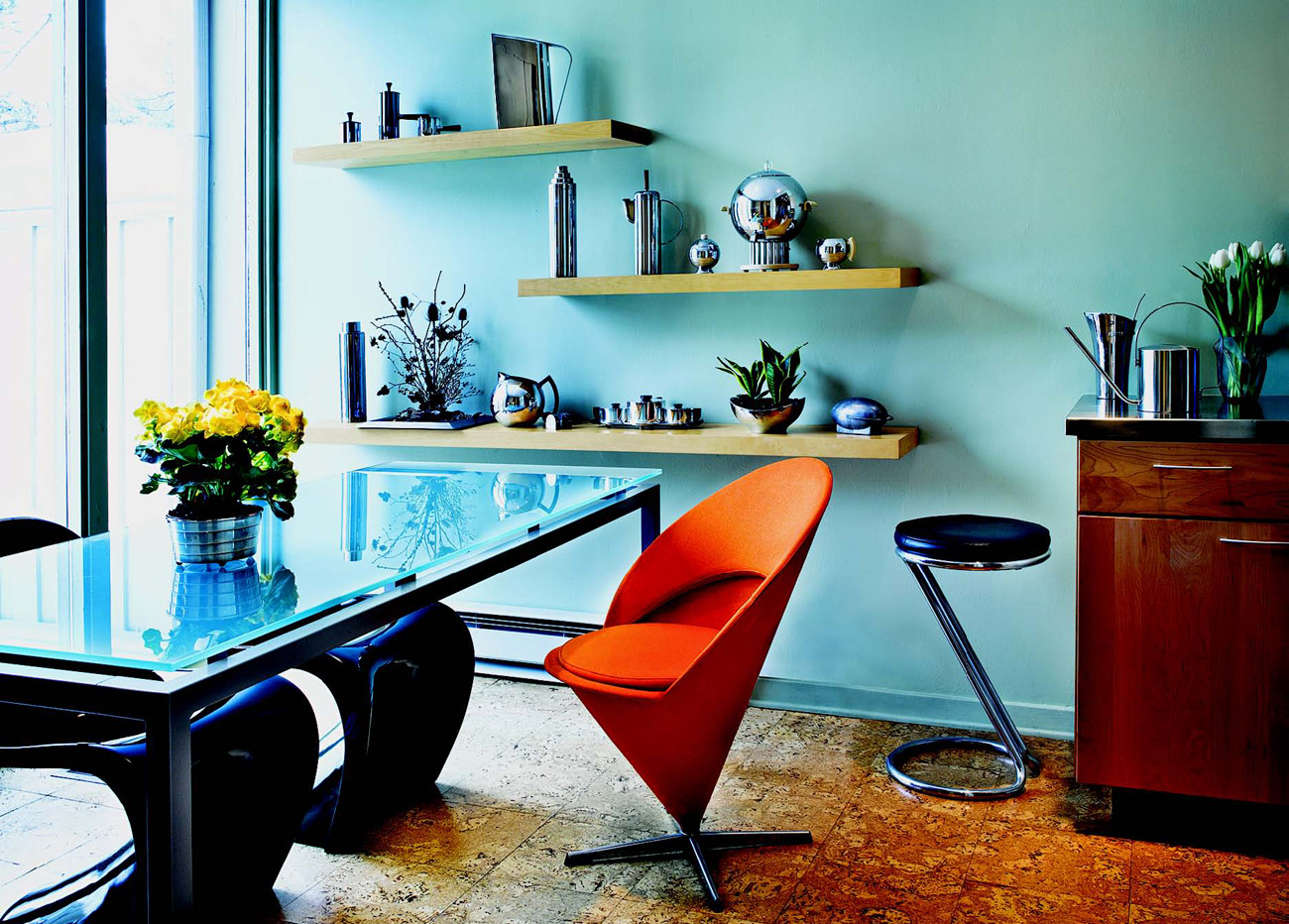
Fig. 1 A “Z” stool designed by Gilbert Rohde (1894–1944) c. 1935 for the Troy Sunshade Company, a cone chair designed by Verner Panton (1926–1998), 1958, and two recent examples of his stacking chair of 1960 provide seating in the kitchen. On the top wall shelf are examples of the Diplomat coffee service designed by Walter Von Nessen (1889–1943), 1932, and of …
Breaking tradition: Ceramics by Michelle Erickson
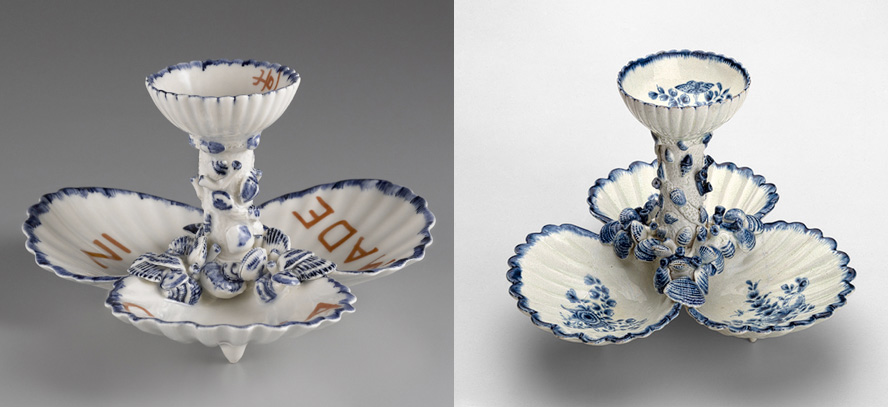
One upcoming highlight of the New York Ceramics Fair is a lecture and demonstration by ceramic artist Michelle Erickson, who was featured in our September 2009 issue. On Saturday at noon Erickson will show visitors how an early 18th-century Moravian squirrel bottle was made—a subject which she explored for the 2009 issue of Ceramics in America, and which coincides with …
Ceramics 101: A sampling of antique English wares
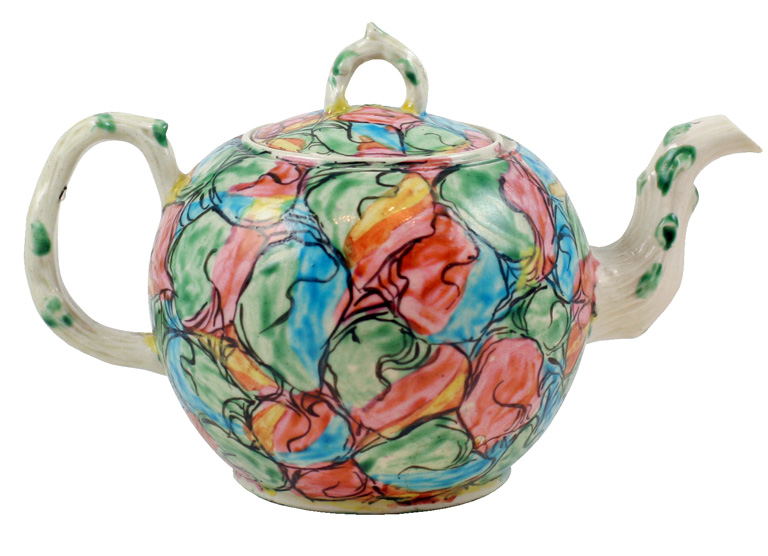
With the dizzying array of wares on display this week at the New York Ceramics Fair, it seems like an opportune time to review some of the basics of the medium. Though most of our readers are familiar with names like Wedgwood and Grueby, we’ve rounded-up a few quintessential examples of English ceramics as an introduction to the widely varied …