from The Magazine ANTIQUES, November/December 2011 In 1854 Gleason’s Pictorial, the popular, nationally circulated magazine out of Boston, published an article promoting the lavish “Daguerrian Gallery” established in Cincinnati by James P. Ball (Fig. 6), lauding his images as “unsurpassed by any in the Union.”1 In fact, Ball’s Gallery (see Figs. 2, 4) was not so unusual. Mathew Brady’s popular …
Rose Fever: The paintings of George Cochran Lambdin
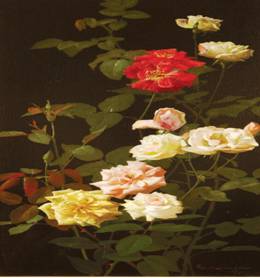
from The Magazine ANTIQUES, November/December 2011 | After his death in 1896 George Cochran Lambdin was remembered by friends and memorialists alike for his paintings of roses. According to the Philadelphia Inquirer, “Mr. Lambdin is known wherever there is anything known of American art as the facile princeps in this specialty.”1 At the height of the tea rose craze during …
In the American Grain: Art and Capital at Crystal Bridges
from The Magazine ANTIQUES, November/December 2011 | The small town of Bentonville, Arkansas, home to some 35,301 souls in the most recent census, is about to be transformed beyond recognition. Already it enjoys some modicum of renown as the ancestral abode of the Walton family: its late patriarch, Sam Walton, founder of Walmart, opened his first five and dime here …
Rodin and America: The artist’s influence in the United States
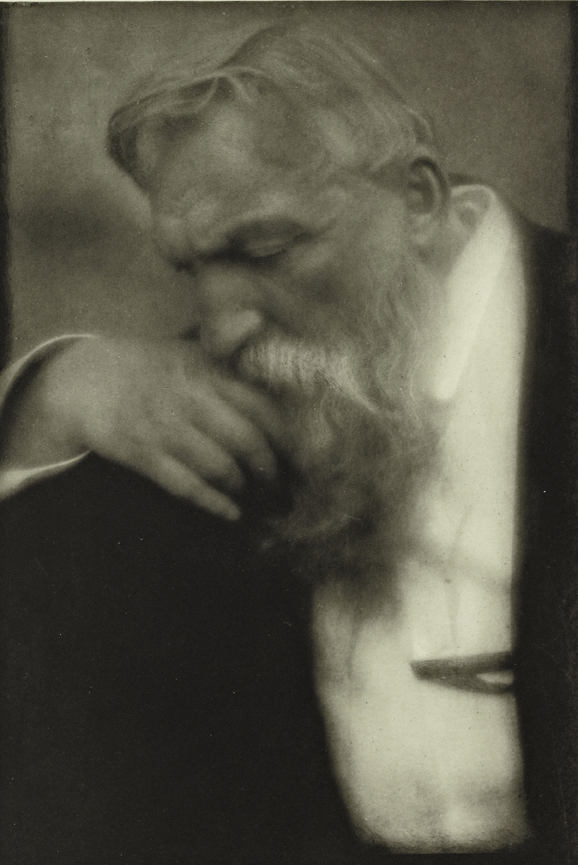
from The Magazine ANTIQUES, November/December 2011 | Fig. 1. Auguste Rodin (1840-1917) by Edward Steichen (1879-1973), 1907. Photogravure (from Camera Work: A Photographic Quarterly, April-July 1911); 9 ½ by 6 ½ inches. Iris and B. Gerald Cantor Center for Visual Arts at Stanford University, gift of the William R. Rubin Foundation. By 1900 it was common to liken Auguste …
Master of delight: William J. Glackens at the Museum of Art, Fort Lauderdale
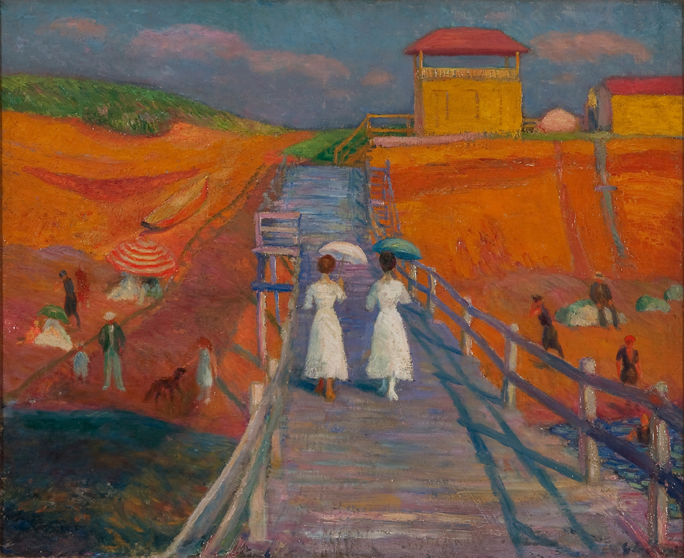
from The Magazine ANTIQUES, November/December 2011 | Fig.1. Cape Cod Pier byWilliam J. Glackens (1870-1938), 1908. Signed “W. Glackens” at lower right. Oil on canvas, 26 by 32 inches. The works illustrated are inthe Museum of Art, Fort Lauderdale, Florida. Gift of an anonymous donor. Behind the facade of a modern white monolith shimmering in the light of the Florida sun lies …
Hirschl and Adler
“We’ve done something that hasn’t been done before,” Stuart P. Feld told me, raising an eyebrow ever so slightly above the rim of his glasses, after the opening earlier this year of Hirschl and Adler’s exciting new gallery in the Crown Building, on the southwest corner of Fifth Avenue and Fifty-seventh Street in midtown Manhattan. And indeed, decorative and fine …
The Japanesque silver of the Whiting Manufacturing Company
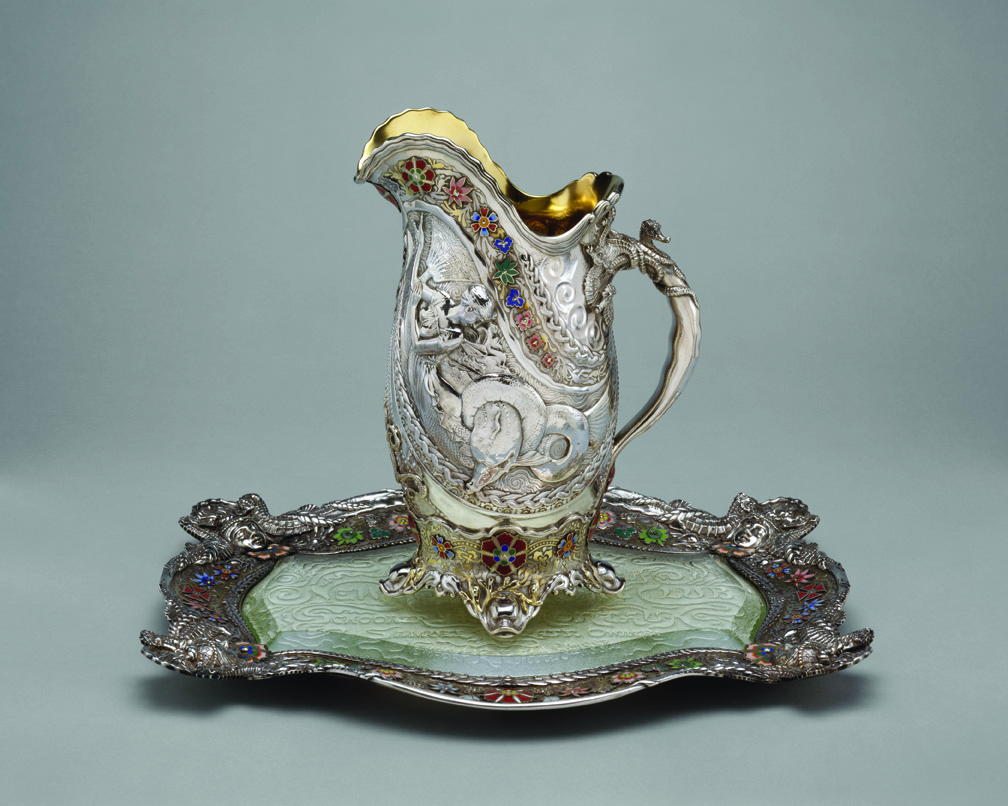
from The Magazine ANTIQUES, September/October 2011 | The 1870s and 1880s were some of the most innovative and exciting decades in the history of the American silver industry. Postwar prosperity, the discovery of silver in the American West, and innovations in manufacturing created an ideal environment for the design and fashioning of original objects. Among the most prolific and successful …
The Man Who Could Do Everything: Louis C. Tiffany at the Charles Hosmer Morse Museum
from The Magazine ANTIQUES, July/August 2011 | View of the Daffodil Terrace from the courtyard. Cohrssen photograph. View of the Living Room gallery from the Reception Hall gallery, showing the hanging turtleback-glass globes and shades, a lunette window, and panels from the Four Seasons window. Cohrssen photograph. Louis Comfort Tiffany (1848-1933) in a photograph by Blank and Stoller, …
More on Manz
Tiffany and Company. Shreve, Crump and Low. Black, Starr and Frost. Marcus and Company. Gorham. Raymond C. Yard. These are just a few of the prominent jewelry retailers supplied by the German-born New York jeweler Gustav Manz in the first decades of the twentieth century. Hitherto little known, Manz’s work is examined in “Where credit is due: The life and …
The life and jewelry of Gustav Manz
Fig. 1. Collage of drawings from a scrapbook of jewelry designs by Gustav Manz, c. 1910–1920. The scrapbook remains in Manz’s family. Collection of the Mathews family. Fig. 2. Gustav Manz (1865-1946) in his studio in a photograph of c. 1935. Collection of Robert Gustav Eastman. Fig. 3. Bracelet attributed to Manz, c. 1925. Yellow gold with colored sapphires …