
NYC Antiques Week 2026 by Christine Hildebrand A self-proclaimed “novice” is formally baptized into the world of antiques at New York City’s Antiques Week, anchored by its headlining event: The Winter Show. 1826: Fashioning the American Myth by Jonathan Prown The Jubilee is justifiably remembered as a highly significant patriotic moment. But as the historian Len Travers notes in his …
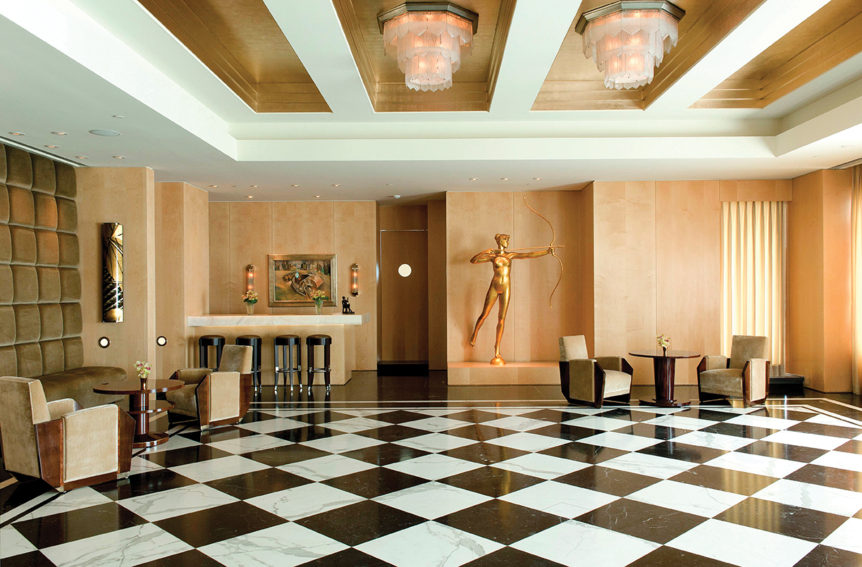
Living with Antiques: Compass Points
The man who brought together the furniture and works of art in two Texas homes takes inspiration from several directions.
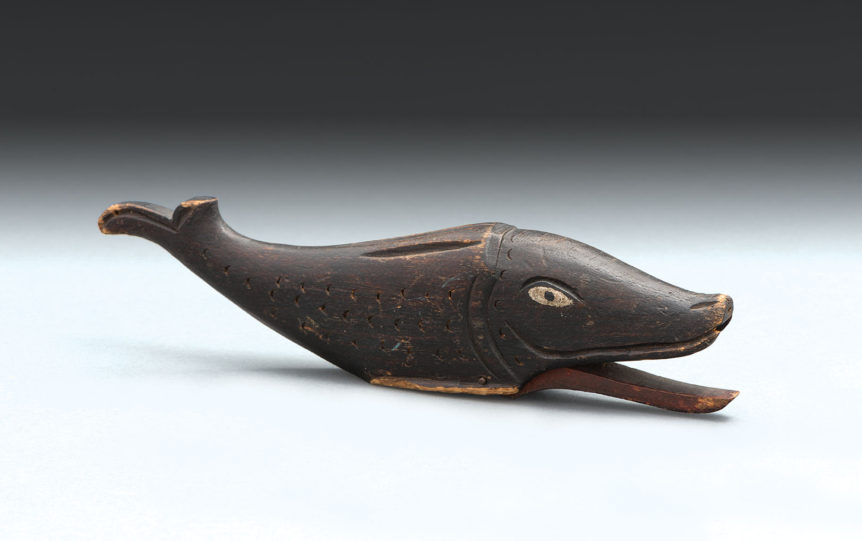
Growing Interests: Expanding the collections at the Abby Aldrich Rockefeller Folk Art Museum
In 1926 John D. Rockefeller Jr. formally embarked on the project that would become the Colonial Williamsburg Foundation by purchasing Philip Ludwell’s house of about 1775 on Duke of Gloucester Street. That acquisition, the first “antique” in Colonial Williamsburg’s collection, came to play a pivotal role in the founding of what would eventually be the Abby Aldrich Rockefeller Folk Art Museum.
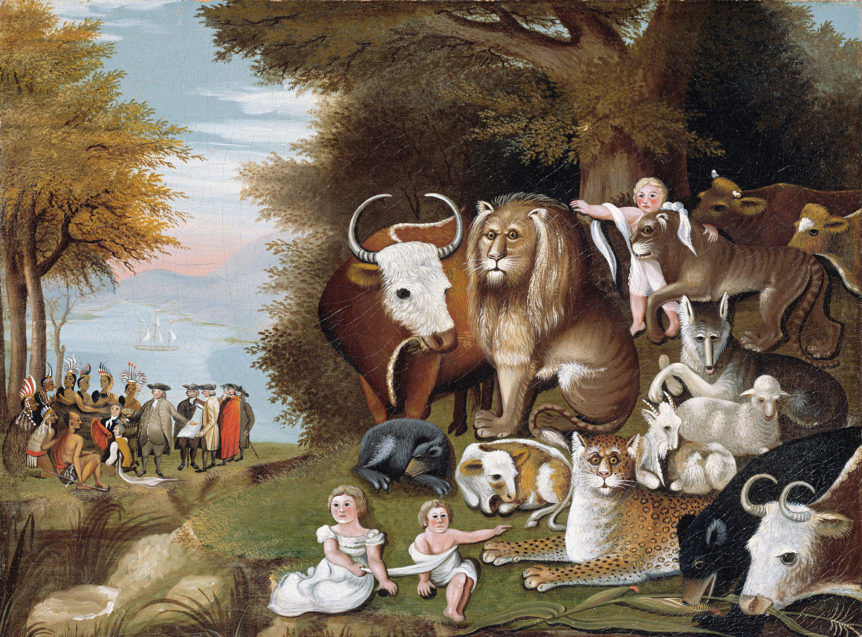
Revisiting The Art of the Common Man
The exhibition American Folk Art: The Art of the Common Man in America, 1750–1900 was held at the Museum of Modern Art in New York City from November 30, 1932, through January 14, 1933. Presenting American folk art as part of a continuous artistic tradition reaching back to the eighteenth century, it was the most comprehensive, illuminating display of the subject held up to that time.
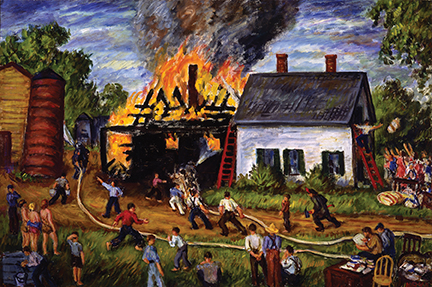
Calamity and catharsis in Maine
Flood, fire, earthquake, drought…few things capture the collective imagination more than the subject of disaster.
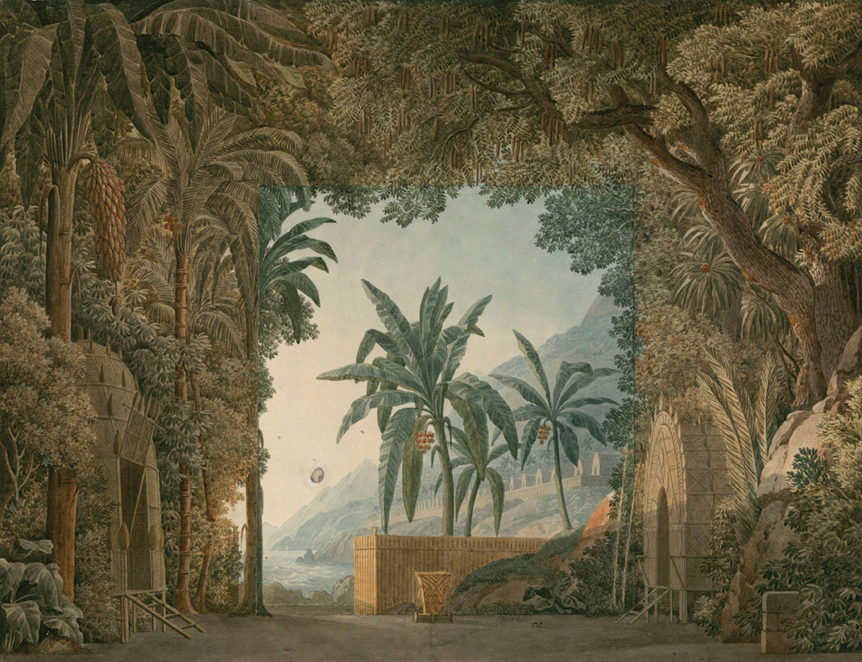
Praiseworthy Percier at the Bard Graduate Center
The name of Charles Percier has for so long been linked with that of his collaborator and partner, Pierre François Fontaine, most notably for their Recueil de décorations intérieures, that the breadth of his individual accomplishments and talents as revealed in the current exhibition at the Bard Graduate Center is a bit mindboggling.
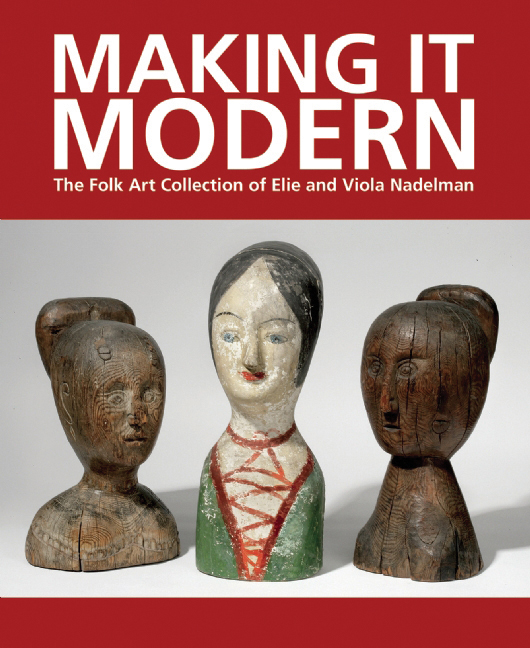
Making it Two Authors
Despite our best efforts to be accurate, on the rare occasion something slips through the cracks.
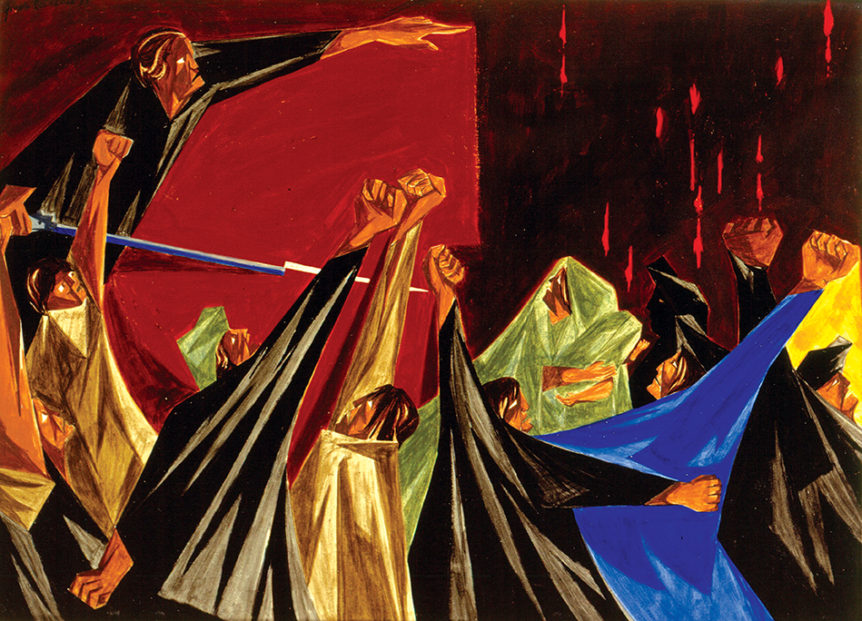
Missing pieces
Scholars hope to reunite all thirty paintings in Jacob Lawrence’s Struggle series, his epic of early American history. But the whereabouts of several panels is unknown.
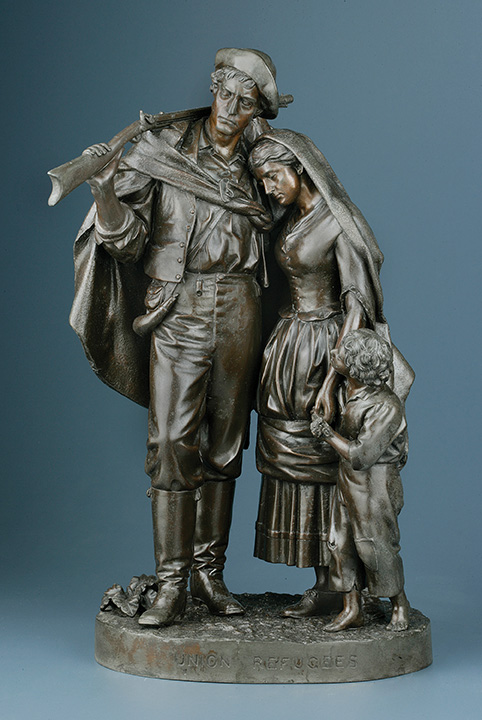
How we see refugees, yesterday and today
In April 1914 the Modernist Studios in New York City held an “Exposition of Bad Taste.” Wallpaper patterns that had been popular in the 1880s served as the backdrop for a crowded display comprising “marble-topped furniture, seaweed, wax flowers, and other treasures under glass; samplers, homemade paintings, ornate chinaware of every description, and countless articles such as were considered extremely genteel in the old days.”
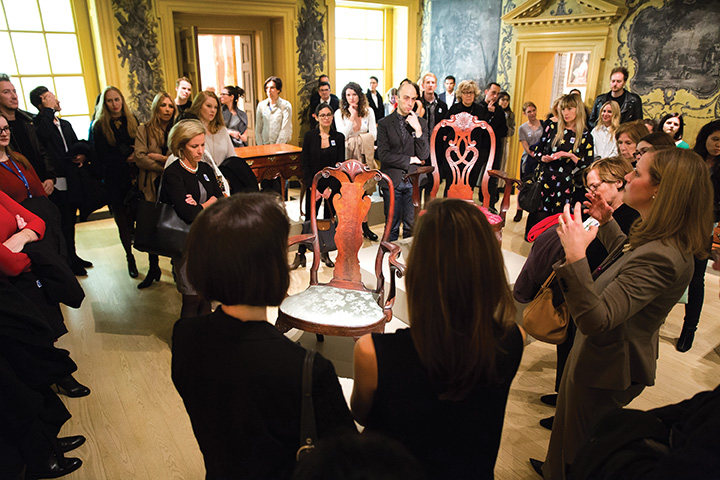
Make Americana great again: The Wunsch family has a plan
Among aficionados of early American decorative arts, the name Wunsch is legendary. The family’s art and antiques collection—started by the canny and ever-curious engineer E. Martin Wunsch (1924–2013), and administered under the aegis of the Wunsch Americana Foundation—is one of the most important in the field.